Pussy Riot’s Nadya Tolokonnikova on Navalny, Russian culture, and supporting Ukraine’s military
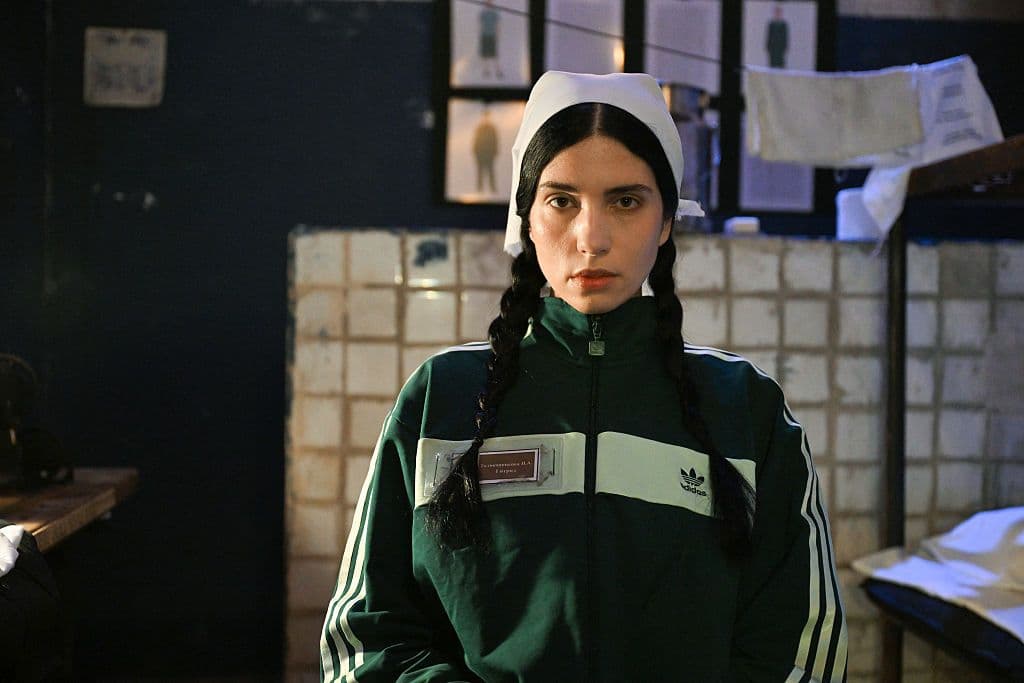
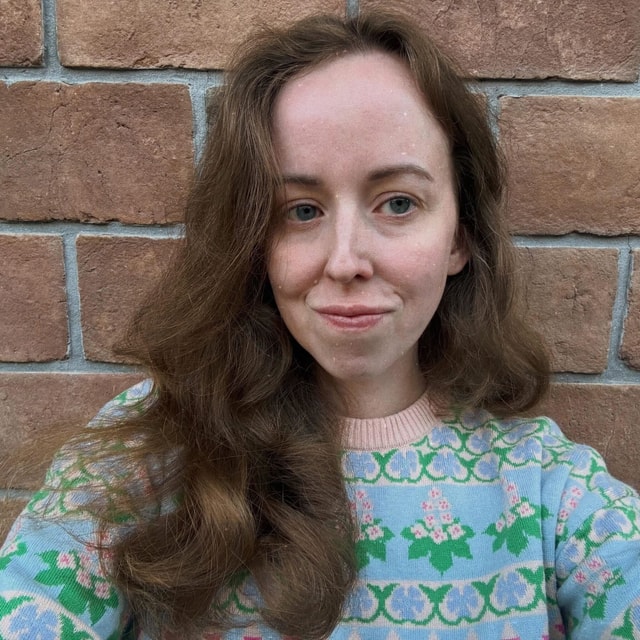
Russian artist Nadya Tolokonnikova, co-founder of Pussy Riot, poses inside a mock prison cell as part of her 10-day durational piece, "Police State," at the Museum of Contemporary Art (MOCA) in Los Angeles on June 6, 2025. (Photo by ROBYN BECK/AFP via Getty Images)
 on Google
“We don't just oppose Putin anymore, we're at war with him,” Nadya Tolokonnikova told the Kyiv Independent during a meeting in Kyiv. “To me, (saying) anything less bold is insufficient to meet the moment.”
Tolokonnikova has never shied away from speaking truth to power. As a founding member of Pussy Riot, the Russian feminist and performance art collective, she quickly became a global symbol of creative resistance and unwavering defiance against authoritarianism in Russia.
She’s been using her position in the newly formed Russian opposition PACE delegation to draw more attention to the needs of Ukraine’s military — a stance she wants to see voiced more loudly and frequently by the Russian opposition, as well as by Ukraine's allies.
In this interview with the Kyiv Independent, her first with Ukrainian media, Tolokonnikova reflects on her unexpected role in the political sphere, the challenges facing the Russian opposition after Alexei Navalny’s death, and why she believes the truest voice of Russian culture now comes from political prisoners.
With her trademark mix of artistic vision and uncompromising honesty, Tolokonnikova discusses the importance of moral clarity during wartime and her latest plans to subvert the Russian state’s attempts at cultural influence — whether inside the Venice Biennale or beyond.
This interview has been edited for length and clarity.
The Kyiv Independent: This isn’t your first time in Ukraine since the start of the full-scale war. What brought you to Kyiv this time?
Nadya Tolokonnikova: I’m here informally to see friends and eat vegan dumplings after a hectic week at PACE. But the key reason to come here is meeting with various groups of Russian fighters in Ukraine’s Armed Forces, and hearing their insight into potential topics to surface at PACE and with politicians in Europe. I believe in prioritizing their voices when I can, and if we are discussing the opposition against Russia, we cannot have this conversation in 2026 without discussing them.
The Kyiv Independent: Let’s talk more about the Russian PACE delegation. What inspired you to get involved?
Nadya Tolokonnikova: Honestly, like a lot of things in my life, I got involved on a bit of a whim. I didn't really expect them to elect me to the delegation, but they did. That's one part of it. On a more serious note, I felt like there wasn’t enough outspoken support from the Russian opposition when it comes to encouraging stronger military support for Ukraine. A lot of them seemed hesitant or maybe just unsure, but I wanted to see more voices speaking up about it. So I figured, why not give it a shot myself?

The Kyiv Independent: What’s your overall take on the work of the delegation so far? The delegation seems to have brought together people with all kinds of different opinions and leadership strategies — do you think the dynamic has been productive?
Nadya Tolokonnikova: I see myself first and foremost as an artist, so my personal incentive in this is not to try and take some leadership role within the Russian opposition. I’ve never really felt like I was part of it, and I never wanted to belong to any party, forum, or group. It's important for me to keep my perspective clear and my senses sharp. For me, the role of an artist is to interpret reality and express it through art, and I feel I can do that best when I’m not attached to any political group.
Since Alexei Navalny’s murder, it’s been a very turbulent time for the Russian opposition. Whether people liked or hated him, his gravitational field was so powerful that he defined the coordinate system. My political views differ quite from his, but I always thought that we can hash out those differences once we bring down Putin.
I don't take for granted that the Ukrainian PACE delegation did not oppose us entering this space after everything Russia has done. That’s a huge gesture of generosity on their part.
After the first session, I drafted a statement calling for support, including military support for Ukraine — I thought that the empty words of wishing Ukraine victory without direct support to the Armed Forces needed to be clarified. I was proud that 14 members signed this.
But beyond ‘strongly worded statements’ which is a bit of a meme now, we’ve been able to find our footing in the PACE system. This session I was able to draft and forward the first written declaration from the platform. It condemns Russia’s return to the Venice Biennale, and 71 delegates signed it. This also was presented as a motion for a resolution, which was the first of this kind of working document to come out of the platform. It will have some real legs when it comes to creating a report and working group around fighting Russian soft power.

Europe has a responsibility here, and the Council of Europe is actually a good place to get this type of work done, as they advise and inform on this type of issue.
Garry Kasparov presented his ambitious vision of a "Russian Taiwan" government body, which he thinks is necessary to advance like-minded people’s goals — I liked that he spoke about people identifying with being ' at war’ with the current Russian regime, and in this sense, they were more united with Ukrainians.
The Kyiv Independent: A Russian writer in exile once told me he wished Navalny had gone to Ukraine after recovering from his poisoning, instead of returning to Russia, to declare that the future of a democratic Russia should be closely linked to supporting a free and independent Ukraine. I’m curious: How much do you agree with that?
Nadya Tolokonnikova: We can only speculate after his death, but if he’d made the decision a year later — once the full-scale war started — maybe things would have been different. Honestly, I would have loved to see Navalny fighting alongside someone like (Ukraine-based Russian journalist) Peter Ruzavin, who currently serves in the Khartia Brigade.
As for the people who have inherited his movement, I would just like to see them working more closely in support of the Ukrainian military. That would be pretty rad, honestly.
The Kyiv Independent: It’s getting harder and harder to know what’s really happening inside Russia these days — it’s starting to feel a bit like North Korea in that sense. But I’m curious: How much do you think there are still people inside Russia carrying out acts of protest? Are they an outlier?
Nadya Tolokonnikova: Well, I don’t want to paint some pipe dream of a beautiful Russia of the future. For me, 2014 was the point of no return, and after February 2022 it really became impossible for anyone with a conscience to ignore that. Honestly, I think we missed our real chance to do something back in 2011–2012. That was the moment when peaceful, symbolic protest might have actually made a difference in stopping Putin.
I remember during that time there was a choice to either go to Bolotnaya Square in Moscow for a legal demonstration, or organize a huge protest near the Kremlin, which would’ve been illegal. For me, it was obvious that we needed to gather illegally. You can’t overthrow a regime by asking politely. You have to show some backbone, you have to show your teeth. We failed to do that back then.
I have so much respect for the courage of people who are still protesting inside Russia. What they’re doing is extremely dangerous. But we have to be honest and say that they’re not going to be able to bring down Putin's regime on their own. The fact that we didn’t push hard enough when we had the opportunity in 2011 to do that is something that always fills me with regret.
The Kyiv Independent: Russian opposition figure Ilya Yashin recently started his own political party in exile and has argued that it’s important to fight Putin’s regime not just with weapons, but also with words. Is it counterproductive to talk about fighting with words at this point in the war?
Nadya Tolokonnikova: A lot of this comes down to the framework one uses. In this sense, I really gravitate towards Garry Kasparov's framework: We don't just oppose Putin anymore, we're at war with him. To me, anything less bold is insufficient to meet the moment, the fifth year of a full-scale invasion, with Russia continuing to bomb hospitals and maternity wards.
A whole range of skills is needed at war. One can fight with words — the culture war, the fight for meaning, is a huge part of Russia’s hybrid warfare and its exports to the West. For example, Russia is returning to the Venice Biennale this year, and it's important to push back with language and ideas, that's what I do as a cultural worker. I don’t fight physically — in this sense I also fight with words, but I raise money and donate to the Ukrainian military.
In times of war — times of emergency — everything becomes black and white. You have to pick a side, and there’s no room for ambiguity or indifference. Pretending otherwise is just denial.

We all have a duty, whether it’s in the so-called culture war, the fight for meaning, or in supporting those on the front lines, or choosing to go and fight.
My choice is always to help the victim, whether that means giving them a weapon, pepper spray, or whatever else is necessary.
The Kyiv Independent: There’s been an ongoing debate since 2022 where Ukrainians are advocating to the West to boycott Russian culture, or to at least engage with it through the lens of decolonization, while some in the West — and within the Russian exile community itself — make arguments like “(19th century Russian poet Alexander) Pushkin has nothing to do with the war.” Meanwhile, the Russian state is trying to weaponize this debate to its benefit. How can we talk productively about culture in this context?
Nadya Tolokonnikova: When it comes to Ukrainians, I want to say outright that they have every right to decide for themselves how they want to engage — or not — with Russian culture. It’s important to listen to their perspective on this.
My approach in these circumstances has been to address the smaller, ad hoc mistakes I notice from people — those instances where people unconsciously fall into an imperialist mindset or framework. I always try to correct them when I notice them. When I talk to an art critic, for example, I ask them how they refer to what used to be called the Russian avant-garde. It used to be an umbrella term to refer to Ukrainian, Russian, and Belarusian artists, but now, you really can't, in good conscience, keep using that label.
I like to raise these questions and help facilitate these conversations. I don’t have all the answers myself, and I don’t think it’s my place to decide. But at least I can help start the discussion.
You’re absolutely right to point out that the Russian state is trying to manipulate this debate for its own benefit, portraying Russia — quite absurdly — as a victim of censorship. It seems ridiculous because it is, but we shouldn’t underestimate our opponent. The culture war that the Russian state is waging is incredibly well-prepared, highly organized, and extremely well-funded. Unfortunately, when you look at the Russian opposition, you don’t always see the same level of determination and organizational skills on display.
The Kyiv Independent: I think when we talk about how Russian culture is tied to politics, most people in the West don’t understand how literal that can be. The Venice Art Biennale is one example — the Russian government appointed the commissioner to the pavilion and funds it. You've been active in trying to prevent their imminent return, how have those efforts been going?
Nadya Tolokonnikova: We reached out to Pietrangelo Buttafuoco, the head of the Venice Biennale, both publicly and privately, but haven’t received any response. Given that he’s a right-wing, Putin-loving fascist, that’s not exactly surprising. I suspect he played a direct role in reinstating the Russian pavilion.
We have a better plan than Buttafuoco for the Russian pavilion. My suggestion is simple: I want the most censored artists today — Russian artists politically imprisoned for opposing Putin and supporting Ukraine — to represent Russia at the Biennale in 2026, 2028, and for as long as the war continues.
The Biennale makes it really hard to get onto its grounds. But we’re resourceful — think of Pussy Riot’s most loud protest actions. That’s all I can say for now about it. I really like this challenge.
I believe the truest representation of Russian culture right now comes from those serving time in prison for their courageous anti-Kremlin stance, whether they took bold action like burning down a military draft office or simply spoke out or sent money to support Ukraine. These people are the ones who I would like to represent a better version of Russia, and by putting them forward, we’re making a powerful statement of protest.
During this spring PACE session we opened an exhibition "Resistance Imprisoned" I curated together with Ritsch-Fisch gallery's Emma Mathieu, showing the artwork of jailed political prisoners in Russia, and it was really well-received. We also told the stories of the Ukrainian POWs Pavel Artemenko and Ihor Kim and had their family members visiting the exhibit and PACE, and of a Ukrainian civilian woman in captivity, Iryna Navalna.
The Kyiv Independent: I recently read about Oleksa Hirnyk, a Ukrainian dissident who set himself on fire in 1978 at the grave of Taras Shevchenko — the great 19th-century Ukrainian writer — in protest against the Soviet suppression of Ukrainian language, culture, and history. You might be interested to know that one of the last things Hirnyk wrote was that people in the West, in particular, won’t truly grasp the threat Russia poses because they haven’t experienced the Russian prison system.
Nadya Tolokonnikova: Oh wow. I agree with that — there’s a real divide between people who’ve been through that experience and those who haven’t. It’s not something I’d wish on anyone. But I do notice a kind of moral clarity in those who have spent time in a Russian jail for the “crime” of truth.
Note from the author:
Hi, this is Kate Tsurkan, thanks for reading this interview. Back when I was just starting to learn about Russia, the story of Pussy Riot and their punk rock stance against Putin's thuggish brand of authoritarianism really made an impression on me. It makes me happy that people like Tolokonnikova remain as real and authentic as ever, all these years later, calling for support for Ukraine when it's needed the most.
If you like reading about this sort of thing, please consider supporting The Kyiv Independent.