Germany's far-right, pro-Russia AfD wins big in regional election but falls short of majority
 on Google
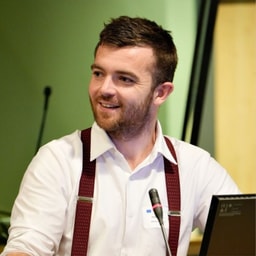


Germany's far-right nationalist party, the Alternative for Germany (AfD), has secured a historic state election victory on Sept. 6, despite falling just short of a majority in the country's eastern region.
The AfD's victory in Saxony-Anhalt gives the party a strong chance to form Germany's first far-right state government since World War II. It may also create serious problems for Ukraine.
The preliminary results showed AfD securing 44% of the vote, winning a plurality of the state's 83-seat parliament, despite falling three seats short of an absolute majority.
The AfD is largely locked out of coalition talks thanks to the so-called "firewall," an agreement by Germany's other parties not to work with the far right — an approach rooted in the country's experience with Nazism.
Even without an absolute majority, the AfD will be able to put the firewall to the test by attempting to persuade members of the Russian-sympathetic far left (BSW) or right-leaning conservatives (CDU) to break ranks and work with them.
If successful, Siegmund may secure the position of minister-president (regional head) of Saxony-Anhalt, allowing the AfD to build the regional government and gain representation in the Bundesrat, the legislative body representing Germany's federal states.
The regional AfD leader has pledged to cut support for Ukrainian refugees and revitalize educational ties with Russia. In a region with 39,000 Ukrainians — including 31,000 refugees — Siegmund has called for slashing funding and services for migrants and stripping Ukrainians of war refugee status.
The AfD's potential control over the eastern state has also sparked fears of disrupted supply routes to Ukraine. German Chancellor Friedrich Merz is reportedly drawing up alternative eastward routes for military equipment — and even NATO troops in the event of a Russian attack, according to the Telegraph.
The AfD's victory in Saxony-Anhalt will also test other local parties' stated resolve not to cooperate with the far right.
While Saxony-Anhalt only represents 1.7 million voters (from a population of 2.1 million) in a country of 82 million people, the AfD's ambitions extend far beyond the region. The party — whose Saxony-Anhalt branch is classified by the German security service as "confirmed far-right extremist" — ultimately aims to unseat Merz and reshape German politics.
The nationalist party is also eyeing electoral gains in the coming weeks, hoping for a win in the northeastern state of Mecklenburg-Vorpommern and a second-place result in Berlin on Sept. 20.
Even if the AfD fails to achieve its goals in those states, its success in Saxony-Anhalt points to the growing normalization of right-wing nationalism — and pro-Russian sympathies — in Germany.
U.S. President Donald Trump appeared to recognize the significance of the election, posting an image of the projected outcome in Saxony-Anhalt to his Truth Social account with no caption.
Billionaire Elon Musk, who has repeatedly endorsed the AfD and other nationalist parties across Europe, congratulated the German far-right party on its victory.
The result was also lauded by Hungary's right-wing ex-Prime Minister Viktor Orban, while other European top officials, including Polish Foreign Minister Radoslaw Sikorski and French Finance Minister Roland Lescure, voiced concern.
"It seems they're just a few votes short of an absolute majority, but this is indeed a very worrying sign," Sikorski told Radio Vox FM.
"We want good relations with our neighbors, with the United States, and also with Russia, because politics only works through compromise," AfD Co-Chair Alice Weidel told journalists on Sept. 6.
Weidel also said she predicts that the poor showing of Merz's CDU party in Saxony-Anhalt will translate to significant CDU losses in future national elections.
"That's where the CDU at the federal level will soon be — falling below 20%," she said, adding she believes Merz will be replaced as chancellor.
Berlin is arguably Ukraine's most important ally in Europe, providing the largest portion of military aid and hosting about 1.3 million Ukrainian refugees, the largest number in the EU.
Opinion polls show Germans tilting toward reducing some financial benefits for Ukrainians, and even the current government is toughening its approach toward draft-age Ukrainian men within its borders.
Editor's note: The original version of the article said that the result makes regional AfD leader Ulrich Siegmund Saxony-Anhalt's minister-president. Siegmund will assume this position only if he secures majority support from the local parliament.