Ukrainian 'Flamingo' missiles, drones strike Russian military factory, shut down Kirishi oil refinery
 on Google
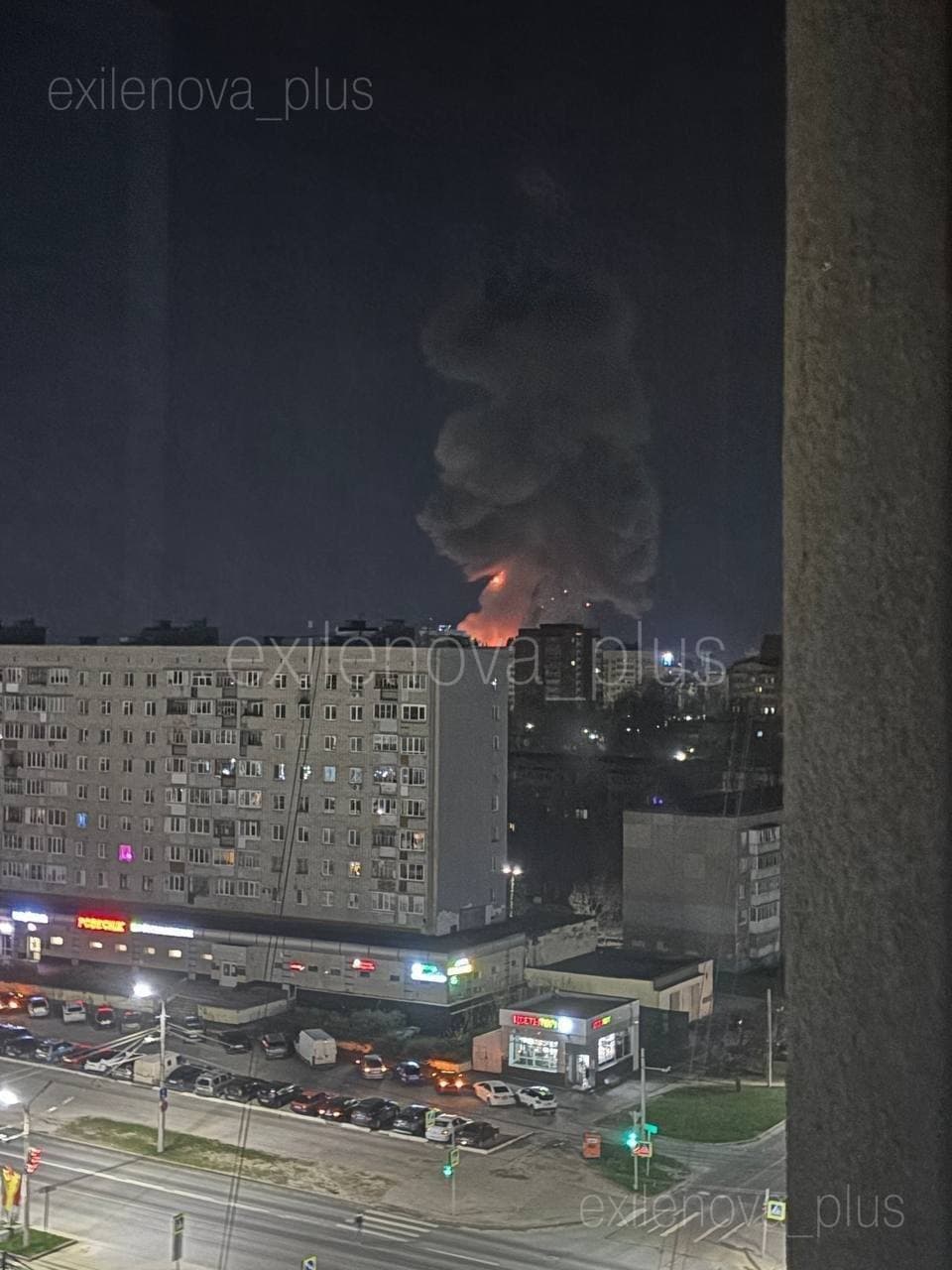
Ukrainian Flamingo missiles struck a Russian military production facility in Cheboksary overnight on May 5, President Volodymyr Zelensky said, as part of a large-scale missile and drone attack that also reportedly targeted one of Russia's largest oil refineries.
Photos and videos posted to social media by local residents purport to show a large fire emanating from JSC VNIIR-Progress in Cheboksary, Chuvash Republic, a Russian state institute that produces components for high-precision weapons used by Moscow to attack Ukraine.
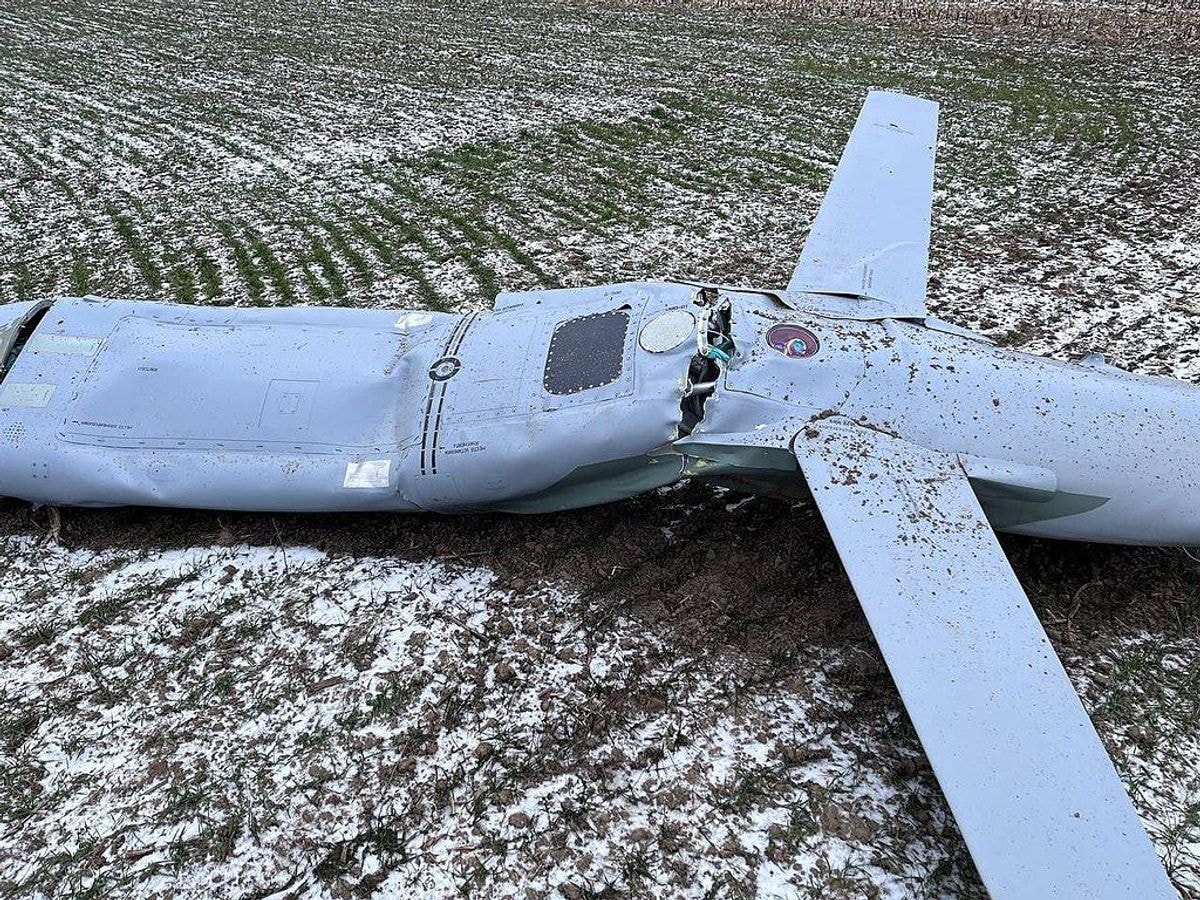
Zelensky later published video showing launches of Ukraine's "Flamingo" cruise missiles, which he credited with the strike on the Russian factory.
"Ukrainian 'Flamingos' covered a distance of more than 1,500 kilometers. The struck military production facility manufactured relay protection systems, automation equipment, and low-voltage apparatus," Zelensky wrote. "Russia must end its war and move to real diplomacy. We have made our proposal."
Russian state-sponsored media later wrote that the attack killed two and injured 32.
Explosions were heard in the area of the facility following an air raid alert announcing a missile threat in the region. Russian Telegram media channels reported that a Ukrainian-made FP-5 Flamingo missile inflicted damage on the facility.
Ukrainian drones were later seen by residents striking the facility again around 7:30 a.m. local time.
Local Governor Oleg Nikolayev claimed that one person was injured in the attack on Cheboksary.
According to Ukraine's General Staff, the institute, located about 1,200 kilometers (745 miles) away from the Ukrainian border, also develops electronic warfare (EW) systems, including the Kometa antenna arrays, used to jam satellite, radio, and radar signals.
The Kometa antenna is used in Shahed-type drones, Iskander-K cruise missiles, and guided aerial bomb modules — all high-precision weapons used by Russia to strike civilian and military targets across Ukraine.
Later into the morning, Ukraine's military also reportedly carried out an attack on the Kirishi oil refinery, also known as KINEF, one of Russia's top refineries by volume.
Leningrad Oblast Governor Alexander Drozdenko first reported a strike to have occurred in an unspecified industrial zone in Kirishi, later confirming that the oil refinery served as the main target.
NASA's fire monitoring system, FIRMS, appeared to corroborate Drozdenko claims, with multiple fires reported in the area of the refinery. At least one photo posted to social media later purported to show smoke rising from the facility.
The Kirishi oil refinery halted processing on May 5 after the Ukrainian drone strikes damaged three of its four crude distillation units, two industry sources told Reuters.
The sources said several auxiliary units were also hit, adding that the full scope of the damage made it difficult to assess how long repairs would take.
The Kirishi refinery is one of Russia's three largest oil refineries, with an annual processing capacity of around 20–21 million tons of crude oil. The facility produces more than 6% of Russia's total refined oil, including a wide range of petroleum products such as fuel that supports the country's armed forces.
Drozdenko further claimed that 29 drones were downed over Leningrad Oblast.
Both the oil refinery and the institute have previously been subject to Ukrainian attacks.
The strikes comes amid a wider attack on various Russian regions with explosions reported in occupied Crimea, as well as in the cities of Voronezh and Kazan.
Moscow Mayor Sergey Sobyanin also said that five drones were downed while approaching the Russian capital.
Russia's Defense Ministry reported downing 289 drones over various Russian regions.
At least 18 Russian airports issued a temporary ground stop amid the incoming Ukrainian projectiles, with air raid alerts declared in regions as far as 2,000 kilometers (1250 miles) from the Russia-Ukraine border.
Ukraine's military has not yet commented on the reported attacks, and the full extent of the damage caused was not immediately clear.
Ukraine regularly launches drone attacks against military and industrial facilities in Russia.
The Flamingo missile, built by controversial defense manufacturer Fire Point, has only been used by Kyiv on a handful of occasions since being first unveiled last summer, with its reported use increasing since November 2025.
Having previously been referred to by President Volodymyr Zelensky as Ukraine's "most successful missile," the domestically produced Flamingo is equipped with a 1,000-kilogram warhead and a 3,000-kilometer (1,864 miles) stated range.
Kyiv's latest large-scale attack on Russia comes one day after a Ukrainian drone hit a high-rise residential building in Moscow just seven kilometers west of the Kremlin and the city's central Red Square and three kilometers from the Russian Defense Ministry building.
The attack marked one of the deepest strikes into central Moscow's residential core since the start of the full-scale invasion, while occurring less than a week ahead of the May 9 Victory Day Parade.