Exclusive: 'It felt like a trap.' How Ukraine was blindsided by Trump's Putin pivot
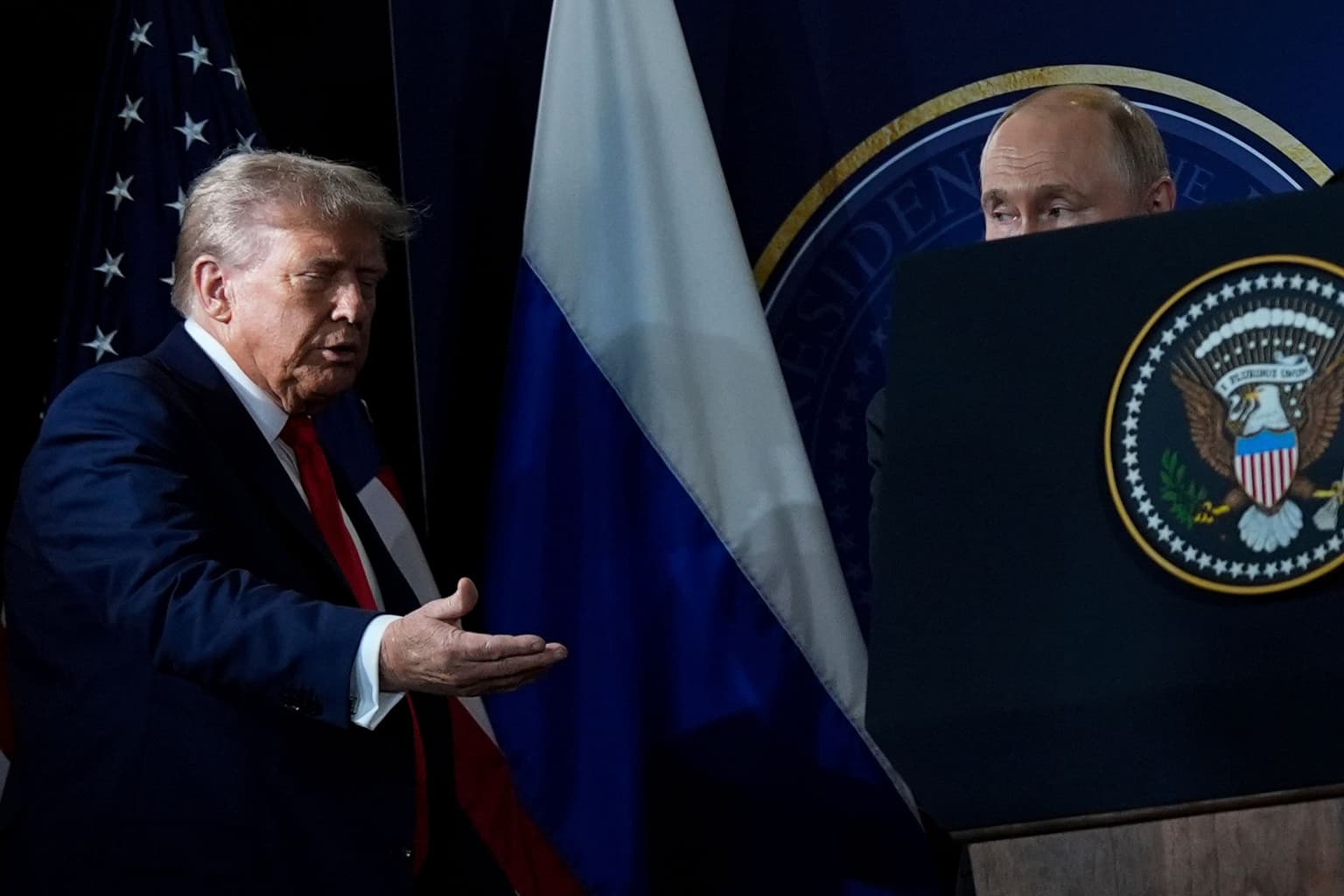
U.S. President Donald Trump and Russia's President Vladimir Putin arrive for a press conference at Joint Base Elmendorf- Richardson, Aug. 15, 2025, in Anchorage, Alaska. (AP Photo/Julia Demaree Nikhinson)
 on Google
When U.S. envoys Steve Witkoff and Jared Kushner told Ukraine's delegation on Oct. 9 that President Donald Trump was preparing to lift sanctions on Russian diesel exports, the Ukrainians struggled to believe what they were hearing.
The delegation had traveled to the United States to discuss a possible energy ceasefire with Russia. Instead, Kyiv's negotiators found themselves blindsided by a decision they feared would hand Moscow fresh revenue to finance its war against Ukraine while undermining Kyiv's leverage in negotiations.
"It was not just our delegation there, but a European one as well," one senior Ukrainian official told the Kyiv Independent. "It's just that everyone was sitting there like fools."
Washington was asking Ukraine to restrain its attacks on Russian energy while giving Moscow an economic reprieve — all as Trump faced consequences from the war against Iran.
"And yet he's the one who got everyone dragged into a war in Iran — a war with no way out — and is selling us out… Just to get a temporary, deceptive reprieve a few weeks before the election," the official said.
The Kyiv Independent spoke with several Ukrainian officials involved in or close to the negotiations. All of them were granted anonymity to discuss sensitive matters.
For Ukraine, the key question was why Kyiv should surrender a major means of pressuring Moscow if Russia faced no obligation to stop attacking Ukraine's energy system.
A deal Kyiv never saw coming
President Volodymyr Zelensky had sent a Ukrainian delegation to the United States for talks scheduled for Oct. 9-10. The agenda included a possible energy ceasefire with Moscow and a separate arrangement to halt attacks in the Black Sea.
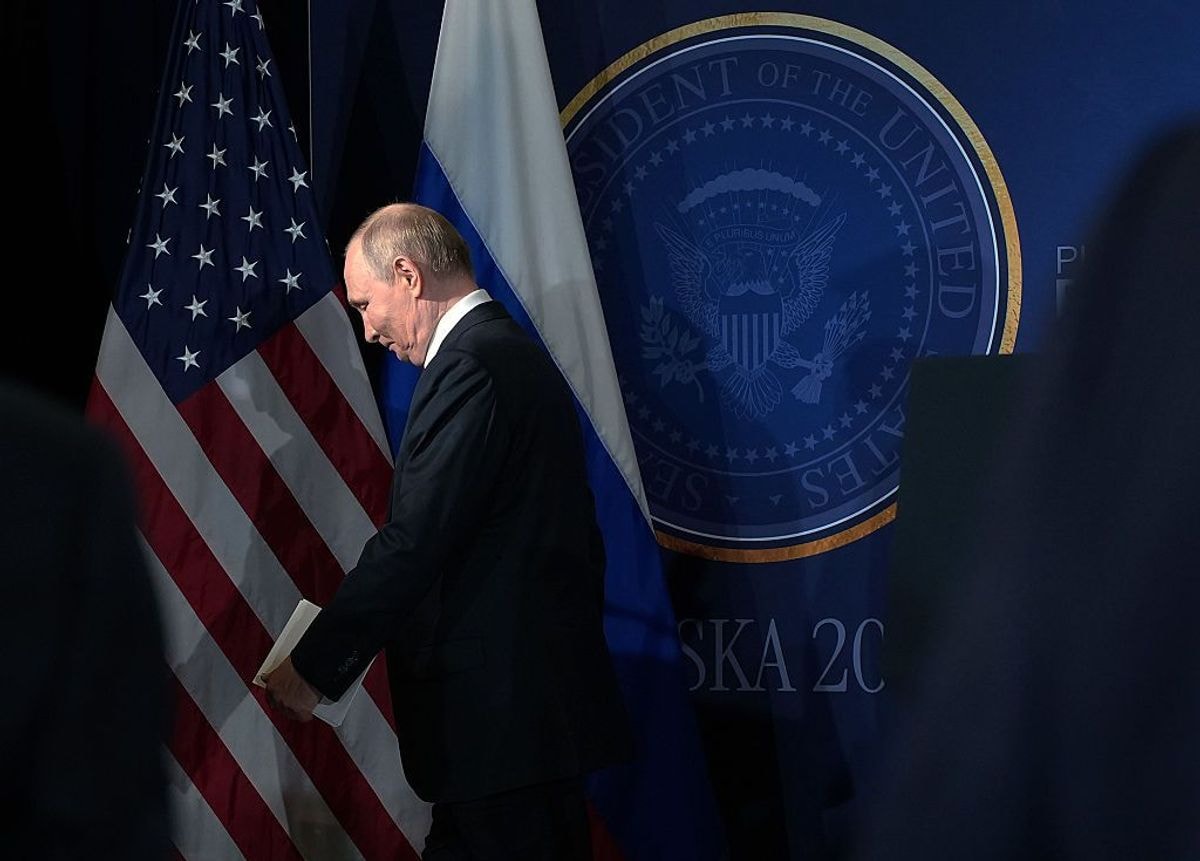
Instead, the talks were derailed after Trump announced that Russia would supply millions of tons of diesel fuel to the U.S. and global markets following a phone call with Russian President Vladimir Putin.
Kyiv had not been informed of the decision in advance. Although Zelensky publicly acknowledged that Washington was considering a deal with Moscow, Ukrainian officials said they had not known the details before the announcement that evening.
For the delegation, the revelation raised questions about whether Washington had already negotiated terms with Moscow while Ukrainian and European officials were still trying to establish the parameters of an energy truce.
"It felt like a trap," the senior Ukrainian official said.
"To be honest, everyone was shocked as f*ck."
The timing of the U.S. decision only deepened the suspicion.
Following Trump's direction, the U.S. Treasury Department announced that its Office of Foreign Assets Control was "immediately issuing a temporary general license to allow the supply of Russian diesel to the global market."
One Ukrainian official pointed to April 7, the date on which the waiver was set to expire, as evidence that Washington had planned the measure around a specific timetable.
"They lifted the sanctions until April 7... So they were preparing this for Oct. 7. It's a birthday present for Putin. They're counting the six months," the official said.

Trump's demand to stop Ukraine's strikes
The dispute had been building for weeks.
Trump had previously pressed Zelensky to stop Ukrainian attacks on Russian energy facilities, arguing that Kyiv should stop disrupting Russia's fuel production.
"Mr. Zelensky has to do one thing. He has to stop knocking out diesel fuel in Russia," Trump told Zelensky on Sept. 13.
Kyiv rejected the premise that Ukraine should halt its strikes unilaterally. Ukrainian officials said Zelensky had repeatedly made clear that any energy ceasefire would have to apply to both sides, with Russia also stopping its attacks on Ukrainian energy infrastructure.
That distinction is central to Kyiv. Ukrainian strikes on Russian oil refineries, terminals, and other energy facilities aim to disrupt a major source of funding for Moscow's war effort. Russia, meanwhile, has systematically targeted Ukrainian power plants and substations, seeking to deprive civilians of electricity and heating.
A ceasefire that stopped only Ukrainian attacks would therefore leave Russia's campaign against Ukraine's energy system intact while protecting infrastructure that helps sustain the Russian war machine.
Yet, Ukrainian officials told the Kyiv Independent that U.S. negotiators presented the issue differently during the talks, framing Zelensky as responsible for the impasse because he had refused to halt attacks on Russian refineries.
The Ukrainians were also told that Washington would cut off intelligence sharing that has helped Kyiv identify and strike targets inside Russia, one person present at the talks told the Kyiv Independent.
U.S. intelligence has played an important role in Ukrainian attacks, and restricting access to it would weaken Kyiv's ability to conduct strikes deep inside Russian territory.

One senior Ukrainian official involved in the talks responded with bitter humor.
"I hope the Americans don't give them Patriot (air defense systems) to protect their oil refineries," the official said.
The remark, however, captured a broader fear in Kyiv.
Washington already ended up helping Moscow shield the infrastructure that finances its war while pressuring Ukraine to surrender a means of striking back.
Another senior Ukrainian official said Ukraine had not agreed to stop attacking Russian refineries and would not commit to doing so without reciprocal Russian action.
For Kyiv, the principle remained unchanged. An energy truce could work only if both countries accepted the same restrictions.
"It was just f**king stupid to bury the idea of an energy truce with that move," one official said, suggesting that Washington was trying to strip Ukraine of its greatest source of leverage in the negotiations.
The war continues on both sides
Events on the ground showed how little the announcement had changed.
Just hours after Trump's announcement, Ukrainian drones struck an oil loading terminal in Russia's Rostov-on-Don. The terminal handles petroleum products for export and supplies fuel to Russia's military.
Russia, meanwhile, launched a drone attack followed by a missile strike on Kyiv on Oct. 10, also targeting Ukrainian energy facilities.
Neither side had agreed to stop striking energy infrastructure, and the U.S. announcement had done little to bridge the gap between their positions.
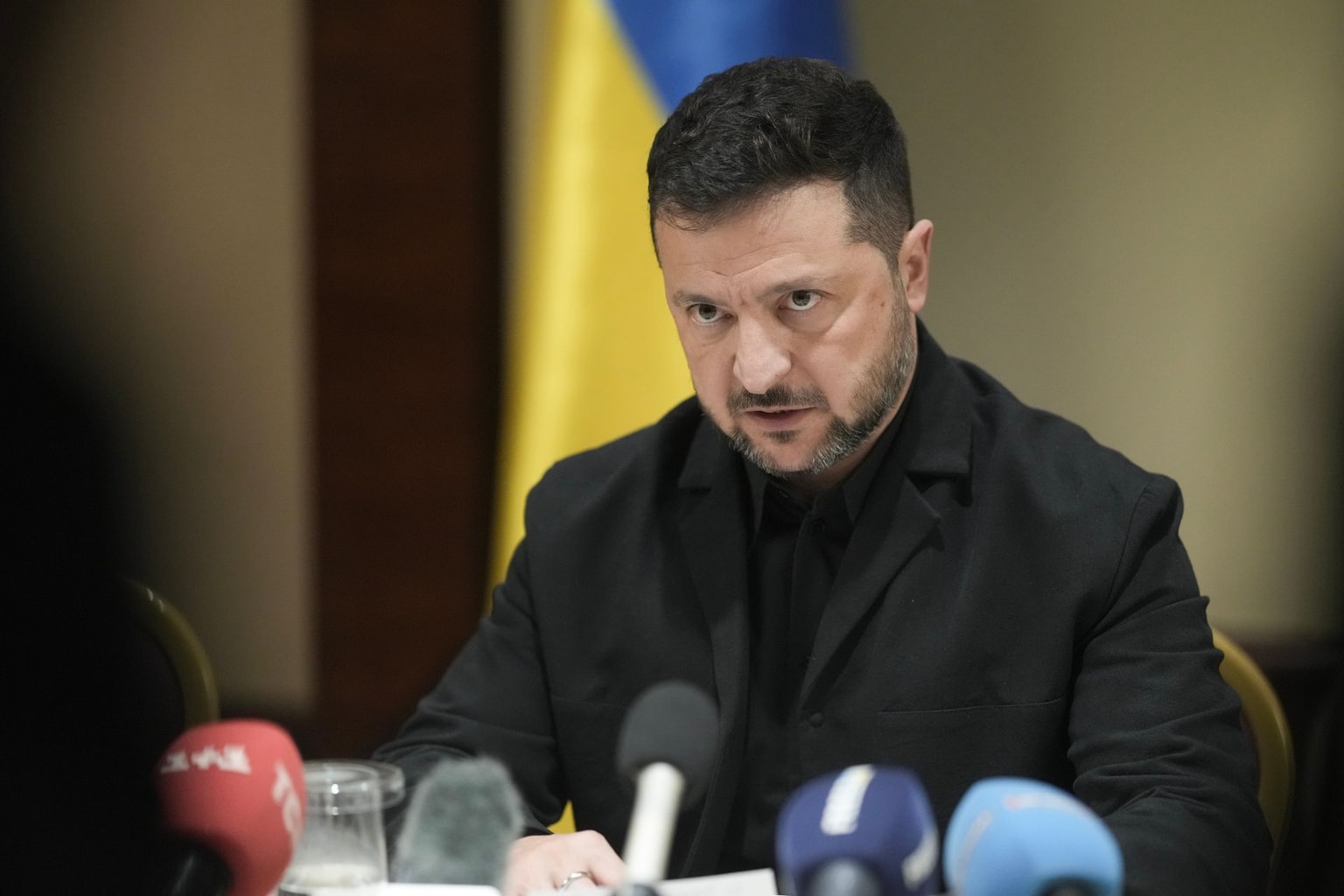
Zelensky addressed the decision in a voice message to reporters late on Oct. 9, warning that allowing Russia to export diesel would just give Moscow additional revenue to sustain its war.
"This only fuels Putin and enables him to wage more war," Zelensky said. "And at the moment when we are talking about peace, the U.S. is allowing Russia to export diesel."
He also questioned the purpose of sending a Ukrainian delegation to negotiations under those circumstances.
"I believe our team is simply being used as a smokescreen. This is certainly not honest, and it is certainly not how partners should act," Zelensky said, calling the decision "a weak decision by our strong partners."
Ukraine was being asked to make concessions on the battlefield even as Moscow continued to attack its cities and energy infrastructure.
For one senior Ukrainian official, the explanation for Washington's move was straightforward: Trump was trying to deflect blame for the consequences of his own foreign policy.
"Clearly, Trump doesn't want to admit that it was his war against Iran that caused so many problems for Americans," the official said.