Ex-Ukrainian ambassador to Poland: President Nawrocki disregards decades of reconciliation between Warsaw and Kyiv
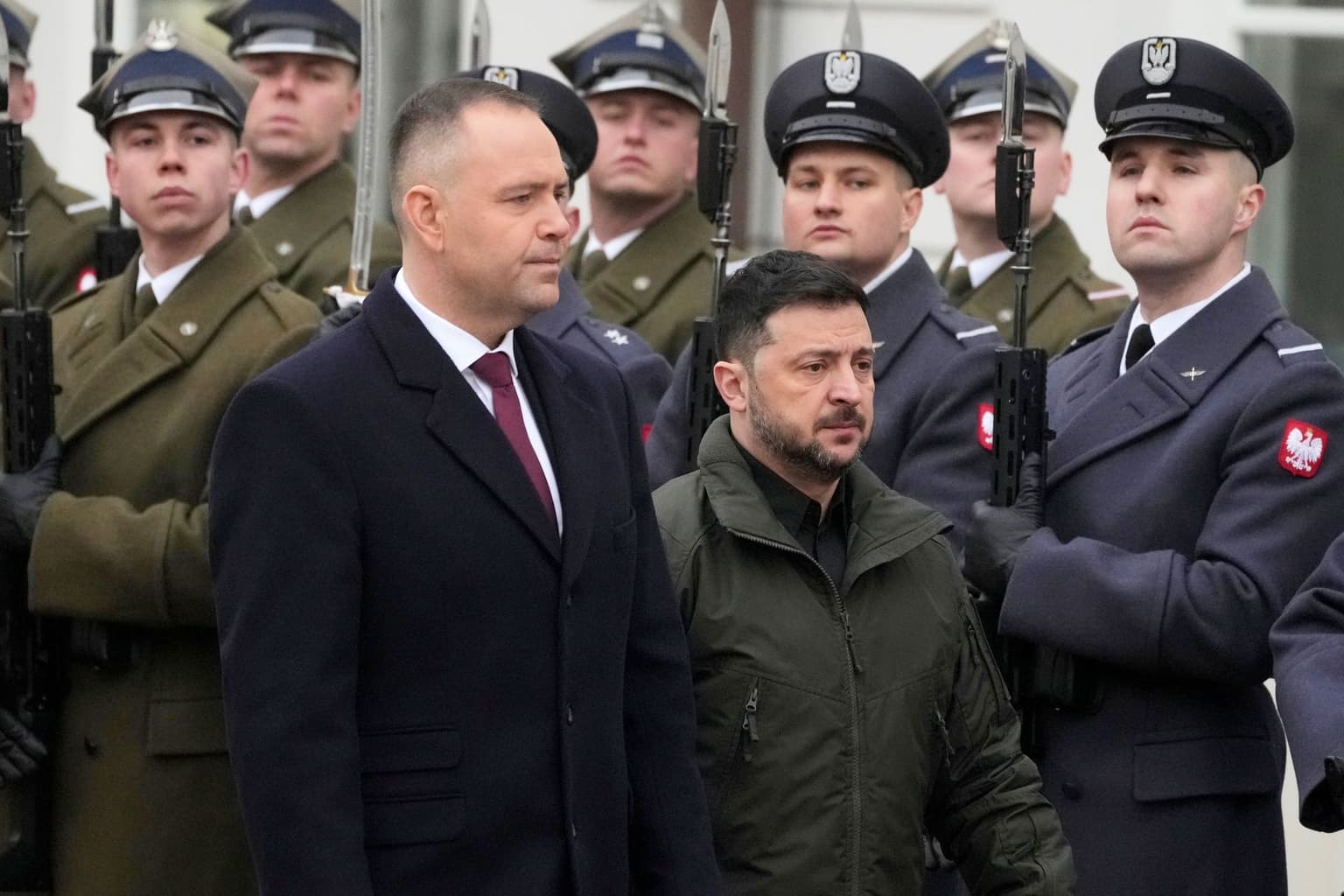
Polish President Karol Nawrocki (L) and President Volodymyr Zelensky (R) in Warsaw, Poland, Dec. 19, 2025. (AP Photo/Czarek Sokolowski, File)
 on Google
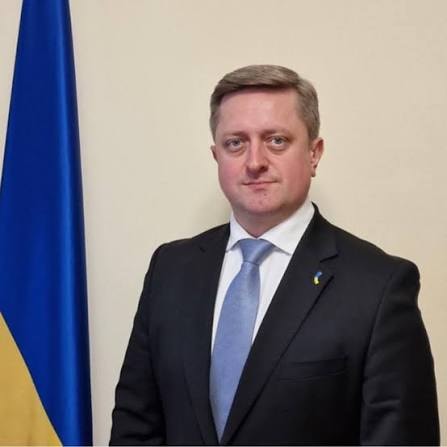
Vasyl Zvarych
Former Ambassador of Ukraine to Poland
In July 2024, serving as Ukraine's Ambassador to Poland, I was honored to be decorated by President Andrzej Duda with the Commander's Cross with the Star of the Order of Merit.
For the trust, the fellowship, and the years of honest partnership — I remain profoundly grateful to my Polish friends. And it is in that same spirit of honesty that I ask them to understand what conscience now requires of me.
My devotion to the interests of the Ukrainian state, my duty to honor the dignity of Ukraine's President Volodymyr Zelensky, the Armed Forces, my fellow diplomats, and the free and unbroken Ukrainian people, as well as my deep sense of justice, compel me to return the state decoration of the Republic of Poland.
It pains me to say this, but evidently some representatives of the Polish political elite never truly understood — and perhaps never wished to understand — the real price of Ukraine's freedom: who Ukrainians are, against what enemy and for what values the Ukrainian people are fighting and shedding their blood today.
"Political egotism blinds."
Nor did they understand that it would be hard to find a people more devoted to friendship and partnership with Poland than Ukrainians — people who will always be grateful to Poles for their open hearts and open homes in the face of Russian aggression.
Tragically, political egotism blinds. It prevents people from seeing the achievements of past decades, the realities of the present, and the possibility of building a shared future.
This is how I interpret the decision of Polish President Karol Nawrocki to strip President of Ukraine Volodymyr Zelensky of Poland's highest state honor — on the grounds that one unit of the Armed Forces of Ukraine, at the request of Ukrainian soldiers themselves, was given an honorary designation in tribute to the Heroes of the Ukrainian Insurgent Army (UPA).
I consider such a reaction, at the very least, disproportionate and irresponsible.
Karol Nawrocki has effectively cast doubt on decades of painstaking work aimed at Ukrainian-Polish reconciliation and mutual understanding. This is particularly painful because that process of reconciliation was not initiated by politicians, but by the very people who had lived through the most tragic chapters of our shared history firsthand.
Perhaps this has been forgotten. Allow me to recall it.
In June 1994, at a seminar organized by the Polish center "Karta" in Podkowa Lesna near Warsaw, the last Supreme Commander of the UPA, Vasyl Kuk, shook hands with Tytus Kolakowski, a veteran representative of the 27th Volhynian Division of the Home Army (Armia Krajowa). It was a moment that would come to define what Ukrainian-Polish reconciliation could look like.
For many, it was a shock.
People who half a century earlier had stood on opposite sides of a bloody Ukrainian-Polish confrontation found within themselves the strength to meet, to speak, and to extend a hand.
That single gesture opened the way for years of dialogue among historians, veterans, and civic figures from both countries — a dialogue that produced the landmark series of scholarly works — Ukraine–Poland: Difficult Questions.
Those people who had lived through the war itself understood a simple truth: history must be the subject of honest inquiry and shared memory, not political exploitation. They knew that reconciliation, first and foremost, means the capacity to honor one's own fallen without denying the pain of other people.
A significant portion of the Polish political elite prefers to forget that the Ukrainian-Polish confrontation has far deeper historical roots and did not begin with the UPA in Volhynia in 1943.
Long before that, the Ukrainian population endured the discriminatory policies of the Second Polish Republic, including the Pacification of 1930, during which Polish authorities carried out mass repressive actions in Ukrainian villages of Galicia and Volhynia.
The Bereza Kartuska internment camp, a facility for political prisoners through which dozens of Ukrainian civic and political figures passed, became a symbol of that repression.
Raising these events is not an attempt to justify crimes against Polish civilians. No crime can be justified. But historical truth demands acknowledgment of the context and the fact that such tragedies do not spring from the ideological writings of Dontsov or Dmowski, whom villagers had never heard of or read.
It was the product of a long accumulation of mutual grievances, failures of state policy, and the radicalization of both communities in territories of shared habitation — a process dramatically accelerated by the total chaos of war and the collision of totalitarian regimes.
Ukrainians do not deny the crimes committed by members of the Ukrainian underground against Polish civilians. We pay due respect to the innocent Polish victims, and even amid the current Russian war, we have opened the path to exhumations and dignified burials.
But equally, the crimes committed against Ukrainians by Polish military and underground formations — in Sahryn, Pawlokomia, Piskorowice, and many other places — cannot be silenced.
"Ukraine has never questioned Poland's right to honor its national heroes, its military formations, or the figures of its independence movement"
Moreover, unlike the UPA, which operated as an independent underground movement and was not part of any internationally recognized state structure, the Home Army was officially part of the Polish armed forces and subordinated to the internationally recognized Polish government-in-exile in London.
For precisely this reason, Polish society and the Polish state must also be prepared for an honest conversation about crimes committed against Ukrainian civilians. Genuine reconciliation is impossible without acknowledging the suffering of both peoples.
The postwar period brought Ukrainians yet another tragedy — Operation Vistula. Tens of thousands of Ukrainians were forcibly expelled from their homes by a decision of Poland's communist authorities.

Moreover, a growing body of research confirms that Soviet intelligence services systematically provoked Ukrainian-Polish confrontations, disguising their operatives as UPA and Polish underground units in order to weaken both national movements and destroy any prospect of understanding between our peoples.
Despite all of this, Ukraine has never questioned Poland's right to honor its national heroes, its military formations, or the figures of its independence movement — even when some of them are connected to pages of history that, for Ukrainians, are associated with the deaths of thousands of innocent people.
We have not demanded the removal of monuments, the renaming of streets, or a revision of Poland's state attitude toward Polish military formations, historical figures, or events.
We have proceeded, and continue to proceed, from the principle that every sovereign state has the right to independently determine its own historical memory policy and to honor those it regards as fighters for its freedom and statehood.
That is precisely why we expect the same attitude toward Ukraine's sovereign right to honor those who fought for Ukrainian statehood and stood against Soviet-communist and Nazi occupation.
And we firmly reject any attempt to impose upon Ukrainians a complex of exclusive collective guilt. The tragedy of Volhynia and Eastern Galicia is the shared pain of Ukrainians and Poles alike. We do not divide victims into "ours" and "theirs," and we do not believe that remembering some must mean erasing others.

To condemn the entire UPA movement for the crimes in Volhynia is equivalent to condemning the entire Home Army, the entire Polish underground — and ultimately the Polish state itself, in whose name those units operated — for crimes against the Ukrainian civilian population in the Chelm region, Podlachia, Lemkivshchyna, and the San region.
History demands honesty, not political labels and collective guilt.
No one outside Ukraine has the right to determine whom the Ukrainian people should consider their heroes — and whom they should not.
Today, when Ukrainian soldiers give their lives every day in the struggle against Russian aggression, any attempt to question Ukraine's right to honor those who fought for Ukrainian statehood in different historical eras is a step toward a new division.
That is why my decision to return the state decoration of the Republic of Poland is not a gesture of disrespect toward the Polish people, toward my Polish friends, or toward those in Poland who have worked for years in the cause of Ukrainian-Polish understanding.
On the contrary, it's a protest against the destruction of the legacy of Ukrainian-Polish reconciliation, built over decades by people of goodwill on both sides of the border.
I continue to believe that Ukrainians and Poles will remain allies. But an alliance can only be strong when it is grounded in mutual respect, equality, and recognition of every people's right to its own memory, its own dignity, and its own heroes.
If veterans of the UPA and the Home Army, after everything they had endured, found within themselves the courage to extend a hand to one another, then today's politicians must find within themselves the wisdom not to destroy what was built with such difficulty.
Editor's note: The opinions expressed in the op-ed section are those of the authors and do not purport to reflect the views of the Kyiv Independent.