KI short logo
Burning tradition — How Mykhail Semenko ignited a new path forward for Ukrainian poetry

Burning tradition — How Mykhail Semenko ignited a new path forward for Ukrainian poetry

Copied!

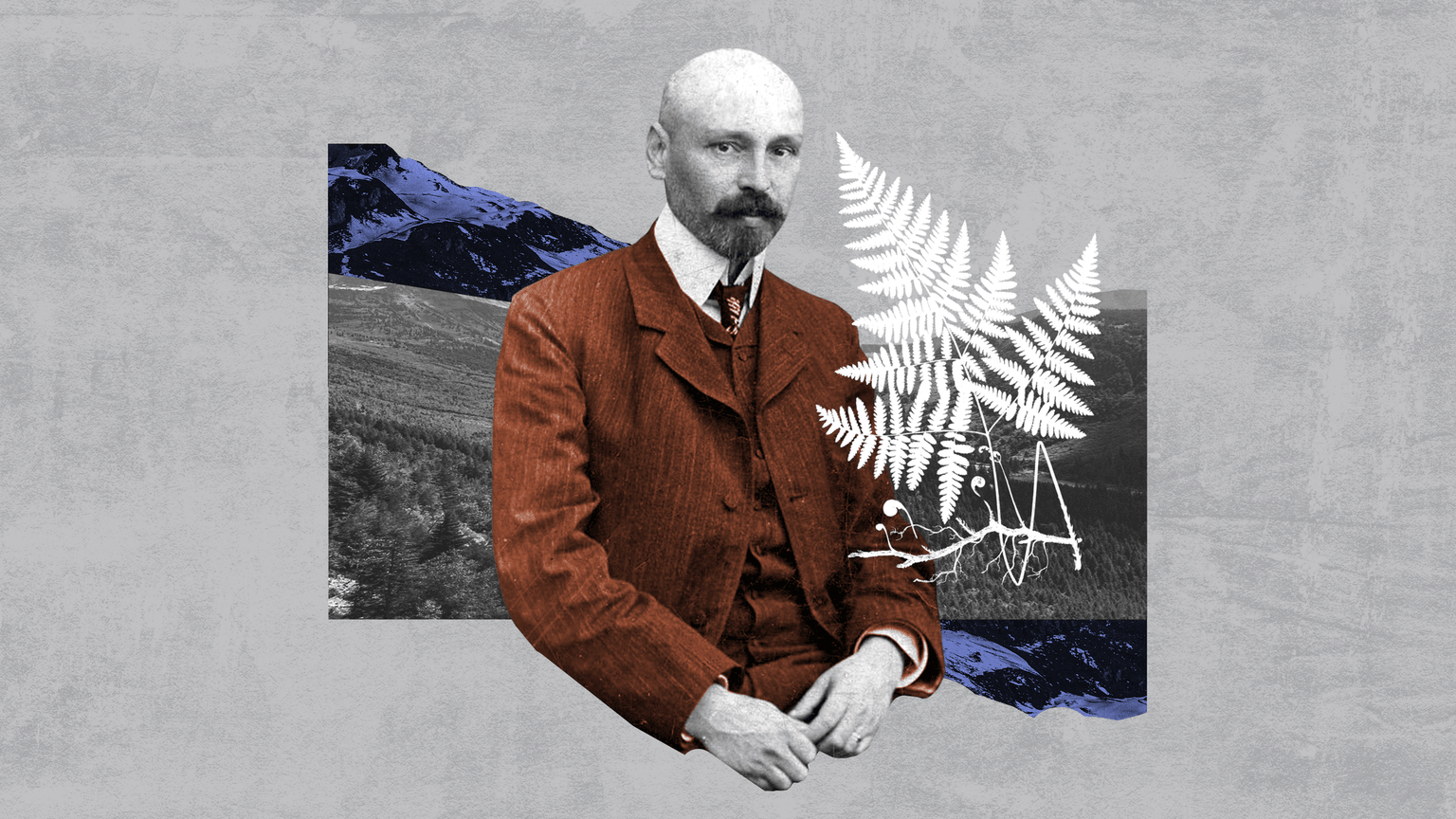
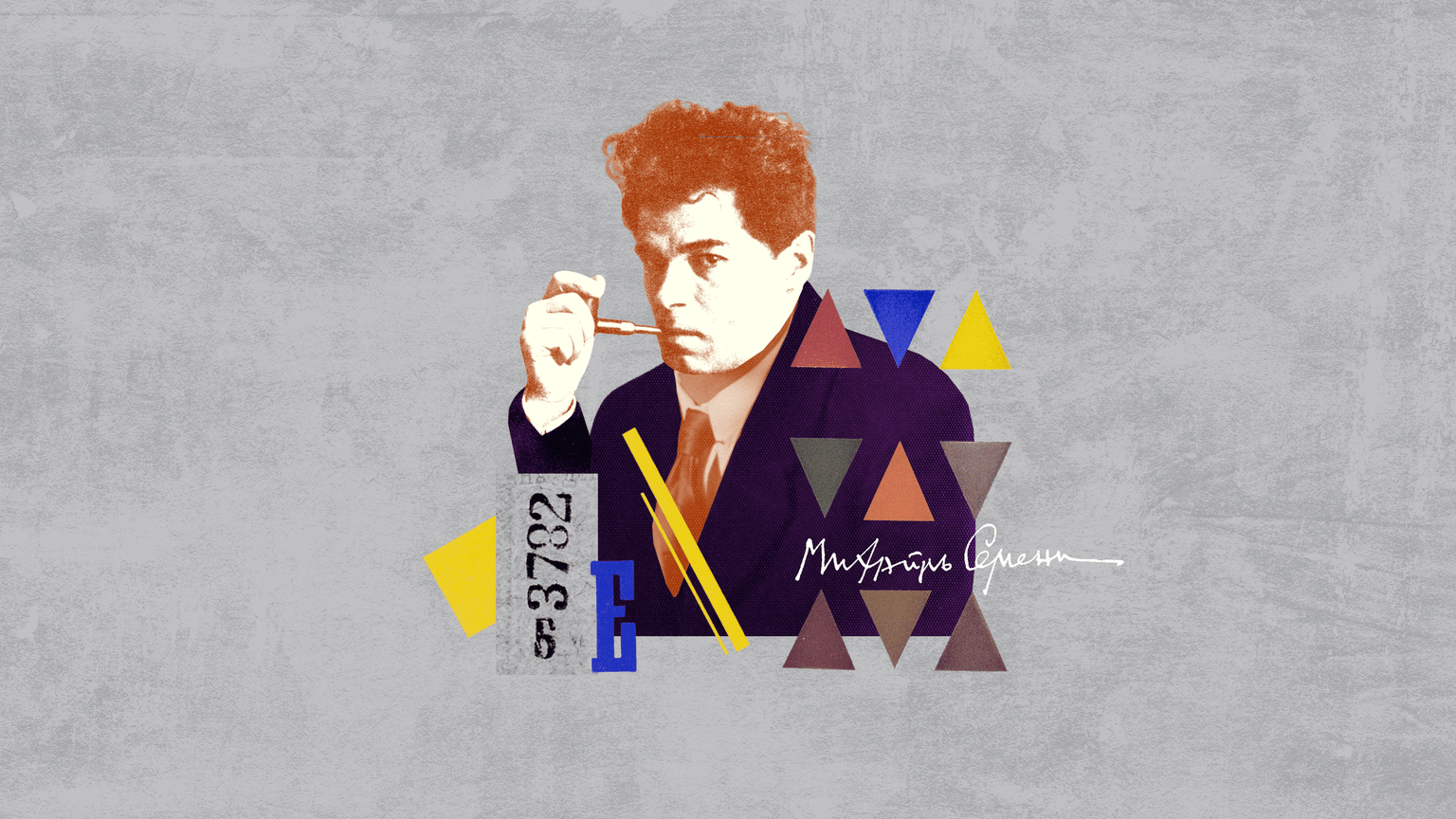
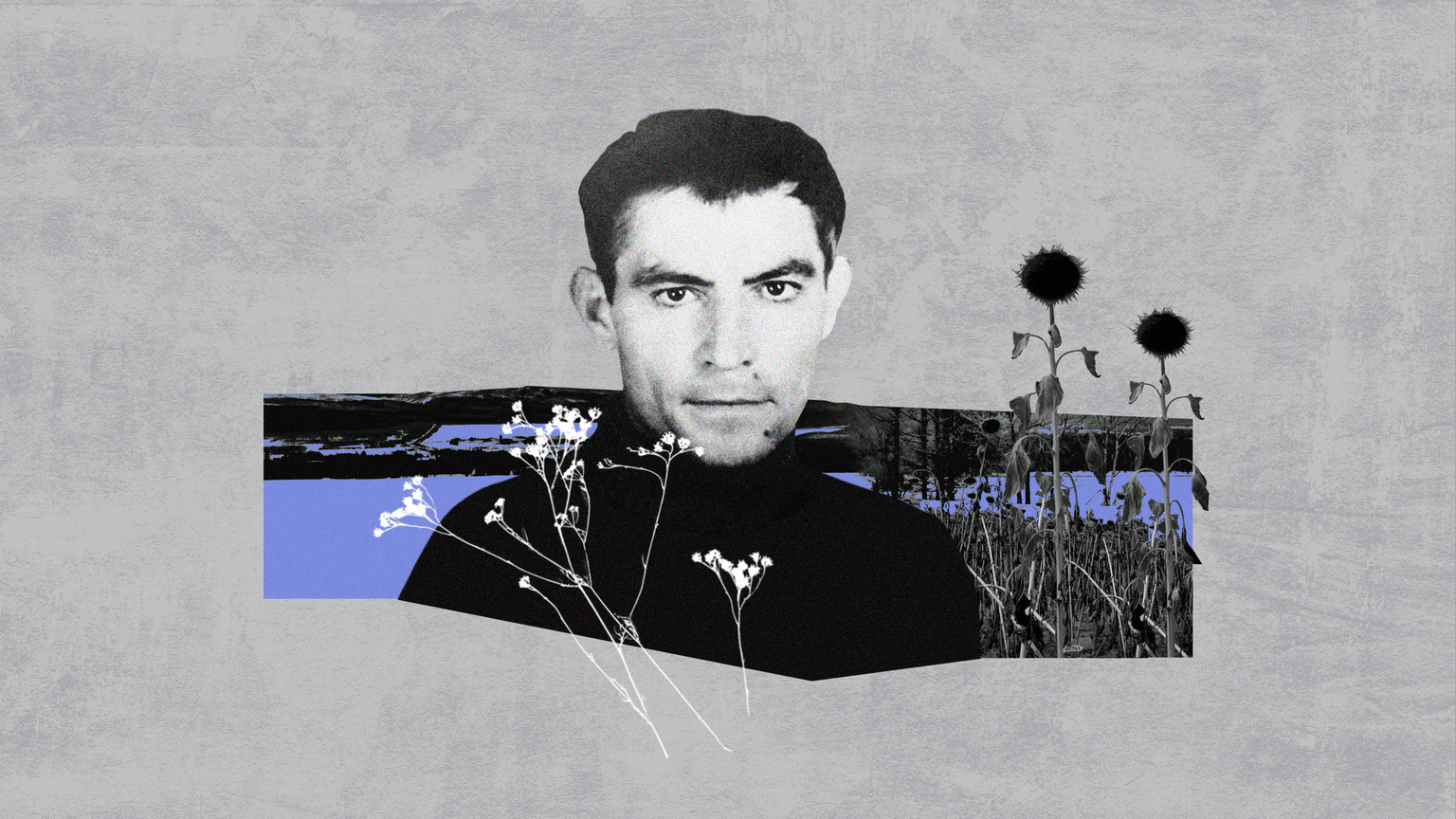
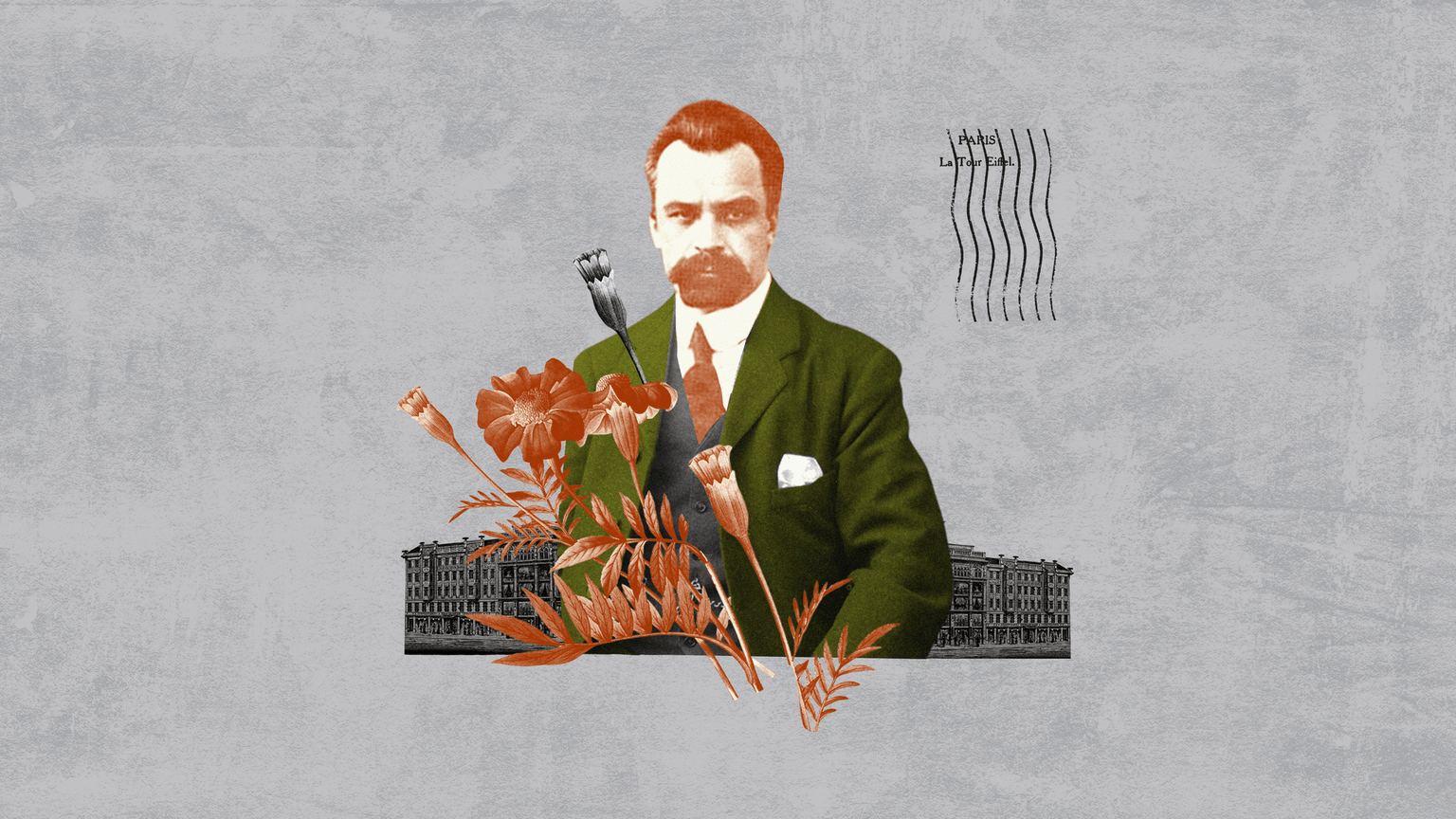
Mikhail Semenko, Ukrainian poet and a prominent representative of the Ukrainian Futurist movement. (Anastasiia Starko / The Kyiv Independent)

Editor's Note: This story is part of the "Hidden Canon"  – a special series celebrating Ukrainian classic literature and aiming to bring it to a wider international audience. The series is supported by the Ukrainian Institute.

Literary giants are typically regarded with an almost sacred reverence. For the 20th Ukrainian poet Mykhail Semenko, however, reverence was overrated. He was prepared to set tradition ablaze — literally — to clear the way for a new artistic future.

“I want to tell you that where there is a cult, there is no art,” Semenko wrote in his 1914 Panfuturist manifesto.

“You cling to your ‘Kobzar,’ which reeks of tar and lard, and think your reverence will protect it. Your reverence has killed it. And there is no resurrection for it. Time turns the titan into a worthless lilliputian, and Shevchenko's place is now in the proceedings of scholarly societies.”

The manifesto, which references 19th century national poet Taras Shevchenko, ends with Semenko declaring that he will burn his predecessor’s pivotal work “Kobzar.” He then proceeded to do just that.

Born in 1892 in the village of Kybyntsi in Poltava Oblast — a village that, despite its small size, is famous for its cultural legacy and ties to other luminaries like Mykola Hohol — Semenko would go on to become a central figure in Ukraine’s Panfuturist movement. Semenko’s work is defined by audacious stylistic innovation, a keen exploration of the tension between rapid industrialization and human intimacy, and an unyielding pursuit of a modern Ukrainian literary identity.

“Above all, one can learn courage from Mykhail Semenko — courage as an inner principle of working with form,” Ukrainian poet Lyuba Yakimchuk, who has worked actively to revive Semenko’s legacy, told the Kyiv Independent.

“For him, poetry was not a fixed structure, but rather a laboratory, a process of continuous searching. A willingness to take risks, to break the inertia of writing, and to seek a new poetic logic — this is Semenko in full. Today, when geopolitical reality changes faster than language can register it, this experience becomes profoundly relevant once again.”

Semenko’s famous anti-Kobzar manifesto is not an assault on Shevchenko’s literary genius, but rather a deliberate provocation aimed at readers whose devotion to canonical works becomes a barrier to accepting new ideas. His challenge was to those who revere the past so deeply that they leave no room for innovation, insisting that true cultural progress can only happen when even the greatest literary achievements are questioned — and, if necessary, left behind.

The time in which Semenko lived demanded innovation. The Soviet Union’s sweeping push for industrialization transformed cities like Kharkiv, Kyiv, Dnipro, and Odesa, bringing in hundreds of thousands of people to join the ranks of a new urban working class. The upsurge in city populations brought overcrowding and strained resources, while the relentless pressure to conform to Soviet ideology — and the unspoken rule to keep up or be left behind — threatened to erase long-standing local traditions and identities.

His poem “City,” one of his most famous and challenging verses, captures this frantic energy:

Sto ste
beep bop
boo
cabdrivers — people
trams — people
carglarewhites
runrush rushlivers
rushrunners
berceus кarou
sel
eli
lily
giant tracks
smoke-steel stacks
fume
fuming
achearette
smoke blue
black smo
ke
expel
gas
fumes live
fumes beg
love hawk
lifegive
liferush
lifegaso
line
car
tram

(Co-translated with Olha Borovyk)

The poem bombards the reader with a cascade of sights, smells, and sensations, immersing us in the sensory overload of a city hurtling toward modernity. Its jagged, staccato lines — fractured by repetition and inventive wordplay — perfectly mirror the relentless rhythm and chaos of urban existence. Semenko celebrates the dynamism of technological progress and collapses the boundary between industry and man, capturing the existential tension that defines life in the modern metropolis.

“Semenko's language is fundamentally unstable and mobile. Where his contemporaries still held onto lyrical tradition or Symbolism, he consistently dismantles the very fabric of poetic language,” Yakimchuk explained.

“His texts often appear as process rather than finished result: they can deliberately appear as ‘shaky’ and fractured, as if chance intervenes within them. Every generic hierarchy is destroyed in them.”

According to translator and literary scholar Alessandro Achilli, Semenko’s approach to Futurism was in many ways similar to that of other European authors of his era, especially in his taste for irony and how he deconsctructed language.

"But in comparison with Russian or Italian Futurism (Semenko's work) is free of any imperial ambition," Achilli said.

Yet Semenko was not just a bold disruptor of literary convention. In much of his poetry, he also reveals a deeply introspective and romantic side through themes of longing, vulnerability, and emotional complexity. In his poem “Pierrot Loves” Semenko writes:

I'm silent
I listen to the quiet backwaters of my soul
About what silences me — I won't confess, I won't confess
I'm sad, I'm sad, I'm sad
For something grips my soul like a maddening nightmare
I'm joyful
For in sadness there's an undying petal
I don't want to be a leaf withered by autumn
I don't want to sigh about winter while it's fall
I want to be bold
And I wait for spring.

I want to be in the park, reading Verlaine to my beloved
I want to whirl with her arm-in-arm in the crowd
I yearn for Chopin's nocturnes
To understand her soul

I want to close my eyes tighter, tighter
To feel my own soul more taut, more taut
I love, I love, I love
I'm silent
And I listen to the quiet backwaters of my soul
What I hear — I'll pour into your soul
I'll confess.

The poem unfolds as an intimate inner monologue, layering silence, longing, and bursts of hope. Semenko’s repetition — “I'm sad, I'm sad, I'm sad” and “I love, I love, I love” — not only emphasizes the depth of feeling but also mimics the obsessive, cyclical nature of emotion itself. Natural imagery — references to autumn leaves, spring, and the “quiet backwaters” of the soul — anchors the poem in the cycles of renewal and decay, reflecting both existential anxiety and a stubborn faith in transformation.

Semenko’s invocation of Verlaine and Chopin situates his longing within a broader European cultural context, hinting at a desire for connection, beauty, and understanding through art. Through restless imagery and emotional candor, Semenko crafts a lyrical space where sadness and hope are not opposites, but entwined forces propelling a person toward transformation.

For all the turbulence of the times, Ukrainian culture went through a renaissance during this period. In the interwar years, Kharkiv — rather than Kyiv — was the country’s vibrant cultural capital, drawing countless artists, writers, and intellectuals. The city’s energy coalesced most famously in the Slovo (“Word”) building, an apartment house built in the late 1920s to serve as a crucible for literary innovation and collaboration. Semenko, naturally, was at the heart of this community.

Article image
Z. Zubkova (L), Mykhail Semenko (C), and Ukrainian futurist poet Ivan Malovichko (R) in Mykhail Semenko's office at the Slovo building in Kharkiv, Ukraine, on June 21, 1935. (CSAMLA Ukraine)

Yet the Slovo building would soon become a symbol of tragedy for Ukraine. As the Ukrainian cultural renaissance that kicked off in the 1930s continued to gain momentum, Soviet authorities went from encouraging it to growing wary, fearing it might stoke nationalist sentiment and challenge Moscow’s grip on power. By the 1930s, Soviet policy shifted sharply — not just in Ukraine, but across the entire Union — abandoning support for local cultures in favor of imposing Russian language and identity as the binding force of the state, a clear return to the Russification policies of the old Russian Empire.

Semenko initially supported the Soviet project, but because his work was inherently innovative, it was only a matter of time before he was seen as a “threat.” The creative doctrine of Socialist Realism was meant to be straightforward, accessible to the masses, and overwhelmingly positive. Semenko’s Futurism, by contrast, reveled in ambiguity and experimentation, challenged conventional form, and embraced the anxieties and contradictions of modern life — qualities that soon placed him at odds with a regime increasingly intolerant of artistic independence.

Two warrants were issued for Semenko’s arrest — one in Kyiv, where he frequently traveled for literary events, and another in Kharkiv, his home base. In April 1937, he was detained on fabricated charges of belonging to a Ukrainian nationalist organization that they claimed was plotting to assassinate Communist party leadership and overthrow the government.

While in custody, Semenko was subjected to such severe torture that he “confessed” to the accusations and, under extreme duress, implicated a fellow poet. On Oct. 23, 1937, he was sentenced to death, executed the following day, and buried in a mass grave in the Bykivnia Forest outside Kyiv — the very same burial that, decades later, would be discovered by Ukrainian painter Alla Horska and her peers before many of them also fell victim to Soviet repression.

Article image
Mikhail Semenko's photo seen at the National Historic and Memorial Reserve "Bykivnia Graves" on the Day of Remembrance for Victims of Soviet Political Repression in Kyiv, Ukraine, on May 18, 2025. (Oleksii Samsonov / Global Images Ukraine / Getty Images)

Semenko was one of more than 200 Ukrainian writers, artists, and intellectuals executed during the height of Stalin’s purges — a tragedy so vast it became known as the Executed Renaissance. In all, an estimated 30,000 members of Ukraine’s cultural and political elite were arrested, imprisoned, and tortured, with countless lives erased in a campaign to silence an entire generation.

Despite efforts to erase the cultural achievements of this pivotal era, the works of Semenko and his contemporaries continue to be read, rediscovered, and revived. The creative breakthroughs they accomplished in lives that were brutally cut short still resonate today, offering inspiration and guidance for those seeking new paths forward in turbulent times.

“In a situation where reality itself loses its coherence, his methods provide tools for making sense of it,” Yakimchuk said.

“He reminds us that poetry can respond to crisis not only through testimony, but also through a radical rethinking of form — a restructuring that begins with the word itself.”


A handful of Semenko's poems are included in the 2019 anthology "New York Elegies: Ukrainian Poems on the City," edited by Ostap Kin, but none of his collections have yet been fully-translated into English.
Share
Avatar
Kate Tsurkan

Culture Reporter

Kate Tsurkan is a reporter at the Kyiv Independent who writes mostly about culture-related topics. Her newsletter Explaining Ukraine with Kate Tsurkan, which focuses specifically on Ukrainian culture, is published weekly by the Kyiv Independent and is partially supported by a generous grant from the Nadia Sophie Seiler Fund. Kate co-translated Oleh Sentsov’s “Diary of a Hunger Striker,” Myroslav Laiuk’s “Bakhmut,” Andriy Lyubka’s “War from the Rear,” and Khrystia Vengryniuk’s “Long Eyes,” among other books. Some of her previous writing and translations have appeared in the New Yorker, Vanity Fair, Harpers, the Washington Post, the New York Times, the Los Angeles Review of Books, and elsewhere. She is the co-founder of Apofenie Magazine and, in addition to Ukrainian and Russian, also knows French.

Read more

Most Popular

1.

Ukraine's siege of Crimea has been a long time coming. Crimea is under an effective siege as Ukraine has been systematically isolating the occupied peninsula with a multipronged campaign of drone strikes. "Hell is beginning," Ukrainian Defense Minister Mykhailo Fedorov said in a June 17 interview. "Logistics are being cut off. Crimea is being isolated." Ukraine plans to fully isolate the peninsula, cutting it off from Russian supply while destroying critical infrastructure — ultimately allowi

Burning tradition — How Mykhail Semenko ignited a new path forward for Ukrainian poetry

8 min read

Mikhail Semenko, Ukrainian poet and a prominent representative of the Ukrainian Futurist movement. (Anastasiia Starko / The Kyiv Independent)

Editor's Note: This story is part of the "Hidden Canon"  – a special series celebrating Ukrainian classic literature and aiming to bring it to a wider international audience. The series is supported by the Ukrainian Institute.

Literary giants are typically regarded with an almost sacred reverence. For the 20th Ukrainian poet Mykhail Semenko, however, reverence was overrated. He was prepared to set tradition ablaze — literally — to clear the way for a new artistic future.

“I want to tell you that where there is a cult, there is no art,” Semenko wrote in his 1914 Panfuturist manifesto.

“You cling to your ‘Kobzar,’ which reeks of tar and lard, and think your reverence will protect it. Your reverence has killed it. And there is no resurrection for it. Time turns the titan into a worthless lilliputian, and Shevchenko's place is now in the proceedings of scholarly societies.”

The manifesto, which references 19th century national poet Taras Shevchenko, ends with Semenko declaring that he will burn his predecessor’s pivotal work “Kobzar.” He then proceeded to do just that.

Born in 1892 in the village of Kybyntsi in Poltava Oblast — a village that, despite its small size, is famous for its cultural legacy and ties to other luminaries like Mykola Hohol — Semenko would go on to become a central figure in Ukraine’s Panfuturist movement. Semenko’s work is defined by audacious stylistic innovation, a keen exploration of the tension between rapid industrialization and human intimacy, and an unyielding pursuit of a modern Ukrainian literary identity.

“Above all, one can learn courage from Mykhail Semenko — courage as an inner principle of working with form,” Ukrainian poet Lyuba Yakimchuk, who has worked actively to revive Semenko’s legacy, told the Kyiv Independent.

“For him, poetry was not a fixed structure, but rather a laboratory, a process of continuous searching. A willingness to take risks, to break the inertia of writing, and to seek a new poetic logic — this is Semenko in full. Today, when geopolitical reality changes faster than language can register it, this experience becomes profoundly relevant once again.”

Semenko’s famous anti-Kobzar manifesto is not an assault on Shevchenko’s literary genius, but rather a deliberate provocation aimed at readers whose devotion to canonical works becomes a barrier to accepting new ideas. His challenge was to those who revere the past so deeply that they leave no room for innovation, insisting that true cultural progress can only happen when even the greatest literary achievements are questioned — and, if necessary, left behind.

The time in which Semenko lived demanded innovation. The Soviet Union’s sweeping push for industrialization transformed cities like Kharkiv, Kyiv, Dnipro, and Odesa, bringing in hundreds of thousands of people to join the ranks of a new urban working class. The upsurge in city populations brought overcrowding and strained resources, while the relentless pressure to conform to Soviet ideology — and the unspoken rule to keep up or be left behind — threatened to erase long-standing local traditions and identities.

His poem “City,” one of his most famous and challenging verses, captures this frantic energy:

Sto ste
beep bop
boo
cabdrivers — people
trams — people
carglarewhites
runrush rushlivers
rushrunners
berceus кarou
sel
eli
lily
giant tracks
smoke-steel stacks
fume
fuming
achearette
smoke blue
black smo
ke
expel
gas
fumes live
fumes beg
love hawk
lifegive
liferush
lifegaso
line
car
tram

(Co-translated with Olha Borovyk)

The poem bombards the reader with a cascade of sights, smells, and sensations, immersing us in the sensory overload of a city hurtling toward modernity. Its jagged, staccato lines — fractured by repetition and inventive wordplay — perfectly mirror the relentless rhythm and chaos of urban existence. Semenko celebrates the dynamism of technological progress and collapses the boundary between industry and man, capturing the existential tension that defines life in the modern metropolis.

“Semenko's language is fundamentally unstable and mobile. Where his contemporaries still held onto lyrical tradition or Symbolism, he consistently dismantles the very fabric of poetic language,” Yakimchuk explained.

“His texts often appear as process rather than finished result: they can deliberately appear as ‘shaky’ and fractured, as if chance intervenes within them. Every generic hierarchy is destroyed in them.”

According to translator and literary scholar Alessandro Achilli, Semenko’s approach to Futurism was in many ways similar to that of other European authors of his era, especially in his taste for irony and how he deconsctructed language.

"But in comparison with Russian or Italian Futurism (Semenko's work) is free of any imperial ambition," Achilli said.

Yet Semenko was not just a bold disruptor of literary convention. In much of his poetry, he also reveals a deeply introspective and romantic side through themes of longing, vulnerability, and emotional complexity. In his poem “Pierrot Loves” Semenko writes:

I'm silent
I listen to the quiet backwaters of my soul
About what silences me — I won't confess, I won't confess
I'm sad, I'm sad, I'm sad
For something grips my soul like a maddening nightmare
I'm joyful
For in sadness there's an undying petal
I don't want to be a leaf withered by autumn
I don't want to sigh about winter while it's fall
I want to be bold
And I wait for spring.

I want to be in the park, reading Verlaine to my beloved
I want to whirl with her arm-in-arm in the crowd
I yearn for Chopin's nocturnes
To understand her soul

I want to close my eyes tighter, tighter
To feel my own soul more taut, more taut
I love, I love, I love
I'm silent
And I listen to the quiet backwaters of my soul
What I hear — I'll pour into your soul
I'll confess.

The poem unfolds as an intimate inner monologue, layering silence, longing, and bursts of hope. Semenko’s repetition — “I'm sad, I'm sad, I'm sad” and “I love, I love, I love” — not only emphasizes the depth of feeling but also mimics the obsessive, cyclical nature of emotion itself. Natural imagery — references to autumn leaves, spring, and the “quiet backwaters” of the soul — anchors the poem in the cycles of renewal and decay, reflecting both existential anxiety and a stubborn faith in transformation.

Semenko’s invocation of Verlaine and Chopin situates his longing within a broader European cultural context, hinting at a desire for connection, beauty, and understanding through art. Through restless imagery and emotional candor, Semenko crafts a lyrical space where sadness and hope are not opposites, but entwined forces propelling a person toward transformation.

For all the turbulence of the times, Ukrainian culture went through a renaissance during this period. In the interwar years, Kharkiv — rather than Kyiv — was the country’s vibrant cultural capital, drawing countless artists, writers, and intellectuals. The city’s energy coalesced most famously in the Slovo (“Word”) building, an apartment house built in the late 1920s to serve as a crucible for literary innovation and collaboration. Semenko, naturally, was at the heart of this community.

Article image
Z. Zubkova (L), Mykhail Semenko (C), and Ukrainian futurist poet Ivan Malovichko (R) in Mykhail Semenko's office at the Slovo building in Kharkiv, Ukraine, on June 21, 1935. (CSAMLA Ukraine)

Yet the Slovo building would soon become a symbol of tragedy for Ukraine. As the Ukrainian cultural renaissance that kicked off in the 1930s continued to gain momentum, Soviet authorities went from encouraging it to growing wary, fearing it might stoke nationalist sentiment and challenge Moscow’s grip on power. By the 1930s, Soviet policy shifted sharply — not just in Ukraine, but across the entire Union — abandoning support for local cultures in favor of imposing Russian language and identity as the binding force of the state, a clear return to the Russification policies of the old Russian Empire.

Semenko initially supported the Soviet project, but because his work was inherently innovative, it was only a matter of time before he was seen as a “threat.” The creative doctrine of Socialist Realism was meant to be straightforward, accessible to the masses, and overwhelmingly positive. Semenko’s Futurism, by contrast, reveled in ambiguity and experimentation, challenged conventional form, and embraced the anxieties and contradictions of modern life — qualities that soon placed him at odds with a regime increasingly intolerant of artistic independence.

Two warrants were issued for Semenko’s arrest — one in Kyiv, where he frequently traveled for literary events, and another in Kharkiv, his home base. In April 1937, he was detained on fabricated charges of belonging to a Ukrainian nationalist organization that they claimed was plotting to assassinate Communist party leadership and overthrow the government.

While in custody, Semenko was subjected to such severe torture that he “confessed” to the accusations and, under extreme duress, implicated a fellow poet. On Oct. 23, 1937, he was sentenced to death, executed the following day, and buried in a mass grave in the Bykivnia Forest outside Kyiv — the very same burial that, decades later, would be discovered by Ukrainian painter Alla Horska and her peers before many of them also fell victim to Soviet repression.

Article image
Mikhail Semenko's photo seen at the National Historic and Memorial Reserve "Bykivnia Graves" on the Day of Remembrance for Victims of Soviet Political Repression in Kyiv, Ukraine, on May 18, 2025. (Oleksii Samsonov / Global Images Ukraine / Getty Images)

Semenko was one of more than 200 Ukrainian writers, artists, and intellectuals executed during the height of Stalin’s purges — a tragedy so vast it became known as the Executed Renaissance. In all, an estimated 30,000 members of Ukraine’s cultural and political elite were arrested, imprisoned, and tortured, with countless lives erased in a campaign to silence an entire generation.

Despite efforts to erase the cultural achievements of this pivotal era, the works of Semenko and his contemporaries continue to be read, rediscovered, and revived. The creative breakthroughs they accomplished in lives that were brutally cut short still resonate today, offering inspiration and guidance for those seeking new paths forward in turbulent times.

“In a situation where reality itself loses its coherence, his methods provide tools for making sense of it,” Yakimchuk said.

“He reminds us that poetry can respond to crisis not only through testimony, but also through a radical rethinking of form — a restructuring that begins with the word itself.”


A handful of Semenko's poems are included in the 2019 anthology "New York Elegies: Ukrainian Poems on the City," edited by Ostap Kin, but none of his collections have yet been fully-translated into English.
Avatar
Kate Tsurkan

Culture Reporter

Kate Tsurkan is a reporter at the Kyiv Independent who writes mostly about culture-related topics. Her newsletter Explaining Ukraine with Kate Tsurkan, which focuses specifically on Ukrainian culture, is published weekly by the Kyiv Independent and is partially supported by a generous grant from the Nadia Sophie Seiler Fund. Kate co-translated Oleh Sentsov’s “Diary of a Hunger Striker,” Myroslav Laiuk’s “Bakhmut,” Andriy Lyubka’s “War from the Rear,” and Khrystia Vengryniuk’s “Long Eyes,” among other books. Some of her previous writing and translations have appeared in the New Yorker, Vanity Fair, Harpers, the Washington Post, the New York Times, the Los Angeles Review of Books, and elsewhere. She is the co-founder of Apofenie Magazine and, in addition to Ukrainian and Russian, also knows French.

Read more
KI short logo
Burning tradition — How Mykhail Semenko ignited a new path forward for Ukrainian poetry

Burning tradition — How Mykhail Semenko ignited a new path forward for Ukrainian poetry

Copied!

Mikhail Semenko, Ukrainian poet and a prominent representative of the Ukrainian Futurist movement. (Anastasiia Starko / The Kyiv Independent)


Editor's Note: This story is part of the "Hidden Canon"  – a special series celebrating Ukrainian classic literature and aiming to bring it to a wider international audience. The series is supported by the Ukrainian Institute.

Literary giants are typically regarded with an almost sacred reverence. For the 20th Ukrainian poet Mykhail Semenko, however, reverence was overrated. He was prepared to set tradition ablaze — literally — to clear the way for a new artistic future.

“I want to tell you that where there is a cult, there is no art,” Semenko wrote in his 1914 Panfuturist manifesto.

“You cling to your ‘Kobzar,’ which reeks of tar and lard, and think your reverence will protect it. Your reverence has killed it. And there is no resurrection for it. Time turns the titan into a worthless lilliputian, and Shevchenko's place is now in the proceedings of scholarly societies.”

The manifesto, which references 19th century national poet Taras Shevchenko, ends with Semenko declaring that he will burn his predecessor’s pivotal work “Kobzar.” He then proceeded to do just that.

Born in 1892 in the village of Kybyntsi in Poltava Oblast — a village that, despite its small size, is famous for its cultural legacy and ties to other luminaries like Mykola Hohol — Semenko would go on to become a central figure in Ukraine’s Panfuturist movement. Semenko’s work is defined by audacious stylistic innovation, a keen exploration of the tension between rapid industrialization and human intimacy, and an unyielding pursuit of a modern Ukrainian literary identity.

“Above all, one can learn courage from Mykhail Semenko — courage as an inner principle of working with form,” Ukrainian poet Lyuba Yakimchuk, who has worked actively to revive Semenko’s legacy, told the Kyiv Independent.

“For him, poetry was not a fixed structure, but rather a laboratory, a process of continuous searching. A willingness to take risks, to break the inertia of writing, and to seek a new poetic logic — this is Semenko in full. Today, when geopolitical reality changes faster than language can register it, this experience becomes profoundly relevant once again.”

Semenko’s famous anti-Kobzar manifesto is not an assault on Shevchenko’s literary genius, but rather a deliberate provocation aimed at readers whose devotion to canonical works becomes a barrier to accepting new ideas. His challenge was to those who revere the past so deeply that they leave no room for innovation, insisting that true cultural progress can only happen when even the greatest literary achievements are questioned — and, if necessary, left behind.

The time in which Semenko lived demanded innovation. The Soviet Union’s sweeping push for industrialization transformed cities like Kharkiv, Kyiv, Dnipro, and Odesa, bringing in hundreds of thousands of people to join the ranks of a new urban working class. The upsurge in city populations brought overcrowding and strained resources, while the relentless pressure to conform to Soviet ideology — and the unspoken rule to keep up or be left behind — threatened to erase long-standing local traditions and identities.

His poem “City,” one of his most famous and challenging verses, captures this frantic energy:

Sto ste
beep bop
boo
cabdrivers — people
trams — people
carglarewhites
runrush rushlivers
rushrunners
berceus кarou
sel
eli
lily
giant tracks
smoke-steel stacks
fume
fuming
achearette
smoke blue
black smo
ke
expel
gas
fumes live
fumes beg
love hawk
lifegive
liferush
lifegaso
line
car
tram

(Co-translated with Olha Borovyk)

The poem bombards the reader with a cascade of sights, smells, and sensations, immersing us in the sensory overload of a city hurtling toward modernity. Its jagged, staccato lines — fractured by repetition and inventive wordplay — perfectly mirror the relentless rhythm and chaos of urban existence. Semenko celebrates the dynamism of technological progress and collapses the boundary between industry and man, capturing the existential tension that defines life in the modern metropolis.

“Semenko's language is fundamentally unstable and mobile. Where his contemporaries still held onto lyrical tradition or Symbolism, he consistently dismantles the very fabric of poetic language,” Yakimchuk explained.

“His texts often appear as process rather than finished result: they can deliberately appear as ‘shaky’ and fractured, as if chance intervenes within them. Every generic hierarchy is destroyed in them.”

According to translator and literary scholar Alessandro Achilli, Semenko’s approach to Futurism was in many ways similar to that of other European authors of his era, especially in his taste for irony and how he deconsctructed language.

"But in comparison with Russian or Italian Futurism (Semenko's work) is free of any imperial ambition," Achilli said.

Yet Semenko was not just a bold disruptor of literary convention. In much of his poetry, he also reveals a deeply introspective and romantic side through themes of longing, vulnerability, and emotional complexity. In his poem “Pierrot Loves” Semenko writes:

I'm silent
I listen to the quiet backwaters of my soul
About what silences me — I won't confess, I won't confess
I'm sad, I'm sad, I'm sad
For something grips my soul like a maddening nightmare
I'm joyful
For in sadness there's an undying petal
I don't want to be a leaf withered by autumn
I don't want to sigh about winter while it's fall
I want to be bold
And I wait for spring.

I want to be in the park, reading Verlaine to my beloved
I want to whirl with her arm-in-arm in the crowd
I yearn for Chopin's nocturnes
To understand her soul

I want to close my eyes tighter, tighter
To feel my own soul more taut, more taut
I love, I love, I love
I'm silent
And I listen to the quiet backwaters of my soul
What I hear — I'll pour into your soul
I'll confess.

The poem unfolds as an intimate inner monologue, layering silence, longing, and bursts of hope. Semenko’s repetition — “I'm sad, I'm sad, I'm sad” and “I love, I love, I love” — not only emphasizes the depth of feeling but also mimics the obsessive, cyclical nature of emotion itself. Natural imagery — references to autumn leaves, spring, and the “quiet backwaters” of the soul — anchors the poem in the cycles of renewal and decay, reflecting both existential anxiety and a stubborn faith in transformation.

Semenko’s invocation of Verlaine and Chopin situates his longing within a broader European cultural context, hinting at a desire for connection, beauty, and understanding through art. Through restless imagery and emotional candor, Semenko crafts a lyrical space where sadness and hope are not opposites, but entwined forces propelling a person toward transformation.

For all the turbulence of the times, Ukrainian culture went through a renaissance during this period. In the interwar years, Kharkiv — rather than Kyiv — was the country’s vibrant cultural capital, drawing countless artists, writers, and intellectuals. The city’s energy coalesced most famously in the Slovo (“Word”) building, an apartment house built in the late 1920s to serve as a crucible for literary innovation and collaboration. Semenko, naturally, was at the heart of this community.

Article image
Z. Zubkova (L), Mykhail Semenko (C), and Ukrainian futurist poet Ivan Malovichko (R) in Mykhail Semenko's office at the Slovo building in Kharkiv, Ukraine, on June 21, 1935. (CSAMLA Ukraine)

Yet the Slovo building would soon become a symbol of tragedy for Ukraine. As the Ukrainian cultural renaissance that kicked off in the 1930s continued to gain momentum, Soviet authorities went from encouraging it to growing wary, fearing it might stoke nationalist sentiment and challenge Moscow’s grip on power. By the 1930s, Soviet policy shifted sharply — not just in Ukraine, but across the entire Union — abandoning support for local cultures in favor of imposing Russian language and identity as the binding force of the state, a clear return to the Russification policies of the old Russian Empire.

Semenko initially supported the Soviet project, but because his work was inherently innovative, it was only a matter of time before he was seen as a “threat.” The creative doctrine of Socialist Realism was meant to be straightforward, accessible to the masses, and overwhelmingly positive. Semenko’s Futurism, by contrast, reveled in ambiguity and experimentation, challenged conventional form, and embraced the anxieties and contradictions of modern life — qualities that soon placed him at odds with a regime increasingly intolerant of artistic independence.

Two warrants were issued for Semenko’s arrest — one in Kyiv, where he frequently traveled for literary events, and another in Kharkiv, his home base. In April 1937, he was detained on fabricated charges of belonging to a Ukrainian nationalist organization that they claimed was plotting to assassinate Communist party leadership and overthrow the government.

While in custody, Semenko was subjected to such severe torture that he “confessed” to the accusations and, under extreme duress, implicated a fellow poet. On Oct. 23, 1937, he was sentenced to death, executed the following day, and buried in a mass grave in the Bykivnia Forest outside Kyiv — the very same burial that, decades later, would be discovered by Ukrainian painter Alla Horska and her peers before many of them also fell victim to Soviet repression.

Article image
Mikhail Semenko's photo seen at the National Historic and Memorial Reserve "Bykivnia Graves" on the Day of Remembrance for Victims of Soviet Political Repression in Kyiv, Ukraine, on May 18, 2025. (Oleksii Samsonov / Global Images Ukraine / Getty Images)

Semenko was one of more than 200 Ukrainian writers, artists, and intellectuals executed during the height of Stalin’s purges — a tragedy so vast it became known as the Executed Renaissance. In all, an estimated 30,000 members of Ukraine’s cultural and political elite were arrested, imprisoned, and tortured, with countless lives erased in a campaign to silence an entire generation.

Despite efforts to erase the cultural achievements of this pivotal era, the works of Semenko and his contemporaries continue to be read, rediscovered, and revived. The creative breakthroughs they accomplished in lives that were brutally cut short still resonate today, offering inspiration and guidance for those seeking new paths forward in turbulent times.

“In a situation where reality itself loses its coherence, his methods provide tools for making sense of it,” Yakimchuk said.

“He reminds us that poetry can respond to crisis not only through testimony, but also through a radical rethinking of form — a restructuring that begins with the word itself.”


A handful of Semenko's poems are included in the 2019 anthology "New York Elegies: Ukrainian Poems on the City," edited by Ostap Kin, but none of his collections have yet been fully-translated into English.
Share
Avatar
Kate Tsurkan

Culture Reporter

Kate Tsurkan is a reporter at the Kyiv Independent who writes mostly about culture-related topics. Her newsletter Explaining Ukraine with Kate Tsurkan, which focuses specifically on Ukrainian culture, is published weekly by the Kyiv Independent and is partially supported by a generous grant from the Nadia Sophie Seiler Fund. Kate co-translated Oleh Sentsov’s “Diary of a Hunger Striker,” Myroslav Laiuk’s “Bakhmut,” Andriy Lyubka’s “War from the Rear,” and Khrystia Vengryniuk’s “Long Eyes,” among other books. Some of her previous writing and translations have appeared in the New Yorker, Vanity Fair, Harpers, the Washington Post, the New York Times, the Los Angeles Review of Books, and elsewhere. She is the co-founder of Apofenie Magazine and, in addition to Ukrainian and Russian, also knows French.

Read more

Most Popular

1.

Ukraine's siege of Crimea has been a long time coming. Crimea is under an effective siege as Ukraine has been systematically isolating the occupied peninsula with a multipronged campaign of drone strikes. "Hell is beginning," Ukrainian Defense Minister Mykhailo Fedorov said in a June 17 interview. "Logistics are being cut off. Crimea is being isolated." Ukraine plans to fully isolate the peninsula, cutting it off from Russian supply while destroying critical infrastructure — ultimately allowi

Burning tradition — How Mykhail Semenko ignited a new path forward for Ukrainian poetry

8 min read

Mikhail Semenko, Ukrainian poet and a prominent representative of the Ukrainian Futurist movement. (Anastasiia Starko / The Kyiv Independent)

Editor's Note: This story is part of the "Hidden Canon"  – a special series celebrating Ukrainian classic literature and aiming to bring it to a wider international audience. The series is supported by the Ukrainian Institute.

Literary giants are typically regarded with an almost sacred reverence. For the 20th Ukrainian poet Mykhail Semenko, however, reverence was overrated. He was prepared to set tradition ablaze — literally — to clear the way for a new artistic future.

“I want to tell you that where there is a cult, there is no art,” Semenko wrote in his 1914 Panfuturist manifesto.

“You cling to your ‘Kobzar,’ which reeks of tar and lard, and think your reverence will protect it. Your reverence has killed it. And there is no resurrection for it. Time turns the titan into a worthless lilliputian, and Shevchenko's place is now in the proceedings of scholarly societies.”

The manifesto, which references 19th century national poet Taras Shevchenko, ends with Semenko declaring that he will burn his predecessor’s pivotal work “Kobzar.” He then proceeded to do just that.

Born in 1892 in the village of Kybyntsi in Poltava Oblast — a village that, despite its small size, is famous for its cultural legacy and ties to other luminaries like Mykola Hohol — Semenko would go on to become a central figure in Ukraine’s Panfuturist movement. Semenko’s work is defined by audacious stylistic innovation, a keen exploration of the tension between rapid industrialization and human intimacy, and an unyielding pursuit of a modern Ukrainian literary identity.

“Above all, one can learn courage from Mykhail Semenko — courage as an inner principle of working with form,” Ukrainian poet Lyuba Yakimchuk, who has worked actively to revive Semenko’s legacy, told the Kyiv Independent.

“For him, poetry was not a fixed structure, but rather a laboratory, a process of continuous searching. A willingness to take risks, to break the inertia of writing, and to seek a new poetic logic — this is Semenko in full. Today, when geopolitical reality changes faster than language can register it, this experience becomes profoundly relevant once again.”

Semenko’s famous anti-Kobzar manifesto is not an assault on Shevchenko’s literary genius, but rather a deliberate provocation aimed at readers whose devotion to canonical works becomes a barrier to accepting new ideas. His challenge was to those who revere the past so deeply that they leave no room for innovation, insisting that true cultural progress can only happen when even the greatest literary achievements are questioned — and, if necessary, left behind.

The time in which Semenko lived demanded innovation. The Soviet Union’s sweeping push for industrialization transformed cities like Kharkiv, Kyiv, Dnipro, and Odesa, bringing in hundreds of thousands of people to join the ranks of a new urban working class. The upsurge in city populations brought overcrowding and strained resources, while the relentless pressure to conform to Soviet ideology — and the unspoken rule to keep up or be left behind — threatened to erase long-standing local traditions and identities.

His poem “City,” one of his most famous and challenging verses, captures this frantic energy:

Sto ste
beep bop
boo
cabdrivers — people
trams — people
carglarewhites
runrush rushlivers
rushrunners
berceus кarou
sel
eli
lily
giant tracks
smoke-steel stacks
fume
fuming
achearette
smoke blue
black smo
ke
expel
gas
fumes live
fumes beg
love hawk
lifegive
liferush
lifegaso
line
car
tram

(Co-translated with Olha Borovyk)

The poem bombards the reader with a cascade of sights, smells, and sensations, immersing us in the sensory overload of a city hurtling toward modernity. Its jagged, staccato lines — fractured by repetition and inventive wordplay — perfectly mirror the relentless rhythm and chaos of urban existence. Semenko celebrates the dynamism of technological progress and collapses the boundary between industry and man, capturing the existential tension that defines life in the modern metropolis.

“Semenko's language is fundamentally unstable and mobile. Where his contemporaries still held onto lyrical tradition or Symbolism, he consistently dismantles the very fabric of poetic language,” Yakimchuk explained.

“His texts often appear as process rather than finished result: they can deliberately appear as ‘shaky’ and fractured, as if chance intervenes within them. Every generic hierarchy is destroyed in them.”

According to translator and literary scholar Alessandro Achilli, Semenko’s approach to Futurism was in many ways similar to that of other European authors of his era, especially in his taste for irony and how he deconsctructed language.

"But in comparison with Russian or Italian Futurism (Semenko's work) is free of any imperial ambition," Achilli said.

Yet Semenko was not just a bold disruptor of literary convention. In much of his poetry, he also reveals a deeply introspective and romantic side through themes of longing, vulnerability, and emotional complexity. In his poem “Pierrot Loves” Semenko writes:

I'm silent
I listen to the quiet backwaters of my soul
About what silences me — I won't confess, I won't confess
I'm sad, I'm sad, I'm sad
For something grips my soul like a maddening nightmare
I'm joyful
For in sadness there's an undying petal
I don't want to be a leaf withered by autumn
I don't want to sigh about winter while it's fall
I want to be bold
And I wait for spring.

I want to be in the park, reading Verlaine to my beloved
I want to whirl with her arm-in-arm in the crowd
I yearn for Chopin's nocturnes
To understand her soul

I want to close my eyes tighter, tighter
To feel my own soul more taut, more taut
I love, I love, I love
I'm silent
And I listen to the quiet backwaters of my soul
What I hear — I'll pour into your soul
I'll confess.

The poem unfolds as an intimate inner monologue, layering silence, longing, and bursts of hope. Semenko’s repetition — “I'm sad, I'm sad, I'm sad” and “I love, I love, I love” — not only emphasizes the depth of feeling but also mimics the obsessive, cyclical nature of emotion itself. Natural imagery — references to autumn leaves, spring, and the “quiet backwaters” of the soul — anchors the poem in the cycles of renewal and decay, reflecting both existential anxiety and a stubborn faith in transformation.

Semenko’s invocation of Verlaine and Chopin situates his longing within a broader European cultural context, hinting at a desire for connection, beauty, and understanding through art. Through restless imagery and emotional candor, Semenko crafts a lyrical space where sadness and hope are not opposites, but entwined forces propelling a person toward transformation.

For all the turbulence of the times, Ukrainian culture went through a renaissance during this period. In the interwar years, Kharkiv — rather than Kyiv — was the country’s vibrant cultural capital, drawing countless artists, writers, and intellectuals. The city’s energy coalesced most famously in the Slovo (“Word”) building, an apartment house built in the late 1920s to serve as a crucible for literary innovation and collaboration. Semenko, naturally, was at the heart of this community.

Article image
Z. Zubkova (L), Mykhail Semenko (C), and Ukrainian futurist poet Ivan Malovichko (R) in Mykhail Semenko's office at the Slovo building in Kharkiv, Ukraine, on June 21, 1935. (CSAMLA Ukraine)

Yet the Slovo building would soon become a symbol of tragedy for Ukraine. As the Ukrainian cultural renaissance that kicked off in the 1930s continued to gain momentum, Soviet authorities went from encouraging it to growing wary, fearing it might stoke nationalist sentiment and challenge Moscow’s grip on power. By the 1930s, Soviet policy shifted sharply — not just in Ukraine, but across the entire Union — abandoning support for local cultures in favor of imposing Russian language and identity as the binding force of the state, a clear return to the Russification policies of the old Russian Empire.

Semenko initially supported the Soviet project, but because his work was inherently innovative, it was only a matter of time before he was seen as a “threat.” The creative doctrine of Socialist Realism was meant to be straightforward, accessible to the masses, and overwhelmingly positive. Semenko’s Futurism, by contrast, reveled in ambiguity and experimentation, challenged conventional form, and embraced the anxieties and contradictions of modern life — qualities that soon placed him at odds with a regime increasingly intolerant of artistic independence.

Two warrants were issued for Semenko’s arrest — one in Kyiv, where he frequently traveled for literary events, and another in Kharkiv, his home base. In April 1937, he was detained on fabricated charges of belonging to a Ukrainian nationalist organization that they claimed was plotting to assassinate Communist party leadership and overthrow the government.

While in custody, Semenko was subjected to such severe torture that he “confessed” to the accusations and, under extreme duress, implicated a fellow poet. On Oct. 23, 1937, he was sentenced to death, executed the following day, and buried in a mass grave in the Bykivnia Forest outside Kyiv — the very same burial that, decades later, would be discovered by Ukrainian painter Alla Horska and her peers before many of them also fell victim to Soviet repression.

Article image
Mikhail Semenko's photo seen at the National Historic and Memorial Reserve "Bykivnia Graves" on the Day of Remembrance for Victims of Soviet Political Repression in Kyiv, Ukraine, on May 18, 2025. (Oleksii Samsonov / Global Images Ukraine / Getty Images)

Semenko was one of more than 200 Ukrainian writers, artists, and intellectuals executed during the height of Stalin’s purges — a tragedy so vast it became known as the Executed Renaissance. In all, an estimated 30,000 members of Ukraine’s cultural and political elite were arrested, imprisoned, and tortured, with countless lives erased in a campaign to silence an entire generation.

Despite efforts to erase the cultural achievements of this pivotal era, the works of Semenko and his contemporaries continue to be read, rediscovered, and revived. The creative breakthroughs they accomplished in lives that were brutally cut short still resonate today, offering inspiration and guidance for those seeking new paths forward in turbulent times.

“In a situation where reality itself loses its coherence, his methods provide tools for making sense of it,” Yakimchuk said.

“He reminds us that poetry can respond to crisis not only through testimony, but also through a radical rethinking of form — a restructuring that begins with the word itself.”


A handful of Semenko's poems are included in the 2019 anthology "New York Elegies: Ukrainian Poems on the City," edited by Ostap Kin, but none of his collections have yet been fully-translated into English.
Avatar
Kate Tsurkan

Culture Reporter

Kate Tsurkan is a reporter at the Kyiv Independent who writes mostly about culture-related topics. Her newsletter Explaining Ukraine with Kate Tsurkan, which focuses specifically on Ukrainian culture, is published weekly by the Kyiv Independent and is partially supported by a generous grant from the Nadia Sophie Seiler Fund. Kate co-translated Oleh Sentsov’s “Diary of a Hunger Striker,” Myroslav Laiuk’s “Bakhmut,” Andriy Lyubka’s “War from the Rear,” and Khrystia Vengryniuk’s “Long Eyes,” among other books. Some of her previous writing and translations have appeared in the New Yorker, Vanity Fair, Harpers, the Washington Post, the New York Times, the Los Angeles Review of Books, and elsewhere. She is the co-founder of Apofenie Magazine and, in addition to Ukrainian and Russian, also knows French.

Read more