Ukraine war latest: 'Hunting their launch sites' — Zelensky reveals new details about Ukraine's ballistic missile defense
 on Google
Key developments on Aug. 22-23:
- 'Hunting their launch sites' — Zelensky reveals new details about Ukraine's ballistic missile defense
- Ukraine weighing 'radical' mobilization changes amid recruitment challenges, official says
- Ukrainian drones reportedly strike Wildberries rival, Ozon, in Russia's Orenburg
- Russia planning 'peripheral' mobilization of 300,000 men after elections, Zelensky says
- Ukraine strikes 2 Russian fighters, air defense assets in Krasnodar Krai, drone commander says
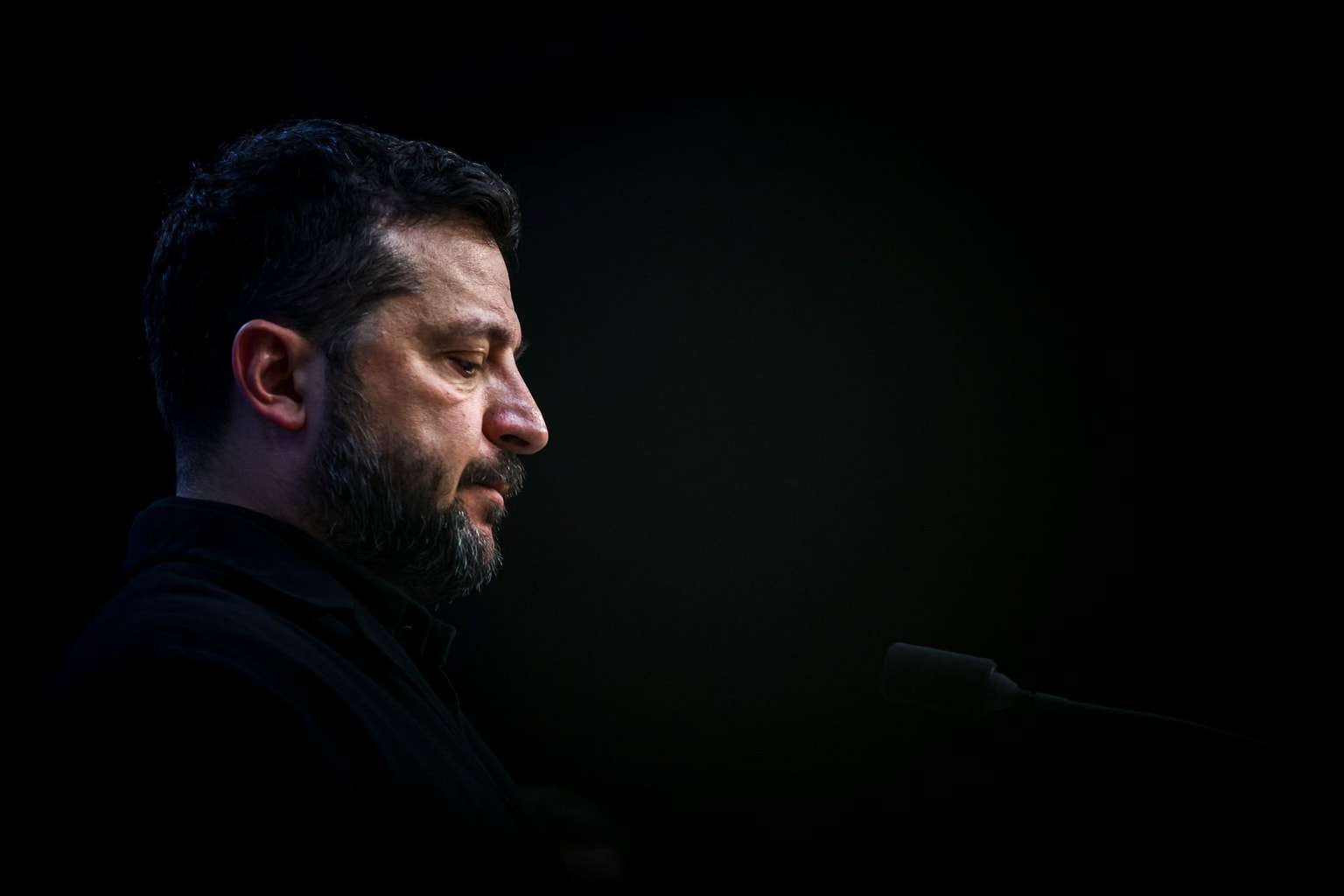
Ukraine has launched a new operation targeting Russian ballistic missile launchers near its borders, President Volodymyr Zelensky said on Aug. 22, as Kyiv faces a shortage of missiles capable of intercepting ballistic weapons.
Zelensky said that Ukrainian military struck an Iskander ballistic missile launcher near Ukraine's borders on Aug. 22, without providing further details.
The strike was part of a separate operation to hunt down Russian missile systems positioned near Ukraine, which Zelensky described as an alternative tactic amid the dire lack of of anti-ballistic missile interceptors.
The Iskander is Russia's main surface to surface tactical ballistic missile system, with a stated range of around 500 kilometers.
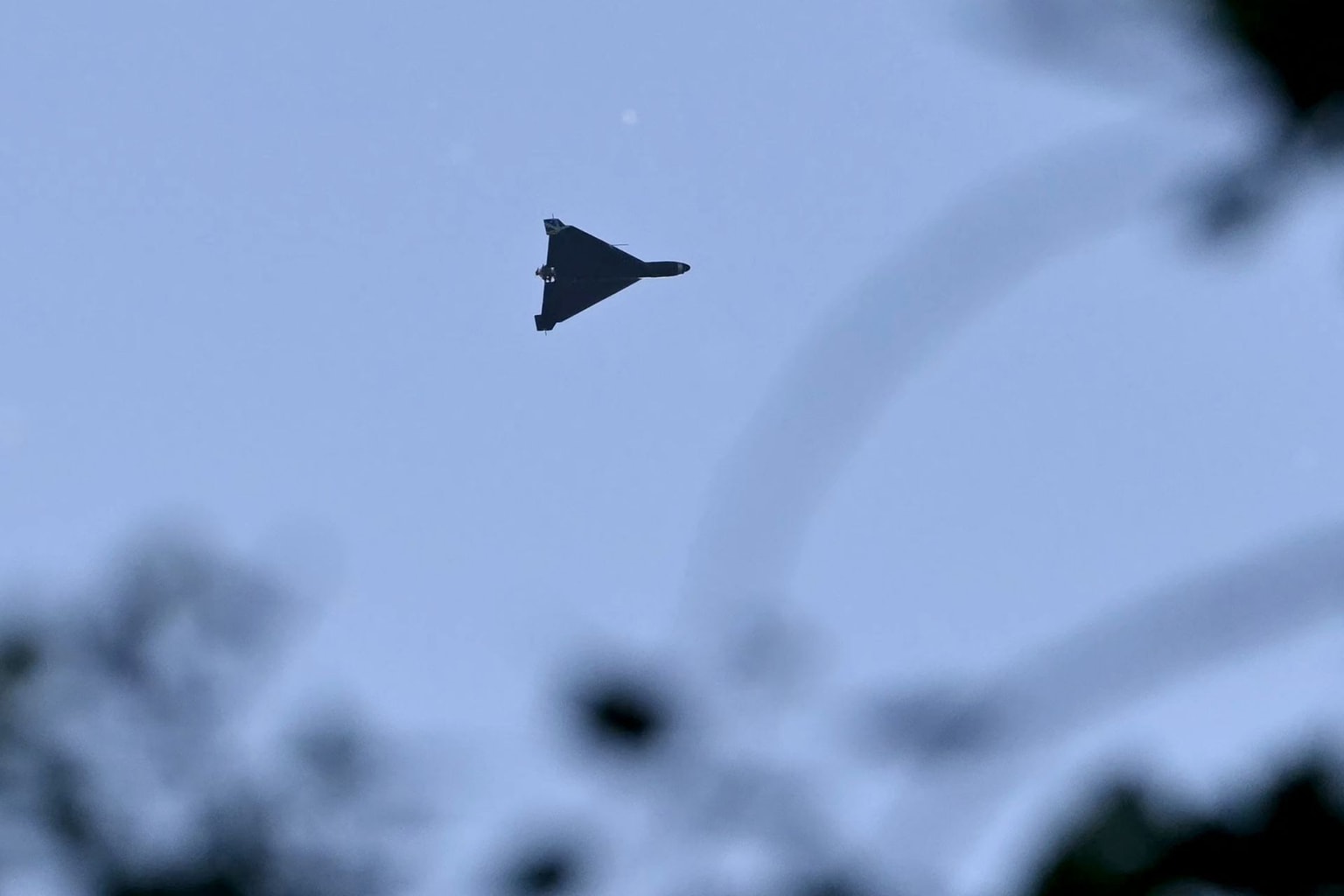
Complemented with North Korean KN-23 ballistic missiles and advanced Zircon cruise missiles, the Iskander has been the workhorse of combined mass attacks again Ukrainian targets in recent months.
When attacking Kyiv and other targets inside Ukraine, Iskanders are launched from mobile erector-launcher systems inside Russian territory, usually in border regions like Bryansk or Kursk oblasts.
With Ukraine's stocks of Patriot ballistic missile interceptor at or near empty, strikes against Iskander launchers have long been proposed as an alternative method of fighting the Iskander threat, but Ukraine has lacked options for quickly detecting and hitting launch sites.
"At one point (the Russians) were planning to launch an attack, but didn’t go through with it. This is no coincidence," Zelensky told journalists.
"In other words, we're working to prevent them from carrying out large-scale missile attacks. These are individual, complex operations, and we're now starting to see the first results."
Zelensky said Russia could potentially produce up to 1,300 ballistic missiles annually and currently has around 600–630 in stock. Moscow could eventually aim to produce around 100 ballistic missiles per month, he said, although it has not yet reached that rate.
Ukraine is also seeking more Patriot interceptors ahead of winter, Zelensky said, revealing that Ukraine had only received 264 missiles for the advanced surface-to-air system this year so far.
The Air Force has requested 360 missiles, up from an initial target of 300. According to the president, Kyiv hopes to secure 5–10% of U.S. stocks, with Ukraine prepared to pay for the missiles.
Zelensky also said Germany had agreed to provide 600 PAC-2 missiles for Patriot systems in 2027–2028, while negotiations with Washington over additional supplies continue.
Longer-term alternatives to the Patriot are also moving ahead, the president said, referring specifically to the Freyja project, a joint effort by European and Ukrainian defense companies to produce a new anti-ballistic missile system.
The project has moved from political discussions to the technical stage, with companies now beginning practical work, Zelensky said.
Ukraine weighing 'radical' mobilization changes amid recruitment challenges, official says
Ukraine is preparing changes to its mobilization system, including potential revisions to the country's draft age, secretary of the parliamentary defense committee Roman Kostenko said on Aug. 22.
Kostenko said that financial incentives offered to encourage Ukrainians to sign military contracts have failed to significantly increase recruitment, prompting officials to consider other measures.
"There are already talks and, as far as I know, some things are changing in the draft age," Kostenko said, adding that the Defense Ministry or General Staff would provide further details. He declined to say whether the draft age could be lowered or raised.
The lawmaker noted that Ukraine does not plan to move away from compulsory mobilization in favor of an exclusively voluntary system.
Kostenko also denied reports that authorities are considering eliminating mobilization exemptions for parents with three or more children, saying there are no such legislative initiatives currently under consideration.
No changes are planned regarding the mobilization of women, Kostenko said, adding that military service for women will remain voluntary.
As the fifth year of Russia's full-scale war against Ukraine goes on, mobilization has become among the most contentious domestic issues in the country.
Ukraine's military faces a growing need to replenish fighting units, build reserves, and allow existing soldiers to rotate off the front line. As Ukraine steps up its mobilization efforts, draft offices are often accused of forced conscription without compliance with fundamental civil rights and ill-treatment of conscripts.
Under martial law, Ukrainian men aged 25 to 60 are currently subject to conscription and are forbidden from leaving the country except under a certain number of specific circumstances.
Meanwhile, Russia reportedly plans to mobilize around 300,000 people after State Duma elections in September, but will do so without touching the country's major cities in an effort to minimize backlash from society, Ukrainian president Volodymyr Zelensky told journalists on Aug. 23.
Ukrainian drones reportedly strike Wildberries rival, Ozon, in Russia's Orenburg
Ukraine's military reportedly launched a drone attack on the Russian city of Orenburg overnight on Aug. 23, striking an Ozon logistics center, Russian Telegram media channels reported.
Photos and videos posted to social media purport to show smoke rising from the warehouse following a reported strike. Air raid alerts were active in the region ahead of the reported strike.
The attack on Ozon, Russia's second-largest online marketplace and main competitor to Wildberries, marked the second reported strike on the company's facilities. The first direct attack on the company's logistics centers occurred just one night earlier on Aug. 22 in a Ukrainian attack on Samara Oblast.
The Kyiv Independent cannot immediately verify the reports. Ukraine's military has not yet commented on the reported attack.
The full extent of the damage was not immediately clear.
After months of strikes on Wildberries facilities, Ukraine’s military appears to have shifted its focus to Ozon sites across Russia, with Ukrainian officials justifying the attacks on the grounds that the company sells goods to the Russian military.
"Systematic strikes on storage centers for dual-use goods are making it more difficult for the enemy to operate and are negatively impacting the overall economy of Russia," the Defense Ministry said after the Aug. 22 attack.
Orenburg is located in southwestern Russia near the border to Kazakhstan, approximately 1,000 kilometers (620 miles) from the Russia-Ukraine border.
Elsewhere in Russia, a massive blaze erupted at a warehouse in St. Petersburg overnight on Aug. 22, officials reported.
Russia's Emergency Situations Ministry said the first spread to engulf an area of at least 82,000 square metres (approximately 882,000 square feet) in the Kolpino district, southeast of central St. Petersburg.
The fire, located in an industrial part of the city, reportedly burned adjacent to an Ozon logistics center, owned by Russia's second-largest online marketplace and the main competitor to Wildberries.
The cause of the blaze was not immediately clear. Air raid alerts had not been declared in the Leningrad Oblast, nor were explosions heard in the area.
Russia planning 'peripheral' mobilization of 300,000 men after elections, Zelensky says
Russia plans to mobilize around 300,000 people after State Duma elections in September, but will do so without touching the country's major cities in an effort to minimize backlash from society, Ukrainian president Volodymyr Zelensky told journalists.
Russia's voluntary recruitment system has increasingly struggled to make up for losses on the battlefield, while diminishing returns in Russian offensives on the front line have fuelled talk of a new wave of mobilization in the country.
Although baring no resemblence to a real democratic process, the Duma Elections are nonetheless seen as a litmus test for support for president Vladimir Putin's regime, and the Kremlin will wait until after to announce a new draft, Zelensky said.
According to Zelensky, the 300,000 mobilized troops will complement existing inflows of recruits into the Russian army, and will either be used to boost Moscow's main offensive effort on the "fortress belt" cities of Donetsk Oblast, or to create new threats in other areas, including Ukraine's northern border.
Since Russia's full-scale invasion of Ukraine, Moscow has only once turned to forced mobilization to fill the ranks of its military: in autumn 2022, when successive Ukrainian counteroffensive successes threatened a broader collapse of Russia's defense lines.
The move triggered an exodus of hundreds of thousands of Russians from the country, with long lines at border crossing points, particularly at the state border with Georgia.
Since then, Putin has famously gone to great lengths to avoid more large-scale forced mobilization, seeing it as a threat to his image as provider of strength and stability to ordinary Russians apathetic to questions of politics and war.
Instead, Moscow has relied on lucrative bonuses offered to those who sign a contract, with responsibility resting largely on regional authorities to meet tough recruitment quotas.
According to Zelensky, Putin plans to minimize perceived political consequences by focusing mobilization efforts away from the large population centers, especially Moscow and St Petersburg.
"They are planning for a kind of 'peripheral mobilization,'" the president said.
"As we understand, it won't happen in the central cities. But I don't think they will succeed in hiding it."
Ukraine strikes 2 Russian fighters, air defense assets in Krasnodar Krai, drone commander says
Ukrainian drones have struck two Russian fighter jets, a large missile-carrying drone, high-value radars, and other air defense assets, Unmanned Systems Forces commander Robert "Magyar" Brovdi said on Aug. 23.
The two jets, a Su-33 and a Mig-29, as well as a large Orion strike drone, were hit at the Vityazevo airfield in Russia's southern region of Krasnodar Krai, Brovdi said.
The Orion is a large Russian unmanned aerial vehicle developed by Russia before the full-scale invasion and similar in class to the Turkish-made Bayraktar TB-2 operated by Ukraine.
On a battlefield dense with enemy air defense assets and interceptor drones on both sides, drones the Orion and TB-2 have been largely rendered useless.
Over 2026, Russia adapted the Orion for a new role: launching the cheap Banderol cruise missile, now regularly used against Ukraine's Black Sea port infrastructure.
All three strikes, videos of which were shared on Brovdi's Telegram channel, were carried out by the 1st Center of the Unmanned Systems Forces, which specializes in long-range strikes.
Other targets included S-400, Pantsir, and Tor air defense systems, as well as eight high-value radars in Krasnodar Krai, Rostov Oblast, and Russian-occupied Crimea.