There is nothing apolitical about the scientists behind Russian weapons
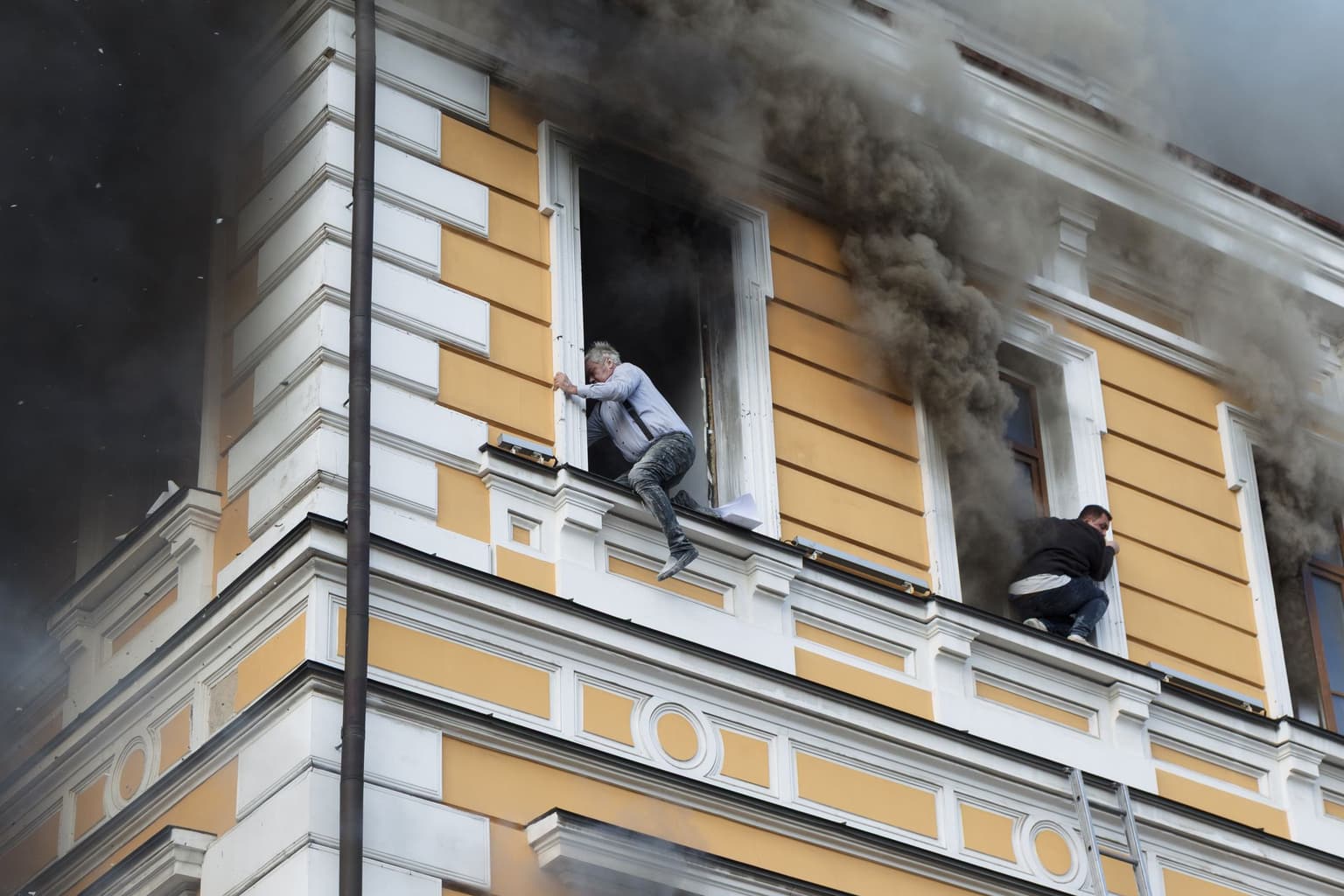
Two men attempt to escape from the National Academy of Sciences building after it was hit by a Russian drone and caught fire in Kyiv, Ukraine, on Sept. 28, 2026. (Ukrinform/NurPhoto via Getty Images)
 on Google
Tetiana Hryn'ova
Physicist at the French National Center for Scientific Research
A lunchtime drone attack on the head office of Ukraine's National Academy of Sciences in Kyiv's downtown on Sept. 28, 2026, might have come as a shock to scientists based outside the country.
Unfortunately, for Ukrainian scientists, those who can be seen climbing down the ladders from the burning building, such attacks are part of the daily routine.
As documented in the UNESCO report from 2024, over 30% of Ukraine's research infrastructure has been damaged by the Russian attacks, and its institutions were forced to move, some multiple times, to safer areas which remain under Ukrainian control.
Occupied Ukrainian scientific institutions undamaged by the war, such as Crimean Astrophysical Observatory, the Marine Hydrophysical Institute, the Institute of Biology of the Southern Seas, the Nikitsky Botanical Garden, Askania Nova Biosphere Reserve, V. I. Vernadsky Taurida National University, and universities in Donetsk, Luhansk, Kerch, and Mariupol, not only saw their facilities appropriated by the Russian scientific community but also had their institutional identities usurped.
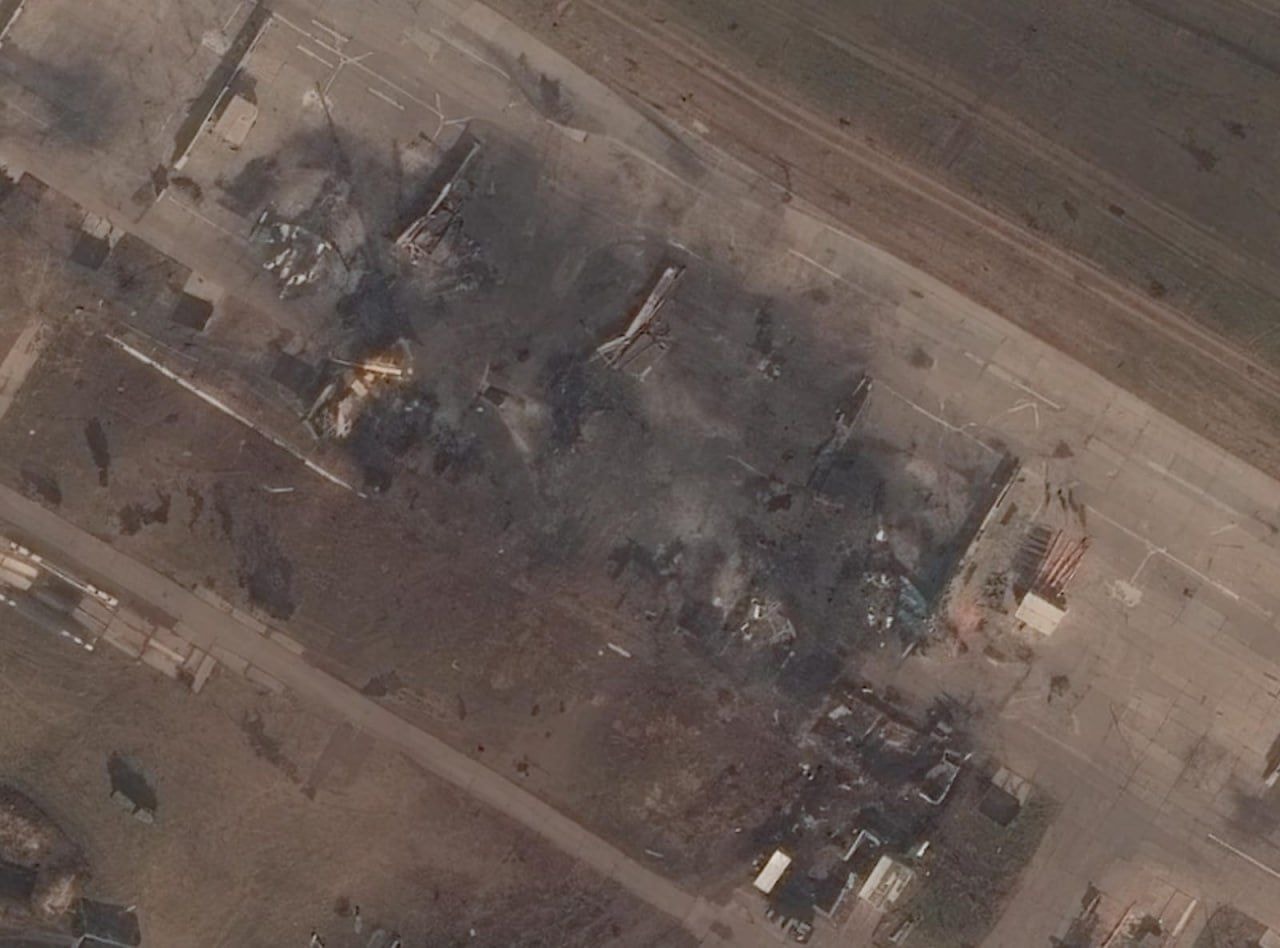
Some Ukrainian scientific facilities, such as the RT-70 radio telescope in Yevpatoria in occupied Crimea, have even been repurposed for military use.

While the Russian scientific community benefits greatly from the seizure and repurposing of Ukrainian research facilities, Russian scientists are simultaneously portrayed as victims of the war because of the sanctions and supposed international isolation brought by it.
The physical expropriation extends to a broader ideological appropriation of Ukrainian scientific heritage.
Portraying Nobel laureate Elie Metchnikoff, a pioneer of cellular immunity born near Kharkiv, George Gamow, a pioneer of Big Bang theory born in Odesa, or Serhii Koroliov, a chief designer of the Soviet space program born in Zhytomyr and the driving force behind the launch of the world's first artificial satellite Sputnik 1 in 1957, as Russian scientists symbolically incorporates their Ukrainian birthplaces into an imagined Russian scientific and cultural geography, only reinforcing claims to Ukrainian territory and legitimizing the seizure of its scientific infrastructure and resources.

By appropriating Ukrainian scientific achievements, Russia enhances the prestige of its own scientific establishment — a legacy apparently too valuable to tarnish with sanctions — while marginalizing Ukraine's contribution to global scientific progress.
The victim narrative also obscures the important role played by the Russian scientific establishment in supporting the ongoing war effort, not only through direct involvement in weapons research and development but also through knowledge and technology transfer and personnel training.
These activities are facilitated by the longstanding and close collaboration between the Russian scientific community and its military-industrial complex.
A prominent example of such cooperation is the Dubna military-industrial hub, infamously known for the Kh-101 and S8000 Banderol missile production and the development of glide bombs, which are eventually used by Russian soldiers to terrorize Ukrainian civilians.

Dubna also hosts the Space Communications Center, which supports intelligence collection and the coordination of Russian occupation forces operating in Ukraine.
For decades, international sources such as Encyclopedia Britannica have presented Dubna as a ‘science city’ centered on the Joint Institute for Nuclear Research (JINR). Such descriptions omitted the existence in Dubna of the missile design bureau Raduga and its production plant, both of which, alongside JINR, are "city-forming enterprises of Dubna."
Collaboration between JINR and Raduga was crucial for the establishment of the university in Dubna in 1994, the Dubna Special Economic Zone in 2005, and the construction of numerous housing complexes for their employees.
University students, taught by JINR scientists, are subsequently recruited by enterprises in Dubna, many of which are subject to international sanctions. JINR scientists themselves either founded or work in some of these companies.
In the fifth year of the full-scale invasion, scientists from Dubna continue to be prominently represented in global organizations such as the International Atomic Energy Agency (IAEA) in Vienna, UNESCO in Paris, the International Union of Pure and Applied Physics (IUPAP) in Trieste and Geneva, and the European Organization for Nuclear Research (CERN) in Geneva, to name a few.
Participation in these organizations reinforces the visibility of JINR and lends credibility to its self-presentation as an "apolitical" institution.
In 2016, the IAEA funded a JINR project with the Institute of Biology of the Southern Seas in occupied Sevastopol, facilitating the integration of Crimea into the Russian scientific sphere.
The Global Conference of the International Decade of Sciences for Sustainable Development, organized by UNESCO in July 2026 in Paris, France, included a session dedicated to JINR.

That same month, JINR was featured at the IUPAP-organized International Conference on High Energy Physics 2026 in Natal, Brazil. Over 240 JINR scientists currently have in-person access to the CERN site, which allows them and their families to live in Switzerland and France and to freely travel within the Schengen area.
On Aug. 8, 2025, Ukraine imposed sanctions on JINR, making it the only country to have done so.
This oversight perpetuates a self-reinforcing cycle in which participation in international scientific activities allows Russian researchers to maintain access to global research networks, which can be used both to legitimize Russia's occupation of Ukrainian territories and to acquire knowledge and technologies that strengthen the Russian military-industrial complex and increase its capacity to attack Ukrainian civil and scientific infrastructure.
The examples discussed here represent only a fraction of a broader, systematic pattern that challenges the portrayal of Russian science as an apolitical enterprise and Russian scientists primarily as victims of sanctions and international isolation.
Therefore, it is time to finally put under scrutiny how scientific cooperation, institutional prestige, and continued participation in international scientific organizations can coexist with, and potentially facilitate, military production and the legitimization of occupation, while scientists in Ukraine face the physical destruction of their institutions.
Editor's note: The opinions expressed in the op-ed section are those of the authors and do not purport to reflect the views of the Kyiv Independent.