News Feed

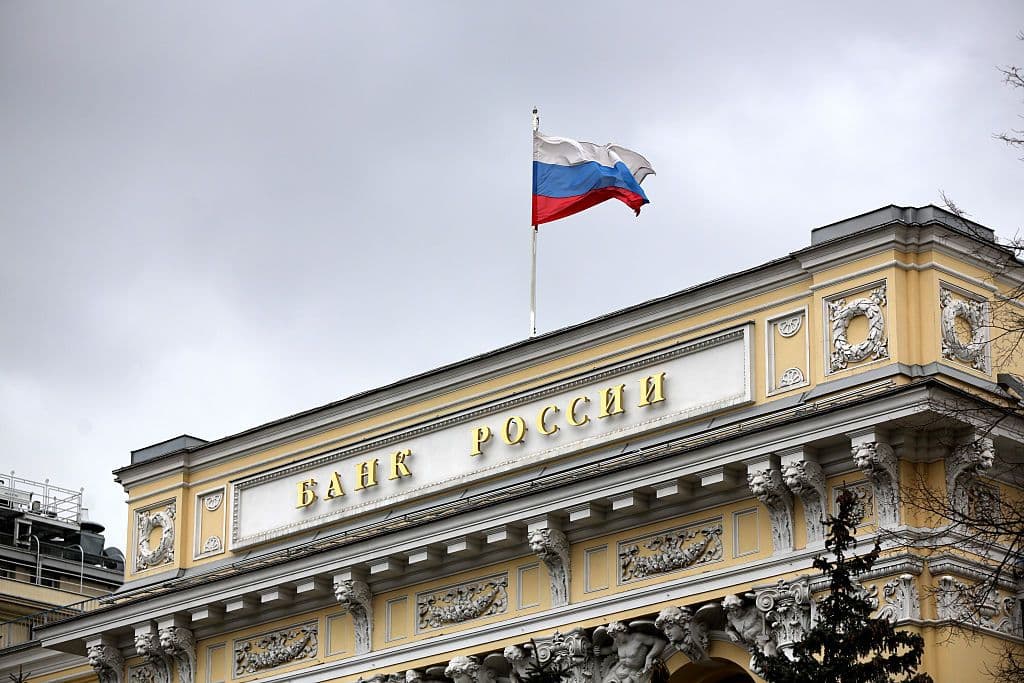
Russian Central Bank hikes interest rates to prop up falling ruble

1 min read
Russian Central Bank hikes interest rates to prop up falling ruble
The Russian flag flies above the headquarters of the Russian Central Bank in Moscow, Russia, on March 18, 2016. (Photo credit: Andrey Rudakov/Bloomberg via Getty Images)

Russia's Central Bank hiked its key interest rate by 350 basis points to 12% on Aug. 15 in an attempt to halt the sharp decline of the ruble.

The decision came after an emergency meeting called when the ruble briefly broke through 100 to the U.S. dollar on Aug. 14 for the first time since March 2022.

The currency exchange rate has since then slightly dropped below the 100 threshold only to steadily rise to 99.08 by 4:02 p.m. Moscow time. Bloomberg commented that the move failed to prop the currency up as it remains among the three worst performers in developing economies this year.

Despite a summer bump in oil revenues, the Russian economy continues to be battered by Western sanctions and the costs of waging war in Ukraine. More countries have divested from Russian oil and gas, slashing Russia's export income to half its prewar levels.

Moreover, Russia has doubled its 2023 military spending to over $100 billion, or a third of the state budget.

Maxim Oreshkin, economic adviser to Russian dictator Vladimir Putin, blamed the ruble's fall on Moscow's central bank.


News Feed

"This collaboration serves as a testament to our country's commitment to the defense of democratic values, to freedom, and to a just and lasting peace," Spanish Defense Minister Margarita Robles said during a visit to Kyiv.

At a press conference in Kyiv on April 22, Ukraine’s Deposit Guarantee Fund and Polish fintech Zen.com, registered in Lithuania, said the company had acquired First Investment Bank, known as PINbank, which was transferred to the state in 2023 and later declared insolvent.

Vladimir Plahotniuc was Moldova's wealthiest businessman and de facto controlled the country's government in the 2010s in what critics described as a "captured state." His fall from grace is seen by his opponents as part of Moldova's alignment with European liberal and democratic values.

Video

The Kyiv Independent’s Kateryna Denisova sits down with Dmytro Kuleba, Ukraine's former foreign minister, to discuss U.S.-led peace talks, Donald Trump’s approach to Ukraine, Europe’s role in ending the war, and why he believes neither Washington nor Moscow can impose a settlement on Kyiv.

Show More