News from occupied Ukraine: FSB officers killed in Donetsk, 75% of new property buyers in Mariupol come from Russia, report says
 on Google

This weekly update from the Kyiv Independent aims to shed light on the situation facing Ukrainians living under Russian occupation and the ever-tightening control of information imposed by the Kremlin.
This week, the Kyiv Independent published a long-read investigation into the endangering of pro-Ukrainian partisans and activists on Russia-occupied territories on the part of the Yellow Ribbon organization and their backers. Read it here.
Key news as of April 26:
- 12 Russian FSB officers killed in Ukrainian drone strike on command post in occupied Donetsk
- Human rights activists identify 7 torture chambers holding Ukraine's Zaporizhzhia nuclear plant staff
- Ukraine returned over 2,100 Ukrainian children abducted by Russia
- 'Wishful thinking' — Ukraine rubbishes Russia's latest Luhansk Oblast claim
- Russia uses subsidized mortgages to drive population replacement in Mariupol
- Russia destroys mass graves near Mariupol, satellite images suggest
- Fearing Ukrainian troops landing in Crimea, Russia intensifies coastal mining
- As Telegram falters, communication with occupied Ukraine is breaking down
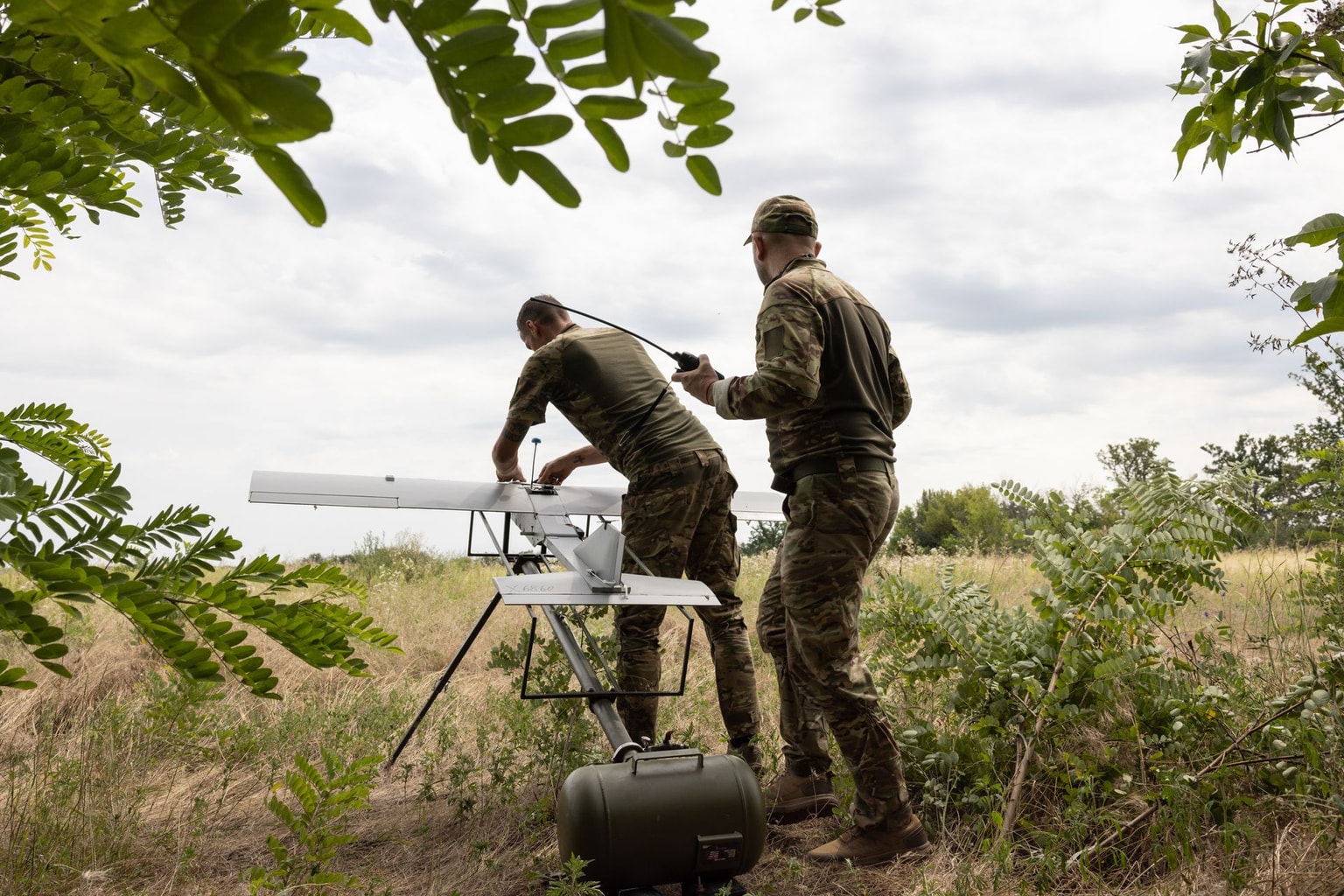
Ukrainian drones struck a command post of the Russian Federal Security Service (FSB) in occupied Donetsk on April 22, killing 12 officers and injuring 15 others, Unmanned Systems Forces commander Robert "Madyar" Brovdi said on Telegram.
A series of explosions rocked Donetsk at around 8 a.m. local time on April 22, and videos began circulating on social media showing what appeared to be Ukrainian drones striking a multi-story unfinished building.
Ukrainian forces used FP-2 drones manufactured by the Ukrainian defense company Fire Point and designed for medium-range strikes, with a payload of 60 to 100 kilograms, Brovdi said.
Human rights activists identify 7 torture chambers holding Ukraine's Zaporizhzhia nuclear plant staff
There are at least seven torture chambers holding staff of the occupied Zaporizhzhia nuclear power plant, Roman Koval, head of research at the Ukrainian human rights organization Truth Hounds, said on April 22.
"We counted at least seven such places in Enerhodar... Representatives of Rosatom were involved in a campaign of pressure on the station employees to force them to sign a contract with them," Koval said in a discussion held by Media Center Ukraine.
Employees at the plant face pressure to sign contracts with Russia, according to Ukraine's nuclear firm, Energoatom. Despite the danger, 2,500 refused the contract, including 15 licensed reactor operators, with many staff now in hiding.
At least 78 employees of the plant are held in the torture chambers in violation of international humanitarian law, Koval said.
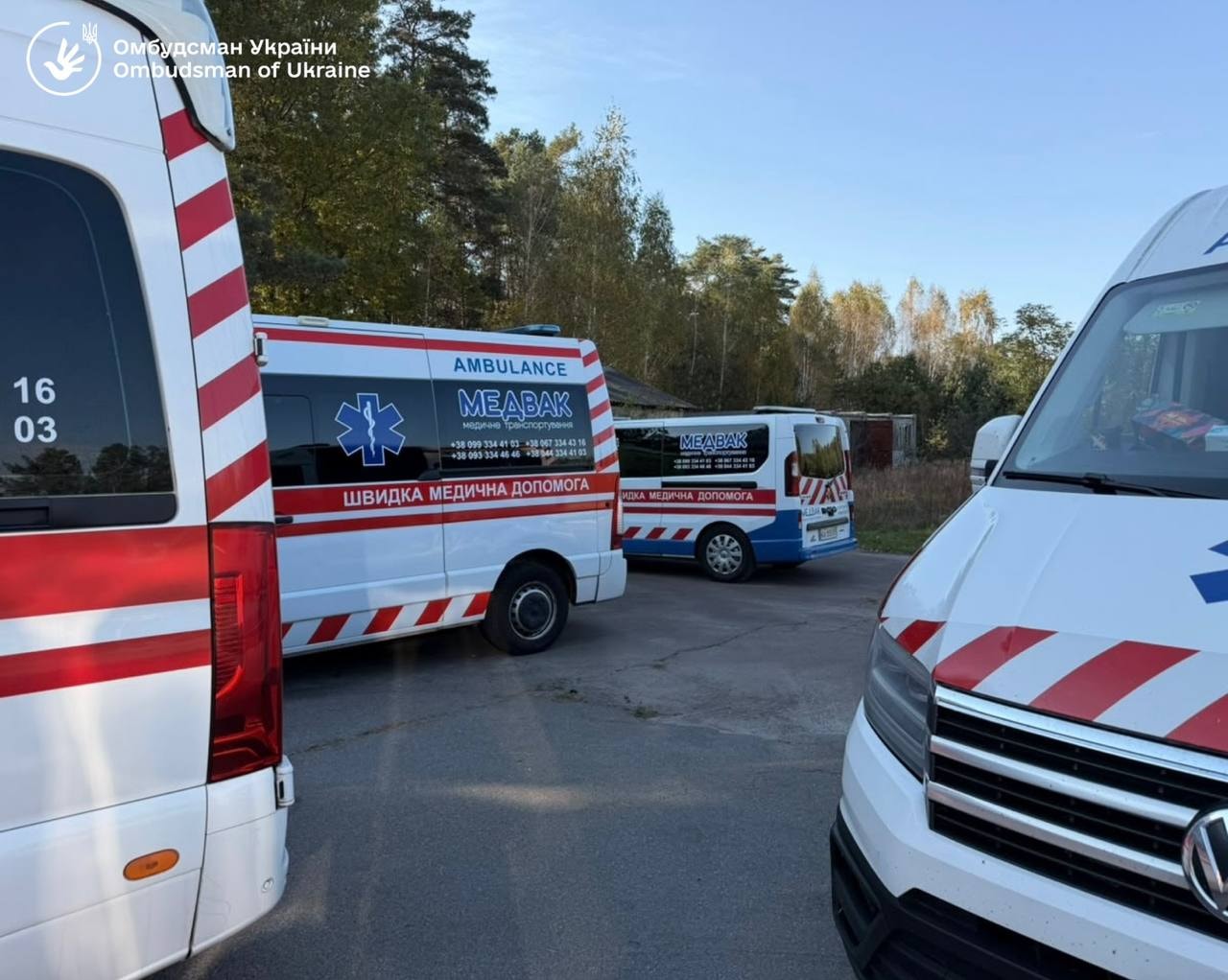
Ukraine has returned over 2,100 Ukrainian children abducted by Russia, Zelensky says
More than 2,100 Ukrainian children abducted by Russia have been brought back to Ukraine through the Bring Kids Back UA initiative, President Volodymyr Zelensky reported on April 22.
The figure was provided to Zelensky during a meeting with Oleksandr Bevz and Maksym Maksymov, representatives of the Bring Kids Back UA team.
The initiative has been tracing and returning Ukrainian children from Russian-occupied territories and Russia since 2023.
Of the 2,100 children, 150 have been returned to Ukraine since the beginning of 2026, Zelensky said.
'Wishful thinking' — Ukraine dismisses Russia's latest Luhansk Oblast claim
Oleksii Kharchenko, the head of Ukraine's Luhansk Oblast Military Administration, denied Russia's claim that its troops have fully taken control of Luhansk Oblast in eastern Ukraine, saying 14 settlements remain unoccupied by Moscow.
On April 21, Russia's chief of the General Staff, Valery Gerasimov, announced that its forces had "fully completed" the occupation of Luhansk Oblast. The Russian Defense Ministry last claimed the same thing on April 1.
Russia currently occupies the majority of the region, with the city of Luhansk and the regional government controlled by Kremlin-installed proxies. But a small parcel of land on the western border of Luhansk Oblast remains contested.
In an April 22 comment to the Kyiv Independent, Kharchenko said that part of Luhansk Oblast remains under the control of the Ukrainian Armed Forces, which "have not lost any ground there for quite some time."
According to Kharchenko, 14 settlements in Luhansk Oblast are not under Russian control. These villages and towns are either in the middle of active battles, in a gray zone, or remain under Ukrainian control.
Russia uses subsidized mortgages to drive population replacement in Mariupol
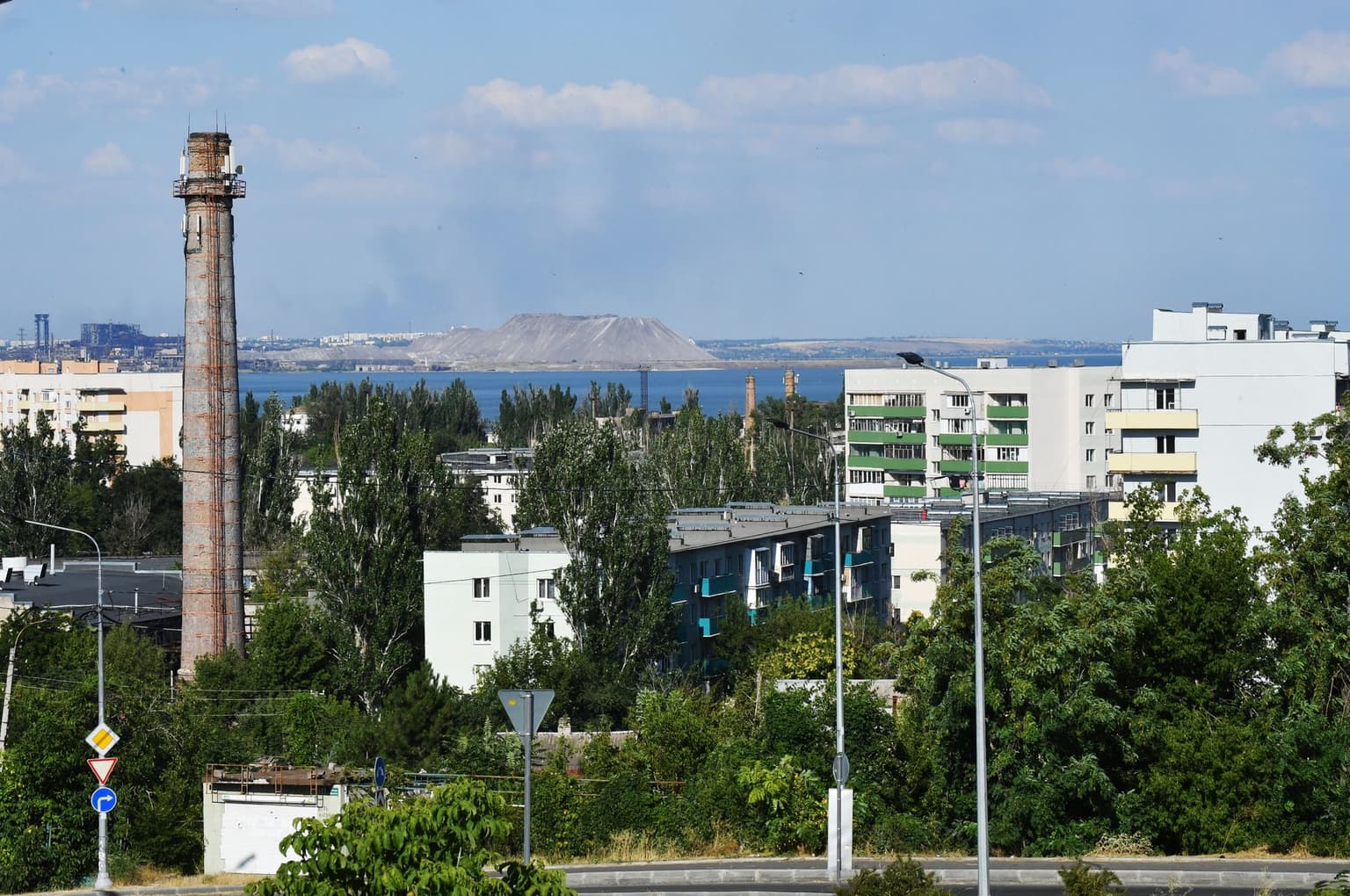
While Russians are buying housing through subsidized mortgages to further move to occupied Mariupol, local resident remain without homes after theirs were destroyed during Russian bombings and strikes on Mariupol in 2022 or demolished by Russian authorities after the occupation.
The report, published on April 21 by Mariupol's city council, which has operated in exile since Russia occupied the city in 2022, says that the Russian occupation authorities continue to build residential buildings using mortgages for further sale.
It also states that 75% of apartments are bought by Russians, while only 25% are bought by residents of Ukrainian territories occupied by Russia. Meanwhile, approximately 18,000 out of the total number of Ukrainians living in Mariupol remain without their houses and apartments.
The Kremlin's attempts to resettle occupied territories with Russian citizens reflect Russia's attempts at population replacement.
"(Russians) understood that it isn't enough to simply erode Ukrainian identity — Ukrainians had to be replaced with Russians," Petro Andriushchenko, former Mariupol mayoral advisor and head of the Center for the Study of Occupation, said.
Russian authorities aim to relocate nearly 114,000 citizens to occupied Ukrainian territories by 2045, pro-Kremlin publication Vedomosti reported on March 17, citing government plans for the development of Donetsk, Luhansk, Zaporizhzhia, and Kherson oblasts.
Russia destroys mass graves near Mariupol, satellite images suggest
Mariupol's city council, operating in exile since Russia occupied the city in 2022, published satellite images on April 21 indicating the destruction of a mass burial site in the settlement of Mangush near Mariupol.
The site was used to bury residents who died during the Russian siege of the city in 2022, according to Ukraine's Center for the Study of Occupation.
The center analyzed satellite imagery of the burial site taken from 2022 to 2026. The area, where Russian forces had reportedly established some of the first mass graves, now appears to have been converted into what is described as a road repair site.
According to preliminary estimates, at least 22,000 civilians were killed during the 86-day Russian siege of Mariupol, according to the center reported.

Fearing Ukrainian troops landing in Crimea, Russia intensifies coastal mining
Russian troops have intensified mining of coastlines in Russian-occupied Crimea to prevent a possible landing by Ukrainian troops, Vladyslav Voloshyn, spokesperson for Ukraine's Southern Defense Forces, told the Kyiv Independent on April 21.
Voloshyn said that Russia's "Crimea" operational-tactical group continues to actively mine the coastlines and beaches as Russia fears Ukrainian marines might land there again. The last time Ukrainian soldiers landed in Crimea was in 2023.
"The beaches will now become minefields," Voloshyn said.
He added that the total length of Crimea's coastline is about 760 kilometers (472 miles) and that much of its territory has already been mined.
"There are dozens of kilometers of mine-explosive barriers. (Russia) uses both variable-depth minefields and individual minefields, and sets up high-explosive barriers. This involves hundreds of different types of individual mines," Voloshyn said.

As Telegram falters, communication with occupied Ukraine is breaking down
Communication between residents of Russian-occupied areas of Ukraine and their relatives in Ukrainian-controlled territory is becoming increasingly difficult as Moscow tightens control over internet access and restricts messaging platforms.
For many, Telegram remains the primary way to stay in touch. But connections have grown unreliable, with users reporting failed calls, delayed messages, and repeated outages.
Residents in Ukrainian-controlled areas say they are struggling to reach loved ones across the front line, as disruptions to the platform appear to coincide with broader efforts by Russian authorities to limit access.
"This was basically the only channel of communication with relatives," Maria, whose family lives in Russian-occupied Donetsk, told the Kyiv Independent on April 15.
"Basically, they ban it and then restore it again."
Read the full article by the Kyiv Independent's reporter Polina Moroziuk.
Note from the author:
Hi! This is Yuliia,
Reporting on the Russian-occupied territories is not easy, as journalists cannot safely travel there and report from the ground because of the risk of detention or death.
But we at the Kyiv Independent are trying to bring more news about these territories in whatever ways we can. If you have any questions regarding the occupied territories, write to me by email, and we would be happy to answer them. And consider joining our community to support this work.