Investigation: A secret program, 'suicidal' missions, and death, torture in occupied Ukraine
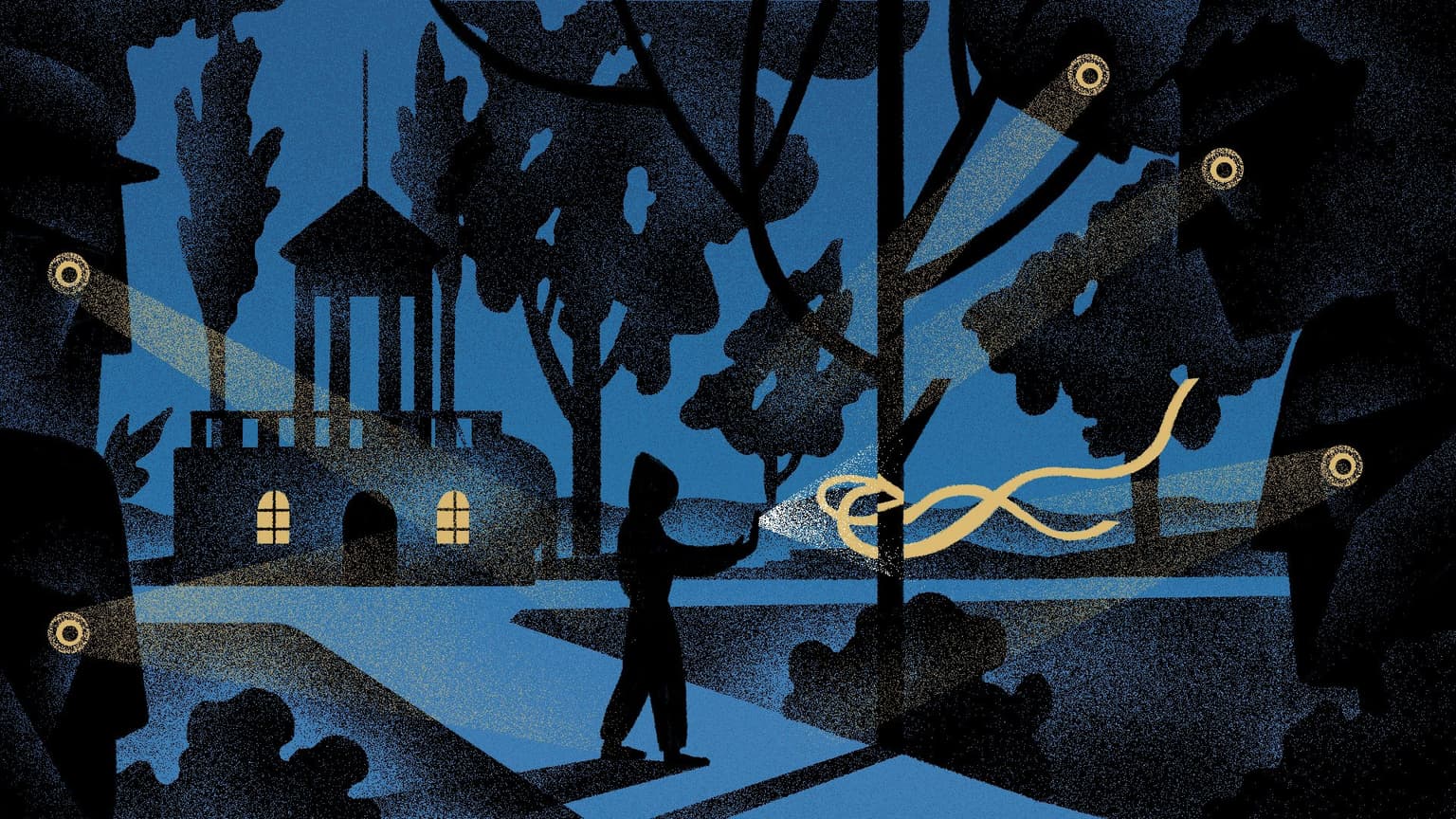
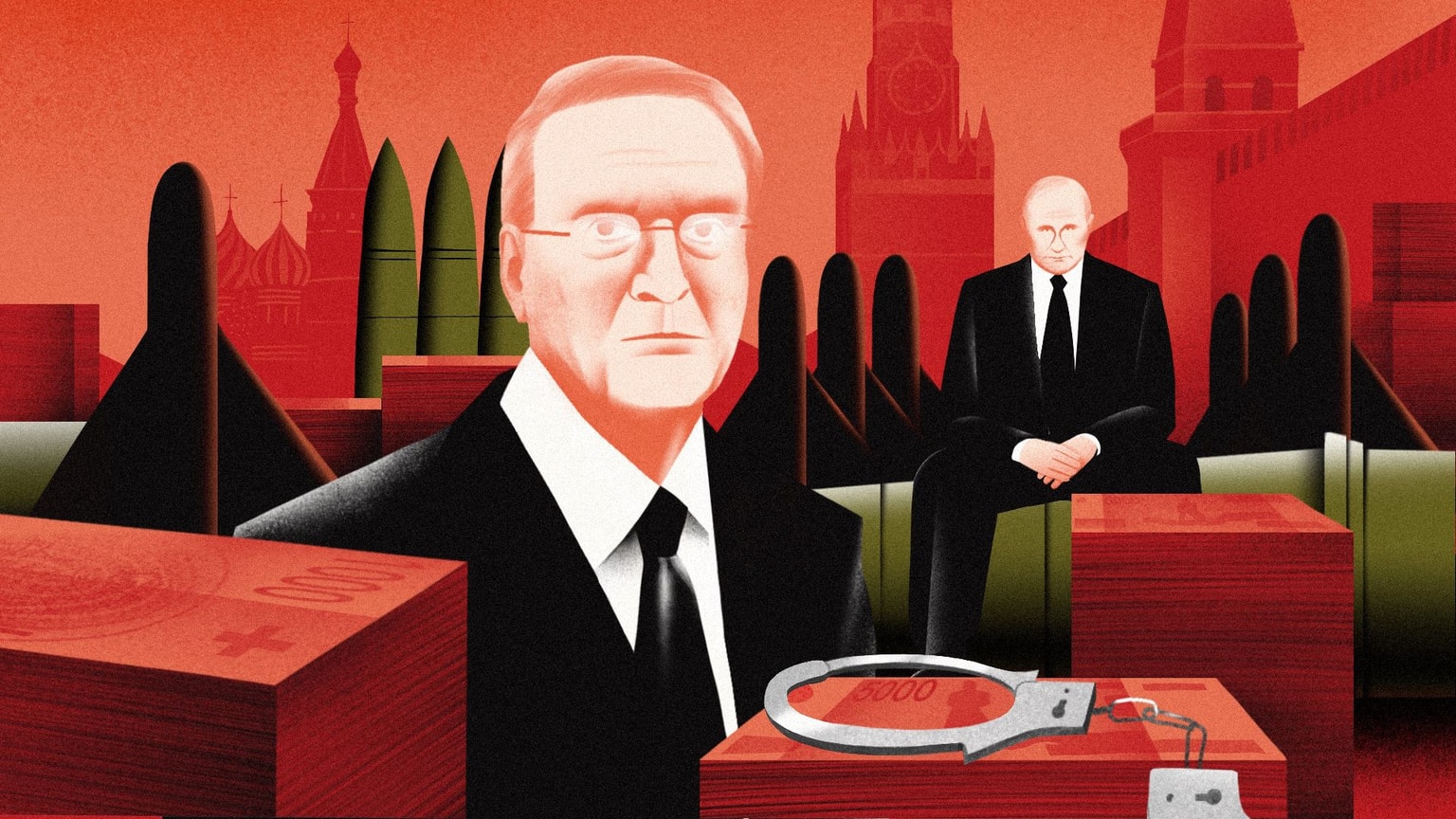
The Kyiv Independent investigation reveals a Western-funded classified program that left Ukrainian civilians vulnerable to torture and death at the hands of the Russian security services. (Kseniia Stepas / The Kyiv Independent)
 on Google
A Western-funded classified program supported a "non-violent resistance" initiative inside Russian-occupied Ukraine for more than three years that encouraged civilians to engage in "suicidal" activities despite credible reports of the deaths, torture, and imprisonment of activists, the Kyiv Independent can reveal.
Russian-occupied Ukraine is one of the most heavily surveilled and most repressive territories in the world, and some of the activities Yellow Ribbon and its sister initiative Zla Mavka continue to promote are breathtakingly dangerous, including listening to Ukrainian songs in public, taking photographs in public places with pro-Ukrainian symbols, burning Russian flags in public places, and even poisoning Russian soldiers with laxatives.
The Kyiv Independent investigation exposes how a program, generously funded by Western governments, relied on activists risking their lives in occupied Ukraine to keep running, but took no responsibility for their safety.
Recruitment and training of Yellow Ribbon’s activists — usually civilians with no military experience or professional training — consists of a minutes-long exchange with an unencrypted Telegram bot. Comprehensive safety information is optional.
A Dubai-based British communications firm, IN2, employing consultants including prominent Ukrainian think-tanker Hanna Shelest, and British journalist David Patrikarakos, secured sums of funding from the British and Canadian governments that vastly surpassed Yellow Ribbon and Zla Mavka’s operational costs, while simultaneously downplaying the risks of the program, and attempting to silence critics who raised the alarm.
According to multiple sources, spoken to at length by the Kyiv Independent over the course of a months-long investigation, the program’s leaders ignored repeated and continuing warnings of critical flaws in the program’s operational security that could be exploited by Russia's Federal Security Service (FSB) to track and detain activists.
Further, these same sources allege the primary concern of all involved was maintaining Western funding, not the safety of activists, despite Yellow Ribbon publicly stating as far back as 2022 that "at least 30" of them had been "arrested or something along those lines," and that "some people from our organization have been killed."
When asked about the tragic fates of some Yellow Ribbon activists, both IN2 and Shelest falsely represented independent research as evidence that no harm had ever come to any civilian undertaking activities with the movement.
"I don’t understand what motivates these projects to use methods that are so dangerous for people living under occupation," Artem Karyakin, a former partisan in the occupied territories and one of the program’s most prominent public critics, told the Kyiv Independent.
"Representatives of Yellow Ribbon couldn't explain to me in private why they do this. It seems to me that their interest is not in the actions themselves, but in maintaining the projects for their own personal benefit."
Western funding 'supporting' resistance program
Working for IN2, which had previously worked on British government strategic communications campaigns in Syria, Hanna Shelest was the company's in-country liaison with the Yellow Ribbon initiative, and its smaller sister program, Zla Mavka.
The program that was meant to support non-violent resistance movements in Ukraine was funded to the tune of millions of dollars by the Canadian and British governments since 2022, according to multiple sources familiar with the events, as well as documents obtained by the Kyiv Independent.
Despite working for IN2 for several years, Shelest’s public income declarations, which she filed in 2024 and 2025, do not mention any income from IN2 or any other foreign company.
David Patrikarakos, also working for IN2 as a contractor, worked as a "Network Director," according to internal IN2 documents obtained by the Kyiv Independent.


His role included "support(ing) delivery of training and campaign activities by contributing to planning, logistics, and cascading security guidance and best practices" and "play(ing) an active role in maintaining the physical and digital safety of activists, supporting risk management protocols and continuity planning."
Patrikarakos was given this role despite having no relevant professional experience in the field, not speaking Ukrainian or Russian, never having worked in the occupied territories, and holding a prominent public profile — which he used to promote Yellow Ribbon.
In a written response to the Kyiv Independent, Patrikarakos denied this was his role within IN2's Yellow Ribbon program, saying he was never in charge of security.
In a statement to the Kyiv Independent, IN2 did not attempt to dispute the veracity of the documents, but claimed it was an early draft of a later document and that Patrikarakos’ role was merely supportive.
Working on a day rate of 800 pounds ($1,080), Patrikarakos was paid a total of 15,200 pounds ($20,520) over a seven-month period in 2025, according to IN2 documents.
According to the documents, a total of 17 people were on the IN2 payroll in relation to Yellow Ribbon and Zla Mavka, with an operational cost over one four-month period totaling 259,830 pounds ($350,219), the equivalent of nearly 780,000 pounds ($1,050,000) annually.
Publicly available Canadian government documents show payments to IN2 covering the periods of 2022-23 and 2023-24 totaling $2,327,000 Canadian dollars ($1,700,955). There are no public records that show how much of it went to support Yellow Ribbon and Zla Mavka.
"They're endangering the lives of their activists for no reason, and profiting from it," a member of Ukraine's Military Intelligence (HUR), speaking on condition of anonymity due to threats to his personal safety, told the Kyiv Independent.
When approached by the Kyiv Independent, both Shelest and Patrikarakos denied claims that their work with IN2 could have contributed to endangering activists in occupied territories.
IN2 has denied causal links between its work and activists' persecution.
A spokesperson for IN2 said: "IN2 categorically denies the false allegations presented by the Kyiv Independent regarding the Yellow Ribbon initiative. These claims are factually incorrect and lack any credible evidence."
David Patrikarakos said: "These allegations are entirely false and I have provided full off the record guidance to the journalist from the Kyiv Times (sic) that will enable them to make an informed decision based on best practice journalism."
All parties denied having any responsibility for the safety of resistance activists in the occupied territories.
Special Forces investigating Yellow Ribbon
According to the Kyiv Independent’s sources, involved in Yellow Ribbon's operations in Ukraine was Lieutenant Colonel Andriy Klimin, formerly with the 72nd Psychological and Information Warfare Center, a part of Ukraine’s Special Operations Forces.
Klimin categorically denied any involvement in Yellow Ribbon. However, in at least one meeting in 2025, he discussed the initiative with insider knowledge, and mentioned its classified British funding. He was also dismissive of the consultants he said were involved in it, including Patrikarakos.
Concerns about how the program was run and funded prompted Ukraine’s Special Operations Forces (SSO) to start an internal investigation.
The SSO confirmed to the Kyiv Independent that within the investigation, they questioned Klimin and "reached out" to Shelest and Patrikarakos but "had not heard back yet" as of mid-April.
In a statement to the Kyiv Independent, Shelest said allegations she was being investigated by the SSO were "false," adding she had, "double-checked to confirm that SSO, as well as other security services, had not had any investigations regarding me."
In written responses to the Kyiv Independent, Shelest confirmed she has been working for IN2 "for about four years" including on the Yellow Ribbon program. She, IN2, and Patrikarakos all denied all allegations made in this article.
In off-the-record conversations with the Kyiv Independent, a source close to the SSO claimed the organization lacked sufficient investigatory powers which have enabled third party organizations such as IN2 to take advantage of the opacity of the occupied territories of Ukraine.
The movement
The Yellow Ribbon movement began as a grassroots expression of Ukrainian protest in territories recently occupied by Russia in 2022, such as in the city Kherson, which saw a wave of public protests and resistance activity during the period of Russian occupation between March and November 2022.
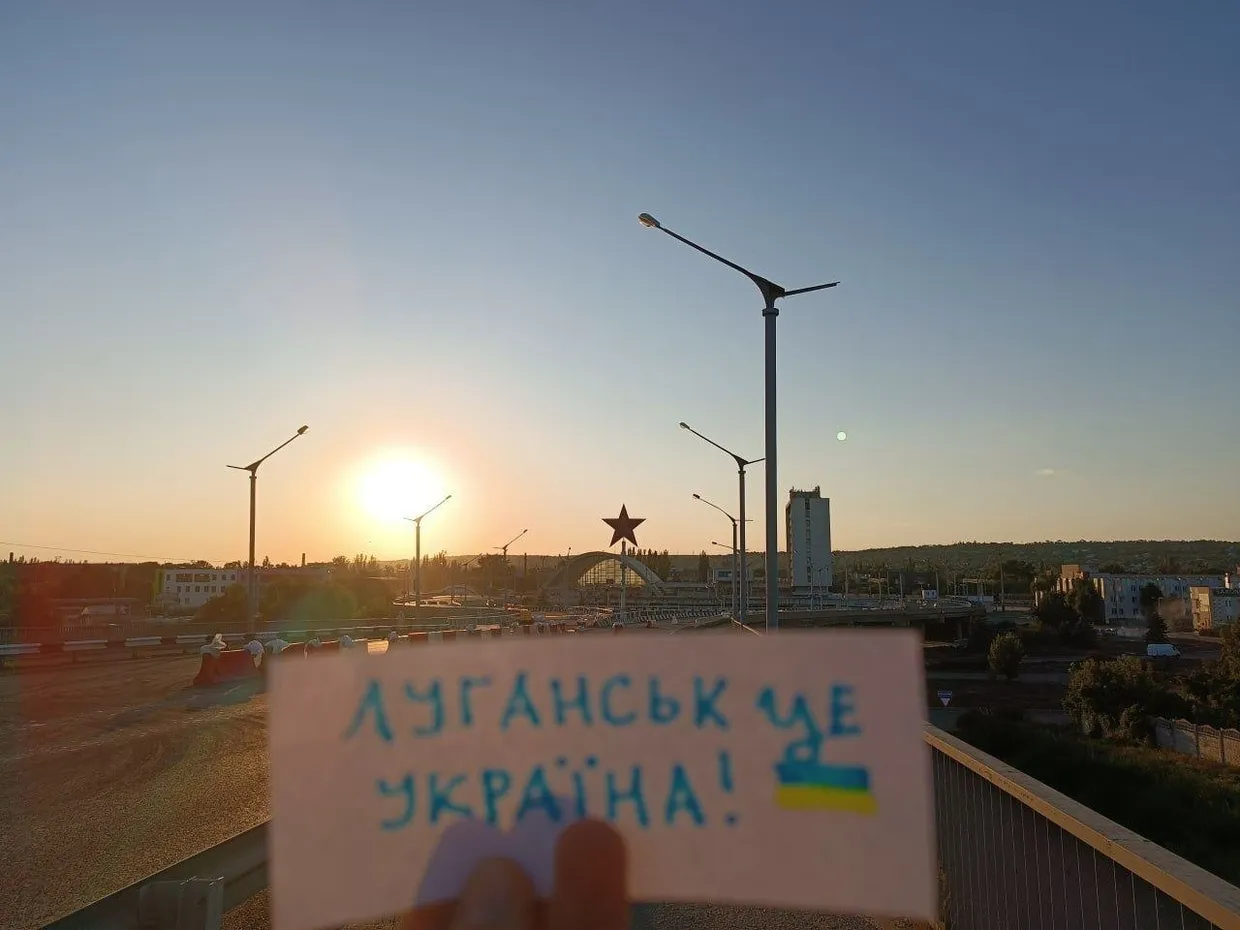
The campaign encouraged civilians in the occupied territories to engage in non-violent, symbolic acts of resistance, primarily taking photographs of themselves holding Ukrainian symbols, flags, or signs proclaiming pro-Ukrainian messages.
Zla Mavka
Zla Mavka is "an all-female Ukrainian non-violent resistance movement that emerged in the occupied city of Melitopol in early 2023," according to the initiative’s website.
The group encourages Ukrainian women living in the occupied territories to conduct a variety of highly dangerous acts of "non-violent" resistance against occupying Russian forces, including defacing Russian currency, reporting the location of Russian troops, and most dangerously, poisoning Russian soldiers with laxatives and other non-lethal poisons.
According to multiple sources and documentary evidence obtained by the Kyiv Independent, Zla Mavka was created as a sister program to "Yellow Ribbon" and was run by the same personnel. Internal IN2 documents do not distinguish between the two programs.
It is difficult to overstate the level of repression in the Russian-occupied territories of Ukraine, the danger inherent in any form of resistance activity, and Moscow's determination to stamp out even the slightest hint of dissent.
People inside Russia itself have been fined just for wearing blue and yellow shoes. Inside occupied Ukraine, those who take a stand in the form of non-violent resistance risk being detained, tortured, or simply disappeared.
Former Ukrainian Partisan Vladyslav Ovcharenko gathered information for Ukraine's Armed Forces in occupied Luhansk from 2014-2016 when he was arrested and sentenced to 17 years in prison before being freed in as part of a Russian-Ukrainian prisoner exchange in late 2018.
"At that time, the influence of the Russian Federal Security Service (FSB) in the occupied areas was not as extensive yet I was still captured," he told the Kyiv Independent.
"With the start of the full-scale war, the situation only changed for the worse. The FSB took control of the occupied cities of Ukraine, including external surveillance systems.
"In Luhansk, for example, cameras appeared on every street — you can’t even walk 10 meters without being noticed."
The recruitment chatbot
Recruitment of potential Yellow Ribbon activists relies on communicating via an unencrypted Telegram bot — a fatally flawed method in an environment where all cellular traffic is heavily monitored by Russian security services.
Andrei Soldatov, a London-based Russian investigative journalist who is an expert in the Russian security services, and who himself has been targeted by the FSB on multiple occasions, told the Kyiv Independent that cellular communications in the occupied territories of Ukraine are more heavily monitored by the Russian security services than in Russia itself.
The Kyiv Independent contacted the bot — which is still active — to recreate the process of signing up to take part in the Yellow Ribbon movement.
The process took only 13 minutes during which we stated in which area of the occupied territories we lived in, and confirmed we were over 18-years-old.
Security protocols for both communicating with the bot and carrying out the task were limited to a basic guide on making Telegram more secure with steps like an account password and enabling the "encrypted chat" feature, and "ideally" using a second phone.
"But don't worry if you don't have access to another phone right now or ever! We're glad to have you with us!" the bot said.
Perhaps of most concern, an extensive list of security protocols — nearly 4,500 words covering things including "phone security basics," "how to avoid being tracked," "precautions for women," and how to safely plan the activity from start to finish — are optional.
"Would you like to read other safety recommendations first?" the bot asks.
If skipped, the next message presents several activity options including "take a picture of the cover of your Ukrainian passport against the background of the city," and "tie a yellow ribbon," two of the activities most heavily promoted on Yellow Ribbon social media accounts.
After choosing the former, and without seeing the extended safety protocols, the chat ends with: "Cool task! Waiting for the result!"

Other tasks presented by the bot as options for new participants carry far more risk, including reporting the positions of Russian troops, wearing Ukrainian national dress, and listening to Ukrainian music in public. Choosing one of these riskier options comes with no further warnings or safety instructions.
Despite the multiple flaws in Yellow Ribbon's main method of recruitment, not only did those working for IN2 fail to rectify them during the three years they were involved, one of the main figures assisting the program was not even aware of the most dangerous tasks activists were being asked to carry out.
In a conversation with the Kyiv Independent, Shelest denied it instructed people to play Ukrainian music in public, claiming that to do so would be "suicidal," suggesting it was a misinterpretation of the instructions.
"This access is simply not worth the risks to these Ukrainians."
Meanwhile, the Yellow Ribbon chatbot instructions said exactly that.
The exact wording from the chatbot — after being told that the potential recruit lives in Crimea — is "слухайте українські пісні в публічному місці," the direct translation of which is "listen to Ukrainian songs in public places."
A 25-year-old woman who lived under Russian occupation in Kherson Oblast before escaping in 2023, told the Kyiv Independent that she knew a man whose ear was cut off "with wire cutters… and his teeth pulled out with pliers" simply for being Ukrainian.
"I don't even know what they would have done for wearing a Ukrainian embroidered shirt — shoot them on the spot?" the woman said.
"I’m a little shocked by this," Ovcharenko told the Kyiv Independent, explaining that such actions almost guaranteed the arrest of participants by Russian security services. "After completing these tasks these people won’t be free for long, knowing the risks," Ovcharenko said, adding that "it looks like a planned special operation to identify our people in those territories."
Ed Bogan, a 25 year veteran of the CIA who helped lead the hunt for Osama Bin Laden, headed the agency’s station in Kyiv for two years, and who has decades of experience running human intelligence assets in some of the most dangerous countries in the world, told the Kyiv Independent he believed Yellow Ribbon’s methodology was "wildly irresponsible" and there is "no more important obligation in the world of lethal consequences" than the safety of activists.
"Given what I've seen of (Yellow Ribbon activities) to date, in my estimation this access is simply not worth the risks to these Ukrainians."
Yellow ribbons, red flags
One of Yellow Ribbon's most visible and most shared resistance activities — the taking of photographs of Ukrainian flags, slogans, ribbons, and even passports inside the occupied territories — is arguably one of the safest tasks for activists to choose.
But the power of the visual message — a pro-Ukraine symbol in front of Russian-occupied buildings for example — is also its weakness. Once the location where a pro-Ukrainian protest is known — either because that location is deliberately chosen for its prominence, or because it has been geolocated — Russian security services can begin trawling through local CCTV in an attempt to identify the individual who took the photograph.
Yellow Ribbon activist Sievil Veliyeva was arrested in 2024 for taking photographs of pro-Ukrainian symbols in occupied Melitopol — Russian security services managed to track her after geolocating the pictures posted on social media and then combing through CCTV.


"When they detained me, they showed me photos which they had already printed from the city’s surveillance cameras. They could see where I had been, where I was taking photos... Everything I was doing was visible," Veliyeva, who was deported from the occupied territories in February 2025, and is still supportive of Yellow Ribbon, told the Kyiv Independent.
The Kyiv Independent asked Kyle Glen, an investigator for the London-based Center for Information Resilience, and an expert in open source investigations to independently assess the ability of a third party to extract information from photographs published by Yellow Ribbon.
Within minutes, Glen managed to locate the exact location of two photos selected at random from the Yellow Ribbon X account, and managed to give a rough date range given the presence of snow on the ground, and the time of day. The approximate height, sex and approximate age of individuals can often be determined from the images.
Russian surveillance in the occupied territories
Adding to the danger is the FSB-led digital security apparatus in place in the occupied territories that is set up to specifically deal with this type of communication.
"When Russian forces invaded officially, they needed to set up Russian telecom operators. These new telecom operators — the branches, the local branches of the Russian operators — needed to get a telecommunication license from the Russian authorities. One of the points in this license is to get SORM installed," Andrei Soldatov, a London based Russian investigative journalist who is an expert in the Russian security services, and who himself has been targeted by the FSB on multiple occasions, told the Kyiv Independent.
SORM — the System for Operative Investigative Activities — allows the FSB, and any other Russian security service and state entities, unrestricted direct access to all cellular communications made in the occupied territories.
This would mean that even if a potential Yellow Ribbon activist contacted the bot and turned on encrypted messaging as instructed, this initial contact would be visible to the Russian security services. They would then be able to see the existence of any further encrypted communications, even if they weren’t able to read the contents of the messages.
Soldatov explained that even using encrypted communications in these conditions could be risky, as SORM devices using DPI — deep packet inspection — would be able to identify a device sending encrypted traffic, identify its IMEI, and then flag the device and associated user for closer inspection.
Other security measures mentioned by Soldatov were either only mentioned in the bot's optional security instructions — such as using a VPN service — or were not mentioned at all — such as using a more recent messenger service that was less popular among the Russian speaking community, and would be a lower priority for FSB.
The funding — and why it was cut
When the Canadian government’s funding ended in 2024, IN2 approached the U.K. for additional funding, according to multiple sources familiar with the events, who provided the Kyiv Independent with documentary evidence, recorded phone calls, and emails.
The U.K. financed Yellow Ribbon and Zla Mavka for a period of four months in 2025, at a total cost of several hundred thousand pounds. Internal IN2 documents reveal that senior members of the project were paid significant sums — the project lead was listed as receiving a day rate of 616 pounds ($833), while network directors such as Patrikarakos were listed as receiving 800 pounds ($1,080) per day.
The actual cost of running Yellow Ribbon could be "up to $20,000 a month, maximum" according to an estimate by a representative of Special Forces speaking off the record.
British funding for Yellow Ribbon and Zla Mavka ended after a number of individuals raised concerns about the program’s operational security, concerns about the employment of unqualified personnel such as Shelest and Patrikarakos, and whether funding the program was an effective use of British taxpayer’s money, leading to an internal FCDO investigation.
A senior source in the British Labour Party, speaking on condition of anonymity, told the Kyiv Independent that when British Minister of State for Europe Stephen Doughty became aware of the concerns, British funding for the program was "discontinued."
The Canadian government did not respond to multiple requests for comment.
For the three years IN2, Shelest, and Patrikarakos were involved in Yellow Ribbon and Zla Mavka, little time appears to have been spent on increasing the safety of activists, but time and effort was spent on silencing those who were raising the alarm.
IN2
According to its website, IN2 is an "innovative, socially responsible, award-winning communications and research company that drives positive change in communities."
The company's mission, its website says, includes "build(ing) locally-focused, community-driven campaigns to empower some of the world's most isolated and marginalized people, while building resilience and stability in even the most challenging locations."
To do this, the company employs "over 160 professionals" from the fields of "communications, research, academia, behavior science, audio-visual production, digital media, and radio," and counts "over 20 different nationalities" among its staff.
The IN2 website highlights several case studies of its work, including countering election interference in Iraq, growing the Instagram following of a "UAE-based platform specializing in chemicals and transition fuels," and "exposing a Ponzi scheme in Yemen."
The website features the logos of a number of organizations including NATO, Meta, the British and Canadian governments, and Nudie Jeans Co.
IN2 is headed by Paul Tilley. Tilley previously ran InCoStrat, an organization which ran secret propaganda campaigns for the British government in Syria which were exposed by the Guardian in 2016.
Shutting down criticism
Multiple people who spoke to the Kyiv Independent reported efforts to silence their criticism of the program.
Two critics said they were visibly followed on multiple occasions in Kyiv, which they believed was an overt attempt to intimidate them.
IN2 made damaging statements about another critic of their activities in a statement to the Kyiv Independent, and also attempted to silence one critic with legal threats from speaking publicly about the deficiencies of the non-violent resistance model in the occupied territories, according to an email also supplied to the Kyiv Independent.
Elsewhere, Patrikarakos used his prominent public profile to promote Yellow Ribbon — without disclosing his work with IN2.
"The group’s growing numbers of activists stay connected via a chatbot plugin on the group’s Telegram messaging app," Patrikarakos wrote in the Atlantic in March 2023.
Acknowledging the FSB's determination to track and detain anyone expressing pro-Ukrainian sentiment in Russian-occupied Ukraine, Patrikarakos inaccurately described the use of the unencrypted Telegram chatbot as "safeguarding the anonymity of the participants against Russian efforts to penetrate the network."
At no point in the Atlantic article does Patrikarakos declare his professional relationship with IN2, who at this point had an active role in assisting Yellow Ribbon. Later that year, he again wrote approvingly about the group in a separate article for the Daily Mail.
On at least one occasion when other media outlets wrote critically of Yellow Ribbon, Patrikarakos defended it without revealing his involvement. In December 2024, the Insider published an article highlighting the work of several resistance organizations including Yellow Ribbon, as well as the risks involved.
In response, Patrikarakos sent the publication a takedown request, obtained by the Kyiv Independent, which again did not mention his affiliation with IN2, and his work with Yellow Ribbon.
"I would ask that this article be taken down," Patrikarakos wrote. "I have been contacted by members of Yellow Ribbon themselves. They are extremely fearful that this article poses a SERIOUS RISK to the safety of activists of theirs who are operating inside the occupied territories right now."
Yet one of the greatest risks to the activists, multiple sources familiar with Ukrainian resistance in occupied territories who spoke to the Kyiv Independent on condition of anonymity due to fears for their personal safety said, was the array of unqualified and inexperienced figures who were notionally responsible for ensuring activists’ safety while operating in one of the most repressive and heavily surveilled places on earth.
What Yellow Ribbon knew — and what it now denies
In 2022 and 2023, Yellow Ribbon itself was repeatedly and publicly vocal about some of its activists being arrested or killed, but in more recent years has been silent on the issue.
In a response to a recent request from the Kyiv Independent for information on activists who had been tortured, killed, or disappeared, Yellow Ribbon denied any cases existed, and acknowledged only "isolated cases of detention" — contradicting what it said publicly in 2022 and 2023.
"During the entire time of communication with the activists, we have not recorded a single case of criminal prosecution, torture, or death of our activists," it added.
Moreover, the group claimed that the activities it encourages would not lead to criminal charges in Russia.
In a written response to the Kyiv Independent, Shelest said there were "no proven cases of the deaths or torture of the (Yellow Ribbon) activists." IN2 said they "categorically deny that any of the program’s activity led to the arrests, torture or deaths of Yellow Ribbon activists." IN2 also said the company "no longer works with Yellow Ribbon Group and has not done so since safety concerns were raised."
In a written response, Patrikarakos said he was "never made aware of torture or deaths of Yellow Ribbon activists."
Shelest also claimed she had "requested the respected NGO Truth Hounds to conduct an investigation" into "similar claims" that resistance movement activists in occupied territories were persecuted. She claimed the investigation "found no evidence."
IN2 also cited a Truth Hounds investigation which they said found "no causal link" between "any of the program’s activity" and "the arrests, torture, or deaths of Yellow Ribbon activists."
The responses misrepresented Truth Hounds’ actual work and conclusions.
"Truth Hounds did not conduct a dedicated investigation into allegations of deaths, torture, or arrests of members of the Yellow Ribbon movement, as referenced by the individual you cited," a spokesperson for Truth Hounds told the Kyiv Independent when asked about the claims.
The group did conduct limited OSINT investigations in 2025 into two specific cases within the Ukrainian resistance movement including Zla Mavka in the occupied territories, and said that "within this defined scope, we did not identify any confirmed cases directly linking harm to specific resistance movements."
"Importantly, the absence of confirmed cases within the framework of this limited OSINT monitoring should not be interpreted as evidence that such cases do not exist," the spokesperson added.
As well as relying on a report that never existed as evidence no harm came to Yellow Ribbon activists, Yellow Ribbon, IN2, Shelest, and Patrikarakos's statements also contradict multiple public statements by Yellow Ribbon itself made over the course of 2022 and 2023, when former spokesperson Yaroslav Bozhko spoke specifically of multiple cases of activists being imprisoned, dying, or disappearing.

In a December 2022 interview with DW, Bozhko said:
"At least 30 participants of the Yellow Ribbon movement have been arrested or something along those lines. Some people from our organization have been killed, but we still do not have a proper list, because the Russians conceal their actions in this area. They do not keep any meaningful statistics on this."
A month later in a video interview, he said:
"I’m telling you honestly, people got caught out over very basic mistakes and ended up in the hands of Russian security services. And unfortunately, it didn’t always end with them staying alive. We don’t have full information about all participants of the Yellow Ribbon movement. There are people for whom we either have partial information or suspect that they were killed."
In a February 2023 interview with RFE/RL, he said:
"One story that deeply affected me was about one of our activists in Kherson. From March to June, we stayed in contact with him, and then he stopped responding. We tried to find out what had happened. We hoped maybe he had left, or at least been arrested. But after the de-occupation, witnesses said he had been killed. And all that time, we thought he was just having phone issues. He was 29-years-old."
In a March 2023 interview with 24 Kanal, Bozhko repeated the figure of "30 cases of arrests have already been recorded," adding that "some have ended fatally."
In a recent response to the Kyiv Independent, Bozhko claimed that the figure of 30 activists was actually "the total number of detentions of Ukrainians known to us in the occupation" despite specifically referring to Yellow Ribbon activists on each occasion.
Yellow Ribbon's response was nearly identical, claiming Bozhko "reported on the total number of arrests of Ukrainians known to us in the (occupied territories) in general — this did not apply specifically to the activists of Yellow Ribbon."
Most surprisingly, Yellow Ribbon’s response relies on Russian law within the occupied territories as proof that no physical harm would come to those carrying out its activities, insisting the harshest punishment Russian authorities in the occupied territories can administer is a fine.
"Actions (such as photographing Ukrainian symbols) are not subject to criminal prosecution even under Russian law, but can only entail administrative liability," the group claimed.
Ukrainians living in the occupied territories are frequently illegally detained, tortured, and deprived of basic human rights according to multiple reports and journalistic investigations.
Yellow Ribbon's public acknowledgements of the tragic fates of its activists largely disappeared around summer 2023, but evidence of further cases of detention, torture, and deaths continued to emerge during the period IN2, Shelest, and Patrikarakos were involved in the program.
A dossier of evidence compiled by members of the Ukrainian military in 2025, and obtained by the Kyiv independent, documents several cases of Yellow Ribbon activists being imprisoned, raped, and killed throughout 2023, 2024, and 2025, all since Bozhko's interview.
In one particularly distressing case, according to the dossier, a 24-year-old woman from Melitopol who had taken part in tasks for Zla Mavka, was "disappeared" by Russian security services. Her body was found two months later. The Kyiv Independent hasn’t been able to independently verify this account due to lack of access to occupied territories.
Several cases of arrests are even in the public record — on Sept. 3, 2024, a Russian court in occupied Sevastopol sentenced Ksenia Svetlishina, a Crimean Tatar woman, to five years and three months in a penal colony for activities she carried out for Yellow Ribbon — a sentence that was later increased to 13 years and 3 months on Oct. 30, 2025.
Former partisan Artem Karyakin is scathing about programs like Yellow Ribbon that encourage activists to take part in symbolic acts of non-violent resistance, which he believes achieve no tangible results, while hindering the work of kinetic resistance activists who can actually have an impact on Russian forces on the occupied territories.
"Such (non-violent) actions only bring death or arrest to the last remaining Ukrainians. This also hinders our security agencies, because those who could quietly and more or less anonymously transmit intelligence and eliminate Russians on a massive industrial scale are simply jailed, imprisoned, simply for taking a photo of a piece of paper against the backdrop of an occupied city," he said.

'A completely different Yellow Ribbon'
In late February, as the Kyiv Independent’s investigation into their program was underway, Yellow Ribbon publicly announced a significant change in their standard operating procedures in an interview with Ukraїner, a Ukrainian publication.
"In 2026, you’ll see a completely different Yellow Ribbon," a representative of the organization, identified only as a "Ivan" told Ukraїner, explaining that their core activity, publishing photographs taken by activists expressing pro-Ukrainian sentiment in the occupied territories represented "a huge risk."
Ivan justified this change in their operating procedures by citing the installation of "high resolution surveillance cameras" and the establishment of "networks of informants" throughout the occupied territories — all of which have existed for years.
In a June 2024 interview, an anonymous member of the Zla Mavka movement noted an increase in CCTV cameras in the occupied territories which they said were installed specifically "to find" members of Ukrainian resistance movements.
And if Yellow Ribbon had learned lessons from Sievil Veliyeva’s apprehension after she returned from Russian captivity to free Ukraine, they would have been aware that the FSB had been using CCTV networks to identify their activists since at least 2024.
In a statement to the Kyiv Independent, sent on March 30, Yellow Ribbon claimed that "we have changed our approaches to shooting and transmitting data to make it impossible to identify locations or individuals."
Just one day later, Yellow Ribbon’s Ukrainian Telegram account posted an image taken by an activist in front of one of the most recognizable buildings in the occupied territories — Donbas Arena in Donetsk.

Additional reporting by Olga Rudenko, Yuliia Taradiuk, Polina Moroziuk, Linda Hourani.
Note from the author:
Hi, this is Jimmy Rushton, the author.
The investigation you have just read is the result of hundreds of hours of work by myself and the team at the Kyiv Independent. Investigative journalism is an expensive and time-consuming process that wouldn't be possible without the support of readers like you. To help us continue in this work, please consider becoming a member of the Kyiv Independent's community.
Thank you very much.