'Life simply returned' – Oleshky ceasefire gives Kherson short respite amid years of Russian terror
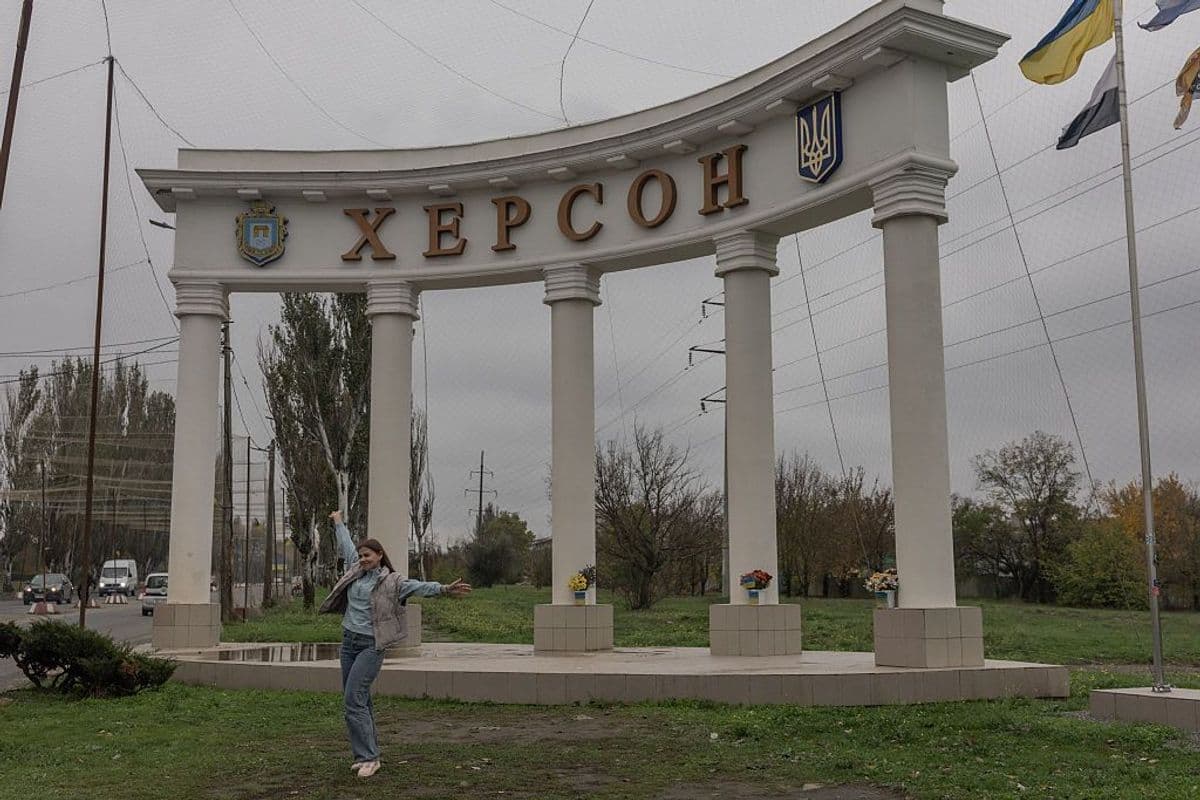
A woman poses for photographs next to Kherson Gateway Stela, next to a road covered by anti-drone nets, during a temporary ceasefire in the southern Kherson region, at the entrance to the city of Kherson, southern Ukraine, on Oct. 31, 2026. (Roman Pilipey / AFP via Getty Images)
 on Google
Editor's note: Ukrainian journalist Daria Litovchenko contributed to reporting on the ground in Kherson, while Francis Farrell compiled the material from Kyiv.
In all of Ukraine, perhaps no city has suffered as much, for as long, during Russia's full-scale war as Kherson.
From the initial eight months of brutal Russian occupation in 2022 — with all of the associated torture, looting and deportation — to Russia's man-made flood caused by the destruction of the Kakhovka Dam, to the systematic "human safari" attacks targeting civilians by Russian drones that have gone on since 2024, Kherson has lived from horror to horror without a break until now.
Over the last few days, this city at the delta of Ukraine's Dnipro River enjoyed something that has become an almost unknown sensation: quiet.

On Oct. 27, along the section of front line following the river through Kherson Oblast, Russian and Ukrainian forces began observing a ceasefire of a scale and length unprecedented in four and a half years of the full-scale war.
Every morning that the ceasefire continued, the daily updates of Kherson Oblast Governor Oleksandr Prokudin — normally filled with reports of attacks and casualties in Kherson and other riverbank communities — read "attacks and casualties were not recorded."
The ceasefire, agreed upon as part of a U.S.-mediated humanitarian mission to the beleaguered Russian-occupied city of Oleshky across the river, also gave the residents of Kherson the opportunity to walk the streets of their city without the fear of death from Russian glide bombs, artillery and, especially, drones.
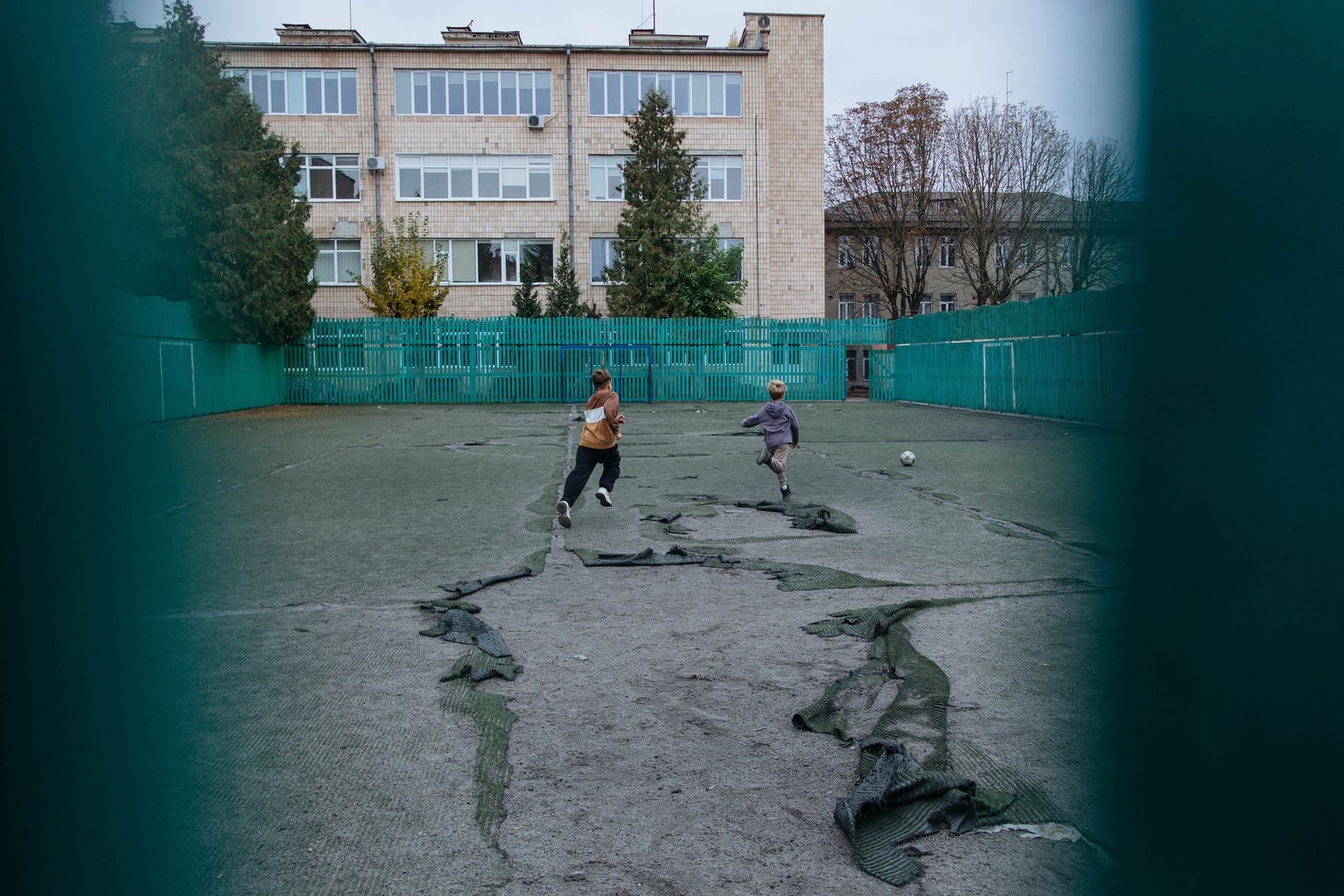
Despite the gloomy autumn weather, the temporary peace brought locals out onto the streets in numbers unseen since Kherson was liberated from Russian occupation in November 2022.
"People can just feel calm and walk around, ride a bike, not run from one place to another," said Iryna Leonova to the Kyiv Independent outside a supermarket.
"It's not that life has changed in the last few days, it simply returned."
Normally, the danger all around Kherson is particularly felt in the so-called "red zone," the neighborhoods and settlements closest to the river, where civilization has almost completely disappeared due to the round-the-clock threat of Russian drones.
Now, these areas are once again accessible, although not completely safe, as landmines dropped over years by Russian forces across the river continue to present a threat, as the tragic death of Marines press officer Volodymyr Obertas showed on Oct. 28.

Usually a resident of the city's Ostriv neighborhood, Inna Sapai has long moved to a safer part of Kherson, further away from the river.
In the last days, she has not only been able to run errands that would have otherwise carried with them too much danger, but she also checked on her home in Ostriv.
"It's strange to feel this sense of movement in the city. Not just the people or the cars, but this intangible feeling in the air," Sapai said to the Kyiv Independent.
"Before, any fleeting moment of quiet just weighed down on you, but now, the silence really lifts your mood."
Since the ceasefire, thousands of Kherson locals have returned to their hometown from outside the city.
Some have come to inspect their homes and collect personal belongings, others just for the short-lived feeling of returning to a hometown that has long become unfit for life.
Markets once almost abandoned have come back to life, while city workers have used the opportunity to repair critical infrastructure that was inaccessible until now due to the drone threat.

But everywhere, local resident Natalia said, who declined to give her last name, the bittersweet feeling of how temporary the quiet will be hangs.
"I feel very mixed emotions, there is not really any joy per se, because even though you see how many people have come to the city — yesterday I was stuck in traffic for the first time in years — but there is an understanding that in just a few days everyone will leave again," she said.
"There have been a lot of tears, as people come home to see how their homes have been damaged or ruined completely. But home is home, and Kherson is a place of power for all of us."

According to Ukrainian Ombudsman Dmytro Lubinets, the ceasefire will continue until 11 p.m. on Nov. 1, upon which the daily strikes across the river are expected to begin again.
Despite the major international effort to make it happen, the Oleshky ceasefire also displayed to the world how quickly the fighting can end in Ukraine if Russia makes the decision to stop.
But with the resumption of hostilities, residents now anticipate that the worst of Russia's campaign to rid the city of life could still be ahead of them.
"I feel sad knowing that soon this will all end, and a great fear of the unknown, that we don't know what will come next," said Natalia.
"People are worried, and I am too, at the fact that it can only get worse."