Letters to the editor: Readers question Trump's Russian diesel deal and US sanctions policy
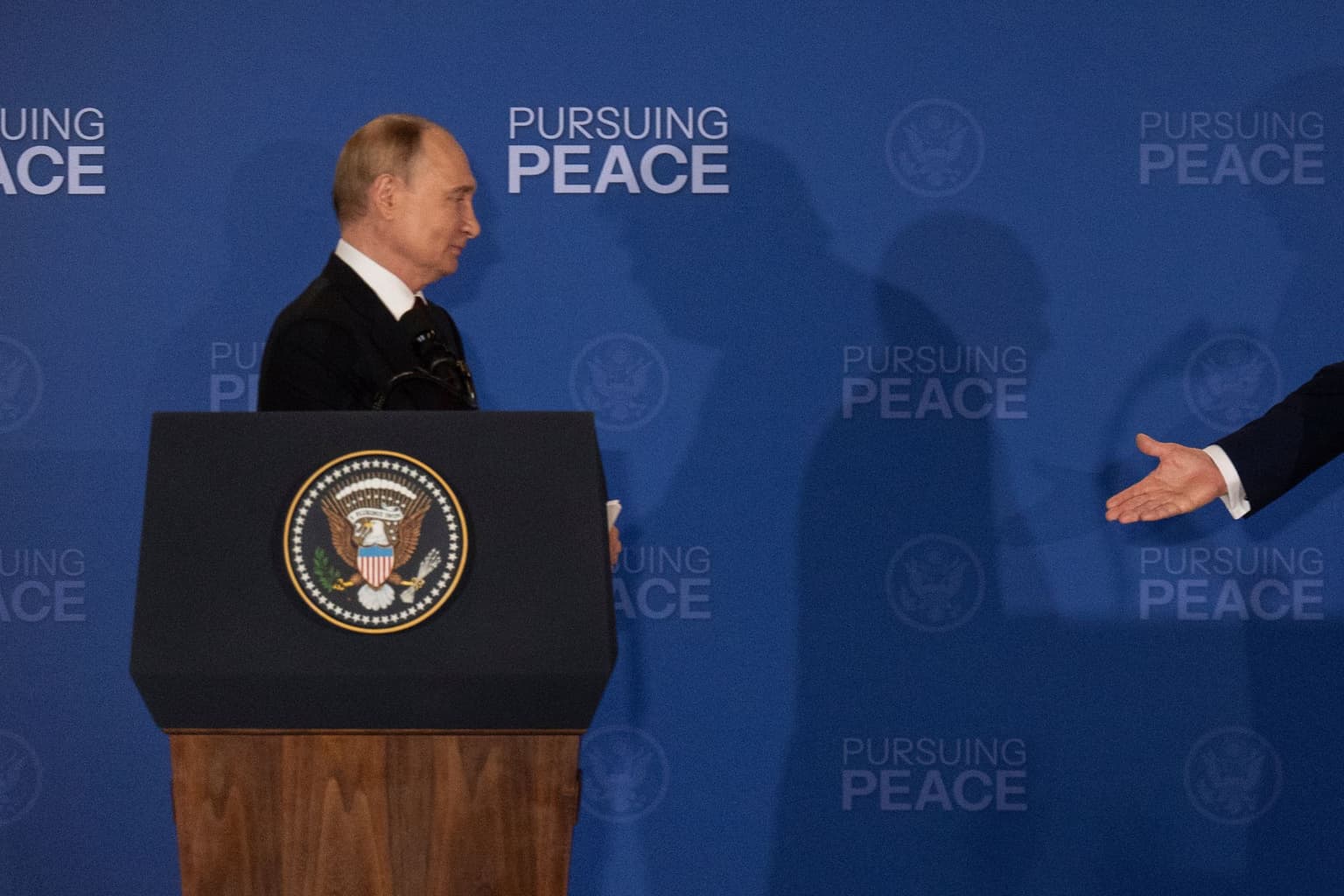
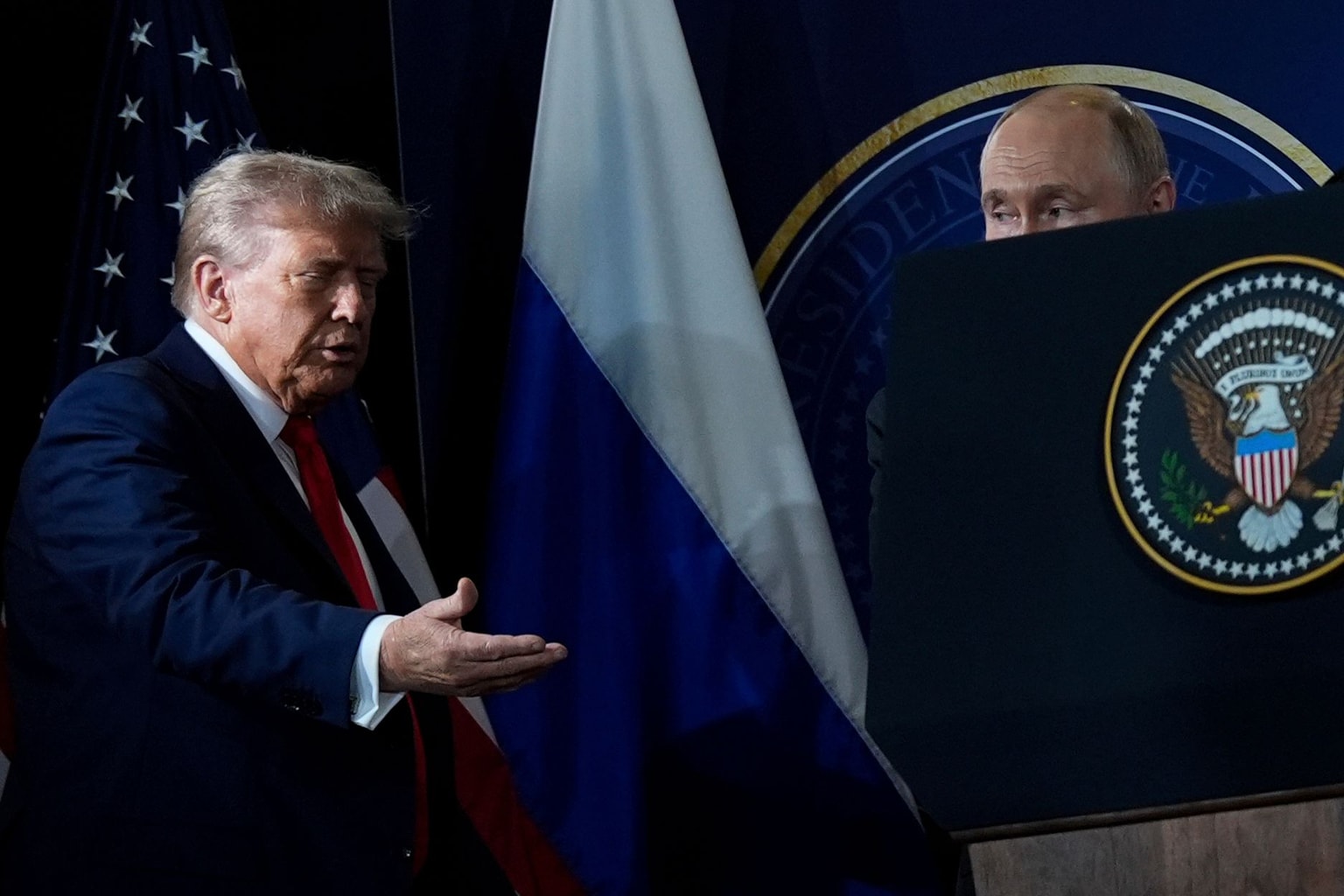
President Donald Trump (R) walks toward Russian President Vladimir Putin (L) to shake hands during a joint press conference at Joint Base Elmendorf-Richardson in Anchorage, Alaska, U.S. on Aug. 15, 2025. (Jae C. Hong / AP)
 Letter to the editor
 on Google
The Kyiv Independent Opinion Desk
This week's letters come from readers questioning the Trump administration's decision to purchase Russian diesel fuel amid rising prices in the United States. An American reader argues the deal benefits Russian President Vladimir Putin at Ukraine's expense, a scholar questions whether a U.S. sanctions bill will meaningfully pressure Moscow, and a British reader raises concerns about Washington's turn to Russian oil.
Got an opinion on anything you've read in the Kyiv Independent? Send it to letters@kyivindependent.com — your letter may appear in our Letters section.
Six days of diesel for America, and billions for Putin
Mark Cary, United States member
U.S. President Donald Trump's MAGA Republican Party is projected to lose the midterm elections in a few weeks, and much of his power and support within the government could evaporate.
Trump needs a scapegoat for the crippling rise in diesel prices in the United States. He has now decided that scapegoat will be Ukraine and President Volodymyr Zelensky.
The diesel "deal" Trump announced a few days ago is nothing but a calculated act of gaslighting aimed at Americans and a wholesale admission that he has always been on Team Russia.
Trump says the deal will give the United States 1.8 million tons, or 14 million barrels, of diesel over the next 90 days, with another 3 million tons next year if Russia can supply it.
This figure is so minor in real terms that it would keep American trucks and industry running on diesel for a mere six days. Donald Trump has simultaneously destroyed American credibility, sided with the enemy, and sold out Ukraine for a pittance.
read also
The US-Russia sanctions bill is not a sanctions bill
Karl Frost, United States / Germany member
The Lindsey Graham bill in the US, passed by Congress on Sept. 16, was celebrated internationally as a landmark Russian sanctions bill. Ukraine supporters who cheered this seem not to have fully appreciated that most Democrats voted against it.
Despite appearances, legally, the bill does not mandate Russia-related sanctions. The legally consequential aspect of the bill is authorizing discretionary tariff powers for the president with no meaningful oversight.
The bill identifies two categories of tariff targets: the top five importers of Russian oil and the top five facilitators of Russian sanctions evasion.
There is language in the bill "mandating" these tariffs. However, the bill gives the president arbitrary, discretionary powers to make exceptions. In other words, the president is not actually mandated to impose these tariffs.
Trump already had the power to sanction Russia, which he was not using, so there is no reason to think this further permission to tariff Russian oil consumers will be used, especially in light of his announcement that the U.S. would buy diesel fuel from Russia to offset fuel price increases caused by his war with Iran.
Unlike the "importer" tariffs, which do have relatively objective criteria, the "facilitator" tariffs are based on presidential interpretation. The Supreme Court has repeatedly affirmed, for example in Dalton v. Specter, that where a statute grants such pure executive discretion as spelled out in the bill, courts will decline to review the factual basis behind the president's determination. The president could theoretically designate any nation currently locked in a trade dispute with the U.S., including allies of Ukraine, as a "facilitator of sanction evasions," slap them with 100% tariffs, and face zero judicial review.
This is the central concern raised by Democrats. As U.S. Representative Don Beyer stated, "This bill would do more harm than good for America and for Ukraine. Giving (Trump) this power when he has shown us over and over again what he will do with it would be an incredible mistake."
Is there anything to do about this?
Mostly no, at least not directly, except for dropping illusions. This matters because the bill is being presented as a tool to pressure Russia and support Ukraine. Trump already declines to use his existing sanctions powers, so there is little reason to expect this one to pressure Russia, and it could actually backfire on Ukraine.
The US turn to Russian oil raises questions
Barry Foster, United Kingdom member
I am a U.K. citizen living in the South West of England. I have a 23-year-old diesel car and am now paying 2 pounds per liter ($2.65).
I am appalled by the descent of the U.S. to the level of barbarism shown by its leaders: resorting to shouting down opposition when they have no reasoned argument and using personal insults against journalists who ask pertinent questions. But back to diesel.
Several weeks ago, Mr. Trump was castigating Ukraine for attacking Russian oil and petrochemical facilities. In the current circumstances, these are appropriate targets, in contrast with Russia's attacks on homes and civilian infrastructure. His "argument" was that Ukraine was causing a global diesel shortage through this strategy, while failing to acknowledge the sanctions he had imposed on Russia.
Ordinary Russians queuing for fuel learned more about their leaders' war from these shortages than from any other source. Mr. Trump had conveniently forgotten that he had contributed to the shortage by attacking Iran, which discovered it could hold the whole world to ransom by closing the Strait of Hormuz, creating shortages of all fuels and many other oil-based products.
Suddenly, Mr. Putin is America's savior, agreeing to export "millions of barrels" of oil to the US! Where has this oil appeared from? Is it the result of lifting sanctions on the shadow fleet? Is Ukraine no longer attacking Russian oil facilities? Maybe these are magic oil wells?
Any story that will last long enough for Mr. Trump to tell it to voters ahead of the midterm elections appears on his antisocial media sites.
Editor's note: The letters published in this section reflect the views of their authors alone and do not purport to represent the position of the Kyiv Independent. Got an opinion on anything you've read in the Kyiv Independent? Send it to letters@kyivindependent.com— your letter may appear in our Letters section.