Interview: Latvia facing 'alarming' period amid rising Russian threat in Baltics, president says
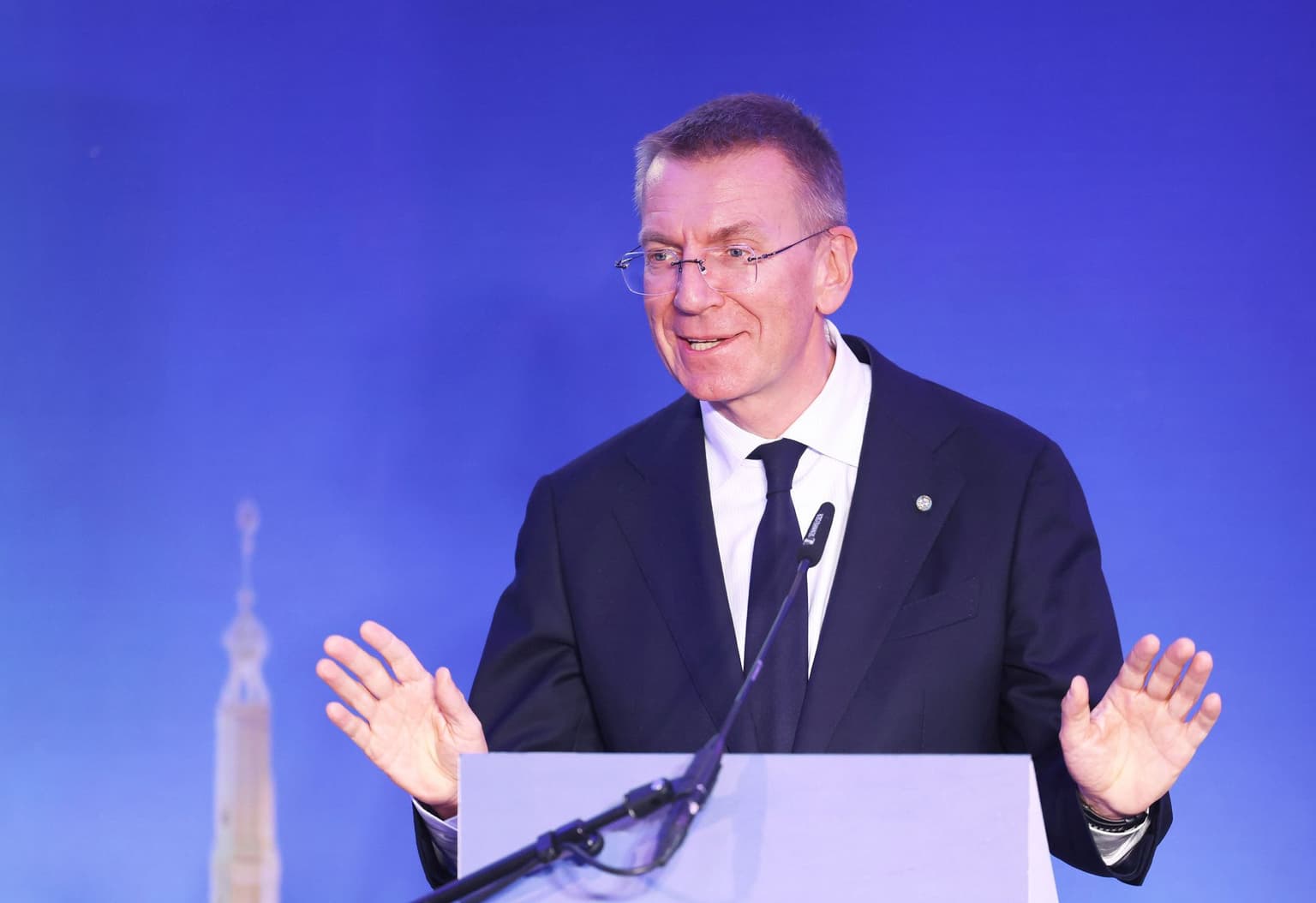
Latvian President Edgars Rinkēvičs speaks at the Riga Conference in Riga, Latvia, on September 10, 2026. (Andrey Rudakov/Bloomberg via Getty Images)
 on Google
Latvian President Edgars Rinkevics said his country sees no signs of an imminent conventional attack by Russia, but described the coming weeks as an "alarming" period in an interview with the Kyiv Independent.
Rinkevics said his government is preparing for cyberattacks, information campaigns, and possible disruptions by Russia around Latvia's parliamentary elections on Oct. 3.
"We have asked, and our NATO friends and allies provided additional battle plans. I'm pretty sure that those measures that we are introducing will be sufficient to have the election process not impacted in any negative way," Rinkevics said.
"But the warning is there."
Security concerns continue to grow in the Baltic region. NATO officials have warned about Russian drone incursions, airspace violations, sabotage, and other hybrid threats, while countries in the region have been strengthening air defenses.

Rinkevics stressed that Latvia does not see Russia preparing an imminent conventional attack against the Baltic states, Poland, or other NATO countries.
"There is a lot of speculation by experts, by bloggers, about a possible conventional attack against the Baltic states or against Poland or other countries," he said. "We do not have facts to support that."
But he said the absence of an imminent conventional attack should not obscure the increasing Russian pressure on countries supporting Ukraine.
"There is increasing pressure against those countries that are supportive of Ukraine," Rinkevics said, pointing to sabotage, cyberattacks, and other subversive activity. He said defense companies that supply Ukraine and nongovernmental organizations that support the country had also been targeted.
Rinkevics warned that information campaigns aimed at creating uncertainty about NATO's willingness or ability to respond to an attack could serve Russia's interests.

"These actually are good for Russia because they, in a way, initiate uncertainty here, in the society, in many societies of NATO and European countries," he said.
In the event of a Russian incursion, NATO troops already stationed on the alliance's eastern flank would be ready immediately, the Latvian president said.
"If someone plans something, we are not expecting two weeks' debate in Brussels," he said. "We are expecting a very, very swift response from NATO troops that are stationed in Eastern flank countries."
read also
Russia not interested in peace
On the prospects for an immediate diplomatic breakthrough between Russia and Ukraine, Rinkevics expressed doubts, saying Moscow showed no sign of changing course.
"Russia does not want to do any peace deal at this time," he said. "They still hope for something."
He nevertheless welcomed U.S. efforts to pursue a peace process and said the central issue was not which American official led the talks but whether Moscow was prepared to engage seriously.
"I think that all the peace talks and efforts will be running into difficulties," he said. "Russia is not willing to sit at the table."
"Russia still believes that they can win this war and may continue fighting."
Rinkevics also confirmed that Latvia, along with other U.S. allies, had been briefed on CIA Director John Ratcliffe's Aug. 25 trip to Moscow.
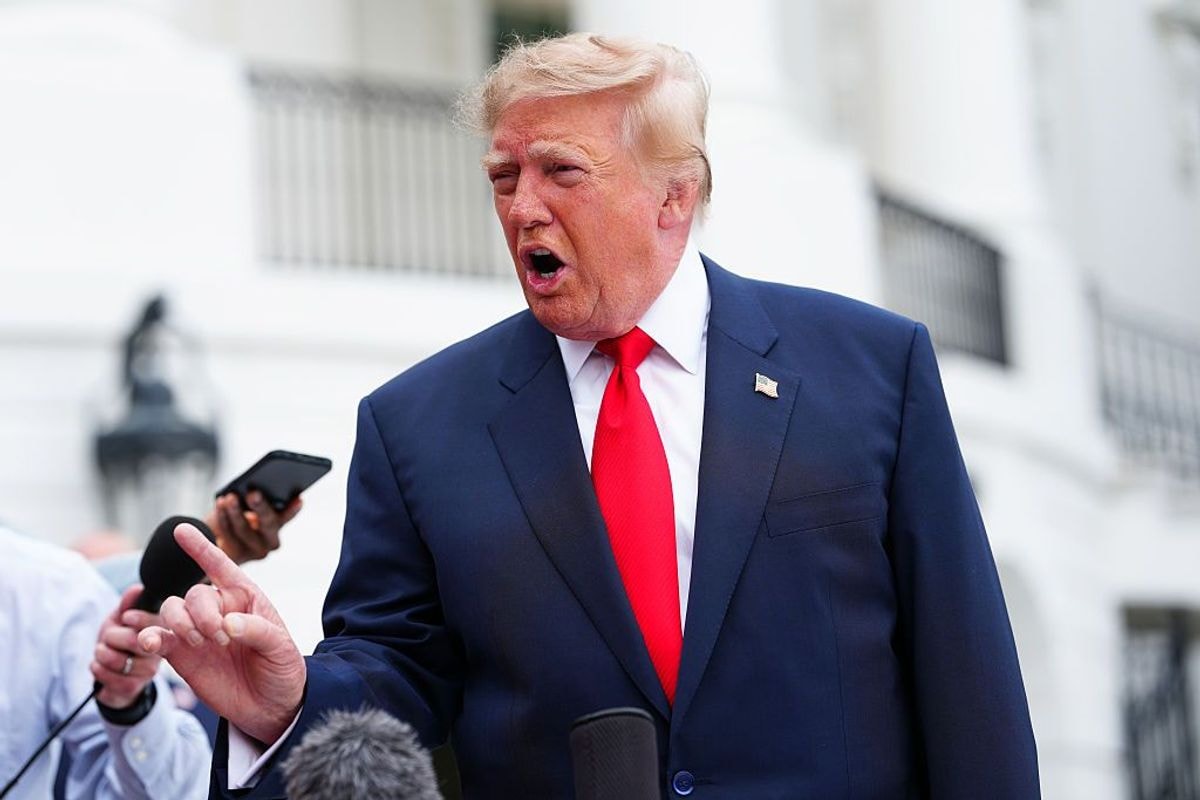
U.S. President Donald Trump said on Aug. 26 that Ratcliffe's visit to Moscow was "semi-routine," dismissing speculation the trip was meant to warn Russia against potential action targeting NATO countries.
Rinkevics did not disclose details of the briefing.
"We have agreed with our American friends and partners that everything that the United States wants to say about this trip will be said by the United States," he said.
read also
New U.S. sanctions
New U.S. sanctions legislation targeting Russia could help push European countries to finally end their remaining purchases of Russian oil and gas, Rinkevics said.
"I think that this may actually produce the result that countries within the EU will stop buying Russian oil and Russian gas," he said. "But, of course, that remains to be seen."
Trump signed legislation targeting Russia with new sanctions and tariff measures on Sept. 18, the White House announced.
The bipartisan legislation, championed by the late Republican Sen. Lindsey Graham, gives Trump authority to impose tariffs of up to 100% on the five largest buyers of Russian oil and natural gas, as well as five countries helping Moscow evade energy sanctions.
China, India, and Turkey are among the largest buyers of Russian oil, while the European Union, China, and Turkey are major importers of Russian natural gas.

Rinkevics called the Graham sanctions law "good legislation."
"I think that what we were calling [for], and what we did ourselves since February 2022, was to phase out buying Russian oil and gas," he said. "We have done it. We have been calling [on] other EU states."
For Rinkevics, cutting economic ties with Russia extends beyond the energy sector, and he warned European companies that still operate in Russia of growing risks after Moscow seized the assets of several Western companies.
"I just want to pass the message to European companies and countries: don't do business with Russia and you will be on the safe side," he said.
While some Latvian companies, including in the pharmaceutical and food-processing sectors, still operate in Russia outside EU sanctions, Latvia has warned them, Rinkevics said.
"We have been kind of saying, to not only our European partners, but to our own businesses, that if you do business in Russia or Belarus, you do it at your own risk," he said.