Exclusive: Watchdog lists ships carrying Russian gas, blasts Trump sanctions waiver
 on Google
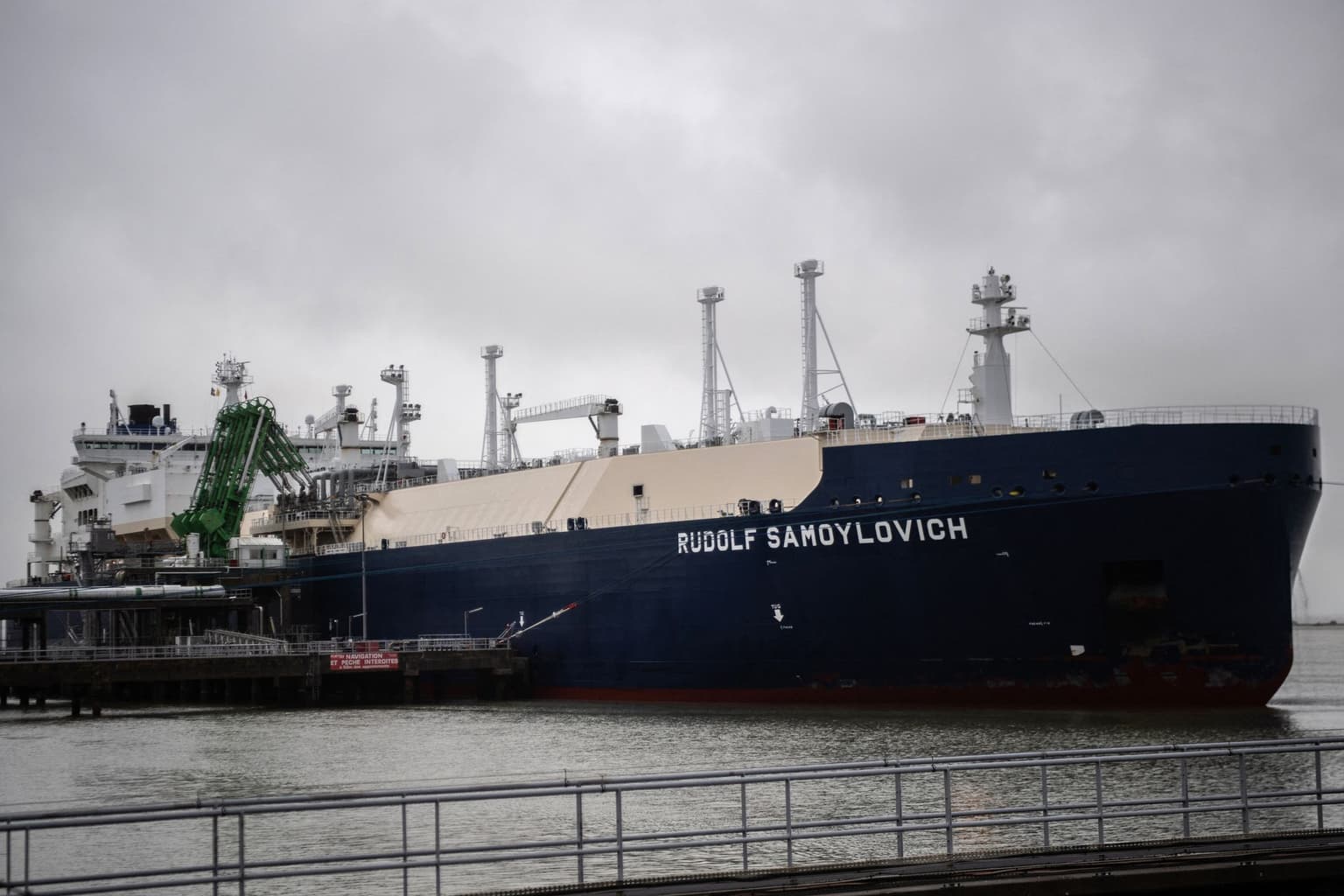
The NGO Urgewald has identified what it says are all the 134 vessels involved in Russian gas trade since 2022, which have carried over 150 million metric tons of cargo since the start of the full-scale invasion of Ukraine, according to data shared with the Kyiv Independent.
As of Oct. 15, around 1.5 million metric tons more were in transit.
The news comes as U.S. President Donald Trump on Oct. 16 issued a broad waiver of Russia sanctions that were set to take effect two days later under a law championed by the late U.S. Senator Lindsey Graham.
The law authorized the president to impose tariffs of up to 100% on the top five countries buying Russian gas and oil, and also provided for extensive sanctions against Russian officials, banks, and the energy sector, including ships involved in the Russian liquefied natural gas (LNG) trade.
"Republicans and Democrats passed this law in Lindsey Graham's name to squeeze Russia's war revenues. Trump has now hollowed it out before its main sanctions could bite," said Alexander Kirk, a sanctions campaigner at Urgewald, on Oct. 17.
"That is a betrayal of the bipartisan effort behind this law and a lifeline to (Russian President Vladimir) Putin."
Between the law's signing on Sept. 18 and Oct. 15, 42 tankers had transported Russian gas, according to the analysis.
These include Boris Davydov, an Arc7 tanker that departed Russia's Yamal terminal on Oct. 6; Konstantin Posiet, which departed Arctic LNG 2 on Sept. 21; and Clean Horizon, which left Yamal the same day with a cargo later delivered to the French port of Dunkerque.
U.S. lawmakers from both parties have urged the White House to impose sanctions under Graham's law in order to pressure Moscow toward ending the war in Ukraine. For LNG tankers, this would enable Washington to target those ships and restrict their access to international shipping services.
Instead, Trump has taken increasingly accommodating steps toward Russia, announcing a deal earlier in October to purchase Russian diesel.
"Congress must challenge this retreat and demand that the administration explain whose interests are served by shielding Russia's energy trade from the pressure this law was designed to impose. Ukraine should not have to pay the price for Washington's unwillingness to act," Kirk said.
The list of 134 ships carrying Russian gas between Feb. 24, 2022, and Oct. 15, 2026, includes 17 Arc7-class LNG carriers, an advanced tanker type designed to export product from the Russian Yamal LNG terminal in the Arctic.
The EU paid 7.88 billion euros (about $8.9 billion) worth of gas from the Arctic project in the first nine months of 2026, Urgewald reported earlier.
While the U.S. has never been a major buyer of Russian fossil fuels and banned all imports in 2022, the EU remains the leading buyer of Russian LNG, followed by China, Japan, and South Korea, according to the CREA think tank.
But the EU has been phasing out Russian LNG imports, with a full import ban to take effect in January 2027.
Urgewald's latest findings underscore how much Russian LNG trade continues to rely on Western services.
Of more than 2700 voyages undertaken since February 2022, about a third were taken by ships owned by either the Greek shipping company Dynagas or the U.K.-based, U.S.-owned company Seapeak, according to data.
Both account for roughly 17% of the voyages each, with the Dutch Anthony Veder gas shipping company coming in third.
Greece has secured a sanctions exemption for Dynagas, allowing the company to continue shipping Russian LNG to non-EU countries even after the EU ban takes effect.
Other operators include Russian companies such as Gazprom and Novatek, as well as China's Cosco.
LNG trade has faced weaker sanctions pressure than Russia's oil exports, which have been constrained by an EU- and G7-imposed price cap, forcing the country to rely increasingly on its shadow fleet to ship its oil.
"Europe must now act with urgency. Sanction the tankers, cut off the services that keep them operating, and close the loopholes sustaining Russia's LNG exports," Kirk said.