Budanov's political honeymoon is over
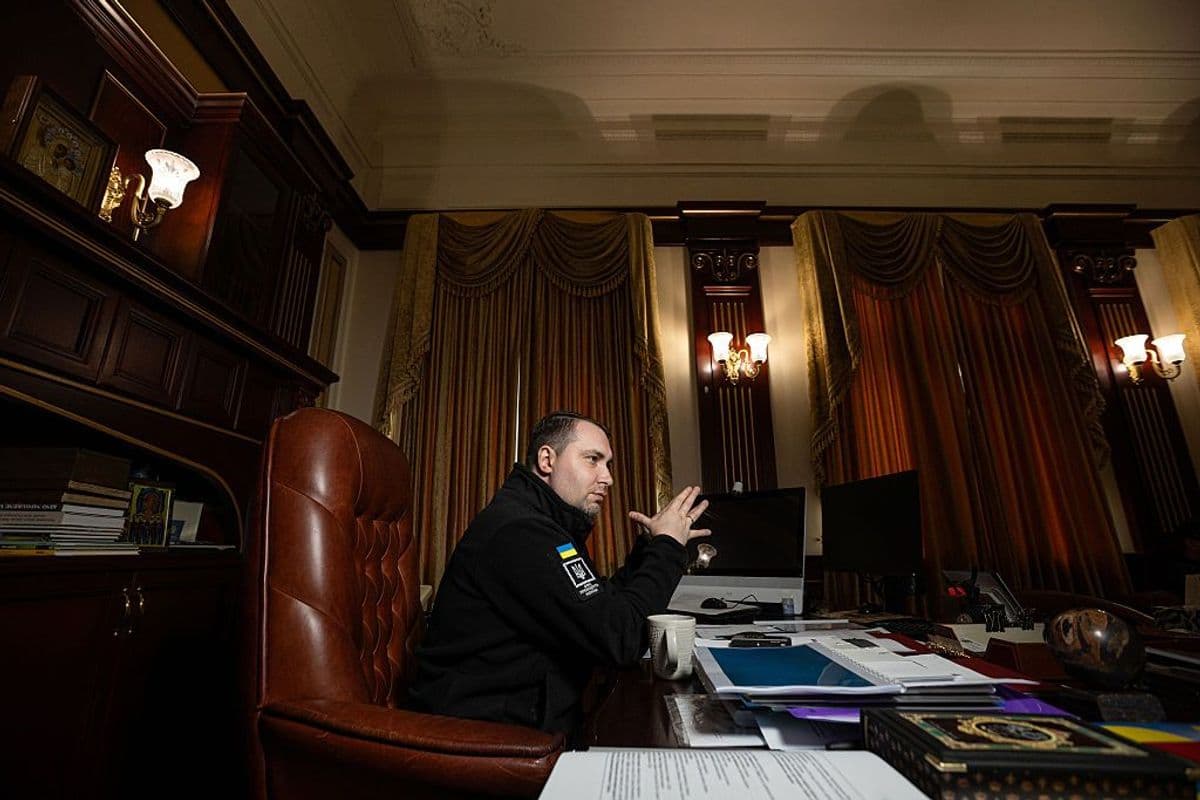
President's Office Head Kyrylo Budanov works in his office on April 18, 2026 in Kyiv, Ukraine. (Julia Weber/Babel.ua/Global Images Ukraine via Getty Images)
 on Google
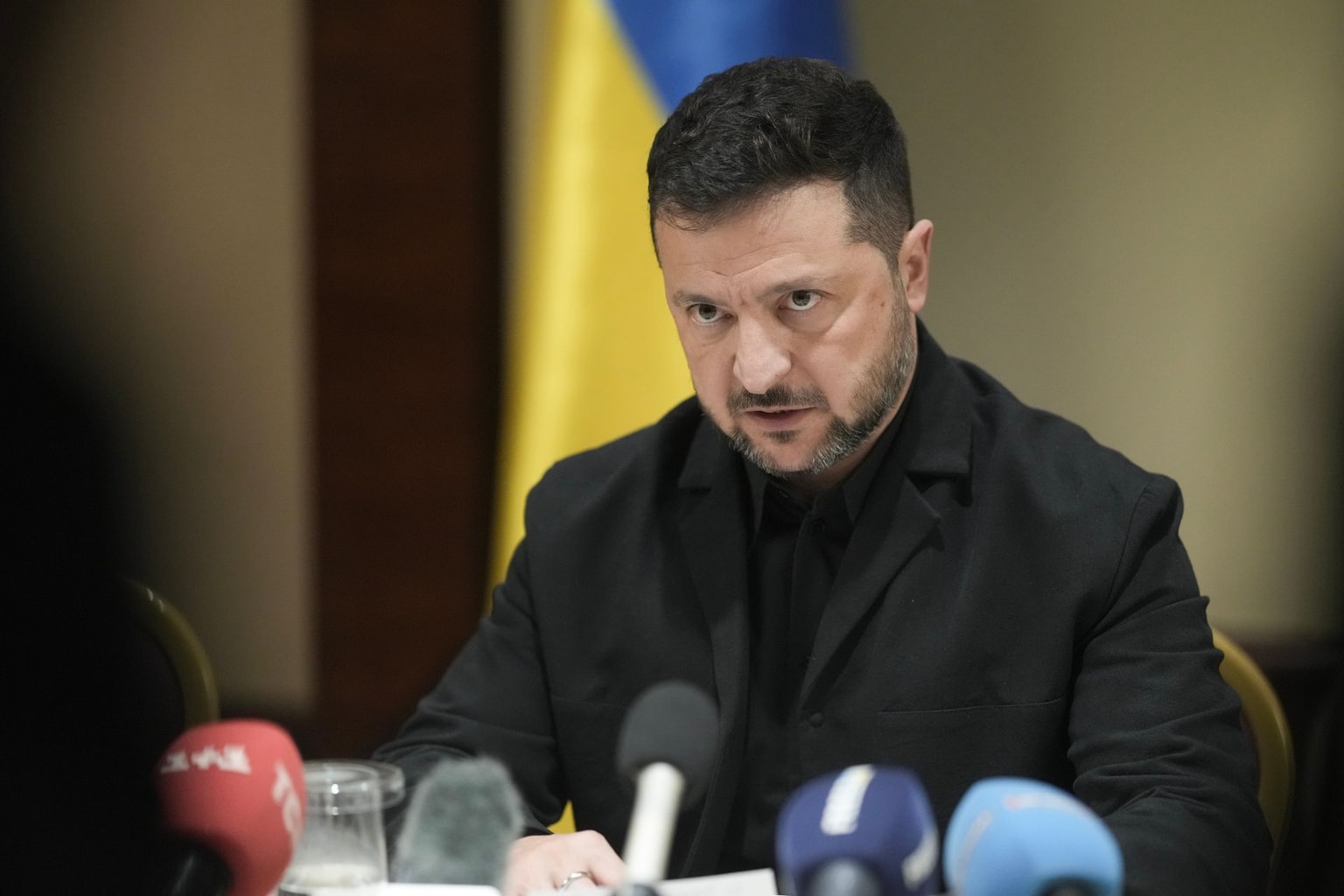
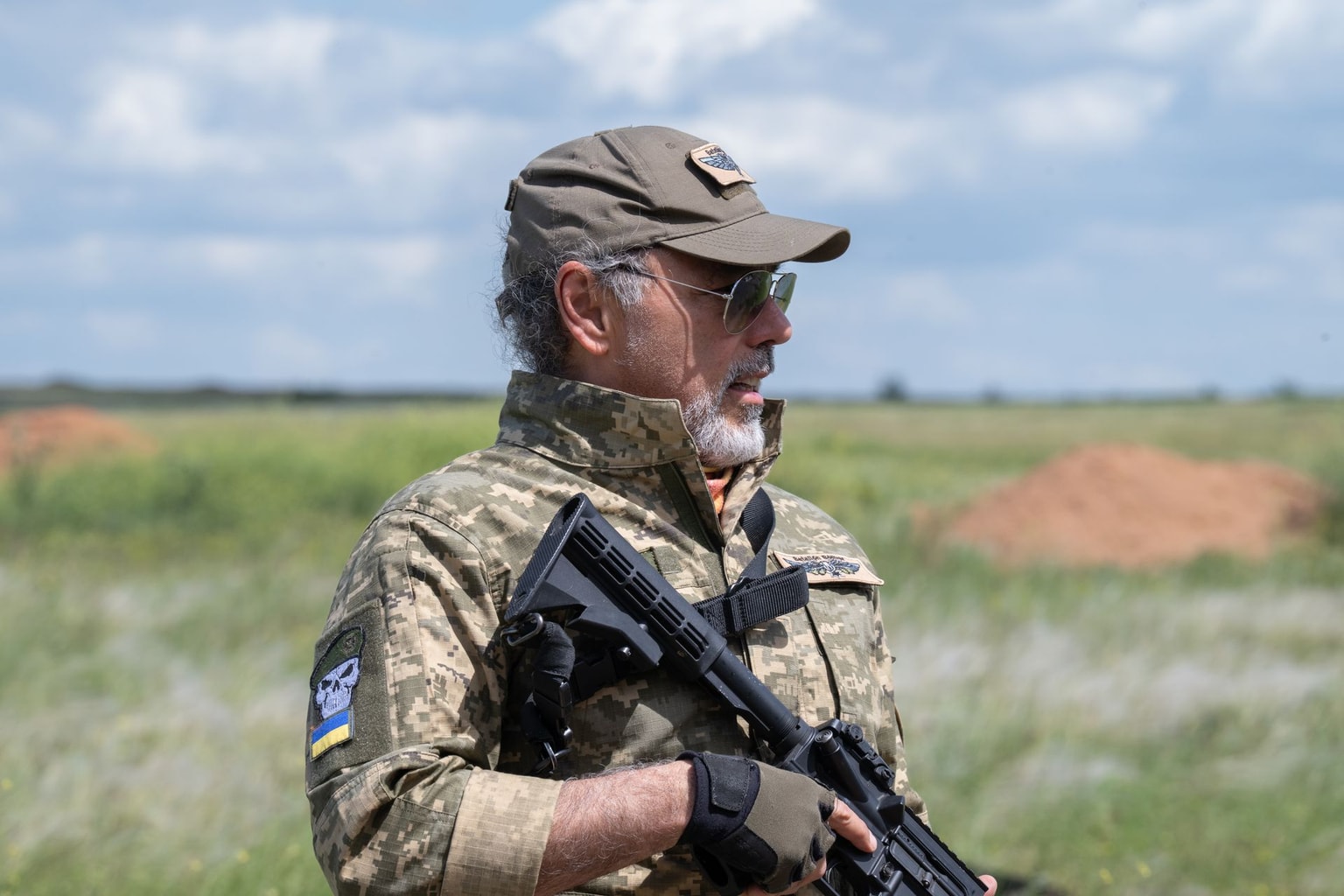
President's Office Head Kyrylo Budanov had something rare in Ukrainian politics: a reputation largely untouched by scandals.
A career military officer, he is best known for running Ukraine's military intelligence agency (HUR) and overseeing a number of formidable operations during Russia's full-scale war. Under his leadership, the agency came to be regarded as one of Ukraine's most competent institutions.
Nine months after switching a military post for political office, Budanov became mired in controversy.
The corruption
Budanov's name has surfaced in recordings as part of a sprawling corruption case, Hromadske news outlet reported on Aug. 26, citing court documents. The case centers on Budanov's former deputy, Iryna Mudra, who was charged last week with corporate raiding and money laundering.
The case is linked to the ongoing investigation into Energoatom, the state nuclear-power monopoly. In the new revelations, Mudra says that the illegal proceedings she was undertaking were ordered by her "boss."
Mudra's boss is Budanov.
The recordings repeatedly refer to a "Kyrylo Oleksiyovich" — Budanov's first name and patronymic. At a court hearing on Aug. 25, a lawyer for Sense Bank's chief executive, one of the suspects, cited an exchange where a man bearing Budanov's name was discussing illegal activity.
Transcripts submitted by prosecutors explicitly identify the speaker as Budanov, according to Hromadske.
Other conversations are more pointed. Mudra and the former lawmaker Maksym Mykytas allegedly discussed a request from Timur Mindich, a suspect in the Energoatom case and a close associate of the president, to take control of Sense Bank's cash flows. "Mindich approached Kyrylo," Mudra allegedly said, adding that there were "serious money flows" to be controlled.
Mudra and Mykytas are accused of laundering Hr 150 million ($3.4 million) through Sense Bank to pay bail for another high-ranking official implicated in the scheme.
The case is complicated, with revelations in November, May, and now August adding meat to the biggest corruption scandal of President Volodymyr Zelensky's tenure.

Anti-corruption agencies haven't pointed at Budanov, and he has not been charged.
Budanov joined the President's Office in January, replacing Andriy Yermak, who was ousted months prior amid the same corruption scandal and charged with money laundering.
In some ways, Budanov was seen as Yermak's opposite. Officials and lawmakers who spoke to the Kyiv Independent said the former intelligence chief, unlike his predecessor, showed little appetite for political intrigue.
Yet he kept Yermak's team in place. He said in an interview on national television aired on Aug. 28 that he believes in "institutional continuity" and didn't want to disrupt the government's work while new officials learned their roles.
Critics say he wasn't allowed to bring the people he trusted.
Some saw Budanov's appointment as head of the President's Office as either Zelensky's attempt to remove a potential rival or to shape a possible successor.
Budanov has regularly been featured in opinion polls, consistently ranking among the country's most trusted public figures. He has trailed only Zelensky and Valerii Zaluzhnyi, the former army chief and now Ukraine's ambassador to the U.K. The latest poll by the Socis research center also placed Budanov behind former Defense Minister Mykhailo Fedorov in the potential presidential race.
Fedorov was riding a high wave following his dismissal as defense minister. Nationwide protests to reappoint Fedorov were ongoing for a month.
Observers who spoke to the Kyiv Independent believe the current political crisis and corruption scandal that followed could damage Budanov's reputation and weaken his political standing.
Political analyst Volodymyr Fesenko says Budanov has now become a "hostage of Zelensky," a position that could undermine his chances of pursuing an independent political career.
"This is the main problem and challenge for him," Fesenko told the Kyiv Independent. "(Budanov) will have to decide soon whether he stays on Zelensky's team, risking further reputational damage and potentially legal problems if situations like this continue to arise."
"If he wants to preserve his potential status as an independent political figure, I think he will have to distance himself from Zelensky."
"If Budanov has political ambitions — and he does — he would have been better off staying on as the war hero and building up his popularity," one pro-government lawmaker said on condition of anonymity, echoing the sentiment. "The President's Office has always been a toxic place."
Fesenko says the question now is whether Budanov will face any legal consequences, including actual charges. The case materials suggest he may have asked Mudra to collect money for bail, he says, but "collecting money for bail is not a criminal offense."
"And if it turns out that there was a breach of the law or some illegal schemes involved, then there could be legal risks," he added.
The politics
Since taking office, Budanov has been devoted to peace talks with Russia. He has also taken up efforts to rebury the remains of prominent Ukrainian historical figures and pushed for the creation of the National Pantheon to honor its heroes, past and present.
After joining the President's Office, Budanov soon appeared at an event dedicated to Ukraine's European integration, presenting himself as an opponent of corruption and saying that the President's Office was open to proposals from anti-corruption activists.
"Corruption begins where hands-on management begins," he said in April, after Yermak, who was tainted in controversy, was dismissed.
But the recently published materials alleged that, behind the scenes, corruption didn't die out with Yermak out of office. On the tapes, Mudra allegedly said that an unnamed top official from the President's Office had told her that "corruption shouldn't be fought — it should be controlled."

On domestic political scandals Budanov has always kept his distance, urging unity and saying that wartime infighting weakens Ukraine. Following the scandal, Budanov echoed the same line, saying that "let the court sort it out."
Officials and experts who spoke to the Kyiv Independent believe that, if true, the published recordings by anti-corruption institutions could tie Budanov to the existing unpopular system.
"Budanov is, after all, part of the military establishment, which is clearly tied to the political leadership. That system can force everyone to play by its rules, even a war hero," says Olexiy Haran, politics professor at the Kyiv Mohyla Academy and research advisor at the Democratic Initiatives Foundation.
Fesenko argues that Budanov was shaped by a military hierarchy in which orders from above are effectively binding, making refusal a potential breach of discipline.
"Zelensky most likely gave Budanov the order. Budanov had no personal motive to save (an unconnected high-ranking official)," he said.
The President's Office hasn't responded as of publication time.
The future
Budanov's involvement in the scandal has raised a broader question about how Ukrainians tend to balance corruption allegations against those who have a good track record defending the country against Russia. Budanov is perhaps the most prominent Ukrainian military figure who may become embroiled in a corruption scandal.
His record as a military officer shapes how people perceive the allegations against him — with his supporters downplaying the allegations and his critics more condemning him, during multiple interviews with the Kyiv Independent.
"For a significant portion of the population, particularly among the military, the position is unequivocal: 'Don’t touch the war hero,'" Fesenko said.
Commanders of the Christian Corps, a military group fighting under the supervision of Ukraine's military intelligence, have issued a public statement in Budanov's defense. The corps includes several units, including Bratstvo (Brotherhood), Tradition and Order, and Revansh, which grew out of far-right movements.
Commenting on the allegations, they said there had been "an attempt to push a negative narrative" about Budanov, pointing to his record of achievements.
Fesenko said military figures could, both publicly and privately, signal to the country's anti-corruption institutions that there is a red line the bureau should not cross. Crossing it, he believes, could trigger a confrontation.
Haran argues that the military has already crossed the line. Further involvement by military figures in politics or anti-corruption efforts, he says, would be "very dangerous."
"People with military achievements are treated differently," Haran told the Kyiv Independent. "But those achievements should not put them beyond the reach of law enforcement or anti-corruption bodies."
Note from the author:
Hello there! This is Kateryna Denisova, the author of this piece.
The Kyiv Independent doesn't have a wealthy owner or a paywall. Instead, we rely on readers like you to keep our journalism funded. If you liked this article, please consider joining our community today.
Thank you.