Exclusive: Inside the years-long scheme to turn a nationalized bank into Zelensky allies’ 'piggy bank'
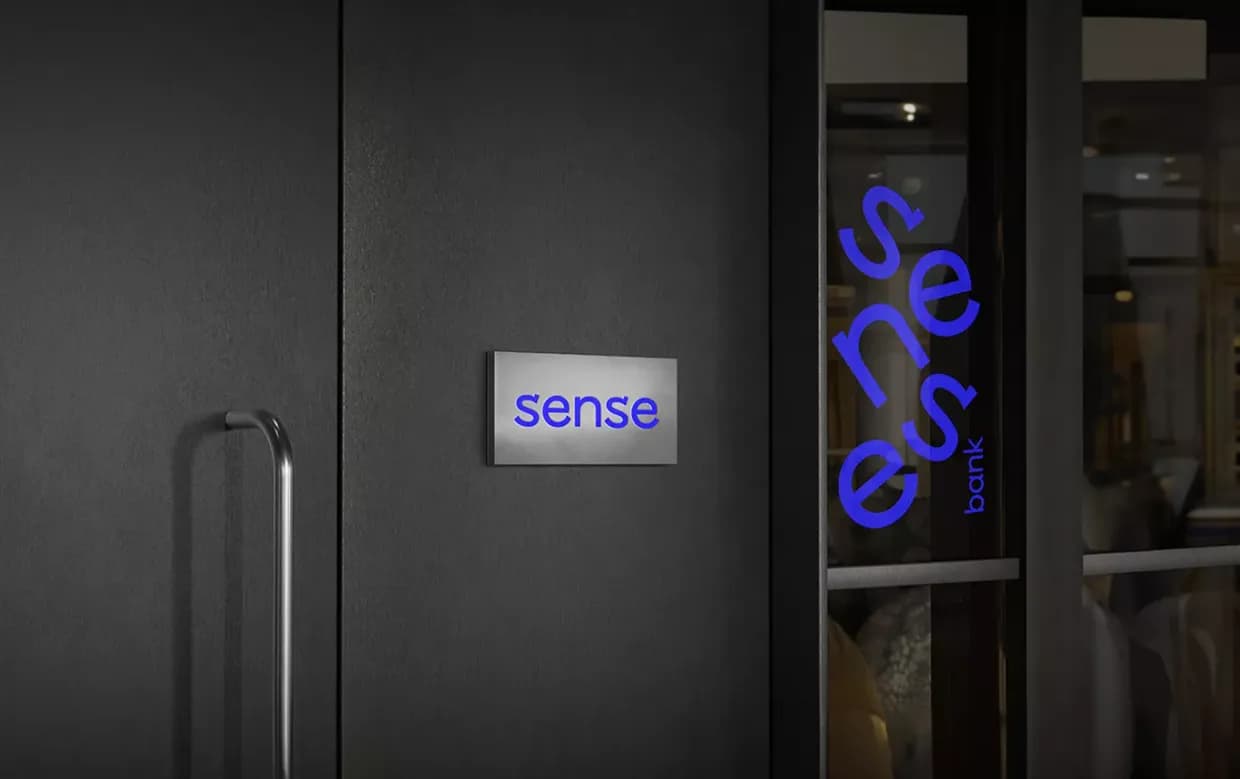
Before its nationalization in July 2023, Sense Bank, formerly known as Alfa-Bank, stood as one of Ukraine's largest financial institutions, owned by ABH Financial Limited and ABH Ukraine Limited. (sensebank.ua)
 on Google
Key findings:
- A Ukrainian state-owned bank, seized from a Russian owner in 2023, was allegedly turned into a tool for insider corruption.
- A senior aide to President Volodymyr Zelensky, Iryna Mudra, pressed to install a favored, conflicted candidate on the bank's oversight board.
- Two officials who vetted him warned he had ties to a previous bank failure and a conflict of interest, but he was appointed anyway.
- The bank's rushed, low-scrutiny nationalization made it easier to quietly manipulate than other state banks.
- Mudra allegedly later used her influence over that board to help arrange bail money for a jailed government minister.
Documents obtained by the Kyiv Independent show that a scheme at the center of Ukraine’s latest corruption scandal was years in the making, built by manipulating a state-owned bank’s oversight board after its nationalization in 2023.
On Aug. 19, Ukraine's anti-corruption authorities accused associates of President Volodymyr Zelensky of using Sense Bank, formerly Russian-owned Alfa Bank, to launder Hr 150 million ($3.4 million). The National Anti-Corruption Bureau (NABU) says the funds were used to secure bail for Energy and Justice Minister Herman Haluschenko, a key figure in a $100 million kickback scheme at the country's state-owned nuclear company Energoatom.
This is the third major corruption case tied to the president's inner circle in the past year — all connected to the same network. The scandal was first uncovered in November, when fugitive businessman Timur Mindich, Zelensky's former business partner, was accused of running a kickback scheme at Energoatom. Former President's Office chief Andriy Yermak was later arrested over his alleged role in the scheme.
Among those also involved was Iryna Mudra, a now-former deputy head of the President's Office and key suspect in the alleged scheme. Meeting minutes show that Mudra strongly pushed for the appointment of Mykola Hladyshchenko, another suspect in the case, to Sense Bank's supervisory board despite concerns about his competence and personal conflict of interest.
The documents reviewed by the Kyiv Independent show how the alleged laundering was made possible: officials, including Mudra, pushed to stack the bank's supervisory board with loyalists two years after its nationalization, according to the meeting minutes.
The perfect bank for corruption
In response to Russia's full-scale invasion, Ukraine moved to nationalize Russian-owned assets in the country, a process the country's international partners supported. Critics, however, have raised concerns that the process of nationalization is opaque.
Sense Bank, then owned by Ukraine-born Russian oligarch Mikhail Fridman, was nationalized under those wartime mandates — a moment that, according to a person with knowledge of the nationalization process, also created an opportunity for top officials to take control of the bank while bypassing the eyes of international observers who backed the push to seize Russian assets.
"Unlike the four major banks that the state had already owned before Russia's full-scale invasion, Sense Bank wasn't closely watched by international observers, so it was a convenient target," the person with knowledge of the nationalization process told the Kyiv Independent under the condition of anonymity.
"It was almost like a piggy bank where you could run shady transactions," the person said.
According to transcripts of secretly recorded conversations published earlier by Ukrainska Pravda in May 2026, two businessmen — Vasyl Veselyi, who previously consulted Sense Bank's supervisory board, and Oleksandr Tsukerman, another suspect in the Energoatom case — discussed potential candidates for the supervisory board of Sense Bank.
All six candidates mentioned in the transcript, who were referred to by the men as "our guys," were appointed to the supervisory board 40 days after the conversation took place, including the head of the board, Hladyshchenko, who is now under investigation.
President's Office Deputy Head Mudra led the nomination committee responsible for selecting supervisory board members at state-owned banks, including Sense Bank. While an independent HR agency is responsible for finding candidates, the nomination committee — made up of five Ukrainian officials — has the final say before being approved by the Cabinet of Ministers.
According to investigators, Mudra was tasked by unidentified people within the President's Office to bring Sense Bank under the office's control to prevent other government bodies from gaining control of it. NABU is also investigating Sense Bank CEO Oleksiy Stupak for his involvement in the scheme.
State-owned assets often end up being a battleground for political influence and personal gain in Ukraine. Supervisory boards, made up of independent and state-appointed members selected through a competitive process, are supposed to serve as a safeguard against corruption and state oversight, handling duties such as the hiring and dismissal of management, including CEOs.
But, as in the case of the Energoatom scandal, supervisory boards can be blocked or controlled, allowing schemes to operate unabated.
The acting chair of Sense Bank's management board, Olena Zubchenko, told the Kyiv Independent that she is unable to comment on the supervisory board's work and why it failed to do its job.
She told the Kyiv Independent that the bank is cooperating with relevant authorities during the investigation.
Trouble from the start
Mudra's relationship with Sense Bank began in 2022 when she was a member of an influential working group on Russian sanctions co-chaired by former President's Office Head Andriy Yermak. The group pushed to sanction Fridman due to his Kremlin connections, paving the way for Alfa Bank to be nationalized by the government.
Yermak was fired in November and arrested in May for his suspected involvement in funneling illicit money — obtained through kickbacks at Energoatom — into a luxury real estate development alongside Mindich and former Deputy Prime Minister Oleksii Chernyshov.
Sense Bank was the first bank to be nationalized during Russia's full-scale invasion after special wartime legislation was passed. According to the person with knowledge of the nationalization process, Sense Bank's nationalization procedure was rushed, with little transparency or regard for good corporate governance and proper management selection.
"Sense Bank was an opportunity for the people under Yermak. They were robbing a bad guy (Fridman). He was an easy target," the person said.
"It's similar to Robin Hood, except that Robin Hood shared his spoils."
read also
The bank fell under the management of the Finance Ministry, which intended to privatize the bank rather than have it run by the state. The International Monetary Fund even included the privatization of the bank as a requirement for an economic agreement in 2025.
But the bank's privatization never happened, prolonged by legal reforms and lengthy procedures such as selecting advisers.
The network behind the scheme took advantage of the lengthy privatization process to co-opt the bank for their own gain, one person close to the Sense Bank case told the Kyiv Independent under the condition of anonymity.
Influencing the supervisory board
In May 2025, Mudra led the Nomination Committee in selecting independent candidates for the bank's supervisory board, which needs nine members to operate — six independent and three state-appointed.
According to documents seen by the Kyiv Independent, she wanted to expand the initial shortlist chosen by the HR agency, Executive Search Ukraine, to include more Ukrainian candidates.
Hladyshchenko, who did not feature on the initial shortlist, was among the new Ukrainian candidates chosen.
Mudra proposed Hladyshchenko, but the Finance Ministry's representative on the committee, Yurii Drahanchuk, and a representative from the European Bank for Reconstruction and Development both raised concerns about his ability compared with other candidates, as well as a potential conflict of interest.
One concern was Hladyshchenko's employment at Delta Bank, which became insolvent in 2015 due to poor management, and at Alfa Bank. Meanwhile, his position at Ukrfinzhytlo, a state-owned enterprise dealing with affordable mortgages that has Sense Bank as a customer, raised a potential conflict of interest.
Nonetheless, after agreeing to resign from Ukrfinzhytlo, the Nomination Committee chose Hladyshchenko, and he was officially approved by the Cabinet of Ministers in June 2025.
He was soon promoted to lead the supervisory board.
According to the tapes published by the anti-corruption bureau on Aug. 19, Mudra allegedly told Hladyshchenko that her "boss" had told her to organize the bail for former Energy Minister Halushchenko.
In the tapes, Mudra and others implicated in the scheme allegedly discussed circumventing a regulatory block on a payment through Sense Bank intended for the bail. They also mentioned using forged documents and an alleged money laundering office.
Mudra did not respond to a call to her personal phone.
On Aug. 20, Ukraine's authorities officially dismissed Hladyshchenko and suspended CEO Oleksiy Stupak.