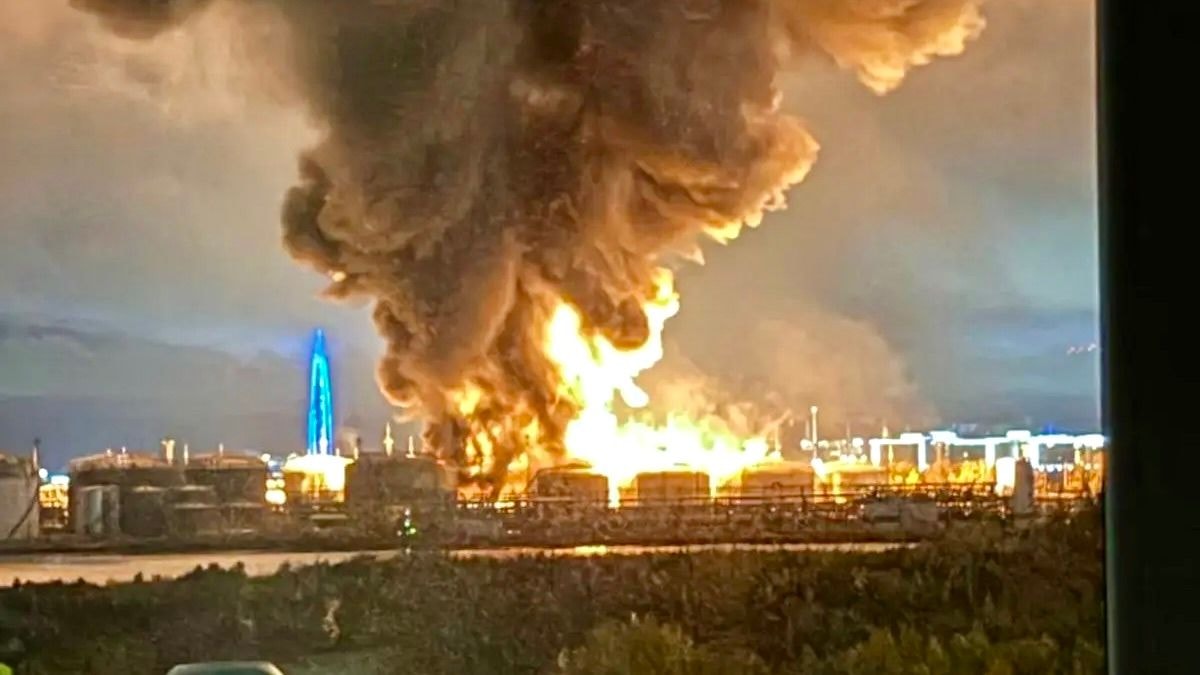
Ukraine war latest: Black smoke rises over Moscow as Ukrainian drones strike refinery in Russian capital
 on Google
Key developments on June 18:
- Ukraine launches largest drone attack on Moscow since start of Russia's full-scale invasion, hits oil refinery
- European Council explores opening communication channels with Kremlin
- Kyiv denies Russian claim that Ukrainian drone struck bus carrying Belarusian children's football team
- Belgium, Germany, Sweden, Netherlands announce new military aid, F-16s for Ukraine ahead of NATO defense ministers' meeting
- Kyiv repatriates 522 bodies that Moscow claims are Ukrainian citizens
- UK to send Ukraine 150,000 drones, air defense systems using proceeds from frozen Russian assets
- Zelensky says anti-ballistic cooperation with allies should yield results by winter
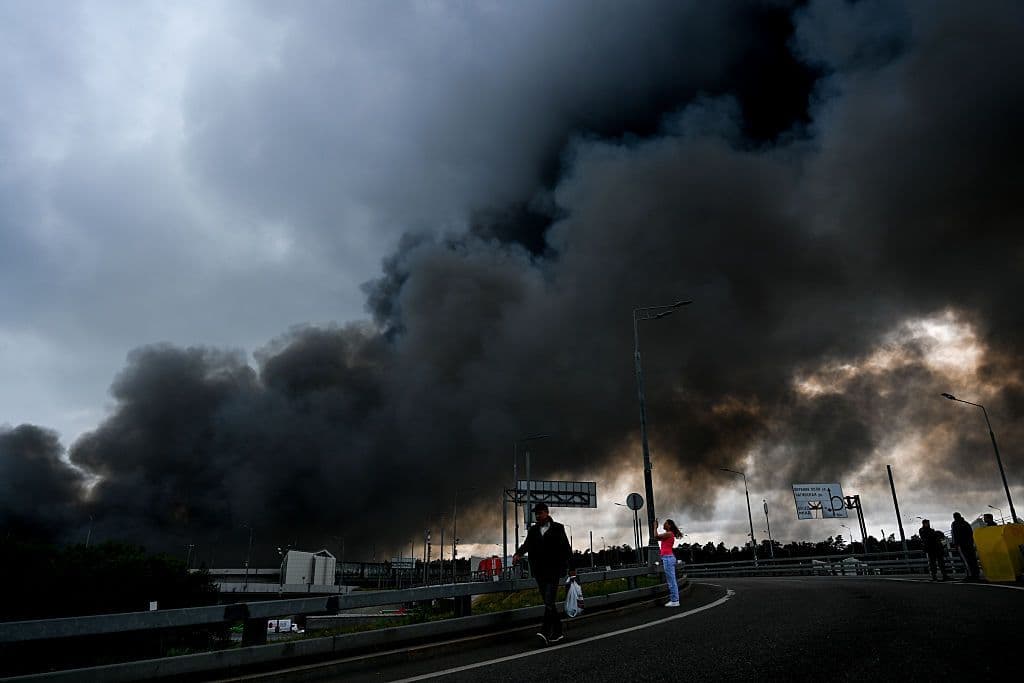
Ukrainian forces struck the Moscow Oil Refinery in the Russian capital's Kapotnya district overnight on June 18, marking the second attack on the facility in a week, President Volodymyr Zelensky confirmed on X.
Moscow Mayor Sergei Sobyanin said around 8 a.m. local time that approximately 180 Ukrainian drones had been shot down on the outskirts of the capital. With the attack still ongoing at the time of his statement, Russian air defenses intercepted another 14 drones over the following hour, bringing the total to 194 — the largest reported Ukrainian attack on Moscow to date.
Russian air defenses also downed 555 drones nationwide overnight, according to the Russian Defense Ministry. Ukraine does not typically disclose the number of drones used in strikes on Russia.
"This is an entirely justified response to Russian strikes on our cities and communities and another important result of our warriors' work against facilities that support Russia's war machine," Zelensky said, adding that "it is time to end this war."
At least 17 people, including two children, were injured in Moscow Oblast in the attack, Russian authorities claimed.
The attack caused major disruptions to air travel, with state-owned airline Aeroflot and its subsidiary Rossiya canceling more than 170 flights to and from Moscow and delaying over 110 others, according to company statements.
Ukraine's General Staff confirmed the strike on the Moscow Oil Refinery, adding that at least five fires were recorded at the facility.
Preliminary data indicated that a combined oil processing unit, secondary refining units and a storage tank farm were burning, the General Staff said.
Speaking to journalists on June 18, Zelensky warned that Ukraine would continue to respond if Russian President Vladimir Putin refuses to end the war.
"If Putin does not want to end this war, we will not sit quietly. We will respond, and the response must be strong. If Ukraine burns, so will Moscow," he said, describing the recent strike as a response to Russia's attack on the Kyiv Pechersk Lavra on June 15.
The president also called for increased pressure on Russia, arguing that sanctions should target the country's energy sector, shadow fleet, oil and gas revenues, banking system, weapons production, and defense industry.
"We have to make Russia feel that there is no point in continuing this war. Most importantly, the Russian people should begin to feel that one man, Putin, is waging this war, while ordinary people are paying the price," Zelensky said.
European Council explores opening communication channels with Kremlin
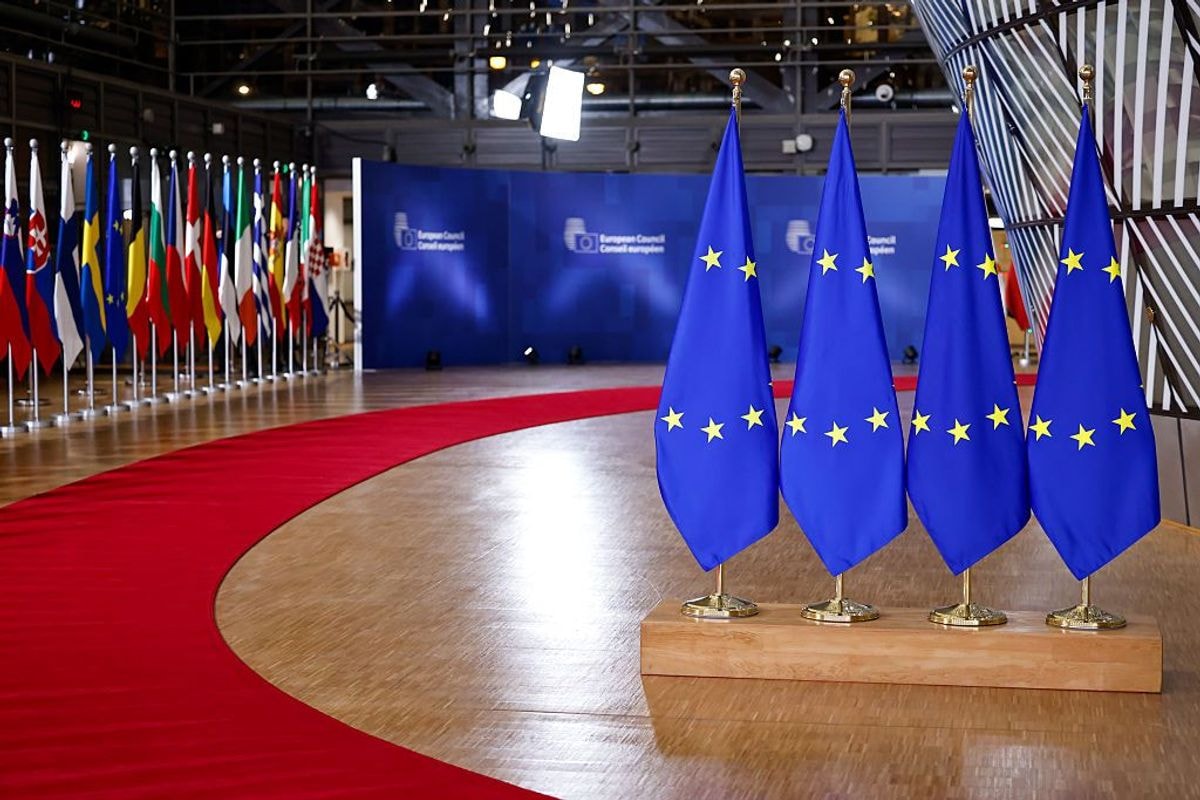
The office of European Council President Antonio Costa has established limited diplomatic contacts with the Kremlin in recent weeks as the bloc explores reopening communication channels with Moscow, the Financial Times reported on June 17.
The contacts come as European leaders increasingly discuss how and when to re-engage directly with Russia over its war against Ukraine after years of diplomatic isolation. EU officials are also keen to ensure the bloc has a seat at the table in any future negotiations over ending the war and shaping the future of European security.
According to the Financial Times, Pedro Lourtie, Costa's chief of staff, held telephone conversations with a senior Russian official close to President Vladimir Putin. The discussions were aimed at establishing lines of communication rather than negotiating substantive issues, according to people briefed on the contacts.
"In the past few weeks, brief contacts were made to open communication channels, but nothing was discussed on substance," one person familiar with the discussions said.
"In any future scenario, the EU has specific interests that will need to be defended, therefore it is important to have established diplomatic channels with Russia."
The contacts do not signal a shift in the European Union's position on the war, officials said.
Ukraine denies Russian claim that Ukrainian drone struck bus carrying Belarusian children's football team
Ukraine's General Staff has denied Russian claims that a Ukrainian drone struck a bus carrying a Belarusian children's football team in Russia's Bryansk Oblast on June 17, calling the claim "yet another information provocation."
"The Armed Forces of Ukraine engage exclusively lawful military targets and do not conduct combat operations against the civilian population," the General Staff said.
Belarusian Health Minister Alexander Khodzhaev said eight people were injured in the alleged attack, including six children, two of whom were in serious condition. A woman was killed, he said. Earlier on June 17, acting Bryansk Oblast Governor Yegor Kovalchuk initially claimed that a woman was killed and six people, including four children, were injured.
The Kyiv Independent could not independently verify whether a drone struck the bus or who was responsible.
The bus was transporting the football team from Gomel, a city in Belarus, to the Russian resort city of Gelendzhik, according to Kovalchuk.
There were 44 passengers on the bus, including 28 children. Kovalchuk said that medical and psychological assistance was provided and that medics from Moscow were traveling to Bryansk.
Belgium, Germany, Sweden, Netherlands announce new military aid, F-16s for Ukraine ahead of NATO defense ministers' meeting
Belgium, Germany, Sweden and the Netherlands announced new military assistance for Ukraine on June 18, including F-16 fighter jets, ahead of a meeting of NATO defense ministers in Brussels.
Ukrainian President Volodymyr Zelensky told journalists that strengthening Ukraine's air defenses, including Patriot systems and anti-ballistic missiles, would be among the key priorities of the meeting, particularly as Russia continues its large-scale missile and drone attacks on Ukrainian cities.
Zelensky said that around 10 countries had expressed support for the new Prioritized Ukraine Requirements List (PURL) packages.
"We are grateful to all defense ministers and all countries. First of all, this is about PURL, air defense, Patriots and anti-ballistic missiles," Zelensky said.
Belgium said it would deliver seven F-16 fighter jets to Ukraine by the end of this year. Four of the aircraft would be used for spare parts, while three would be operational and help Ukraine defend its skies against Russian attacks, Belgian Defense Minister Theo Francken said while speaking to journalists ahead of the meeting.
Francken also said he would propose transferring all of Belgium's remaining F-16s to Ukraine in the coming years, although the pace of deliveries depends on the arrival of new F-35 fighter jets to the Belgian Air Force.
Kyiv repatriates 522 bodies that Moscow claims are Ukrainian citizens
Ukraine repatriated the bodies of 522 Ukrainian citizens, including soldiers, the Coordination Headquarters for the Treatment of Prisoners of War (POWs) said on June 18.
During previous repatriations, Russia at times returned the bodies of its own soldiers to Kyiv, with Ukrainian officials alleging the practice may have been aimed at avoiding compensation payments to Russian families or reflected a "negligent attitude toward their own people."
Ukrainian investigators and forensic experts will conduct examinations and identification procedures to determine the identities of the repatriated bodies, the statement read.
The Coordination Headquarters for the Treatment of Prisoners of War (POWs) has not specified how many civilians and military personnel were among the 522 repatriated bodies.
UK to send Ukraine 150,000 drones, air defense systems using proceeds from frozen Russian assets
The U.K. will provide Ukraine with 150,000 drones and more than 350 air defense missiles and radar systems under a new military aid package worth 752 million pounds ($1 billion), the British government announced on June 18.
The package, unveiled during the NATO defense ministers' meeting and Ukraine Defense Contact Group (UDCG) gathering in Brussels, will be financed through the U.K.'s 2.26 billion-pound ($3 billion) Extraordinary Revenue Acceleration (ERA) loan to Ukraine, backed by proceeds generated from immobilized Russian assets.
The assistance includes Ukrainian-produced drones to be delivered by the end of 2026, as well as Lightweight Multirole Missiles (LMM) and ground-based radar systems aimed at strengthening Ukraine's air defenses against Russia's continued missile and drone attacks.
British Defense Secretary Dan Jarvis announced the package after meeting President Volodymyr Zelensky in Brussels on the sidelines of the NATO defense ministers' meeting and the UDCG, which brings together nearly 50 countries coordinating military support for Ukraine.
read also
Zelensky says anti-ballistic cooperation with allies should yield results by winter
President Volodymyr Zelensky arrived at the Ramstein-format meeting in Belgium on June 18 as Ukraine's allies pledged additional military assistance for Kyiv.
The meeting comes as Russia continues large-scale missile and drone attacks on Ukrainian cities, prompting Kyiv to press partners for more air defense systems and interceptor missiles.
"We all see that Putin is now relying on one thing, constant missile attacks, and he has ballistic missiles, so we need anti-ballistic capabilities," Zelensky said during the gathering.
"Russian ballistic missiles remain a problem, and we need an answer to that problem."
The Ukrainian president said he expects progress on anti-ballistic defense cooperation by the end of this year, adding that Kyiv and its partners should begin seeing concrete results by winter.
"By this winter, we should already see concrete outcomes from our joint work on anti-ballistic defense," he said, noting that the effort is not only critical for Ukraine but also for broader international security and requires sustained long-term cooperation.
Kyiv and Berlin also signed agreements covering the development of anti-ballistic defense capabilities and the joint production of Termit ground-based robotic systems in Germany.