Tulsi Gabbard's last pass to Russia
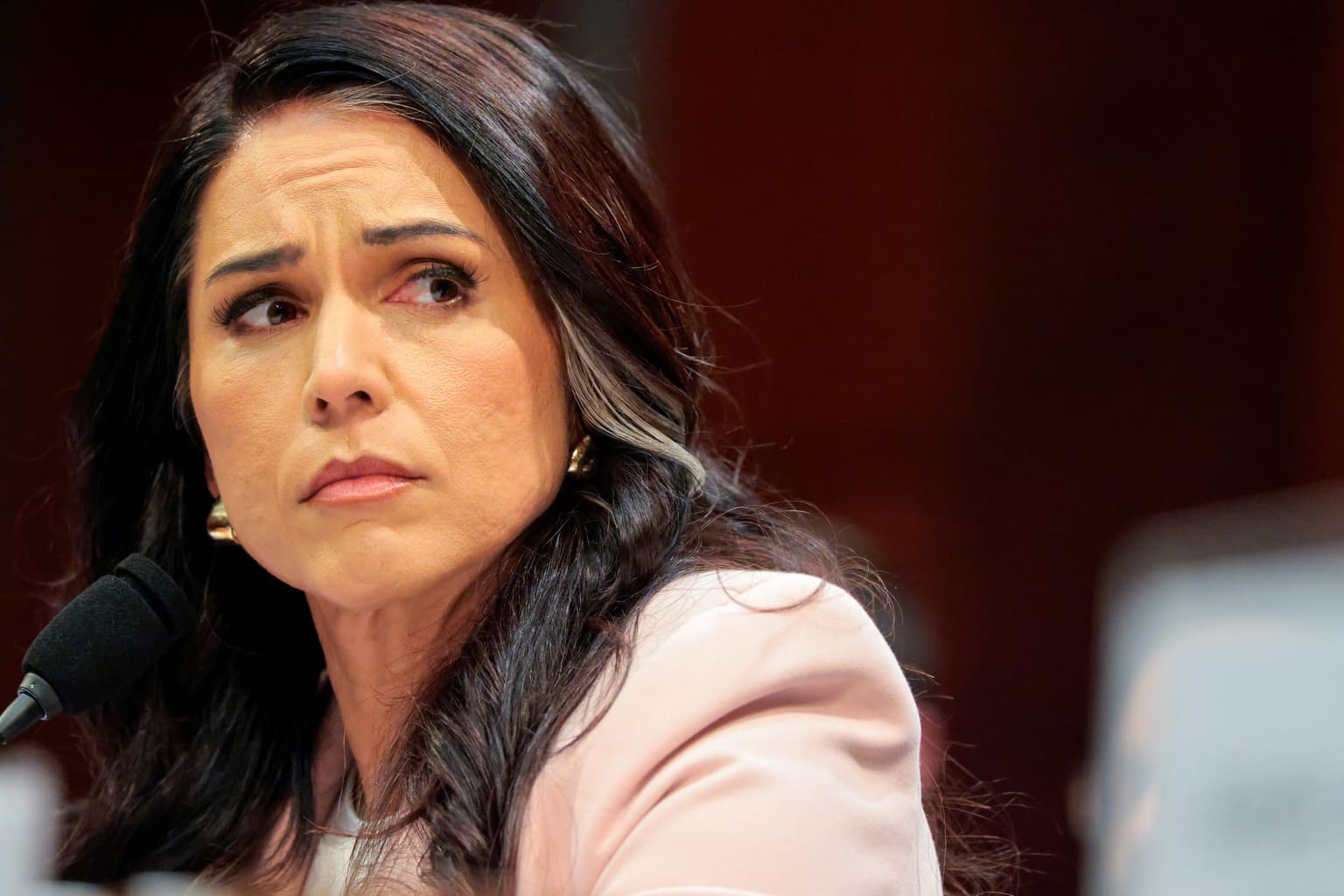
Director of National Intelligence Tulsi Gabbard testifies during a House Select Intelligence Committee hearing to assess worldwide threats in Washington, D.C., U.S., on March 19, 2026. (Heather Diehl / Getty Images)
 on Google
Outgoing U.S. National Intelligence Director Tulsi Gabbard's declassification of intelligence that she claims reveals U.S. funding for biological laboratories, including in Ukraine, was quickly amplified by Russian propaganda bot networks, the Kyiv Independent has learned.
The claims themselves are hardly new.
Russian propaganda outlets have pushed variations of the same narrative for years, and Gabbard herself promoted similar allegations before joining the Trump administration.
Information shared with the Kyiv Independent suggests the release provided a fresh push for pro-Kremlin influence operations, which seized on the alleged revelations and repackaged them for global audiences.
Gabbard has been here before
The controversy traces back to the earliest days of Russia's all-out war.
In 2022, Russian officials claimed the U.S. was funding biological weapons laboratories in Ukraine, using the accusation as part of an effort to justify its war.
The existence of U.S.-funded laboratories in Ukraine has never been secret.
For decades, Washington has funded programs to secure dangerous pathogens and prevent the proliferation of biological threats.
The initiative emerged after the collapse of the Soviet Union, when concerns grew about the security of former Soviet research facilities and hazardous biological materials.
Some of those facilities were located in Kyiv, Tbilisi, and other cities across the former Soviet Union.
The U.S. State Department publicly explained the program as early as April 2020.
"Here in Ukraine, the U.S. Department of Defense's Biological Threat Reduction Program works with the Ukrainian government to consolidate and secure pathogens and toxins of security concern in Ukrainian government facilities, while allowing for peaceful research and vaccine development," the statement reads.
"We also work with our Ukrainian partners to ensure Ukraine can detect and report outbreaks caused by dangerous pathogens before they pose security or stability threats."
Notably, the page is now unavailable under the new administration.
Russia transformed those publicly known centers into a conspiracy theory.
The Kremlin claimed that a network of more than 30 laboratories was conducting secret research into deadly pathogens and biological weapons under U.S. supervision.
In March 2022, President Volodymyr Zelensky rejected the allegations.
Still, the claims were amplified by several prominent figures in the United States, including podcasters Tucker Carlson and Steve Bannon.

Then a former congresswoman, Tulsi Gabbard, echoed parts of the narrative.
"Here are the undeniable facts: There are 25 to 30 U.S.-funded biolabs in Ukraine… these biolabs are conducting research on dangerous pathogens," she said in 2022.
Gabbard later argued that she was not accusing either Ukraine or the U.S. of wrongdoing and was just expressing concern about the laboratories' security.
Still, her comments sparked bipartisan criticism from lawmakers, who argued she was repeating claims that closely mirrored Russian propaganda.
The controversy also earned Gabbard praise on Russian state television.
Despite the backlash and her previous promotion of conspiracy claims, U.S. President Donald Trump later nominated her to spearhead the country’s intelligence.
A 'declassification' that reveals little new
Gabbard's office released documents that it said demonstrate the U.S. government's "longstanding" funding of more than 120 biological laboratories in over 30 countries conducting research involving pathogens, including some "dangerous" ones.
In a June 12 statement, the Office of the Director of National Intelligence said the network includes laboratories in Ukraine and warned that some facilities "may be at risk of compromise due to the ongoing Russia-Ukraine war."
The release included a four-page presentation, portions of which were redacted.


According to Gabbard's office, some laboratories in Ukraine may have housed dangerous pathogens under conditions where they could have been exposed to Russian attacks, seizure, or damage during Moscow's war against Kyiv.
The documents reference pathogens linked to diseases like tularemia, Ebola, and Marburg virus disease (MVD).
"Despite the obvious potential for catastrophic global impact… entities within the Biden administration's national security team lied to the American people about the existence of U.S.-funded and supported biolabs," Gabbard said in a press release.
Yet the facilities themselves are publicly known and operate as part of international disease monitoring and biosafety efforts.
The U.S. government has never denied their existence. In practice, Gabbard's release repeated arguments that Russian officials have promoted for years.
The controversy deepened further when conservative activist Laura Loomer, who has become increasingly critical of Russia, published her own review of the materials.
"I have discovered evidence that (Gabbard) is directly peddling Russian government propaganda."

"I have discovered evidence that (Gabbard) is directly peddling Russian government propaganda," she said.
According to Loomer, several graphics used in the release closely resembled materials previously published by Russian intelligence services, with Office of the Director of National Intelligence branding added on top.
One slide included a U.S. intelligence assessment warning that Russia would attempt to spread false narratives about American-funded biological laboratories in Ukraine — a detail she described as ironic given the context of the release.
Another slide was an AI-generated map of Ukraine containing geographical inaccuracies that did not resemble standard intelligence products.

A separate slide reproduced material connected to American contractor Black & Veatch's work with the Defense Threat Reduction Agency in Ukraine. Russia has previously circulated similar documents in official publications and at the U.N. Security Council.
"There is no evidence that Ukraine, in its longstanding cooperative program with the U.S., has engaged in Gain of Function or biological weapons research," Loomer added.
Ukraine's Foreign Ministry also rejected the allegations as baseless.
"Cooperation between Ukraine and the United States in the biosafety field has been focused on strengthening the capabilities of the public health system, epidemiological surveillance, laboratory diagnostics, biosafety, and biosecurity," the ministry said.
Russian networks quickly seize on the release
Whether intentional or not, the release quickly became useful material for Moscow's information operations.
Russia's "Matryoshka" bot network published at least six fake videos in a single day focused on Gabbard's so-called disclosure, according to Antibot4Navalny, a group that tracks Russian disinformation campaigns.
"If someone is still in doubt whether the entire biolabs narrative was a Russia-supported influence (operation), Matryoshka dedicated at least six fake videos to this," the group told the Kyiv Independent.
Researchers at the Ukrainian-founded technology company LetsData observed a similar trend.
According to analysis shared with the Kyiv Independent, pro-Kremlin information channels rapidly framed Gabbard's release as official confirmation of claims Moscow has been making since the beginning of the war.
One of the dominant narratives portrayed the documents as proof that Russian warnings about biological laboratories in Ukraine had been correct all along.

Other narratives focused on allegations of a cover-up, arguing that U.S.-funded laboratories had been hidden from the public — a claim Gabbard herself had made.
Researchers also identified efforts to cast Gabbard as a whistleblower confronting a supposed "deep state," while linking the biolab allegations to broader attacks against Ukraine.
The reaction was not limited to online networks. Russian Foreign Ministry spokesperson Maria Zakharova quickly endorsed the release.
"This is exactly what the (Russian) Defense Ministry and I have repeatedly spoken about, drawing the international community's attention to the dangerous and unregulated U.S. military-biological activities, including in Ukraine," she said.
For analysts, the speed and consistency of the response were telling.
LetsData concluded that the campaign relied heavily on recycled claims and selective interpretations to reinforce existing pro-Kremlin narratives.
"Gabbard's 'declassification' sparked intense debate, with malign assets amplifying the release as confirmation of Russian narratives, while productive assets noted the documents contained no new or sensational information," the company said.
Disclaimer: This article was produced as part of the F.A.C.T. (Fighting Against Conspiracy and Trolls) project, funded by the European Union through HaDEA. The views expressed are those of the authors and do not necessarily reflect the views of HaDEA or the European Union. Neither HaDEA nor the EU is responsible for any use of the information contained herein.