The war of the cities: The new edition
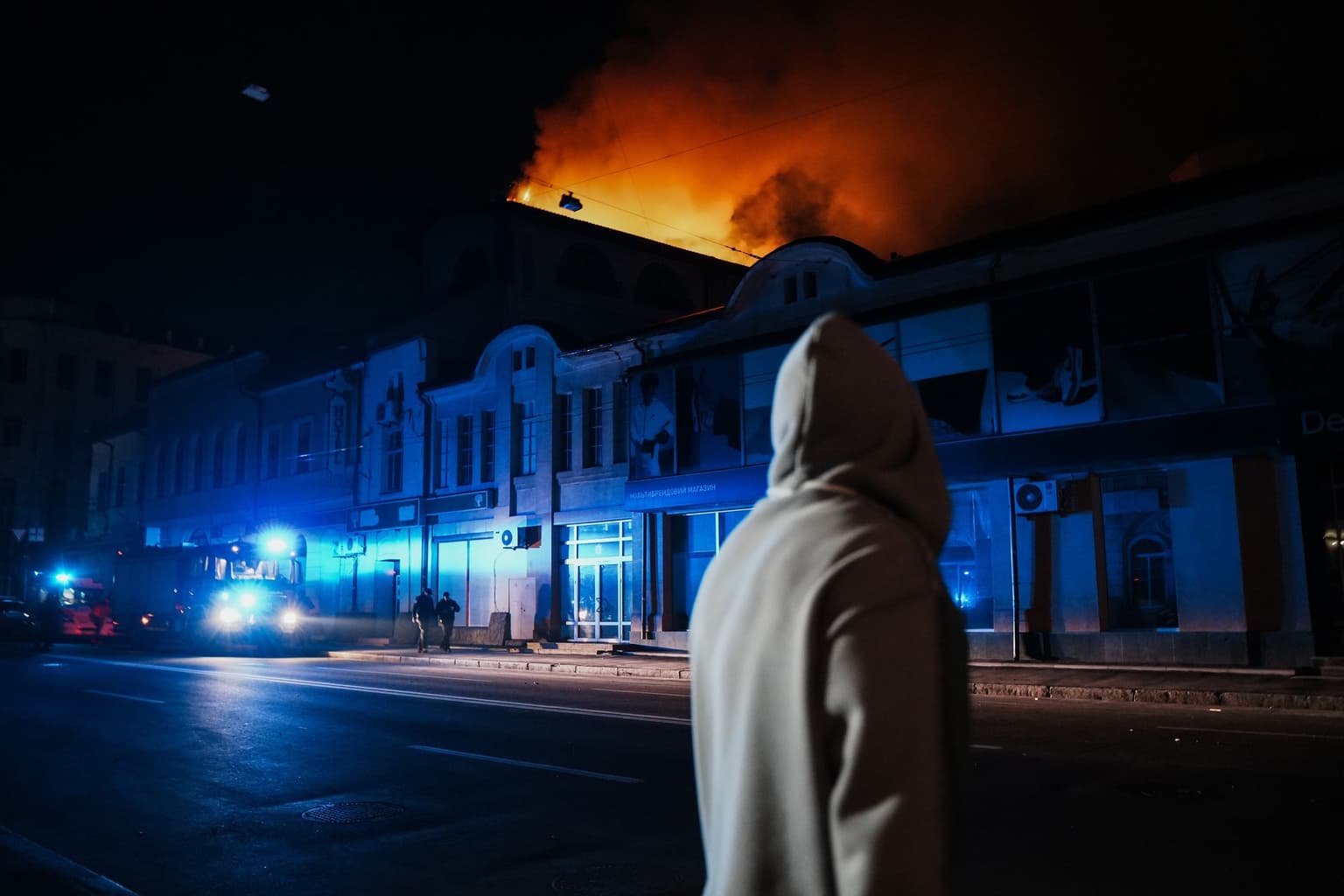
People walk in front of a burning historic building following a Russian drone and missile attack in Kharkiv, Ukraine, on April 2, 2026. (Viacheslav Mavrychev / Suspilne Ukraine / JSC "UA:PBC" / Global Images Ukraine / Getty Images)
 on Google
Mykhailo Dubynianskyi
Political commentator and publicist
Large-scale combat had been ongoing in Ukraine for several years, and the war had taken on a predominantly positional character. Any advance on the front proved insignificant and came at a disproportionately high cost in casualties. The bet was then placed on massive strikes against Russia's rear cities.
No, this is not a brief description of the current Russian-Ukrainian war.
This is roughly what the grueling eight-year standoff between Iraq and Iran looked like from 1980 to 1988. It was during that period that the Western press coined the succinct term "war of the cities."
Of course, the preconditions for such a scenario emerged much earlier — during the positional deadlock of World War I. However, in 1914–1918, a full-scale "war of the cities" was prevented by the imperfection of the technology of the time. German airship raids on Paris and London had more of a psychological than a practical effect. And Berlin and Vienna were not attacked from the air at all.
In 1939–1945, mutual strikes on rear cities reached an unprecedented scale. But at that time, they did not compensate for a stalemate on the fronts — rather, they complemented a predominantly mobile war.
However many bombs fell on Berlin, and however many V-rockets were launched at London, the fate of World War II was decided at the Kursk Salient and on the beaches of Normandy.
In the 1980s, however, all the conditions for a genuine war of the cities came together. Iraqi dictator Saddam Hussein invaded neighboring Iran, expecting a blitzkrieg, but the war turned out to be protracted and bloody. For several years, combat operations went back and forth, and then the front virtually froze. Hoping to turn the tide of the war, Saddam ordered a series of massive strikes against Iranian cities. But Tehran attempted to respond in kind.
As a rule, the Iran-Iraq "war of the cities" refers to several distinct intensive campaigns between 1984 and 1988.
Iraq struck Tehran, Tabriz, Shiraz, Isfahan, and other urban centers using Soviet R-17 ballistic missiles and the Al-Hussein missiles developed on their basis. Iranian retaliatory strikes were directed mainly against Baghdad, Basra, and Kirkuk, using the same R-17s purchased from Libya, and North Korean Hwasong-5 ballistic missiles.
In addition, both sides actively used combat aviation and long-range artillery. Overall, the Iraqi army achieved greater success in this confrontation. But breaking the Iranians by attacking their cities still proved impossible.
Four decades later, history is repeating itself. There are no serious breakthroughs on the front, and the Russian-Ukrainian confrontation is becoming above all a "war of the cities." Not only in Moscow, but now in Kyiv too, the bet is being placed on long-range strikes against the enemy's rear.
The Kremlin leadership is counting on systematic aerial terror to eventually force us to accept Russian terms. And we hope that regular strikes deep into Russian territory and the destruction of the enemy's economic potential will drive Putin to desperation and compel him to abandon his unacceptable demands.
Clearly, much has changed since the 1980s.
First, the new version of the "war of the cities" is far more intense than the Iran-Iraq missile duel. It is no longer divided into distinct campaigns with lengthy intervals, but proceeds almost continuously. Strikes are delivered many times more frequently. If Iraq fired a total of 533 ballistic missiles at Iran throughout the entire war, Russia attacked Ukraine with approximately 770 ballistic missiles in just ten months of last year alone.
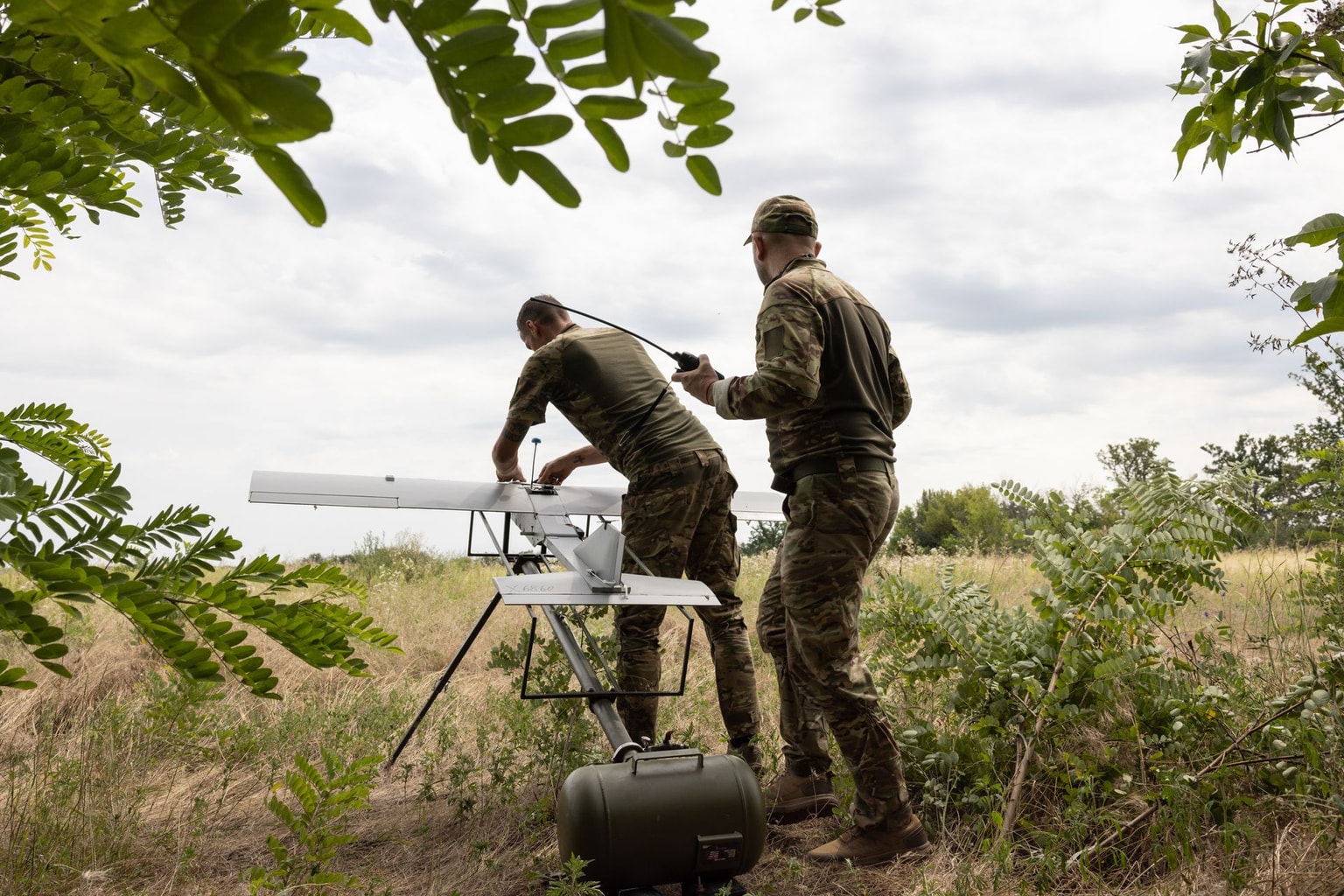
Second, cheap drones have been added to missiles and aircraft. This has largely worked in Ukraine's favor. Despite a significant lag in missile capabilities, Kyiv has achieved partial parity in the "war of the cities." When the Russians first began their mass bombardment of our rear, we looked like hopeless underdogs. Today, Ukraine is striving to confront the aggressor on nearly equal terms.
In the spring of 2026, Russia's vulnerability in the air war became particularly apparent. Russia's military potential allows it to systematically terrorize Kharkiv and Odesa — but does not allow it to protect Tuapse or Cheboksary from Ukrainian strikes.

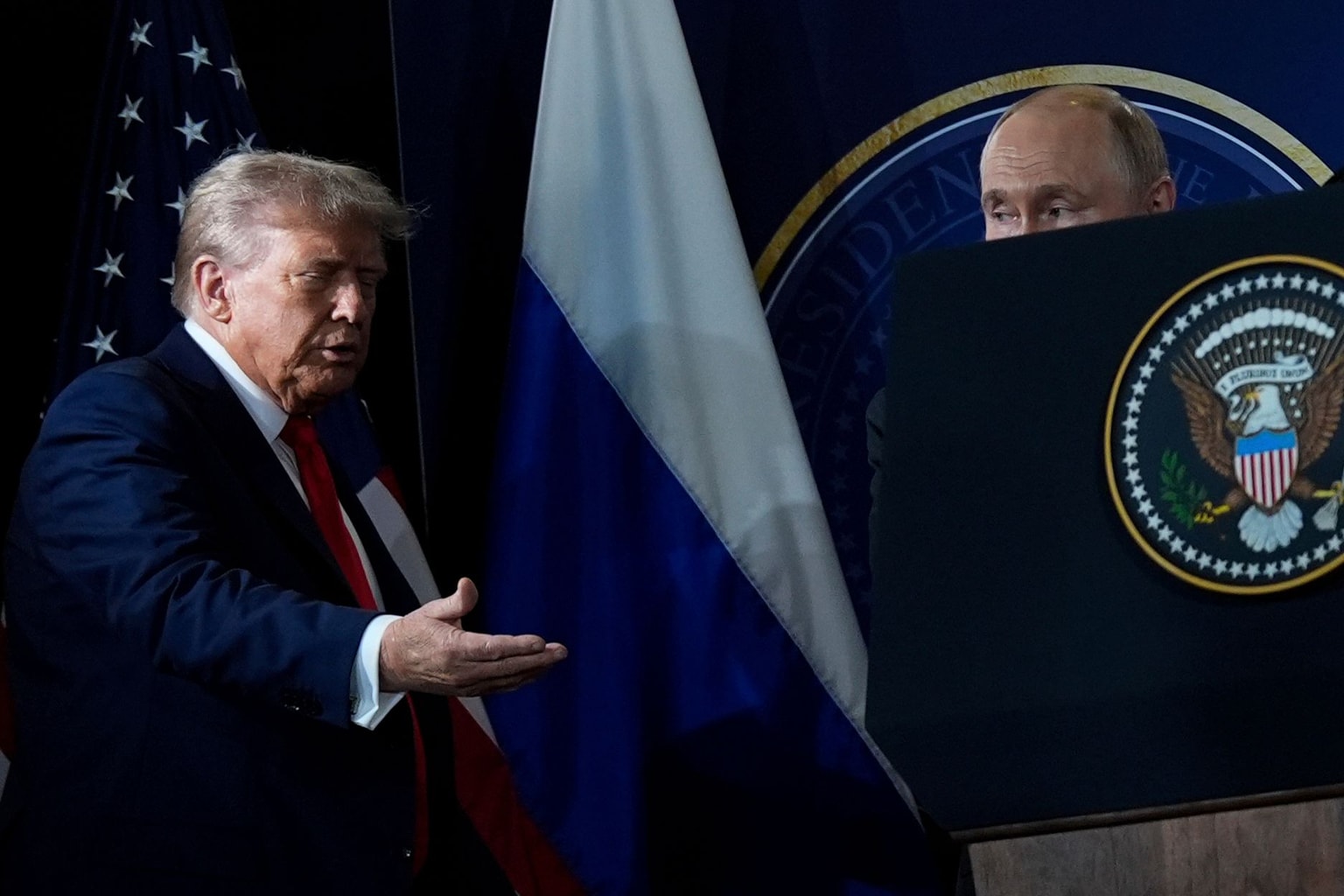
And even having surrounded Moscow with a solid ring of air defenses, the Russian regime cannot guarantee a peaceful Victory Day parade on May 9th. To achieve that, it is forced to humble itself and, through the mediation of Donald Trump, negotiate a short-term ceasefire with Ukraine.
Unfortunately, we face a similar problem. In the fifth year of large-scale military confrontation, Ukraine is capable of reaching Perm, Grozny, Ufa, and Yekaterinburg — but cannot fully shield the capital, Kyiv, from enemy missiles and drones. Ukraine can paralyze virtually any Russian airport — but cannot restore the operation of even a single airport on its own territory.

Within the framework of the "war of the cities," we manage to seriously complicate life for the enemy — but we cannot ease life for our own civilian population.
Most likely, there is simply no adequate technical solution to this problem. Recent combat operations in the Middle East have demonstrated that even the wealthiest and most powerful countries in the world are incapable of creating a one-hundred-percent effective air defense system.
A destructive sword is easier to forge than an infallible shield. Striking rear targets is cheaper than covering them. Defending your own cities is harder than attacking someone else's.
Parity in the "war of the cities" does not spare the civilian population from suffering and casualties: it allows retribution against the enemy for that suffering. It is impossible to keep your own citizens safe, but you can offer them the moral satisfaction of knowing that the enemy is also having a hard time.
Of course, in theory, mutual vulnerability could push both sides toward mutual restraint from long-range strikes. After May 9th, some of us briefly allowed ourselves to believe that under the new conditions, the Kremlin would move toward partial de-escalation. Russia's agreement to Ukrainian peace proposals would indeed have been a rational step.
In practice, however, a quite different scenario is possible.
Too many hopes are tied to the "war of the cities." It is seen as the main trump card that will determine the outcome of the great game, one that cannot be abandoned. And there is always the temptation to overestimate one's own endurance and underestimate the enemy's.
Editor's note: Copyright, Ukrainska Pravda. This translated article has been republished by the Kyiv Independent with permission. The opinions expressed in the op-ed section are those of the authors and do not purport to reflect the views of the Kyiv Independent.