The quiet death of Novaya Gazeta: How a once-powerful newspaper refused to leave Russia — and slowly lost its voice
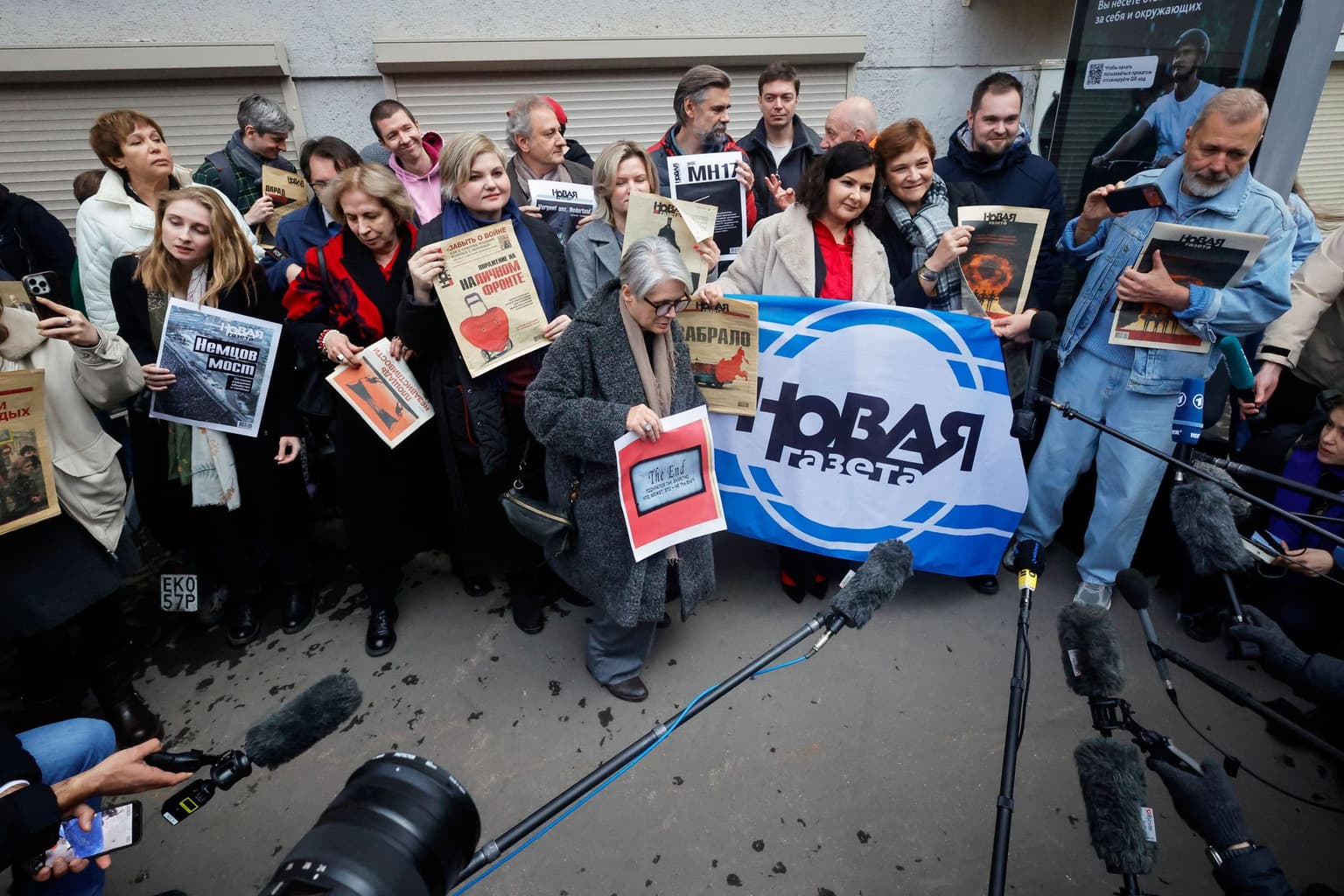
Staff of the Novaya Gazeta newspaper pose with its publications and a flag outside the newspaper's offices as it ceases publication in Moscow, Russia, on Nov. 9, 2026. (Tatyana Makeyeva/AFP via Getty Images)
 on Google
Novaya Gazeta, once one of Russia’s most influential independent newspapers, shut down on Monday, bringing an end to an institution that had survived years of Kremlin pressure but had been steadily stripped of its staff, reach and ability to publish.
The newspaper announced its closure on Oct. 30, citing relentless pressure from Russia’s security services.
In recent years, Russian authorities have blocked its website, arrested members of its staff on dubious charges, and branded its journalists "foreign agents."
The final blow, according to the newspaper, came when Novaya Gazeta, led by Nobel Peace Prize laureate Dmitry Muratov, was evicted from its offices and cut off from the donation system that had allowed it to raise funds directly from readers.
"Over the years they received so much abuse, not just from the authorities, but from Russian citizens."
"In this country, human rights and freedoms have been destroyed, and their defense is treated as a crime," the newspaper said in a statement announcing its closure. The statement bore the title: "They have killed us."
With the death of Novaya Gazeta, another relic of pre-war Russia disappears, swallowed by an increasingly totalitarian state that has spent years dismantling the institutions, freedoms and remnants of civil society that once existed beyond the Kremlin's control.
A legacy of free speech
Few Russian news outlets matched Novaya Gazeta's legacy. The newspaper was founded in 1993, partly with the money given to former Soviet leader Mikhail Gorbachev when he won the Nobel Peace Prize.
The newspaper was celebrated for its exposes of Russian corruption and human rights abuses.
Novaya Gazeta journalists were at the forefront of investigations that challenged the official narrative of the 2004 Beslan school siege, which ended in a botched attempt to storm the building by Russian special forces.
They repeatedly exposed abuse by Russia’s armed forces during the Chechen Wars, then covered extrajudicial killings carried out by local warlord Ramzan Kadyron, including his purge of the LGBTQ community.
Six of its journalists were murdered, including Anna Politkovskaya, who was killed in her apartment building in 2006. Editorial meetings at the newspaper's offices took place under the portraits of their murdered colleagues, while Politkovskaya's desk remained untouched for two decades.

Vera Slavtcheva-Petkova, professor of global journalism and communication at the University of Liverpool, spent time at the newspaper in 2014, while researching Russia’s independent media.
She said that Novaya Gazeta's journalists had no desire to be passive observers.
"Their mission was to work for a Russia that was very different to the Russia that Vladimir Putin believes in," she says. "They believe in Russia as a democratic country, as a free country. They believe that their duty is also to help every individual reader that contacts them for help."
But like many of Russia’s independent news outlets, Novaya Gazeta spent the 2010s trying to work under increasingly tight restrictions. Even in 2014, Novaya Gazeta journalists were paid little, and not always on time, says Slavtcheva-Petkova.
"Over the years they received so much abuse, not just from the authorities, but from Russian citizens," she says. "It is difficult to sustain what they have been sustaining for so many years."
"But when Russia launched its full-scale invasion of Ukraine in February 2022, the narrow space in which Novaya Gazeta had sought to maneuver finally ran out."
Novaya Gazeta's tenacity was recognized on the global stage. In October 2021, Novaya Gazeta's long-time editor-in-chief, Muratov, was awarded the Nobel Peace Prize alongside Filipino journalist Maria Ressa.
But when Russia launched its full-scale invasion of Ukraine in February 2022, the narrow space in which Novaya Gazeta had sought to maneuver finally ran out.
Scores of Russians moved into exile as wartime censorship laws arrived. Some of Novaya Gazeta's journalists moved to Europe and set up a separate publication, Novaya Gazeta Europe. It remains unaffected by the Moscow closure.
In a Telegram message published on March 1, 2022, it said that Russian authorities had demanded the outlet remove all content that referred to Moscow's violence in Ukraine as a "war," "aggression," or "invasion," and said that it asked 4,460 of its paid members whether to continue work under censorship or suspend operations.
Some 94% said that the newspaper should keep writing.
'Colleagues, you weren't journalists at all'
The decision to remain in Russia and continue publishing under increasingly crippling restrictions drew criticism from some who questioned whether the newspaper could still fulfill its journalistic mission.
Russian law criminalizes both "discrediting the armed forces" and "spreading fake news," specifically targeting anyone who does not toe the line when it comes to Kremlin propaganda.
Adhering to these laws — as well as a basic loyalty to the truth — has left topics such as Russia’s war in Ukraine off-limits. Many mourned a publication they saw as a mere shadow of its former self.

Novaya Gazeta "managed to operate for all these years under these very prohibitions — by simply not saying anything," Maria Stroeva, a journalist who worked for Russia’s RBC TV until 2014, wrote on social media following the closure.
"In that case, colleagues, you weren't journalists at all. Pardon me for saying so. Half-truths and deliberate silence are just pseudonyms for propaganda."
Once an investigative powerhouse, Novaya Gazeta's work now centered on safer topics, such as the impact of the war in Russia: from the struggling social budgets that meant that Belgorod kindergarteners would no longer get New Year's gifts, or the teenagers added to Russia’s list of "terrorists and extremists."
These were a far cry from the investigations that had once made the newspaper one of Russia’s most formidable independent publications.
For many of the journalists and researchers unable to travel to Russia themselves, the insights that Novaya Gazeta could provide were still valuable.
"The problem with authoritarian regimes, especially consolidated authoritarian regimes like Russia, is that the news stops giving you the full picture of what it feels like to be inside," says Maria Kuznetsova, a human rights advocate and policy researcher and co-author of "How to Survive Authoritarianism."
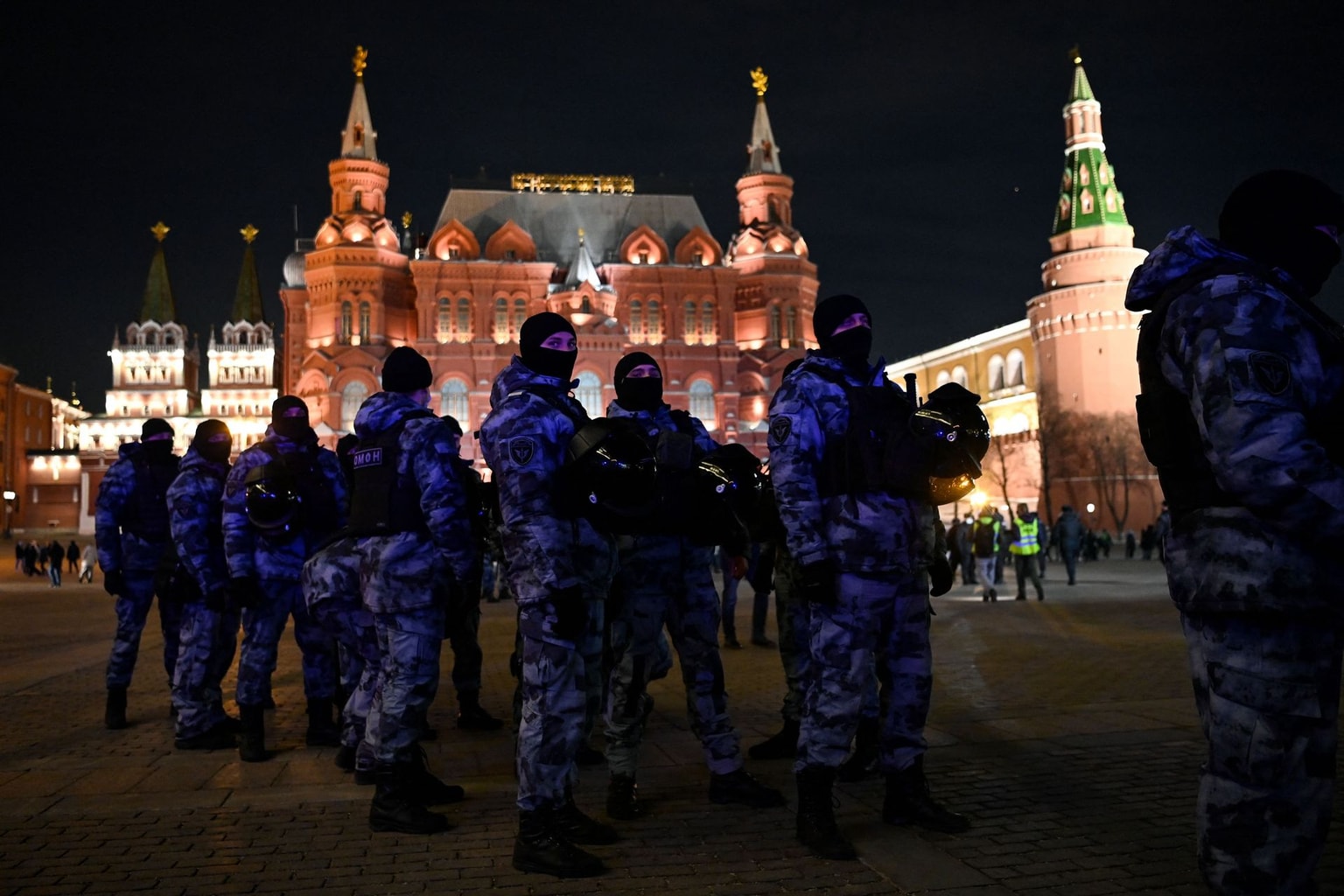
"This atmosphere of fear and even how streets change, how many police officers you see on the street — those are things that are very difficult to convey through digital technologies."
That shared experience also allowed Novaya Gazeta to connect with its readers at a time when the Kremlin actively tried to stoke the divide between activists and journalists who have left Russia, and those who remain.
“Russia is a place where people who leave — especially people who leave and who try to stay in politics — are seen perhaps as people who don't share the pain and don't share the consequences with people who stay,” says Kuznetsova.
Novaya Gazeta was able to use its presence inside Russia to produce reporting that would have been difficult, if not impossible, to replicate from abroad.
"Dodging heavy state repression and finding ways to report facts without getting destroyed isn't 'collaboration'; it's survival and resilience, as I see it," says Russian journalist Pavel Kanygin. He worked at Novaya Gazeta until 2022 and now heads the investigative media project Prosleduet Media.

Novaya Gazeta fought for journalism — and for Russia — it believed in until the very end. But once it had accepted to work under Kremlin censorship, it could no longer do the work that its country truly needed.
“Reporters were still investigating things that the government didn't want them to: corruption and environmental abuses,” says Tom Masters, a journalist who formerly worked as editor for the English version of Novaya Gazeta Europe.
“But by accepting those restrictions, inevitably it couldn't directly report on the biggest story of all.”