Russia's foreign election meddling has a losing record. Experts explain why
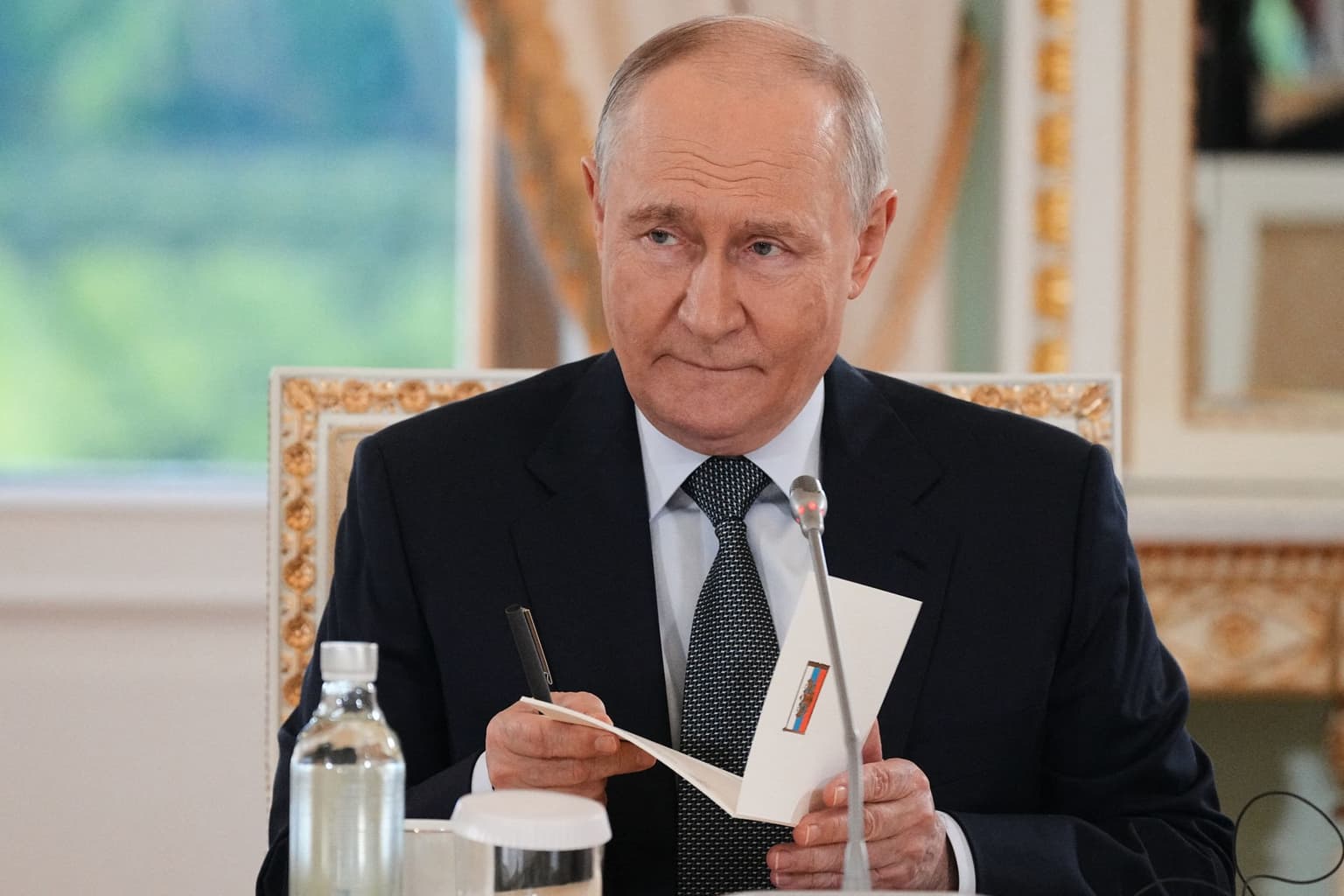
Russian President Vladimir Putin meets with representatives of international news agencies on the sidelines of the St. Petersburg International Economic Forum at the Constantine Palace in St. Petersburg, Russia, on June 4, 2026. (Dmitry Lovetsky / Pool / AFP / Getty Images)
 on Google
President Vladimir Putin has never lost an election in Russia. Outside Russia's borders, however, the Kremlin has been learning a different lesson.
From Moldova to Hungary — and, more recently, Armenia — Moscow has poured money and political capital into influencing elections abroad. Yet, time and again, the candidates and forces it favored have fallen short.
Some of Russia's traditional allies have drifted away from Moscow, embracing pro-Western governments, or have become far more resistant to Kremlin pressure than they once were.
The Kyiv Independent examines why Russia's influence campaigns keep failing, who orchestrates them, and where Moscow's playbook still works.
The Kremlin's election manager
Russia's interference campaigns are organized and funded from the top.
At the center of many of them is Sergei Kiriyenko, Putin's first deputy chief of staff and one of the most powerful figures in the Kremlin.
Kiriyenko is widely viewed as the architect of Russia's domestic political strategy. In recent years, he has also taken on a role in managing Russia's occupied territories in Ukraine.
In 2024, the U.S. Justice Department identified Kiriyenko as the overseer of a network of internet domains allegedly used by Moscow to spread disinformation.
According to U.S. officials, the websites mimicked legitimate American news outlets while publishing pro-Kremlin content to undermine support for Ukraine and influence U.S. voters ahead of the presidential election.
"President Putin's inner circle, including Kiriyenko, directed Russian public relations companies to promote disinformation and state-sponsored narratives," former U.S. Attorney General Merrick Garland said.
Kiriyenko's reach extended well beyond the United States.

Analysts and investigators have linked him to Russian influence efforts in Moldova and Hungary. Even in the Russian-occupied Georgian region of Abkhazia, Moscow needed his direct involvement to secure its preferred outcome.
"It took a direct intervention of Kiriyenko, and various economic benefits to get a pro-Russian candidate elected," said Anton Barbashin, co-founder and editorial director of Riddle Russia.
Under Kiriyenko's supervision, Russia has moved away from just openly backing candidates and toward more sophisticated tactics: fake news sites, coordinated social media campaigns, and efforts to inflame divisive issues.
Russia spends millions — perhaps billions — on such operations. Yet the returns have at times disappointed the Kremlin.
Expensive failures
Despite the scale of Russia's efforts, its recent record has been marked by setbacks. Moldova became one of the clearest examples.
Ahead of the country's 2025 parliamentary elections, the Kremlin was accused of deploying troll farms, disinformation campaigns, and vote-buying networks to defeat President Maia Sandu's pro-European Party of Action and Solidarity (PAS).
The effort failed. PAS won, keeping Moldova on the pro-European path.
Hungary has become another test case. Russia sent social media specialists to influence the country's April elections in favor of former Prime Minister Viktor Orban.
Kiriyenko oversaw the operation using many of the same methods employed in Moldova.
Investigators have also pointed to similar tactics in Romania, including coordinated online influence campaigns surrounding the country's 2024 presidential race.
In Armenia, meanwhile, Moscow moved beyond disinformation.
As parliamentary elections approached, Armenian exports to Russia suddenly faced restrictions. Transit routes for Armenian goods were disrupted. Russian officials warned of broader economic retaliation, including higher energy tariffs.
Then came the political messaging. Putin publicly referenced a potential "Ukraine scenario," indirectly threatening Armenia with a war for pursuing a pro-Western path.
And yet, once again, Moscow struggled to achieve the outcome it wanted.
The limits of the Russian playbook
The contrast with Russia's own political system is impossible to ignore.
At home, the Kremlin controls elections, dominates the media landscape, and marginalizes opposition voices. Genuine political competition is impossible.
Abroad, however, Russia appears to assume that similar methods — amplified by covert influence and political pressure — can shape outcomes in open societies.
Reality has proved more complicated.
Voters often react negatively when they perceive outside interference. Exposure of influence campaigns can reduce their effectiveness.
As a result, Russia has built a long record of costly operations that deliver no wins.

Daniel Fried, former U.S. ambassador to Poland, said their effectiveness depends heavily on timing, local conditions, and whether they are identified early.
He warned against viewing disinformation campaigns as unstoppable political weapons.
"Alertness on the part of targets of information operations, whether in Hungary, Armenia, Romania, or Moldova, was key to blunting the effectiveness of those operations," he said.
In some cases, officials have even gone as far as annulling election results when evidence of foreign interference was strong.
In Romania, the Constitutional Court canceled the first round of the presidential elections after a pro-Russian, anti-NATO candidate, Calin Georgescu, won the race, with authorities citing an "organized manipulation from abroad."

Why Russia keeps losing
Experts say Moscow's failures are not the result of a lack of ambition. If anything, Russia has shown remarkable persistence.
Barbashin argues that Russia's biggest limitation is its inability to create support from scratch. The Kremlin can magnify existing grievances and divisions, but it cannot create them where they do not already exist.
"Russia can only amplify the opinions and positions already shared organically by people of the states in question. Amplify, radicalize, mobilize," he said.
"But it can't create an organic opinion or position out of nowhere."
John Lough, senior research fellow and head of foreign policy at the New Eurasian Strategies Center, believes Russia's appeal has also diminished since the start of its full-scale invasion of Ukraine.
"Russia does not offer an attractive model of development," he said.
"Governments in the post-Soviet space are by now very familiar with the Russian playbook for manipulating elections and know how to counter it to the point where they can at least reduce its effects."
Still, that does not mean the threat has disappeared. Pro-Russian forces have also secured victories in countries such as Georgia and Bulgaria.
In Bulgaria, officials even appealed to the EU ahead of the vote over fears of Russian interference, trying to avoid the Romanian scenario.
"Some Russian messages continue to land well, particularly with some constituencies in France, Germany, and Italy," Lough added.