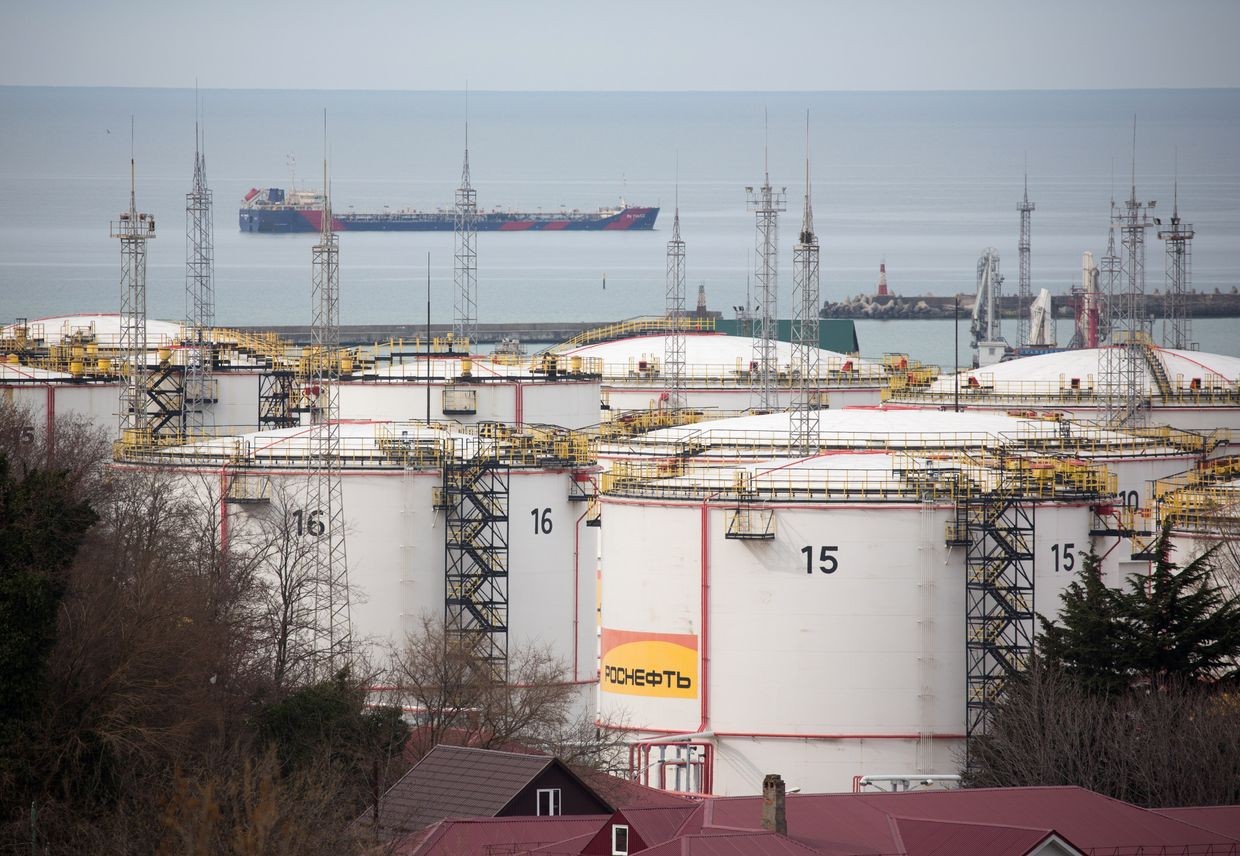
Bloomberg: Russian marine oil exports hit 2 month low after storms, suspected Ukrainian attack on refinery
 on Google


Russian seaborne exports of crude oil fell to their lowest level in two months, hindered by winter storms and a recent attack on a Russian processing plant, linked by several media outlets to Ukraine, Bloomberg reported on Jan. 23, citing industry shipping data.
The weekly average of Russia's maritime transport of oil dropped by 340,000 barrels a day to a seven-week low of 3.06 million per day.
Novatek's gas-condensate plant caught fire on Jan. 21 at the port of Ust-Luga in Russia's Leningrad Oblast following a possible coordinated effort by Ukraine to strike key targets deep inside Russian territory, the BBC reported, citing an unnamed source in Kyiv.
Ukrainian officials did not comment on the attack, but the unnamed source told the BBC that it was the work of the Security Service of Ukraine (SBU).
Novatek is the largest independent natural gas producer in Russia. The plant in Ust-Luga processes stable gas condensate - a byproduct of natural gas - into naphtha while also exporting oil products to international markets.
Novatek said on Jan. 21 that the plant's operations would be halted, but analysts said the following day it would likely resume its normal work within a few weeks.
The disruption caused by the suspected attack has nonetheless impacted Russia's oil exports.
Port data viewed by Bloomberg indicated that the Ust-Luga is not operating at full capacity, with only one of the berths currently being used and a four-day pause in ship loading added to the calendar.
Even if the plant resumes operations within the next few weeks, the Russian Sinara Investbank said that the attack could affect as much as a quarter of Novatek's revenues.