After Nestle and Auchan seizures, Russia is coming for others
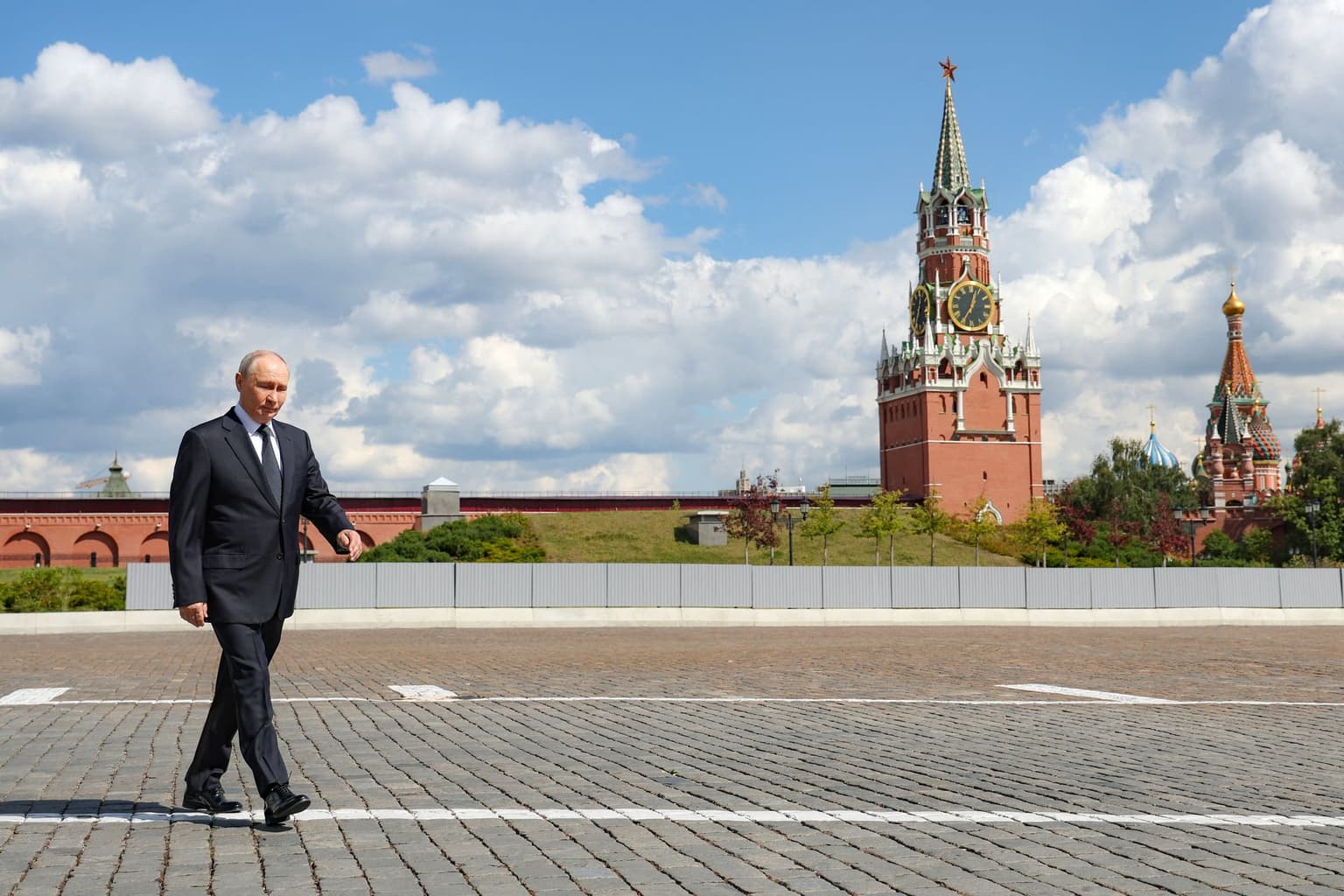
Russian President Vladimir Putin walks walks through the Kremlin in Moscow, Russia, on Aug. 20, 2026. (Viacheslav Prokofiev / POOL / AFP via Getty Images)
 on Google
Bennett Freeman
Co-founder and Steering Committee member of B4Ukraine
The recent Russian seizure of assets belonging to corporate giants Nestle and Auchan made headlines, all the more striking given the companies' years of loyalty to the Kremlin regime, including throughout Russia's full-scale invasion of Ukraine.
This action seems shocking, but should not be surprising.
Fascist imperial Russia has not seen and does not see Western companies as partners for mutual benefit, only as targets for weaponization, manipulation, and confiscation.
One can only wonder whether the recent seizures will prompt other Western companies and investors to recognize this as a final wake-up call: an opportunity to exit Russia before they, too, meet the same fate and find themselves irredeemably complicit in Putin's crimes.
Unlike many Western firms, Auchan and Nestle did not leave the Russian market after the 2022 invasion of Ukraine. Their PR teams dressed it up in the language of corporate responsibility, arguing that they were providing "essential" goods to the Russian population and protecting the livelihoods of their Russian employees.
In reality, the strategy was clearly different: preserve market share, benefit from competitors' departures, wait out the war, and continue business as usual.
This bet was a losing one.
"The short-term profits have turned into long-term exposure to financial, legal, and reputational damage."
Over the past four and a half years, we repeatedly warned both Nestle and Auchan that staying in Russia was not a responsible and strategic business decision, but a risk that would inevitably become a liability.
As early as 2022, when Putin seized ExxonMobil's stake in the oil-production joint venture, the writing was already on the wall. Then came Danone and Carlsberg, Uniper and Fortum, Rockwool and Canpack, and other Western companies whose illusions and delusions about remaining in Russia were rudely rewarded.

Yet few companies listened, while many chose to stay, gaining short-term wins at the expense of long-term, much bigger losses.
Let's set the moral argument and the question of supporting Ukraine aside for now and look at the revenues first. CEOs who chose a wait-and-see approach, thinking in terms of the current quarter and their responsibility to deliver returns to shareholders, fundamentally misunderstood the nature of this war. They badly misjudged the risks and then dismissed them.
The question is: what are shareholders really rewarding: short-term dividends, or the fact that they may now have to write off millions of dollars in losses on their Russian businesses?
The short-term profits have turned into long-term exposure to financial, legal, and reputational damage.
That leads to another question: whether companies are finally capable of properly assessing geopolitical risks. Now that we are in the fifth year of the war, the answer should be obvious.
"Waiting for the Kremlin to decide the fate of your business is not a risk-management strategy."
The Kremlin's seizure of the Russian assets of Auchan, Nestle, and others reinforces a reality that has been evident for years: Russia is a hostile and lawless environment where foreign companies' assets remain at the mercy of a criminal regime.
Any company that stays in Russia is gambling with its investments, exposing itself to sudden expropriation and the whims of a rogue state that views Western firms as expendable, and risks becoming complicit in financing and sustaining Russia's war.
The latest asset seizures should serve as a warning to all companies still operating in Russia: waiting for the Kremlin to decide the fate of your business is not a risk-management strategy.
Corporate leaders should stop asking "how not to provoke Moscow," but instead focus on how to exit the market responsibly and swiftly. Smartest businesses have already left Russia or are finalizing their exit deals.
McDonald’s, for example, sent a clear moral message by exiting the Russian market in the months following the invasion, selling its Russian business, and removing its brand from the market. Meanwhile, Unilever, with which we at B4Ukraine directly engaged, sold its business in October 2024, demonstrating that full disengagement remains possible even after a prolonged delay and despite the numerous financial obstacles imposed by the Kremlin.

Others are waiting until they become the next targets of forced asset seizures, a reality that Nestle and Auchan are now learning the hard way.
Moscow will undoubtedly come for others, and this is why the least risky option, rather than sitting and waiting for nationalization, is to write off their losses and seek recourse through international arbitration.
Russia is increasingly weaponizing Western companies' exposure to its domestic market, and firms that remain are effectively holding both Ukraine and Western governments hostage to their private interests.
Thereby, Ukraine's partners must ensure their domestic companies do not contribute to Russia's war economy or undermine the support for Ukraine that taxpayers are providing.
They should establish clear standards for corporate conduct that uphold both human rights and economic security. It can be done by issuing principle-based, non-prescriptive guidance and requiring robust due diligence from companies operating in Russia, setting out clear expectations and processes without dictating specific actions.
In this way, governments do not assume responsibility for companies' overseas behavior but rather fulfill their own international obligations to protect human rights.
They should also incentivize and support swift exits from the Russian market while promoting ethical reinvestment in Ukraine and other stable, secure markets.
Such steps are important if we are to prevent the Kremlin's list of stolen companies from growing any longer.
Editor's note: The opinions expressed in the op-ed section are those of the authors and do not purport to reflect the views of the Kyiv Independent.