Putin’s two-war advantage over Trump
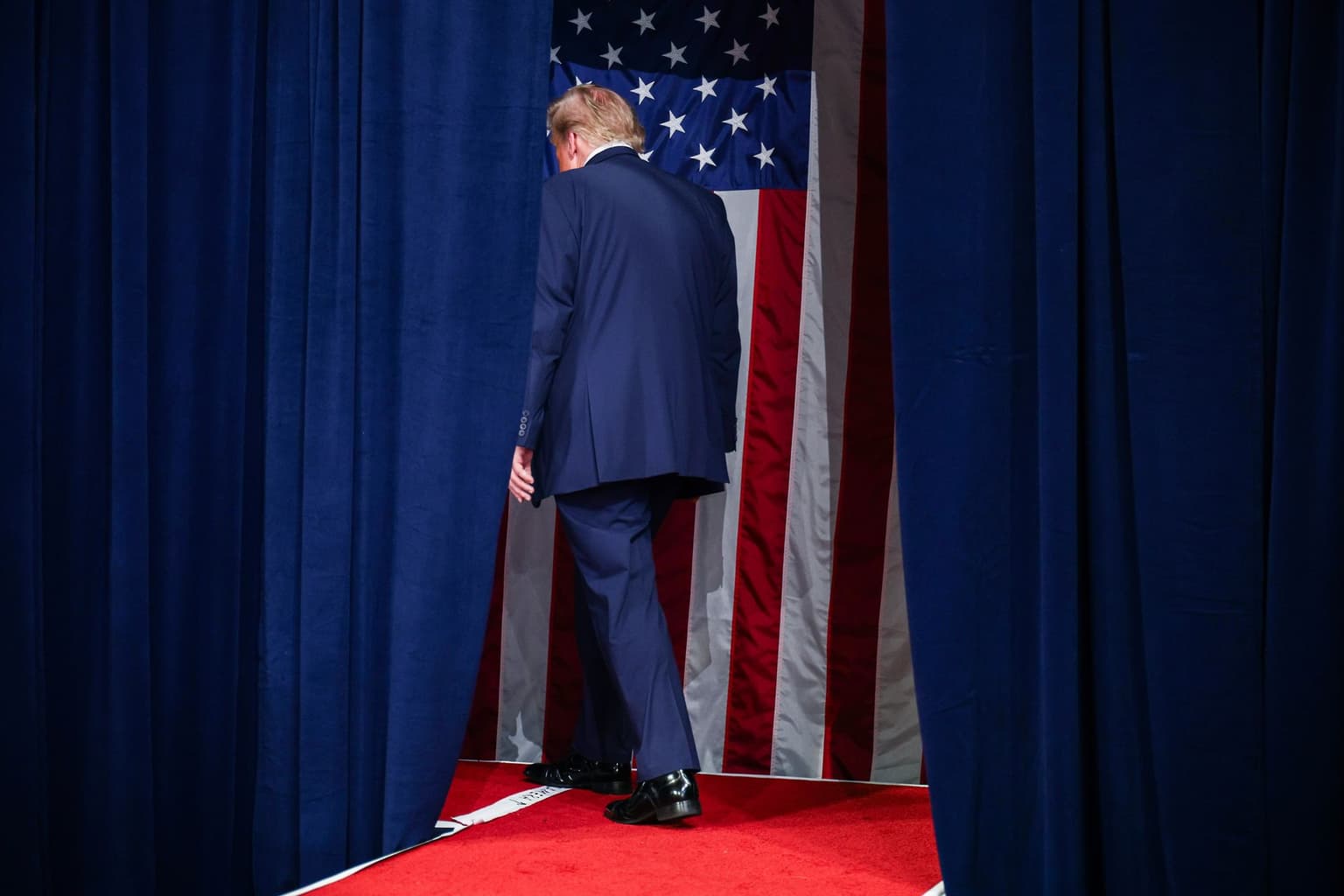
U.S. President Donald Trump in Fort Myers, Florida, U.S., on Oct. 23, 2026. (Alex Wong / Getty Images)
 on Google
Two wars are testing U.S. President Donald Trump's ability to shape world events — and Russia is using the situation to its advantage.
As the U.S. pushes Russia to end its invasion of Ukraine, Moscow is also involved in the war between the U.S. and Iran. Major news outlets have reported that Russia is sharing military intelligence with Tehran, even as Trump has praised Moscow for staying out of the fighting.
The contradiction was clear last week. During high-level talks in St. Petersburg, U.S. negotiators met with Russian President Vladimir Putin to discuss ending the war in Ukraine. But when Trump was asked about the talks on Oct. 21, he turned to Iran.
"Trump is essentially confronted with two major wars that he has a massive political interest in ending."
"We negotiated with Russia to stop the war with Ukraine, and we have been pretty happy with Russia that they have not gotten involved with Iran," Trump told reporters.
His comments point to an opportunity for Putin. With Trump eager to end both wars, Moscow can present itself as a partner in resolving one while pursuing its own goals in the other.
"Trump is essentially confronted with two major wars that he has a massive political interest in ending," said Christian Emery, an associate professor of international politics at University College London.
"Putin is trying to exploit Trump's domestic political vulnerability to achieve his main aim: normalizing relations with the U.S. without offering any serious concessions on Ukraine," he added.
A practical partnership
Since the start of Russia’s all-out war against Ukraine, both Russia and Iran have sought to bolster bilateral ties.
In January 2025, Iranian President Masoud Pezeshkian visited the Kremlin to sign a long-heralded partnership deal between the two countries.

Under heavy sanctions, Iran and Russia expanded trade and shored up their positions on the global stage. Russia has also benefited from Iranian drone technology, using Shahed-type drones extensively in attacks on Ukrainian cities.
The relationship remains a practical one, says Arman Mahmoudian, a research fellow at the Global and National Security Institute and a faculty member at the University of South Florida.
Russia has reasons to keep Iran close. Tehran's presence ensures that there is at least one country with friendly ties in the Persian Gulf. It also means that the Kremlin retains influence in the Middle East, something that took a blow with the fall of Syria's former Russian-backed president, Bashar al-Assad, in December 2024.
But these are secondary concerns compared with Ukraine, says Mahmoudian. Moscow has behaved accordingly by supporting Iran with intelligence, but has not risked further damaging relations with the United States by providing large amounts of ammunition and weapons.
"This relationship between Russia and Iran is not an alliance but a partnership driven by shared interests," he says, adding that Moscow would be unlikely to prioritize Tehran over a potential rapprochement with Washington.

Tehran keeps check
Yet none of this means Tehran is entirely at Moscow's mercy. Iran, too, sees the relationship as one of mutual convenience, using its ties with Russia to maintain a foothold on the international stage.
"Russia offers Iran a platform on the international stage; every once in a while, the Russian and Iranian presidents meet. There's a lot of fanfare," says Sina Azodi, a visiting scholar and lecturer at the Institute for Middle East Studies at George Washington University.
"Is Russia going to backstab us again?"

"But I don't think that Iranians can ever trust Russia. There's always this discussion of, "' Is Russia going to backstab us again?'"
That mistrust reflects the limits of what Moscow can offer. "Putin has little or no leverage to compel the Iranians to make concessions," says Emery. "Nor can he offer the security guarantees that would ease their concerns about being attacked by the U.S. and Israel again."
For Moscow, however, the value of the relationship lies less in what it can deliver to Tehran than in what it can offer Washington. By presenting itself as a potential mediator, while demonstrating its willingness to act against Iranian interests, the Kremlin can signal that its cooperation comes at a price — and that it is prepared to trade its ties with Tehran for concessions elsewhere.
In that calculation, Iran is not necessarily a partner Russia intends to protect, but a source of leverage in a much larger negotiation. And if Moscow believes that distancing itself from Tehran could help secure U.S. concessions over Ukraine, there is little reason to expect loyalty to stand in the way.