Old Khata's 'Kvitky' — Tribute to beauty and enduring legacy of Ukrainian folk art
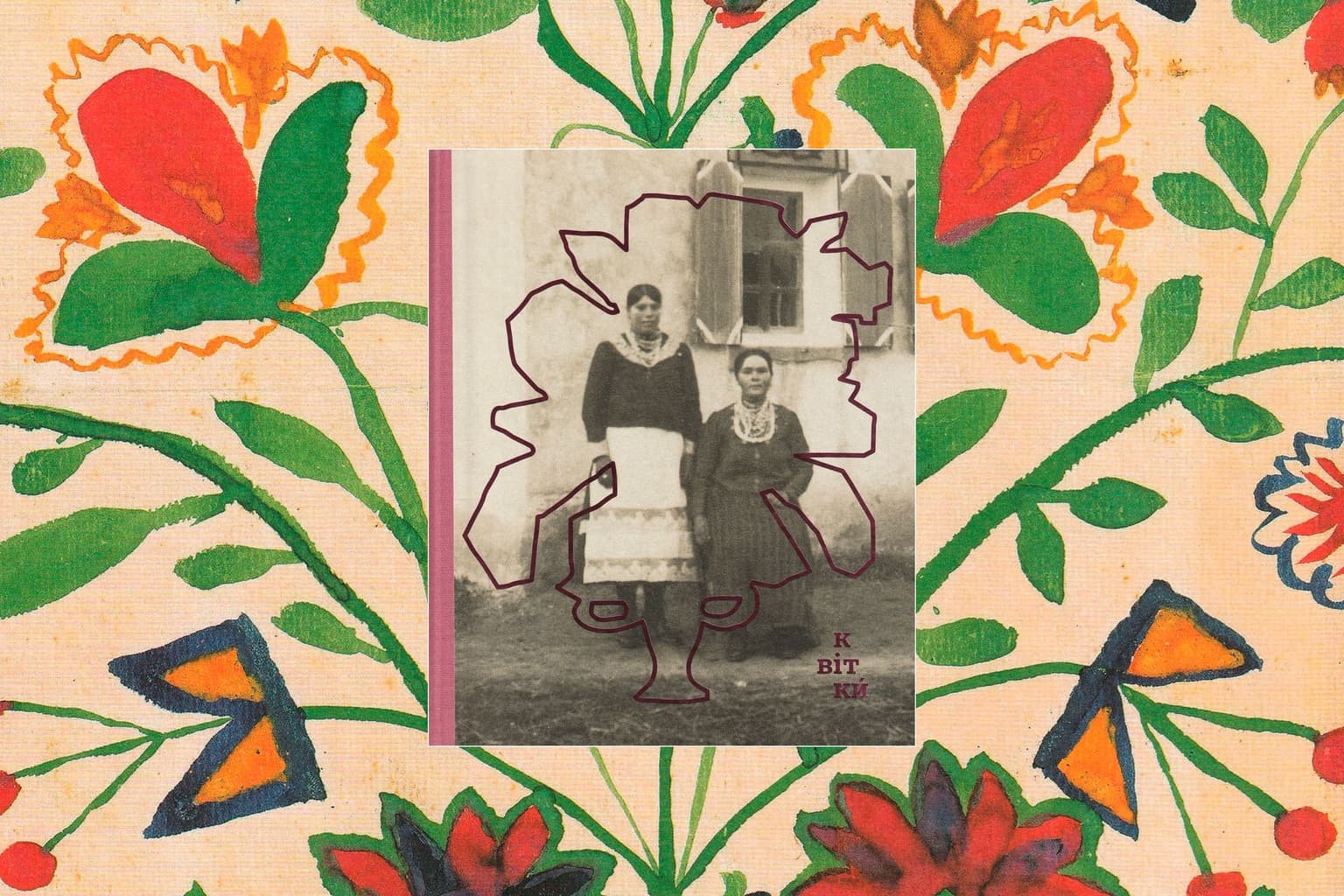
The cover of “Kvitky” by Old Khata and a drawing featured in the book. (Collage: The Kyiv Independent)
 on Google
Imagine your family has survived World War I, a nationwide revolution marked by brutal violence and constantly changing governments, and a famine. Then, less than a decade later, another, even more devastating famine strikes your land under its new rulers. You and the people around you have suffered for years, and many have died. No end to the suffering is in sight.
Yet, on the eve of an important religious holiday, you sit down and decide to continue one of your people's most beautiful and heartwarming traditions: painting your house's walls.
First, you paint a small pot. Long green stems grow out of it, each covered in flowers of every shape and size. Almost every flower has petals in different colors, and strange fruits sprout between the blossoms, making the plant look as if it belongs in a fairy tale. Towering above it all, like a crown, is the largest flower, shaped like an eight-pointed star.
This wall painting, created in a village in central Cherkasy Oblast in 1935, and dozens of others from 11 regions of Ukraine are brought together under one cover in "Kvitky." Old Khata, an independent Ukrainian collective founded by two sisters exploring the country's traditional rural culture, had published its second book on this unique art form at a time when Russia is deliberately targeting Ukrainian culture as part of its war strategy (Editor's note: The Kyiv Independent's Kate Tsurkan translated 'Kvitky' into English).
This weighty, exquisitely designed book presents what is described as the largest printed collection to date of materials on traditional Ukrainian house paintings from the first third of the 20th century. However, it is more than a collection of images and accompanying texts. "Kvitky" testifies to the continuity of Ukrainian culture, science, and art, and honors those who have resisted centuries of attempts to erase Ukrainian identity.

People in Ukrainian villages have painted their houses since at least the 19th century. The practice served both practical and decorative purposes: it kept walls clean and made houses more attractive. These homes were usually built from simple, locally available natural materials, and painted walls brought beauty into everyday life, even when ordinary villagers could not afford decorative objects and expensive homeware.
"Just as Stalin and other Soviet leaders sought to deprive Ukrainian culture of its originality and authenticity, Vladimir Putin’s Russia continues to deny Ukraine’s distinct national identity and systematically target its cultural institutions."
The paintings most often depicted plants and other elements of the natural world surrounding the villagers. This is reflected in the book's title, "Kvitky," which means "flowers" in Ukrainian. The tradition was mainly practiced by women, from teenage girls to grandmothers. Everyone in the village knew who the most talented painters were, and sometimes they were even invited to paint other people's houses in exchange for a reward.
The women used whatever materials they had at hand. They made paints from natural substances, including plant juices and clay, and used tools such as cat-hair brushes, potato stencils, string, and scissors. Sometimes, they painted not only the inside and outside walls of their homes but also nearby buildings, including barns, sheds, and granaries. Flowers and ornaments transformed the family's entire surroundings into a work of art.
Traditional wall paintings on whitewashed houses were documented particularly extensively in the 1920s. This was the period of "Ukrainization" in the Soviet Union, when policies initially supported the development of national cultures. In the 1930s, however, repression and persecution crushed this cultural revival.

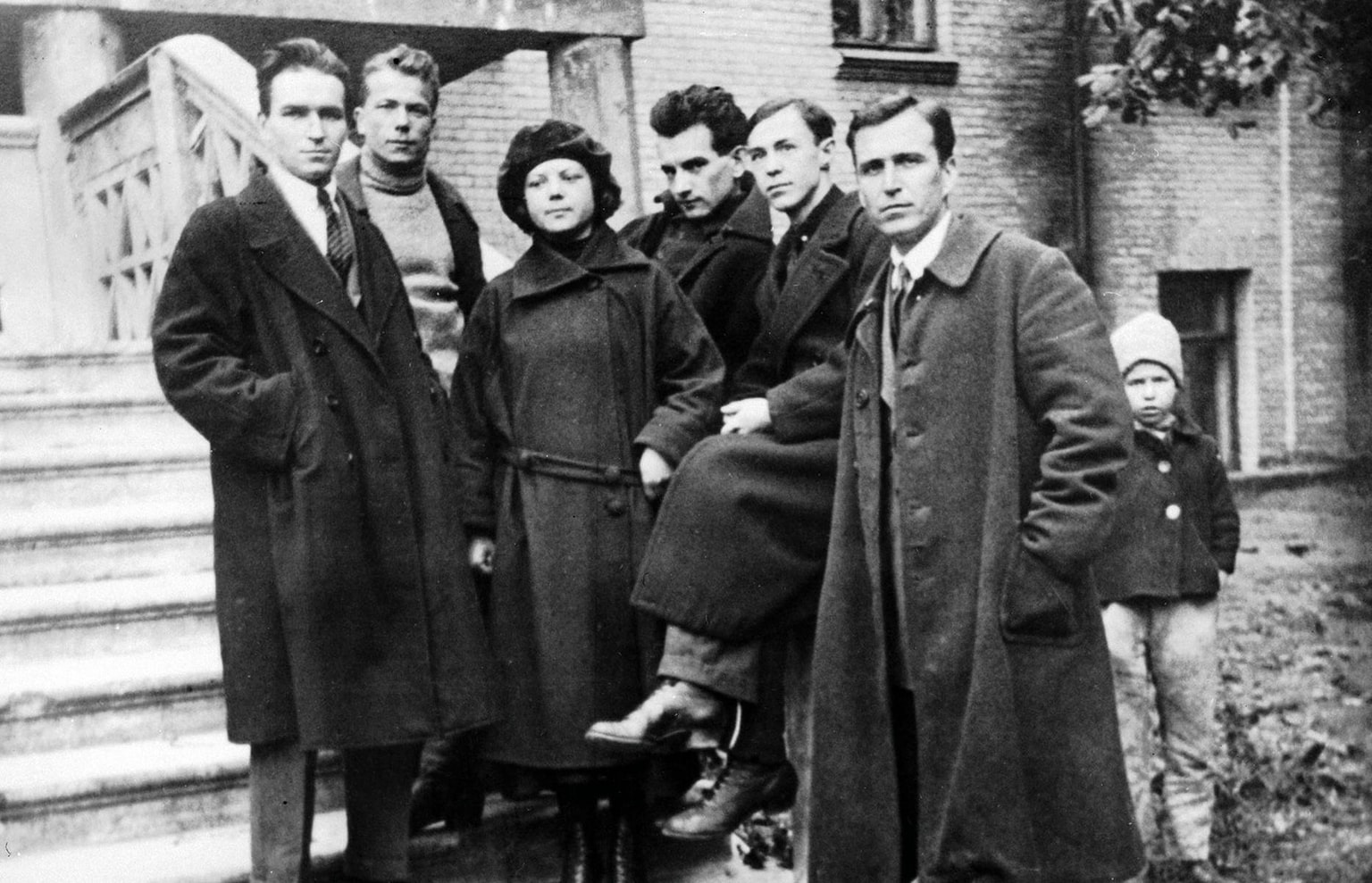
"Kvitky" highlights the stories of the researchers who traveled to Ukrainian villages to document house paintings and speak to the people who created them. These scholars devoted years to studying different forms of folk art. But when the Soviet authorities branded such work as "nationalism" or "espionage," many were prevented from continuing their studies, imprisoned, or killed. Some of the village artists suffered the same fate.
The tradition of house painting has largely disappeared, and so "Kvitky," like Old Khata's previous book, seeks to preserve a relic of the past. As modern materials and technologies spread, hand-painted houses declined, and people rarely preserved existing paintings. The natural pigments used in the designs quickly faded in sunlight, while house walls were regularly whitewashed.
But most devastatingly, Ukrainian villages were transformed by industrialization, migration, and the Holodomor of 1932–1933, a man-made famine caused by the policies and actions of the Soviet authorities under Joseph Stalin. Millions of Ukrainians died in the Holodomor, and many others left their villages, taking with them the knowledge and skills that had sustained local artistic traditions.
"A number of the villages where the paintings in the book were created are now under Russian occupation or lie close to the front line, scarred by fighting. Civilians in Russian-occupied territories face intense Russification and are forced to conceal their Ukrainian identity and pro-Ukrainian views for fear of punishment."
What remains today are articles and books written by Ukrainian scholars of house painting, colored sketches of paintings made during field trips by researchers and artists themselves, lithographs, and black-and-white photographs taken during expeditions.
The editors, Anna Ilchenko and Svitlana Oslavska, and designer Halyna Verheles have masterfully handled the difficult task of bringing together these fragmented, often low-quality archival materials into a coherent visual and textual narrative that immerses readers in the world of Ukrainian folk decorative art.


"The book is, above all, about beauty," the editors write in the preface. "It's about those moments that catch your eye and make you pause, smile, and shake your head in wonder: how beautiful!" Reading "Kvitky" is a series of moments like these.
The images of the wall paintings, each with its own distinct character, offer a glimpse into the private worlds of Ukrainian families living a century ago. Excerpts from researchers' writings provide context, helping readers understand how the paintings were created, the conditions in which villagers lived, and how the art form changed over time. Photographs from the expeditions, featuring painted houses, artists and their families, and the researchers themselves, make the story feel more real.
Although every artist featured in the book had a unique style, paintings from the same region or period shared certain characteristics. These distinctive features invite readers to reflect on everyday life in Ukraine at the time: the natural and built environments that surrounded villagers, and the ways they perceived the world around them.
Paintings from central-western Vinnytsia Oblast often feature asymmetrical compositions and rounded shapes, in contrast to those from Cherkasy Oblast, where geometric ornaments and repeating patterns are more common. In the Black Sea region, known for winemaking, grape clusters appear among painted fruit motifs. Meanwhile, paintings in Podillia, a historical region in the central-western part of Ukraine, between the Southern (Pivdennyi) Buh and Dniester rivers, feature a wide variety of flowers, plants, and animals, some of which are difficult to identify. The colors also vary, from vibrant reds and blues in central-eastern Dnipropetrovsk Oblast to lighter greens and browns in neighboring Kirovohrad Oblast.
The first part of the book features mostly paintings created in the 1910s and 1920s. These poignant, imaginative paintings, often naive yet full of love, invite the eye to wander across their smallest details. Then, suddenly, the mood shifts: a drawing dated 1935 depicts red stars bearing the hammer and sickle, with children in Young Pioneer uniforms.
"Just as Stalin and other Soviet leaders sought to deprive Ukrainian culture of its originality and authenticity, Vladimir Putin’s Russia continues to deny Ukraine’s distinct national identity and systematically target its cultural institutions."
These Soviet propaganda symbols feel sharply out of place, as if they had been added at the last minute, when the artist remembered that she was expected to include them to avoid trouble. Unfortunately, such additions did not save many artists who fell victim to Soviet repression.
These materials show how folk art, and house painting in particular, changed under often suffocating political conditions. Unsurprisingly, the paintings from this period look more standardized and repetitive, with less boldness and individuality.

Just as Stalin and other Soviet leaders sought to deprive Ukrainian culture of its originality and authenticity, Vladimir Putin's Russia continues to deny Ukraine's distinct national identity and systematically target its cultural institutions. Ukraine's publishing industry has suffered enormous losses: Russian attacks on publishing facilities destroyed more than 13 million books over the summer of 2026 alone.
A number of the villages where the paintings in the book were created are now under Russian occupation or lie close to the front line, scarred by fighting. Civilians in Russian-occupied territories face intense Russification and are forced to conceal their Ukrainian identity and pro-Ukrainian views for fear of punishment, including brutal interrogations, abductions, unlawful arrests, and torture. These places have been cut off from preserving Ukrainian traditions, and it remains unclear whether they will ever be revived.
All this underscores how relevant and timely "Kvitky" is. Amid the existential threat posed by Russia’s neo-imperial ambitions, publishing a book about one of the most intimate and fragile forms of Ukrainian folk art is an act of love. It honors both those who created beauty in their everyday surroundings and those who have worked to preserve it.
"Kvitky" is now available for purchase on the official website of the Old Khata project, along with the collective's first book about Ukraine's villages.