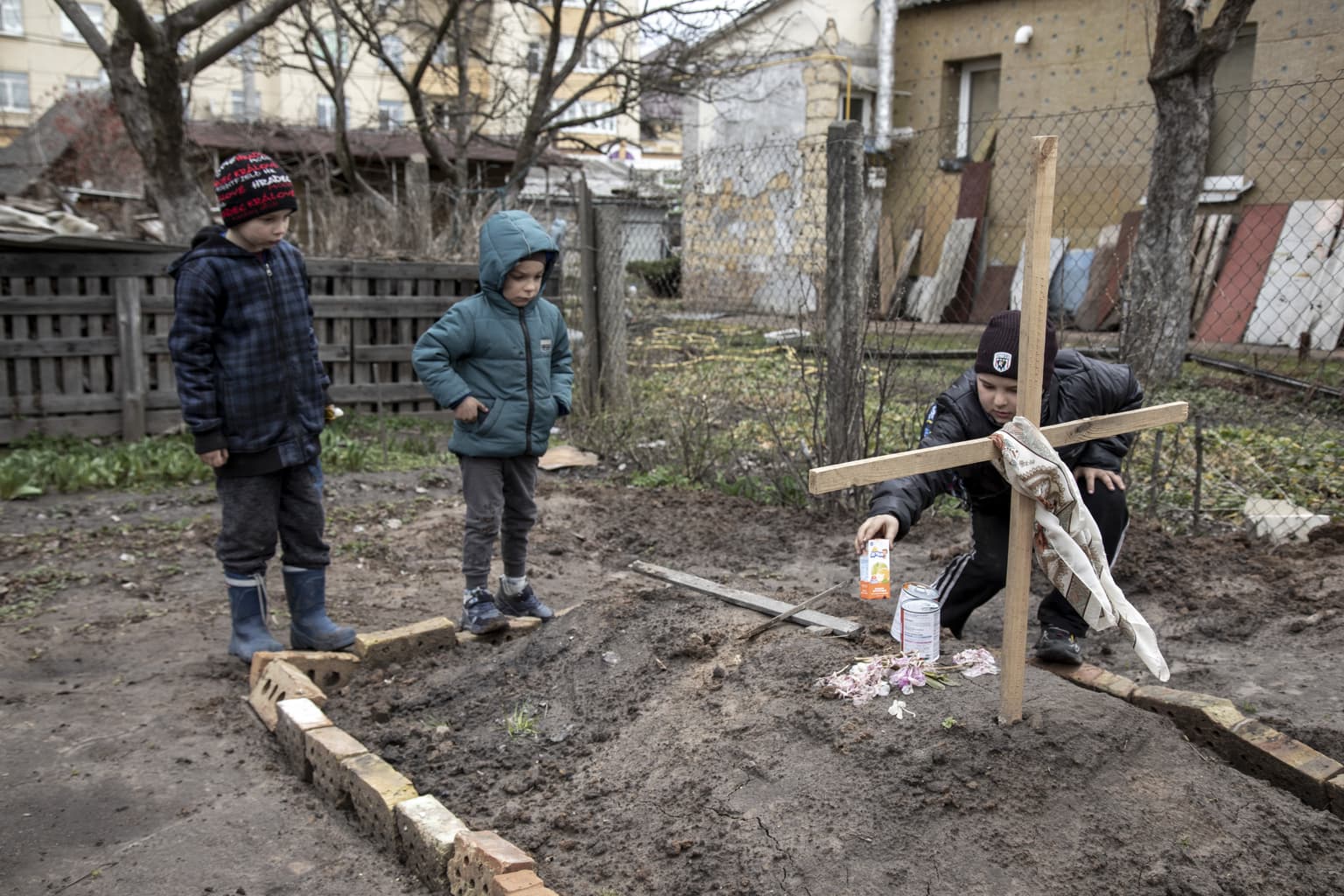
A young kid gives an offering of food to his mother grave as his younger brother and a neighbor stand next to it, in the town of Bucha, on the outskirts of Kyiv, April 4, after the Ukrainian army secured the area following the withdrawal of the Russian army from the Kyiv Oblast in previous days. (Getty Images)
April 14 marks 50 days since Russia launched its brutal all-out war against Ukraine.
Moscow's unprovoked military aggression has already cost it approximately 19,900 servicemen and 5,260 units of weapons and other equipment, according to Ukraine's government estimates.
Russia hasn't achieved any significant success in its offensive, having captured only one regional capital, Kherson, which has been actively resisting the occupation.
Yet Ukraine can hardly celebrate this interim victory, as Russian forces are regrouping and preparing to focus on advancing in the country's east.
Foreign Minister Dmytro Kuleba said that the upcoming Battle of Donbas will be similar to World War II, as Ukraine expects large-scale operations and maneuvers involving thousands of tanks, armored vehicles, aircraft, and artillery.
Russia's war has already killed 1,964 and injured 2,613 civilians in Ukraine, according to the United Nations. The true numbers, however, are expected to be much higher, as data about casualties from the occupied territories and the front-line cities is hardly accessible. In Mariupol, a besieged seaport in southeastern Ukraine alone, "tens of thousands" of people have been killed, according to President Volodymyr Zelensky.
Ukraine still doesn't publish its military personnel losses.
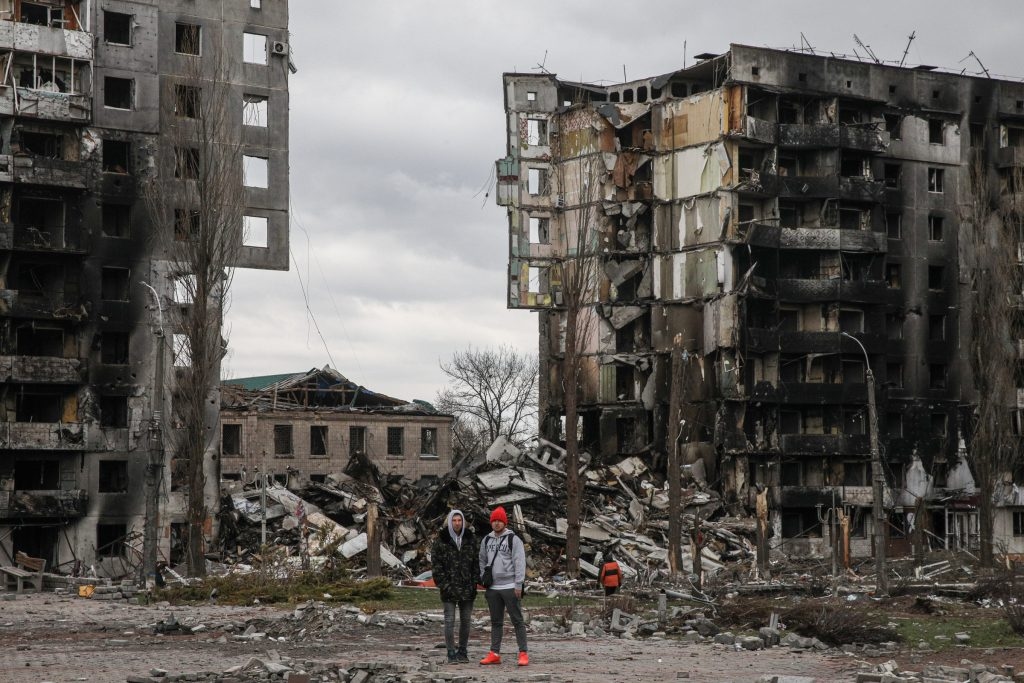
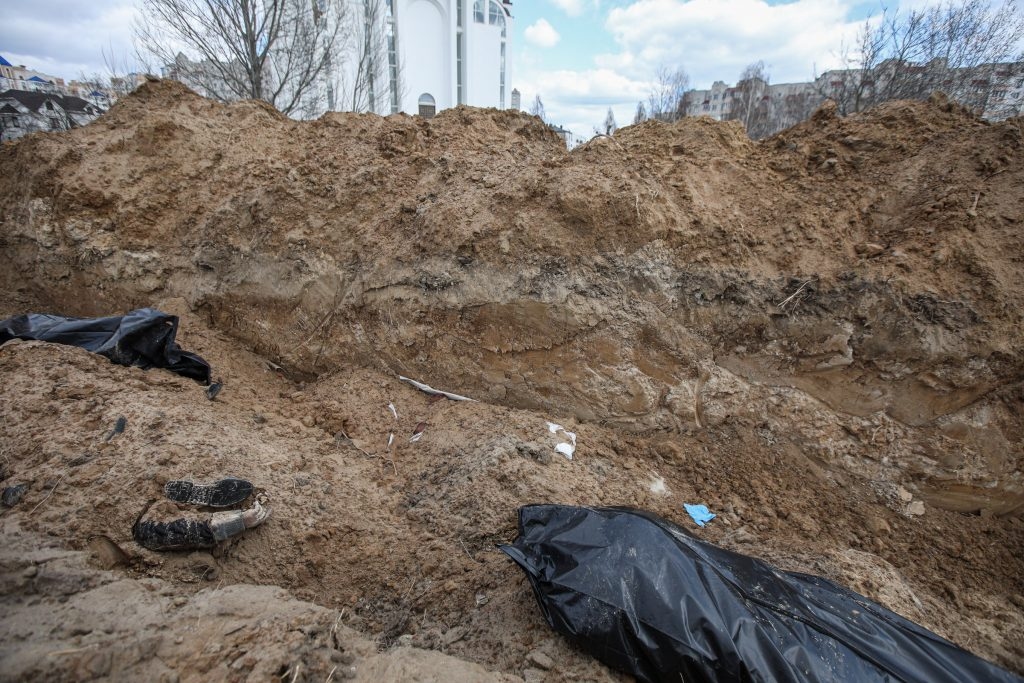
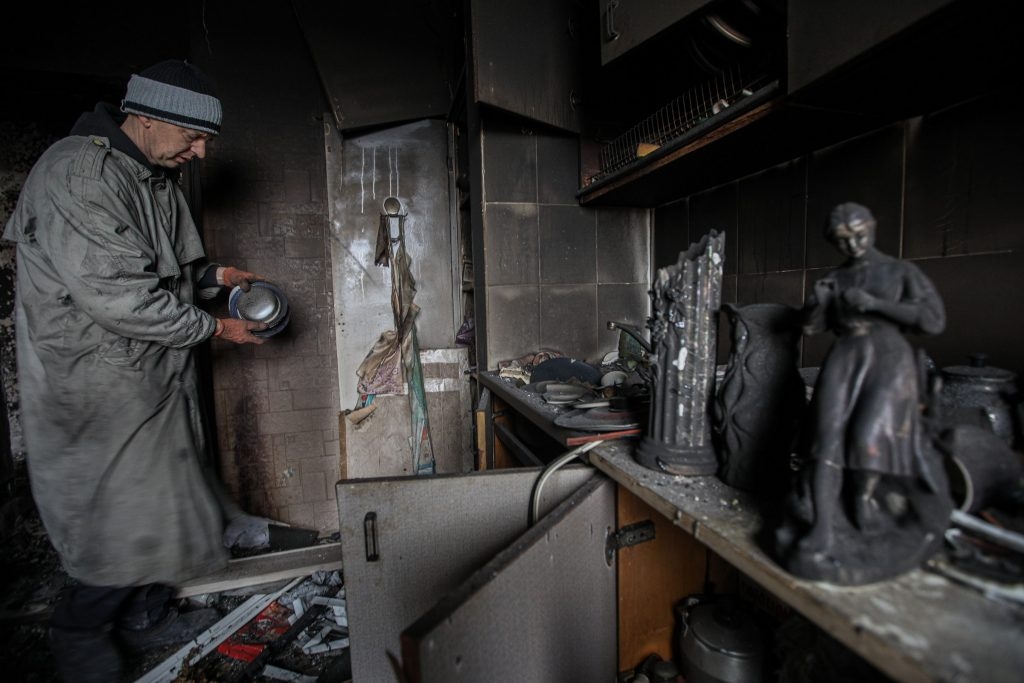
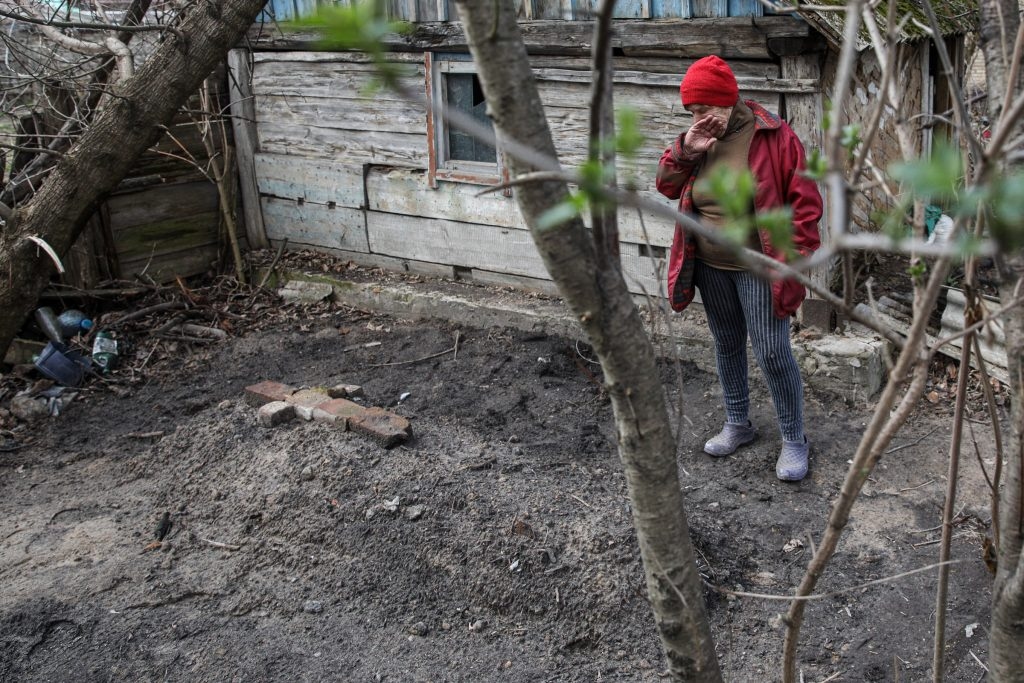
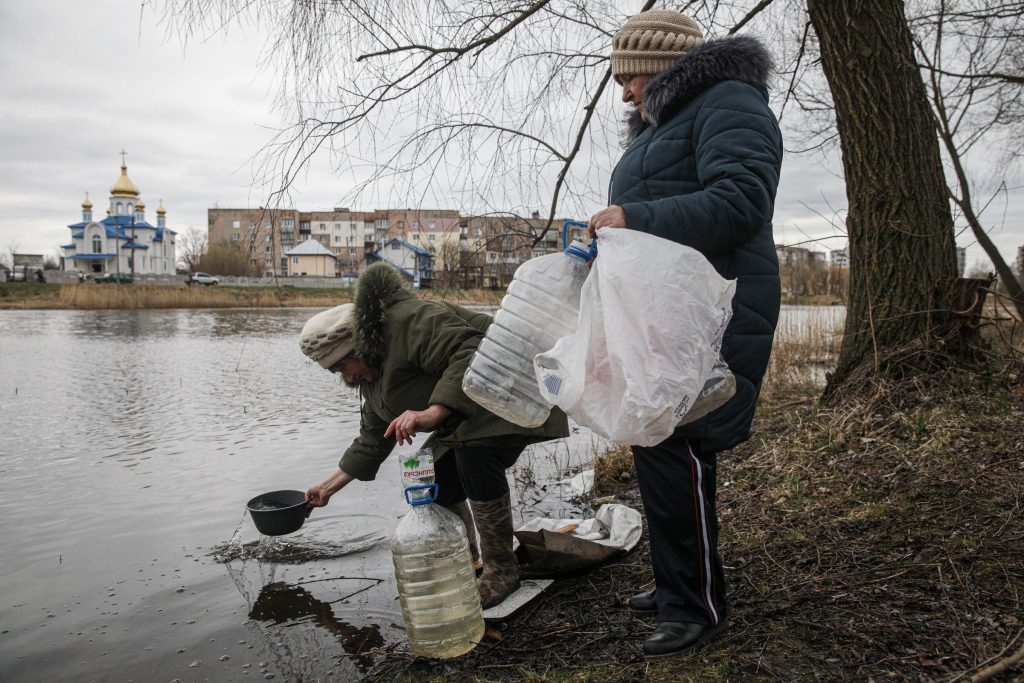
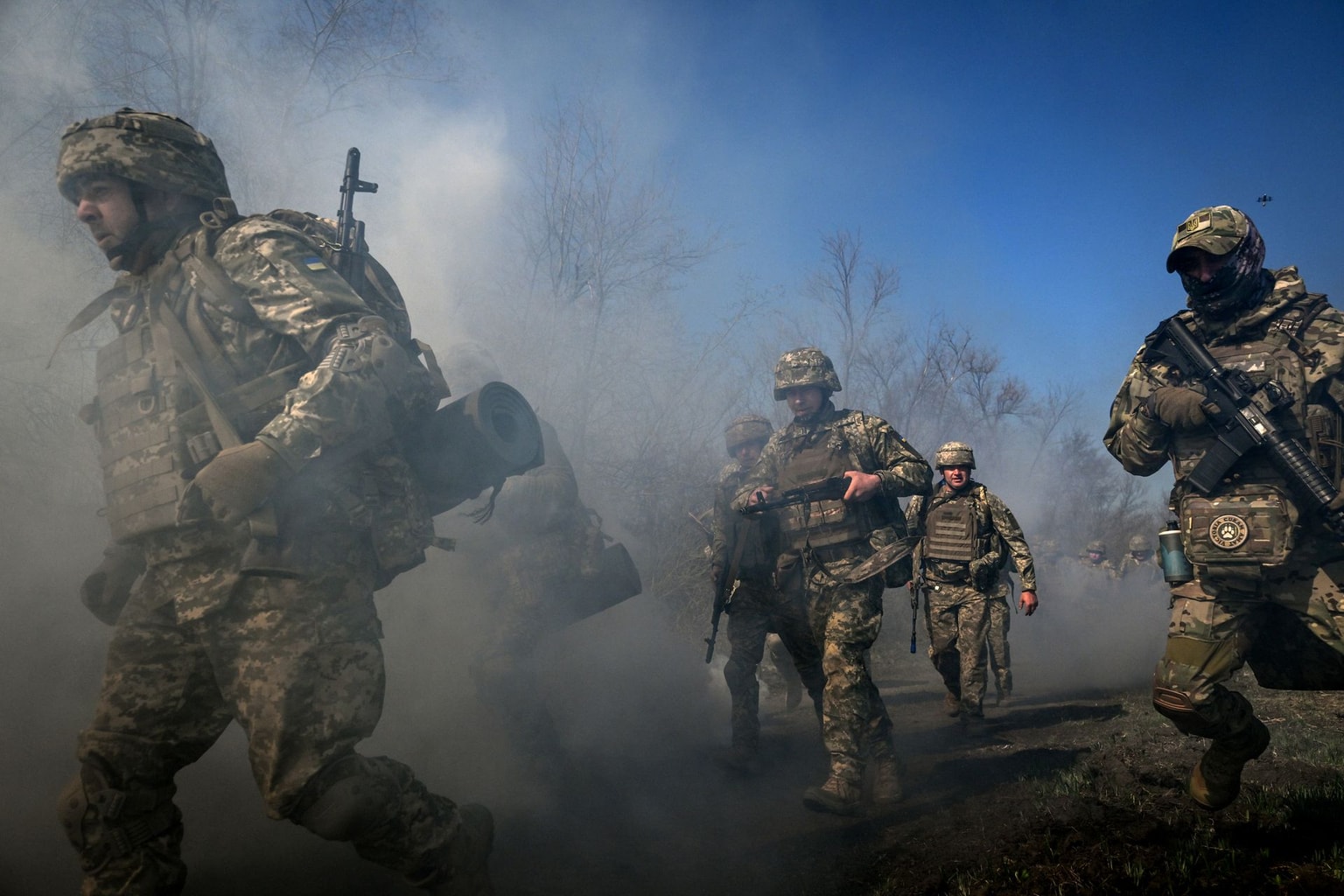
Smoke rises over the town of Rubizhne, Donbas Oblast, on April 7, amid Russia's military invasion launched on Ukraine. Six weeks after invading its neighbor, Russia's troops have withdrawn from Kyiv and Ukraine's north and are focusing on the country's southeast, where desperate attempts are under way to evacuate civilians. (AFP/Getty Images)Cemetery workers unload bodies of civilians killed in and around Bucha before they are transported to the morgue at a cemetery on April 7, in Bucha. The Ukrainian government has accused Russian forces of committing a "deliberate massacre" as they occupied and eventually retreated from Bucha, 25 kilometers northwest of Kyiv. Hundreds of bodies have been found in the days since Ukrainian forces regained control of the town. (Getty Images)Two men stand in front of a residential building destroyed by Russian bombing in early March, in the town of Borodyanka in Kyiv Oblast on April 6. (Kostyantyn Chernichkin)British Prime Minister Boris Johnson meets Ukrainian President Volodymyr Zelensky in Kyiv, Ukraine on April 9. (Getty Images)Mourners attend a memorial service for serviceman officer of Right Sector, Ukrainian Volunteer Corps, Taras Bobanych, call sign Hammer, at the Saints Peter and Paul Garrison Church in the western Ukrainian city of Lviv on April 13, amid Russia's invasion of Ukraine. (AFP/Getty Images)A man embraces his wife as she is about to board a train at Slovyansk central station, in Donetsk Oblast on April 12, amid Russian invasion of Ukraine. The Ukrainian leaders of the Donetsk and Luhansk oblasts in the Donbas have asked civilians to evacuate west in reaction to an anticipated Russian offensive to take the eastern region. (AFP/Getty Images)People walk down an avenue in Mariupol on April 12, 2022, as Russian troops intensify a campaign to take the strategic port city, part of an anticipated massive onslaught across eastern Ukraine. (AFP/Getty Images)A partially buried body is seen in a mass grave in the town of Bucha, near Kyiv on April 4. (Kostyantyn Chernichkin)Dmytro Sadofiev goes through his belongings in his kitchen in the town of Borodyanka in Kyiv Oblast on April 6. The town has suffered from a Russian bombing in early March. (Kostyantyn Chernichkin)Emergency personnel walks among injured people lying on the sidewalk in the aftermath of a rocket attack on the railway station in the eastern city of Kramatorsk, in Donetsk Oblast, on April 8. More than 50 people were killed and over 100 injured in the attack. (AFP/Getty Images)A five-story residential building destroyed by Russian bombardment in the Ukrainian city of Kharkiv, as seen on April 10. (AFP/Getty Images)Ukrainian soldiers on the front line with Russian troops in Luhansk Oblast on April 11. (AFP/Getty Images)Olga Antonova cries next to the grave of civilian man who was killed by Russian soldiers on the street near her house few weeks ago in Bucha, near Kyiv, on April 4. Days later, Russian soldiers allowed her to bury the man in her yard. (Kostyantyn Chernichkin)Thousands of people carrying banners and Ukrainian flags lie down on the ground to represent war victims during a protest against ongoing Russian attacks on Ukraine, in front of the German Federal Assembly in Berlin, Germany on April 6. (Getty Images)Residents run near a burning house following a shelling of Severodonetsk, Luhansk Oblast, on April 6, as Ukraine tells residents in the country's east to evacuate "now" or "risk death" ahead of a feared Russian onslaught on the Donbas region, which Moscow has declared its top prize. NATO believes Moscow aims to take control of the whole Donbas region in eastern Ukraine with the aim of creating a corridor from Russia to annexed Crimea. (AFP/Getty Images)Natalia Blyzniuk (L) and her sister Liudmila, local residents who spent last month in the city, take water from the river in the town of Borodyanka in Kyiv Oblast on April 6. (Kostyantyn Chernichkin)A resident searches for the graves of relatives in a cemetery in Chernihiv, northern Ukraine, on April 5. Chernihiv, just 50 kilometres from the border with Belarus, was swiftly encircled in the early days of the Russian invasion of Ukraine. City officials estimate around 350 civilians have been killed in Chernihiv since the start of the Russian invasion. (AFP/Getty Images)
Nilsson also said Sweden saw no signs that Russia's political system or Vladimir Putin's grip on power were under immediate threat, despite economic strains caused by the war and Western sanctions.
Even if the decision is adopted at the EU level, it will not prevent Budapest from accepting ethnic Hungarians fleeing Ukraine because of the war or mobilization, Hungarian Prime Minister Peter Magyar said.
The plan, backed by 300 billion pounds ($400 billion) in funding over four years, is part of a drive toward a more "European NATO" and will help the British forces deter the Russian threat, outgoing U.K. Prime Minister Keir Starmer said.
According to the French news outlet BFM TV, the blast injured Ukrainian businessman Vadym Yermolaiev, his partner, and 13-year-old daughter. Authorities are investigating the incident as a possible terrorist attack.
The EU's new steel allocation, set to enter into force on July 1, was introduced in response to global steel overcapacity, which has been hurting EU producers. The measure aims to restrict tariff-free steel imports to 18.3 million metric tons per year, a 47% reduction.
The Norwegian defense company Kongsberg and Ukraine's DevDroid announced on June 30 a collaboration to produce ground drones equipped with state-of-the-art weapons systems, aiming to supply Ukraine and other European countries.
The payment is part of the initial 6-billion-euro ($7-billion) tranche dedicated to drone procurement under the 90-billion-euro ($103 billion) Ukraine Support Loan.
"I proposed what I believe was a very fair, partnership-based approach: MiGs in exchange for drones," Polish Defense Minister Wladyslaw Kosiniak-Kamysz said. "The Ukrainians initially accepted it but did not follow through, so there are no MiGs for Ukraine because there are no drones, or drone capabilities, for Poland."
Swedish defense company Saab announced on June 29 that it had signed a $4.83 billion contract with Poland to supply three A26 submarines, as Poland and Sweden deepen defense cooperation under the Baltic Sea Pact.

 on Google