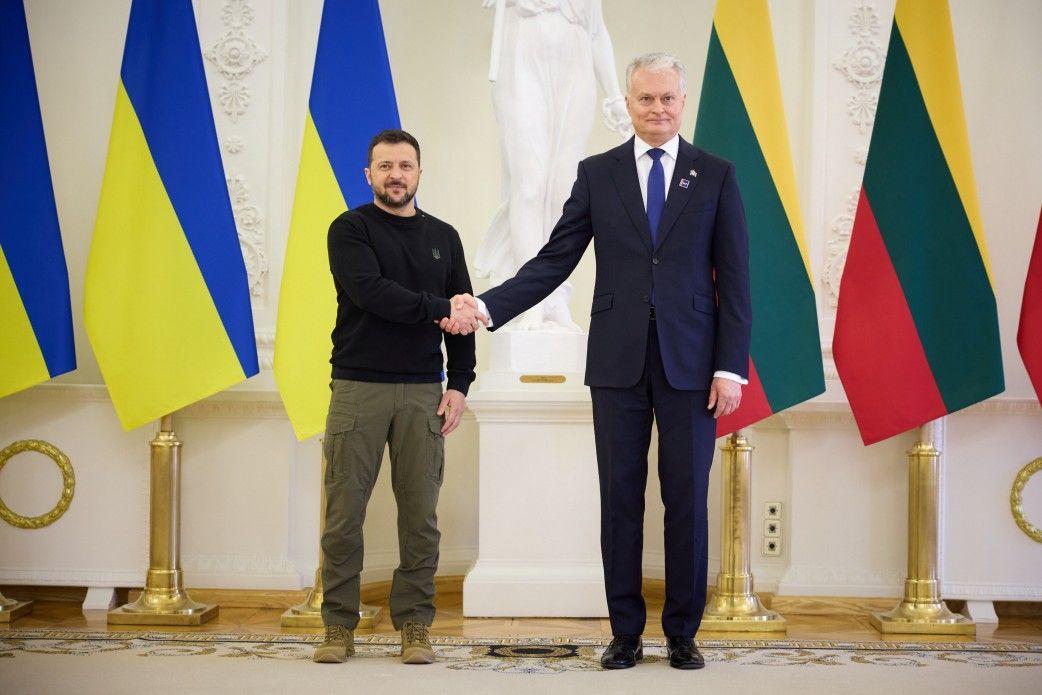
Ukraine's President Volodymyr Zelensky (L) and his Lithuanian counterpart, Gitanas Nauseda, meet in Vilnius, Lithuania, on April 11, 2024. (Ukraine's Presidential Office)
Lithuanian President Gitanas Nauseda announced on June 26 that Lithuania will allocate at least 0.25% of its GDP to assist Ukraine's security and defense.
The decision was approved during the State Defense Council meeting, according to Nauseda.
"Lithuania will continue to stand firmly with Ukraine until victory. We will always support freedom," Nausedawrote on X.
Lithuania, one of Kyiv's staunch supporters, announced the creation of the deminingcoalition in July 2023.
Kateryna Hodunova is a News Editor at the Kyiv Independent. She previously worked as a sports journalist in several Ukrainian outlets and was the deputy chief editor at Suspilne Sport. Kateryna covered the 2022 Olympics in Beijing and was included in the Special Mentions list at the AIPS Sport Media Awards. She holds a bachelor's degree in political journalism from Taras Shevchenko University and a master's degree in political science from the National University of Kyiv-Mohyla Academy.
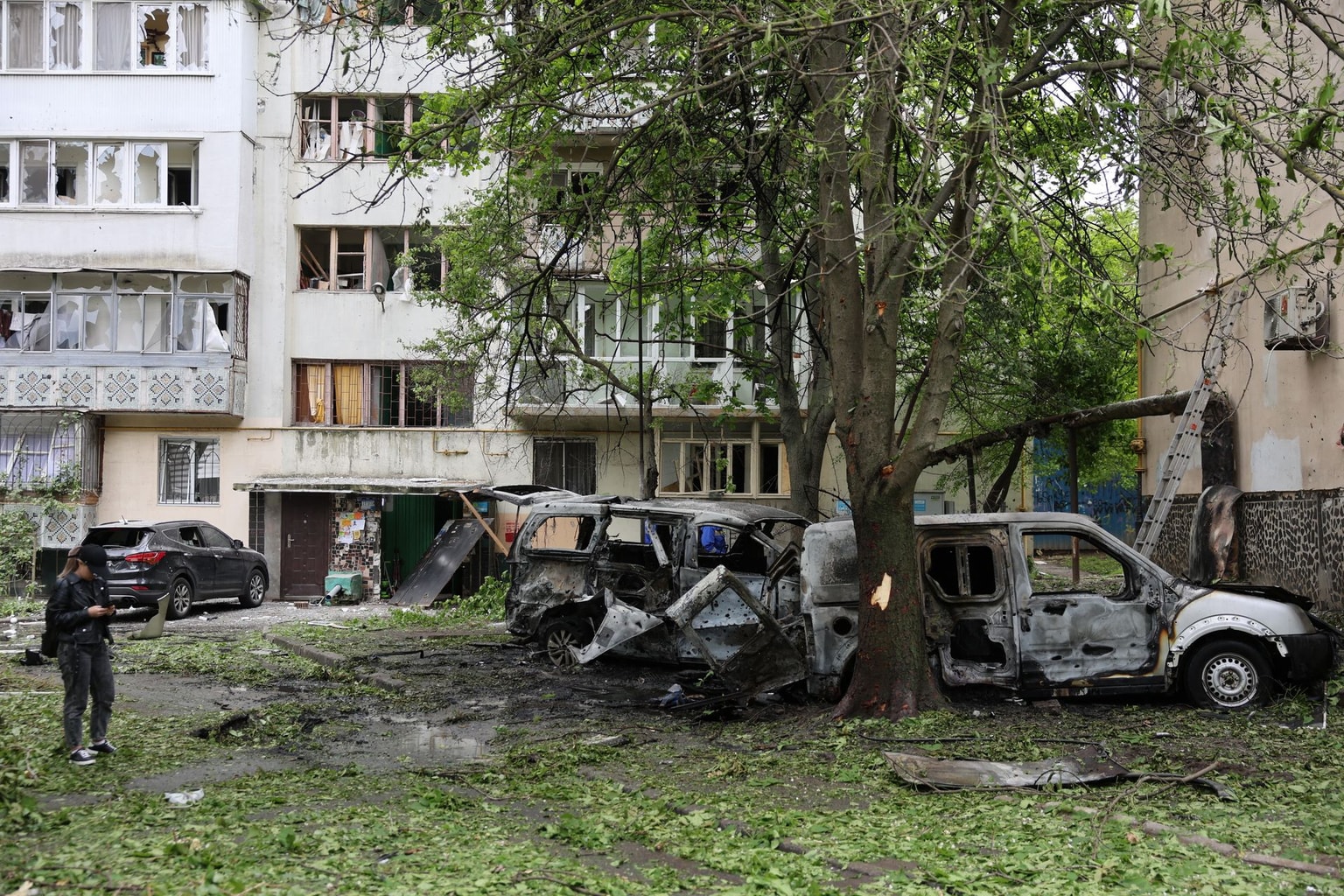
Among the victims killed were three children, including a 12-year-old child, according to the State Emergency Service. Forty-seven people were reported injured as well.
Ukraine's military reportedly launched a large-scale drone attack overnight on May 15, striking Russian military and energy infrastructure in multiple regions of Russia, Russian Telegram media channels reported.
Ukraine has consistently qualified for the Eurovision final since it began participating in 2003 and won in 2004 with Ruslana's "Wild Dances," in 2016 with Jamala's "1944," and in 2022 with Kalush Orchestra's "Stefania."
36 countries and the European Union have committed to supporting the Special Tribunal, and the Netherlands has carried out preparatory work to host the court in The Hague.
The Pentagon has abruptly cancelled a planned deployment of 4,000 U.S. troops to Poland, as concerns over the reliability of U.S. military commitments to European allies continue to increase.
Russia's prison population has fallen by nearly 40% over five years, a decline driven in part by Moscow's recruitment of prisoners to fight in Ukraine.
The bipartisan legislation would reaffirm U.S. support for Ukraine, expand sanctions against Russia, and authorize additional military and financial assistance for Kyiv.
It only takes $5 to support independent journalism.
As global attention shifts to the Middle East, Russia’s war against Ukraine hasn’t stopped — and the Kremlin benefits from the world looking elsewhere. Our newsroom reports from Kyiv to help you understand what’s happening and why it matters. Support our work by becoming a member.


 on Google