'We will sow' — Odesa farmers defiant in face of relentless Russian assaults
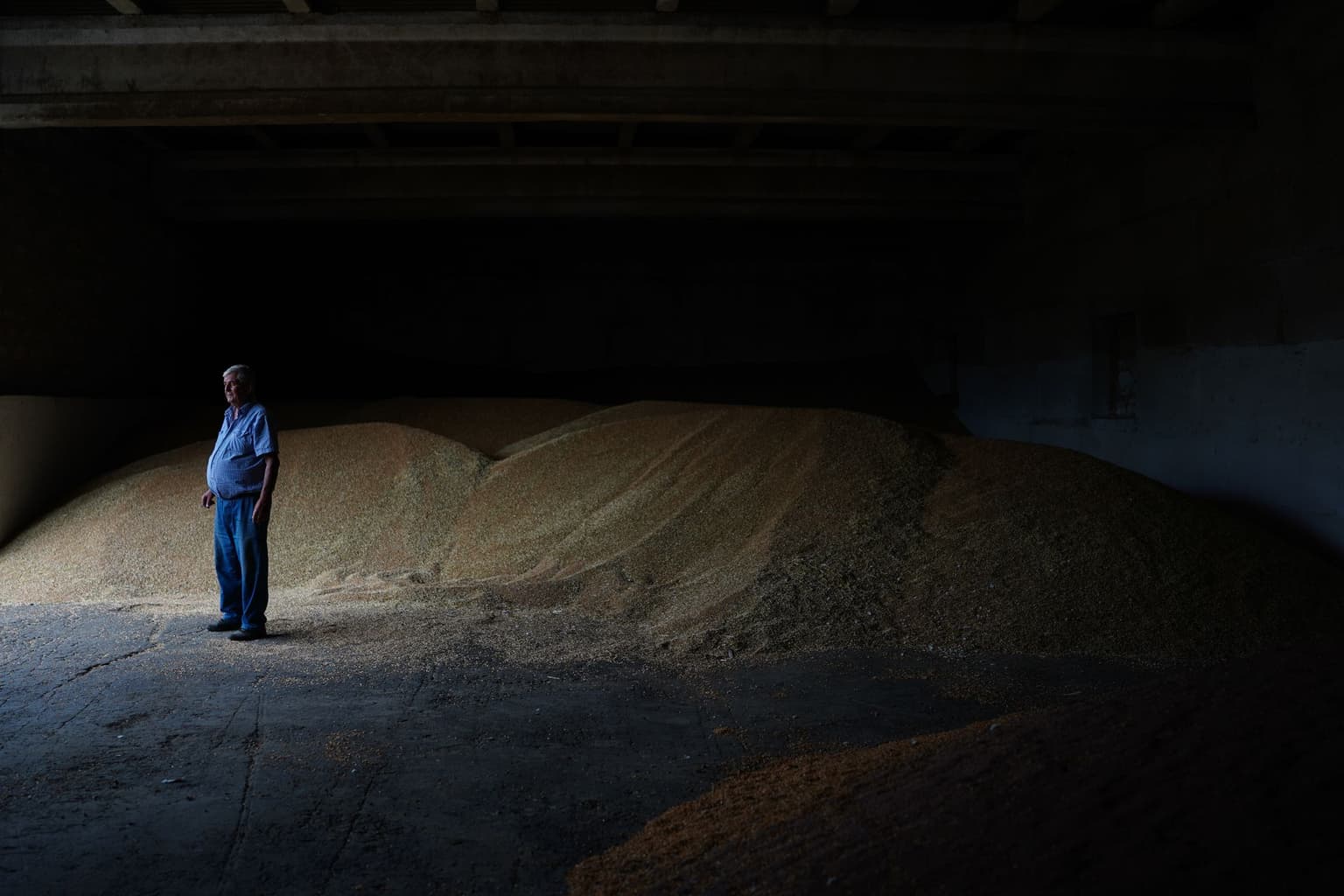
Volodymyr Varbanets, 76, a farmer, stands in the grain warehouse in Odesa Oblast, Ukraine, in August 2026. (Karina Piliuhina / The Kyiv Independent)
 on Google
ODESA OBLAST — Volodymyr Varbanets sinks his hands into a mound of wheat, letting the golden kernels slip between his fingers.
This year brought an unusually good harvest, the best since the beginning of Russia's full-scale invasion, he says. Behind him, hundreds of metric tons of wheat, barley, lentils, and peas fill the farm's warehouses.
"But we cannot sell it," he sighs.
For more than 20 years, Varbanets has worked this land, sowing and harvesting crops across 206 hectares. At 76, he still climbs behind the wheel of his tractor or combine. Three of the men who once worked on the farm have been mobilized, leaving him, his son, and another worker to tend the fields.
Normally, by late August, trucks would already be carrying his harvest from the farm to the three deep-water ports of the Greater Odesa logistics hub about 50 kilometers south. From there, it would be loaded onto commercial cargo vessels and shipped across the Black Sea to markets worldwide.
"We cannot sell it."

But this year, the harvest remains in the warehouse.
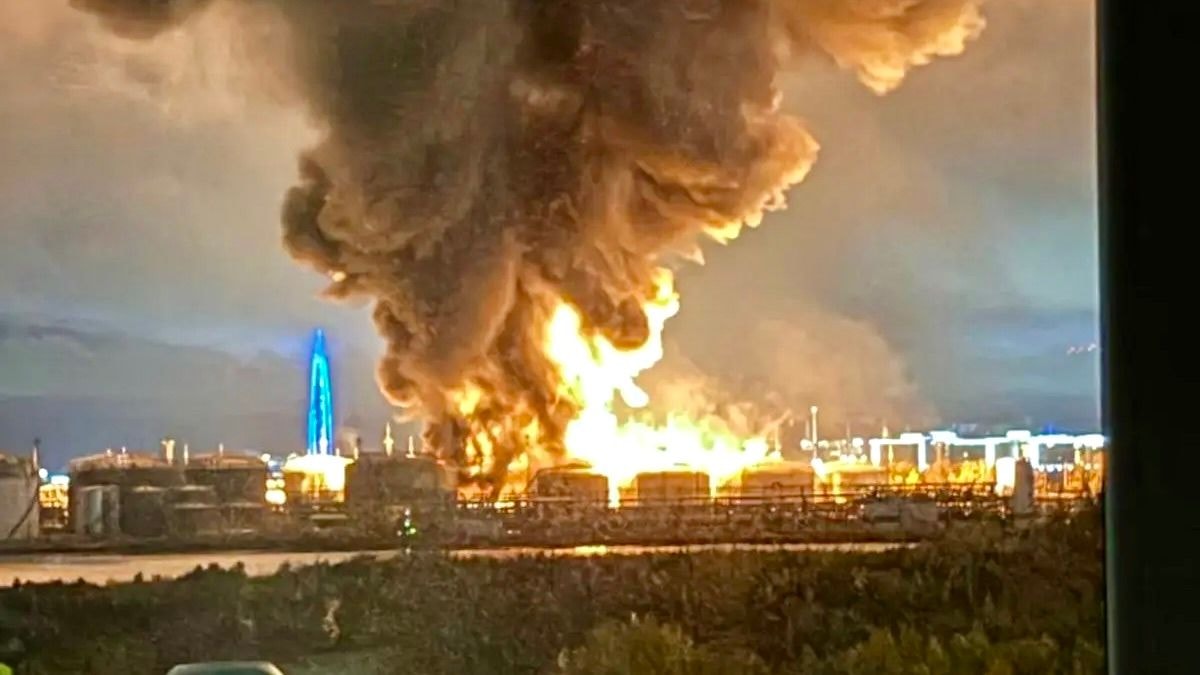
Since mid-July, Russia has intensified its attacks on Odesa's ports and adjacent infrastructure. Although the ports remain technically open, fewer ships now dare to enter this new maritime kill zone.
"The ports are almost blocked," says Dmytro Barinov, president of the Ukrainian Ports Association Ukrport.

'Ship hunting' campaign
On July 13, a Russian strike on a Togolese-flagged cargo vessel killed five people and injured 10 as it unloaded mineral fertilizers at the port of Odesa.
Six days later, three Russian cruise missiles struck the Golden Leo, a civilian bulk carrier loaded with corn, shortly after it left Chornomorsk. The attack killed 10 people, including nine crew members from India and Syria, and a Ukrainian maritime pilot. The damaged vessel sank a week later in the Black Sea.
"The corridor is not working, the ports are standing still, nobody is taking grain."
Both ships were traveling the maritime corridor used by merchant ships to reach Greater Odesa's three deep-water ports: Odesa, Chornomorsk, and Pivdennyi. Ukraine established the maritime corridor in August 2023, after Russia did not renew the agreement that Turkey and the United Nations had brokered separately with each side to allow for the export of grain from Ukrainian ports. Ukrainian strikes on Russian naval facilities and warships opened up the corridor for commercial shipping.
Barinov describes the increase in Russian attacks on civilian commercial vessels in the Black Sea this summer as a systematic targeting campaign rather than sporadic hits.
"It's ship hunting," says Barinov.
In July, 169 vessels entered the ports of Greater Odesa. By late August, only one or two ships a day were arriving, according to Barinov.

Container lines were among the first to suspend calls, he says. Their ships run on fixed schedules and cannot afford to wait indefinitely for safe passage. Bulk carriers transporting grain or iron ore have more flexible schedules, but Barinov says even those operators are increasingly reluctant to enter Odesa.
Some shipowners have offered crews substantially higher pay to make the journey, he adds. But at some point the problem is no longer one of schedules, freight rates, or insurance premiums.
"They are afraid for their lives," Barinov says. "It's not a matter of money."
Working at a loss
The drop in traffic has come at the height of Ukraine's harvest season.
Between Aug. 1 and Aug. 26, Ukraine exported around 1.42 million metric tons of agricultural products, around one-third of the possible export volume with full logistics access, the Agriculture Ministry estimates. Grain was hit hardest, with exports at 822,000 metric tons, around one-fifth of the potential volume.

"The corridor is not working, the ports are standing still, nobody is taking grain," says Varbanets, looking at his harvest. "And if somebody does take grain, then it is for next to nothing."
Last year, he says, even the cheapest wheat sold for around Hr 11,000 ($265) a ton. Today, buyers are offering him roughly Hr 3,500 to 4,000 ($84 to $96). Lentils that previously sold for around Hr 25,000 ($602) a ton now fetch about Hr 15,000 ($361).
At the same time, the farm's costs for diesel, fertilizer, and spare parts have risen.
"We are not even working for zero," he says. "We are working at a loss."
Varbanets still needs to pay his workers and taxes, and settle with the owners of the land he leases. In a few weeks, he has to sow again.
read also
The grain can be kept in his warehouse for about a year, Varbanets adds. But it has to be moved regularly to preserve its quality; at his farm, he uses a loader to shift it from one part of the warehouse to another.
"Grain has to be constantly in motion," he explains.
The grain elevators have little room for new deliveries. Until enough ships arrive to carry the stored grain away, they cannot empty, leaving farmers with fewer places to send their harvest.

No good alternative
Ukraine has other routes for moving its exports, but none match the capacity of the deep-water ports around Odesa.
Ukraine’s Danube ports of Izmail and Reni became crucial after Russia's 2022 blockade and, as ships retreat from Greater Odesa, have taken on more traffic. For farmers like Varbanets, rerouting grain to the Danube means a much longer and more expensive journey.
Izmail is roughly 400 kilometers away from his farm, and Varbanets estimates that the cost of transporting grain there can amount to 30-35% of the grain's sale value, before accounting for delays.
The Danube ports are smaller and constrained by the Sulina Canal, which limits the size of vessels that can reach them. Barinov says ships carrying around 5,000 to 7,000 metric tons can use the route, a fraction of the capacity available at Greater Odesa's deep-water terminals.
"Nobody is taking grain."

Moving the cargo of a single 100,000-metric ton capacity ship overland would require roughly 5,000 trucks, each requiring a driver, documents, fuel, and a border crossing, Barinov adds.
The Danube route offers no escape from Russian attacks either. Russia has repeatedly targeted ports and logistics infrastructure there, leaving Ukraine's backup route slower, smaller, and exposed to many of the same dangers as Odesa.
By the end of August, around 70 vessels were waiting to enter the Sulina Canal en route to Ukraine's Danube ports. The shift has kept some exports moving, but it has also shown how quickly alternative routes become congested when traffic is diverted from Greater Odesa.
Romania's port of Constanta is another option. Ukrainian cargo can reach it by rail or road. While Constanta already handles Romanian and other European exports, border capacity, railway links, and cargo transfers all create additional bottlenecks for Ukrainian cargo.
Defending the corridor
What keeps the corridor open at all is a force of Ukrainian Navy patrol boats that work around the clock, serving as mobile air-defense groups along the coast. Each vessel covers an assigned sector, monitoring the waters, detecting and neutralizing explosive devices, watching for unmanned boats, and shooting down low-flying Russian attack drones.
When an incoming aerial threat is detected, Yevhen, a 32-year-old serviceman of the Ukrainian Navy identified by first name only for security reasons, puts on his body armor and helmet, climbs into the turret, and takes his position at the machine gun.

Shahed drones have chased their boat more than once while they were out at sea, he says.
"We fired back," says Yevhen, who served in the airborne forces before joining the Navy. He never expected to end up at sea.
"I can't swim," he adds with a smile.
But the boats' machine guns offer little protection against missiles launched from occupied Crimea and Russia. Crews increasingly face jet-powered Shahed variants and Banderols, which travel faster than conventional Shaheds and are harder to intercept.

Russia sends alternating types of drones and missiles at intervals of 30-minutes to an hour, says Oleh Zasyadvovk, a captain 2nd rank and communications officer with the Ukrainian Navy.
"There is no period of more than an hour without an alert," he says. "The tactics change almost every day."
During particularly demanding shifts, Yevhen says, he spends more than 24 hours at sea and goes for as long as two days without sleep.

The next harvest
For Varbanets, the lack of viable alternative routes is becoming more pressing as storage space dwindles. His wheat, barley, lentils, and peas already fill most of the warehouse space, while the next harvest approaches.
"There will be nowhere to pour the sunflower," he says.
On his way to the sunflower fields, Varbanets passes the village cemetery where four Ukrainian flags mark the graves of local men killed fighting in the war. One of them grew up with his grandson, who worked on the farm as an agronomist and is now serving in the military.
Further along the road, the war has cut through the farmland. The soil is charred where a Russian drone shot down nearby crashed and burned. The crash sparked a fire that burned around 600 hectares of land and damaged the tree lines that protect the soil from wind and snow in winter, Varbanets says.
Asked whether he will replant the burned fields, he answers: "What else can we do? We will sow."