Help us keep bringing the truth to light, even when Russia turns the lights out.

Shop and support
News Feed

Defense Ministry: $4.8 billion to be allocated for shells, missiles in 2024

• 2 min read
Defense Ministry: $4.8 billion to be allocated for shells, missiles in 2024
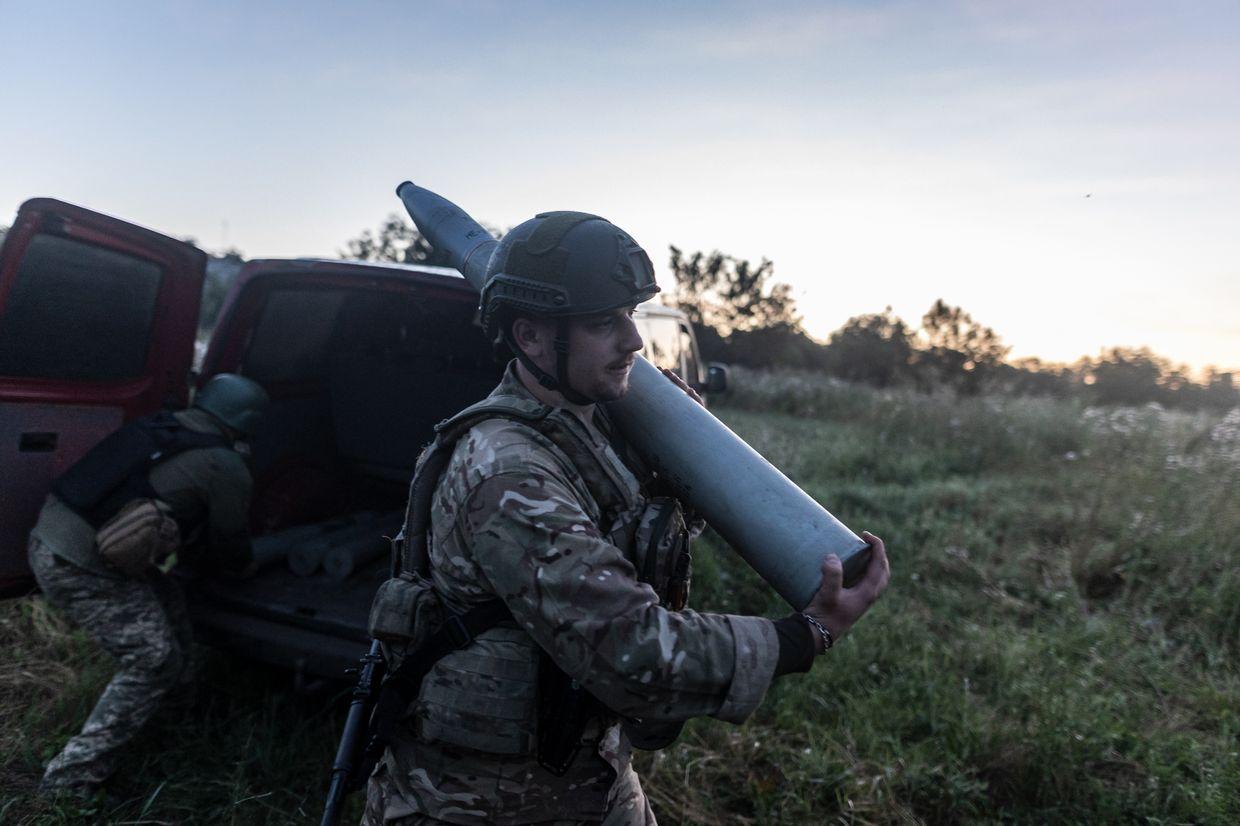
A Ukrainian soldier carries shells to their front line position in the direction of Bakhmut in Donetsk Oblast, Ukraine on July 22, 2023. (Diego Herrera Carcedo/Anadolu Agency via Getty Images)

The Ukrainian government will earmark Hr 175 billion ($4.8 billion) for the purchase of shells and missiles as part of the country's 2024 defense budget, said Deputy Defense Minister Yurii Dzhyhyr on Nov. 24.

Dzhyhyr also said that another Hr 80 billion ($2.2 billion) will go towards the purchase of military equipment.  Another top priority is to repair damaged military equipment, as well as purchase spare parts, he added.

As much as possible, the Ukrainian government will try to make purchases from domestic suppliers.

"According to our estimates, more than Hr 190 billion ($5.2 billion) from the funds that will be contracted next year will remain with domestic producer(s)," Dzhyhyr said.

The delivery of shells from the U.S. has dropped in recent months as the stability of continued aid from Ukraine's largest supplier of military aid increasingly comes into question.

Hopes that Ukraine's European allies may be able to fill in the gaps in shell provisions were also likely proving to be overly optimistic, as Bloomberg reported on Nov. 10 that the EU pledge to deliver one million shells to Ukraine by March 2024 was behind its target.

At the same time, Russia has dramatically increased the size of its military budget for 2024 and has reportedly received over one million shells from North Korea.

Avatar
Nate Ostiller

News Editor

Nate Ostiller is a former News Editor at the Kyiv Independent. He works on special projects as a researcher and writer for The Red Line Podcast, covering Eastern Europe and Eurasia, and focused primarily on digital misinformation, memory politics, and ethnic conflict. Nate has a Master’s degree in Russian and Eurasian Studies from the University of Glasgow, and spent two years studying abroad at Kyiv-Mohyla Academy in Ukraine. Originally from the USA, he is currently based in Tbilisi, Georgia.

Read more
News Feed
Video

In May 2026, Ukraine’s 3rd Army Corps launched a secret counteroffensive now known as Operation Vivaldi, aiming to strengthen Ukraine’s defensive positions in the Lyman and Sviatohirsk sectors and disrupt Russia’s plans to encircle Ukraine’s key strongholds – the cities of Sloviansk and Kramatorsk.

"Russia is building the military-industrial capacity to continue waging wars even after the war in Ukraine ends. These are not the actions of a country preparing for lasting peace," Oleksandr Danylyuk, chairman of the Center for Defense Reforms and former chief adviser to Ukraine’s defense minister, told the Kyiv Independent.

 (Updated:  )

For almost two years, student-led demonstrations in Serbia rallied against Vucic's right-wing incumbent Serbian Progressive Party. Protesting against alleged corruption in the government, the movement was triggered when a train station canopy in the city of Novi Sad collapsed in 2024, killing 16 people.

Show More