Defense committee concludes its review of mobilization bill
 on Google

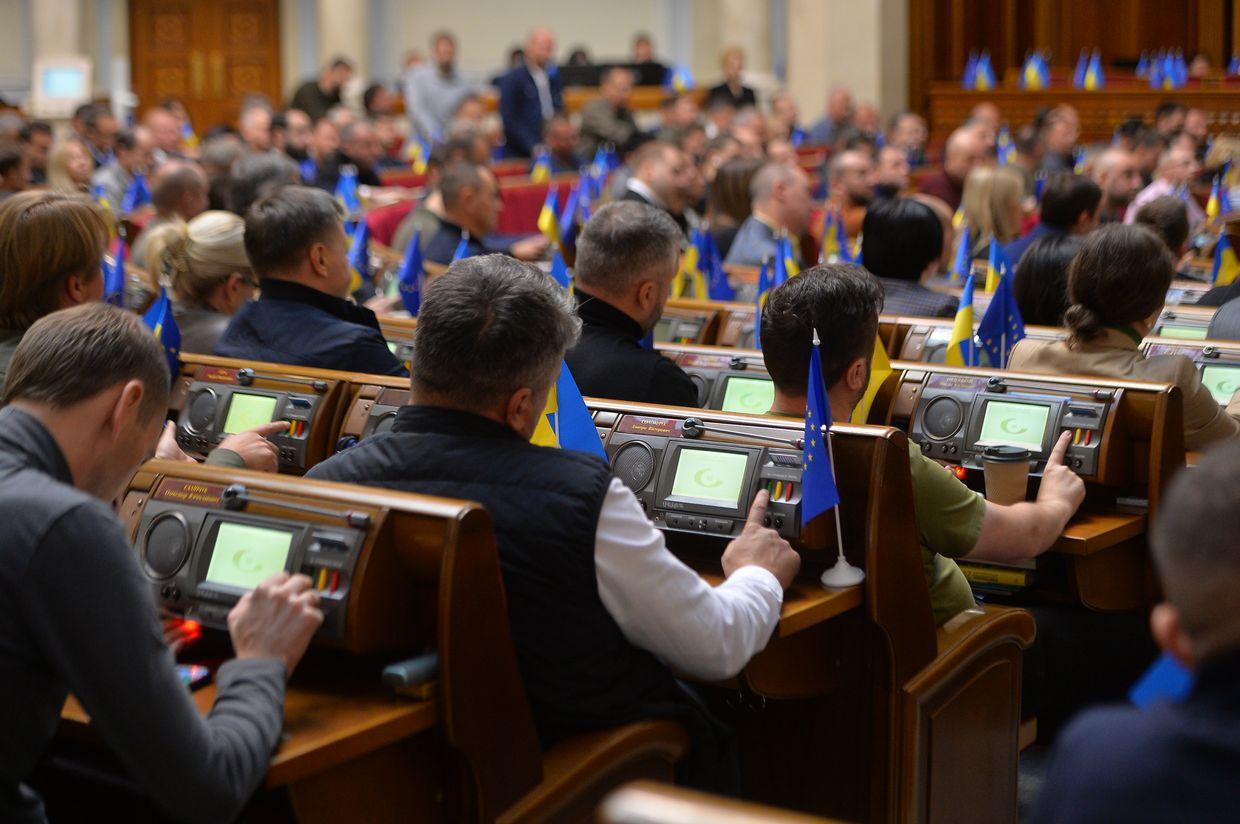
The parliament's National Security and Defense Committee finished reviewing all the amendments to a mobilization bill and removed provisions on demobilization and rotation of military personnel, lawmaker Oleksii Honcharenko said on April 9.
The bill is going to be considered in the plenary hall on April 10, according to the lawmaker.
Ukraine's government hopes to update the legal framework around conscription in order to ramp up mobilization in 2024. The parliament will now be considering a new draft of the mobilization law after its initial, contentious version was withdrawn.
The parliament supported the updated bill in the first reading on Feb. 7. Over 4,000 amendments to the bill have been submitted since its passing in the first reading.
On April 2, President Volodymyr Zelensky signed three laws introducing changes to mobilization, according to the parliamentary website. Zelensky approved laws to lower the minimum age of compulsory military service from 27 to 25, allowing younger men to be mobilized, create the online register for conscripts, and cancel the "partially eligible" status in the military medical examinations.
The Verkhovna Rada also approved a law on March 21 that cancels the "partially eligible" status in the medical reports, which indicates certain health issues and allows conscripts to be exempt from specific kinds of military service.
From April 2, there will be only two categories in the medical reports, "eligible" and "non-eligible." The person who was previously examined as "partially eligible" must be re-examined.