Can women solve Ukraine's manpower problem?
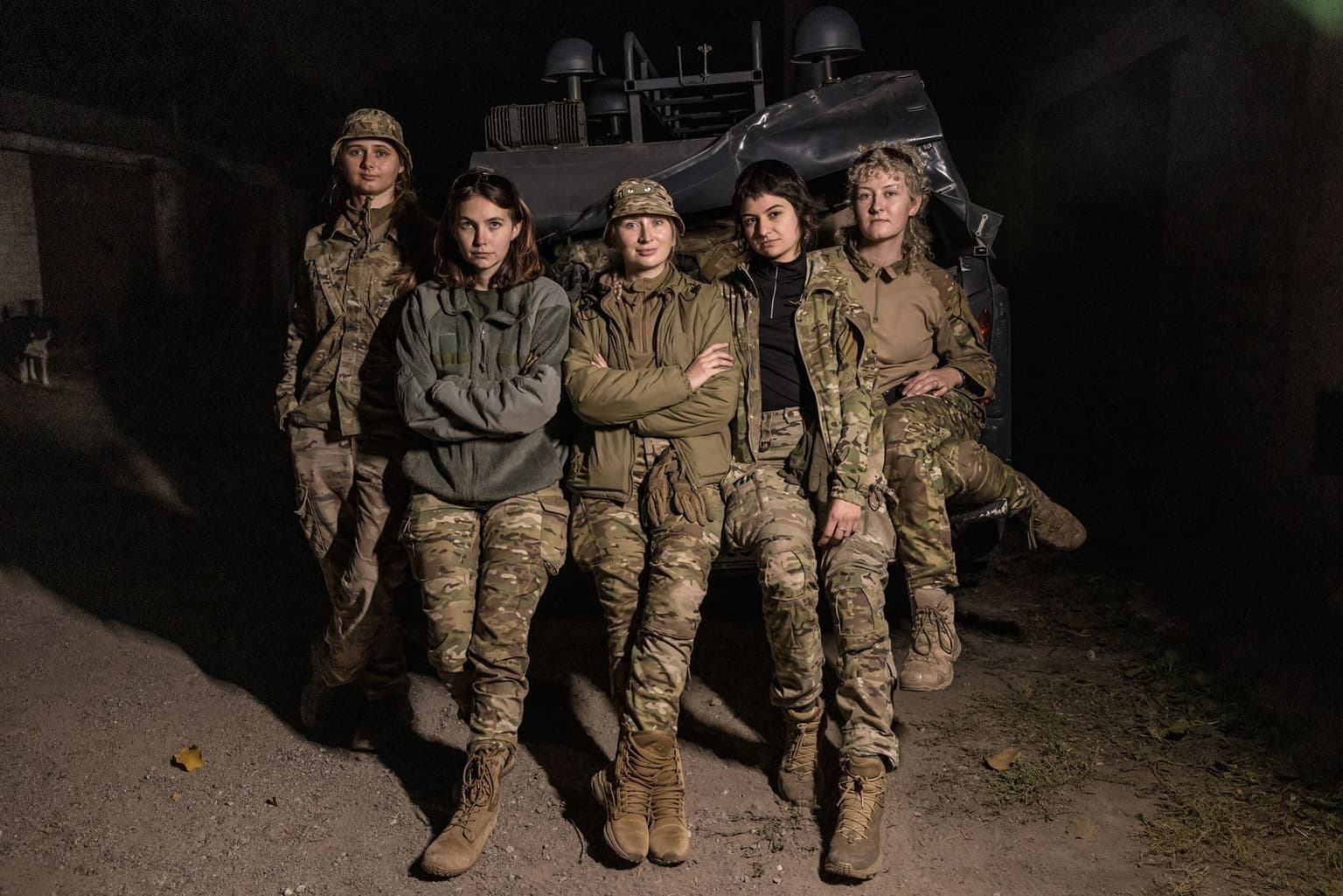
(L-R) Maryna, 23, call sign Vesna, Tetiana, 22, call sign Titan, Daria, 35, a commander of the crew with a call sign Hilka, Viktoriia, 26, call sign Karma, and Oleksandra, 24, call sign Smakolyk, members of the all-women UAV crew recently created as part of the Typhoon special forces unit of the National Guard of Ukraine, in Zaporizhzhia Oblast, Ukraine, on Oct. 6, 2025. (Oksana Parafeniuk / The Washington Post via Getty Images)
 on Google
During a routine assignment in Mykolaiv Oblast in 2022, Nataliia Lishchyshena suffered an injury that would change her life. Jumping out of a vehicle, she landed hard, badly bruising her chest.
At first, Lishchyshena thought little of the injury, aggravated by body armor designed without women's bodies in mind. But doctors later linked it, along with stress and hormonal changes, to the development of a benign tumor. The condition ultimately led to a mastectomy. A military medical commission later concluded the illness was directly related to her service.
"We conducted a survey with the women's movement Veteranka, and we were shocked by the results," Lishchyshena told the Kyiv Independent. "About 85% of women in the military have problems with their breasts, and there are very many cases of cancer."
Conditions for women in the Ukrainian military remain challenging — from a lack of properly fitted equipment, which can lead to serious health problems, to unwelcoming and, at times, dangerous attitudes from male colleagues. Nonetheless, recent comments from prominent political figures have revived the debate over mobilizing women.
Former Defense Minister Oleksii Reznikov brought the question to media attention in an interview with Radio Free Europe/Radio Liberty (RFE/RL) on Aug. 20, when he said that military service should be mandatory for both men and women.
Reznikov argued that requiring women to serve in the military would "immediately double the mobilization pool."
But doubling the pool on paper does not necessarily mean doubling the size of the military in practice, raising broader questions about the proposal's practical necessity and whether political considerations may also be at play.
"Reznikov's idea is logical in theory, but in practice it has significant limitations," Viktor Kevliuk, a reserve colonel and analyst at the Center for Defense Strategies, told the Kyiv Independent.
U.S. Special Envoy for Ukraine Keith Kellogg intensified the controversy in an interview with the Naspravdi MAX YouTube channel published on Aug. 24. "So do I believe women should be mobilized into the army? My answer is yes, because they fight no worse than men," Kellogg said.
Hours after Kellogg's remarks, the Ukrainian parliament issued a statement clarifying that the mobilization of women "is not being carried out, prepared, or considered."
Military service for women in Ukraine remains voluntary, and Reznikov's position sharply contrasted with President Volodymyr Zelensky's 2023 stance that he would never sign a law mandating the mobilization of women.
Reality behind the numbers
More than 75,000 women currently serve in Ukraine's Armed Forces, according to the General Staff. About 55,000 serve as military personnel, while the rest hold civilian positions. Their ranks have nearly doubled since the start of the full-scale invasion. Military registration is mandatory only for women with medical or pharmaceutical training.
Most women serve in medicine, logistics and support, analysis, and drone operations rather than in front-line infantry and assault units. That is where the military's most acute personnel shortage remains, Kevliuk said, with those positions carrying significantly greater physical and psychological demands.
"Massive recruitment of women into such roles is unlikely to bring a qualitative breakthrough in the short term," the analyst added.

Reznikov suggested that bringing more women into the military could have a knock-on effect: with women taking up more positions in the rear, more men could potentially be moved closer to the front.
"Many men in rear positions have health limitations, and under the law, they cannot be sent to combat units because of their health conditions," Kevliuk said.
Some "rotation effect" is possible, Kevliuk added, but not overnight or at scale, and only with changes to staffing structures, additional training for women, and a broader rethinking of how units are staffed.
Fight to be seen
The growing presence of women in Ukraine's military dates back to 2014, when Russia occupied Crimea and began its war in Donetsk and Luhansk oblasts. There were no serious efforts at the time to develop standard-issue uniforms for women, while those serving in combat roles were often officially registered as cooks or other rear personnel.
Legal restrictions on women holding combat positions were lifted in 2018, but the military took years to adapt its equipment to the growing number of women in its ranks.
The first standard-issue summer uniform designed for women was introduced only in 2023. There is still no standard-issue winter uniform for women. When it came to body armor, the gap was even more striking: the State Rear Operator (DOT) made its first purchase of women-specific body armor only in July 2026, with just 2,000 units for around 55,000 women serving in military positions.
While men in the military also face shortages and often have to cover their own equipment needs, women's access to essential gear remains more limited.
Kseniia Drahaniuk, co-founder of Zemliachky, a Ukrainian nonprofit that helps equip women serving at the front, said Ukraine has made significant progress in recent years — even if that progress is not always immediately visible.
The U.S. military spent five decades discussing the need for women-specific uniforms, Drahaniuk said, and the issue remains unresolved for many of Ukraine's European partners. Ukrainian forces, meanwhile, have had to adapt to battlefield conditions in real time.
"Every bureaucratic process, every approval takes a very long time. The country cannot respond as quickly as the civilian sector can," Drahaniuk said, adding that "years" can pass between the purchase of equipment and the moment it reaches a servicewoman.
Demand for women's equipment has grown as more women join, she said, and positions once considered relatively removed from the front line, such as air defense operators, have become more dangerous with increased Russian attacks.
An electronic warfare operator who goes by the call sign "Strada" told the Kyiv Independent that attitudes toward women in the military have improved significantly over her two years of service. But she said state-provided equipment and support still have a long way to go.

"Strada" also said that while seeing women in Ukraine's military is no longer "unusual," skepticism toward them has not disappeared but simply taken different forms.
"When a woman is asked, 'Are you sure you can handle it?' or 'Why do you need this?' or is told, 'It will be difficult for you,' it really diminishes you," she said, adding that women often face a kind of overprotectiveness that is neither necessary nor helpful.
"I'm for judging people in the military by their results. If you can do the job, do it. If you can't, that's a question of professional ability, not gender."
Another sensitive issue rarely discussed publicly is sexual harassment.
The servicewomen and female veterans interviewed by the Kyiv Independent said they had not experienced sexual harassment while serving. But they also stressed that their experiences do not mean such cases do not occur.
A law signed by Zelensky on March 16 established principles of equality and non-discrimination and introduced mechanisms to protect military personnel from discrimination and sexual harassment.
Oksana Hryhorieva, gender adviser to the General Staff, said at a press conference on March 24 that the number of such cases in the military had decreased. At the same time, she acknowledged how difficult it can be to prove that harassment occurred.
"Basically, it's one person's word against another's. There is still no evidence because witnesses will not testify about it," Hryhorieva said.

Why is women's mobilization being discussed now?
According to political analyst Ihor Reiterovych, Kellogg's remarks may have been more of a coincidence and a sharing of personal experience, given that his wife and daughter served in the military. Reznikov's statement, though, was "not his own initiative," Reiterovych said.
"I think there was a certain request from the Presidential Office to divert attention from other issues by making such statements," Reiterovych said.
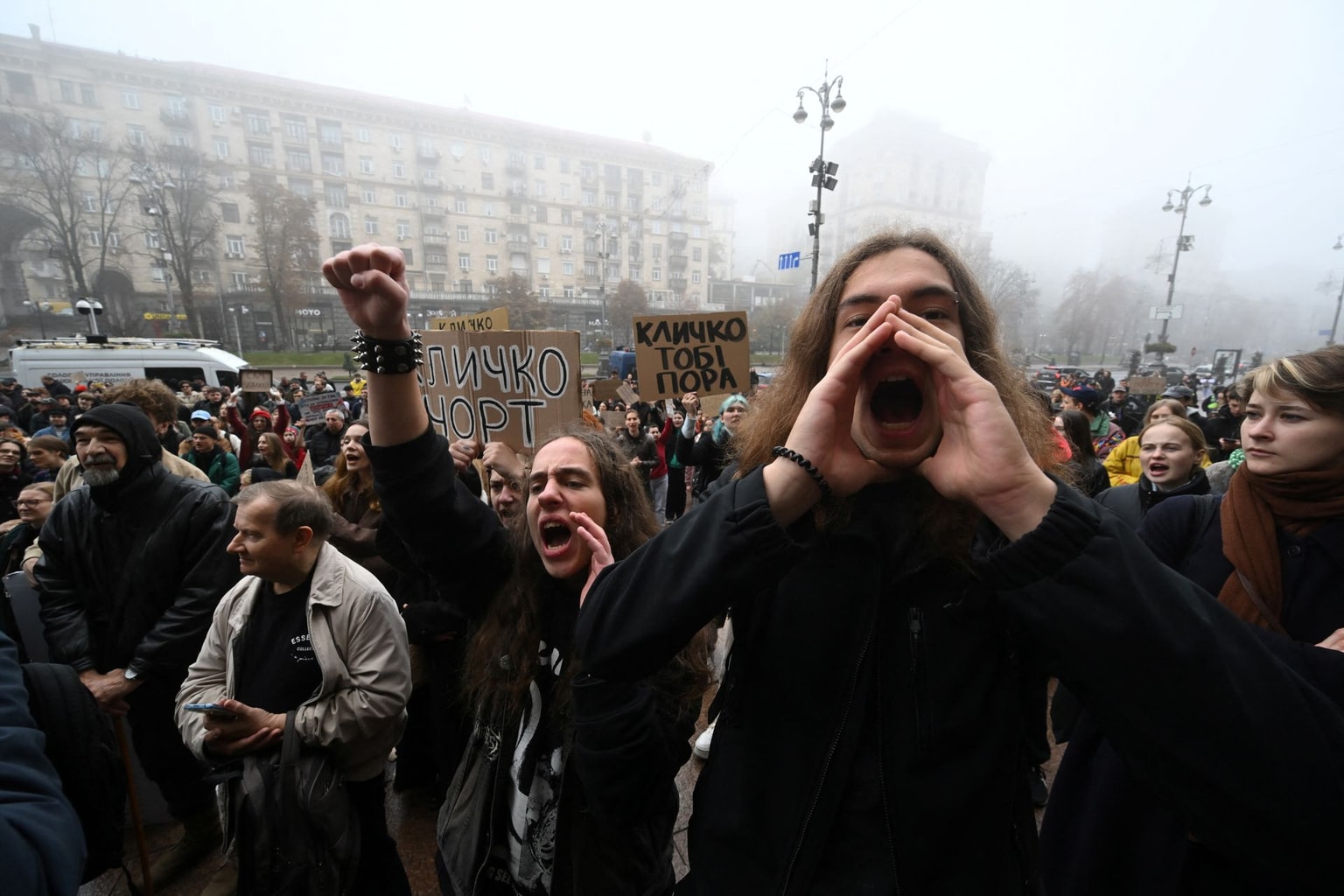
Reznikov's remarks came as Zelensky's team was dealing with yet another corruption scandal involving Iryna Mudra, a former presidential deputy chief of staff. The president was also still recovering from a political crisis triggered by the unexpected dismissal of then-Defense Minister Mykhailo Fedorov without clear justification on July 15, followed by Fedorov's calls for elections to be held during martial law, and nationwide protests.
"So, as of now, (the mobilization of women) is nothing more than a trigger issue that attracts attention, gets good views, but it is futile," Reiterovych said. "I cannot imagine how the Ukrainian parliament would vote for something like this."
Reiterovych said the government might seriously consider mobilizing women only if Ukraine faced a "catastrophic shortage of people" liable for military service. That manpower shortage has not yet been reached, he argued, noting that an estimated 2.5 million to 3 million men in Ukraine have not updated their military registration data.
Other options remain, he added, from reconsidering the criteria for limited or full exemption from military service to allowing civilians willing to support the military in rear positions to do so without formally joining the armed forces.

The servicewomen and female veterans interviewed by the Kyiv Independent also questioned the need to debate women's mobilization now, saying the government should first improve conditions for women willing to serve voluntarily.
Yuliia Mykytenko, a reserve officer and active member of the women's movement Veteranka, said she was not opposed to women joining the military, but raised concerns about the need for mass mobilization of women.
"At the beginning of the full-scale war, we had an almost million-strong army of motivated soldiers, where one was worth ten. How was this resource squandered to the point where we are now talking about mobilizing women?" Mykytenko said.
For the reserve officer, the problem lies deeper than the size of the mobilization pool. Mykytenko said the military's combat effectiveness is being undermined by failures to respect service members' rights, a lack of clear communication about battlefield objectives, and unresolved questions over economic exemptions from mobilization and those evading service.
Bringing women into the mobilization pool would not fix those problems but instead signal that the military had been pushed to a critical limit, she added.
"If it really comes to the point where women are mobilized, I will automatically consider that our country has lost," Mykytenko said.