A decade after journalist Pavel Sheremet’s murder, justice remains out of reach
 on Google
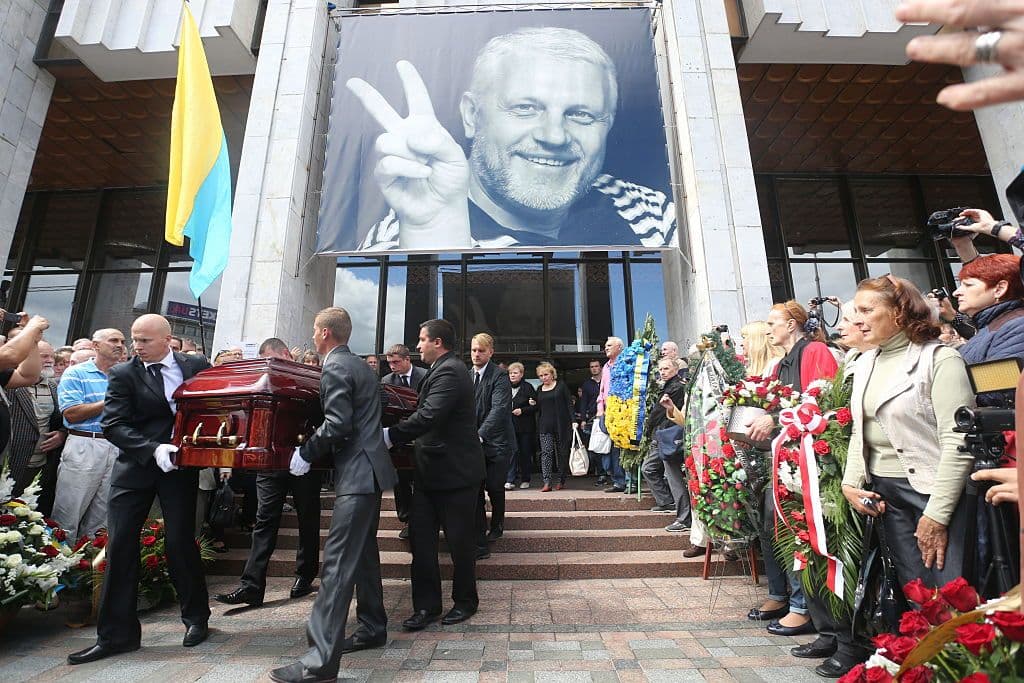
A decade after the murder of Belarusian-born journalist Pavel Sheremet in a car bombing in central Kyiv, justice remains elusive.
The prosecution's case has unraveled under criticism, the three accused have been released, and proceedings are frozen until the end of Russia's full-scale war — when the trial is expected to begin again from scratch.
If the prosecutors speed up the process, it may take one and a half or two years after the end of the war, Dmytro Kruhovyi, a lawyer for one of the suspects, Andriy Antonenko, told the Kyiv Independent.
But if the prosecutors decide to question all the 500 witnesses they had previously mentioned, the trial may “never” end, he said.
“Cases like this usually take a very long time because courts are often unable to adhere to the principle of continuity of proceedings due to a shortage of judges and heavy caseloads,” he added.
The case underscores the persistent impunity surrounding crimes against journalists in Ukraine. Dozens of journalists have been killed in the country since it gained independence in 1991. In most cases, those who ordered the killings have never been identified.
"We cannot comment on speculation," Maryanna Haikovska-Kovbasyuk, a spokesperson for the Prosecutor General's Office, told the Kyiv Independent.
"We have the materials from the criminal investigation, the evidence, and three individuals who have been formally named as suspects. The investigation is continuing to identify other, as-yet-unidentified individuals who may have been involved in organizing the murder."
Investigation stalled indefinitely
Sheremet was killed in central Kyiv on July 20, 2016, after an explosive device was planted under his car.
He was the executive director of the independent online newspaper Ukrainska Pravda and a journalist at Radio Vesti, a station owned by Oleksandr Klymenko, an ally of pro-Russian ex-President Viktor Yanukovych.
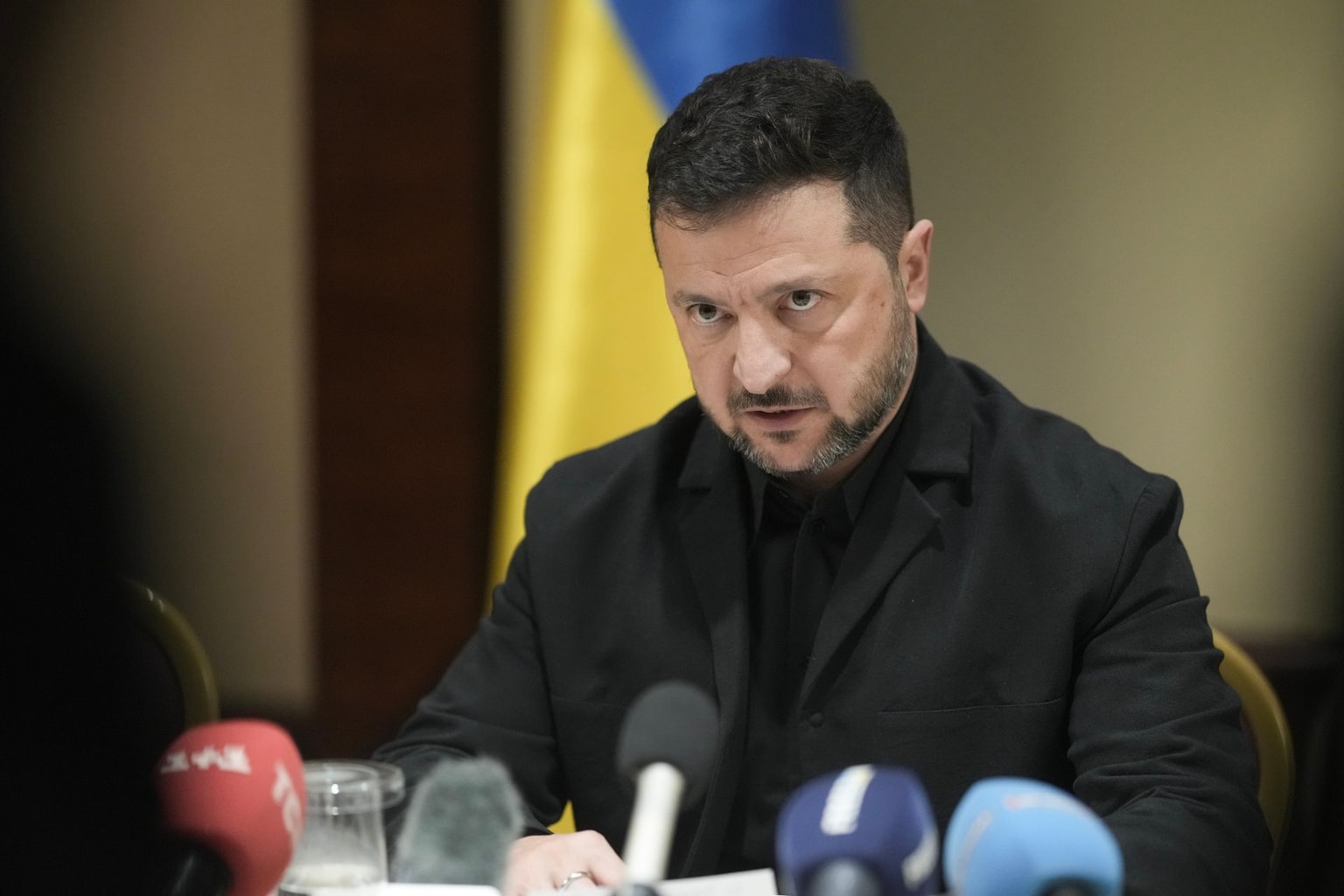
Three suspects — Antonenko, Yulia Kuzmenko, and Yana Duhar — were arrested in 2019. President Volodymyr Zelensky backed the case by appearing at a press conference to unveil the suspects alongside then Interior Minister Arsen Avakov.
The President's Office did not respond to requests for comment.
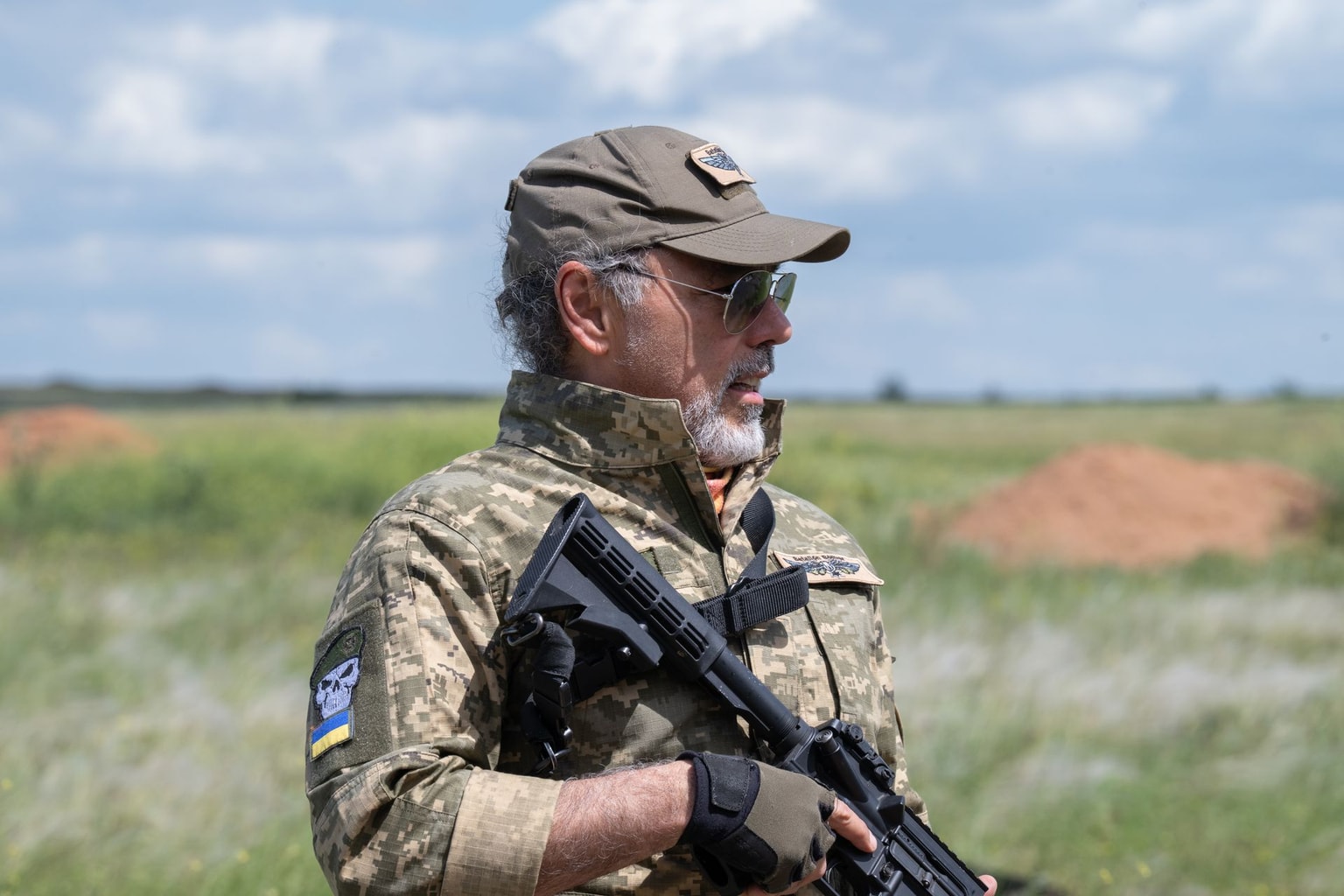
Antonenko currently serves in Ukraine’s Special Operations Forces, while Duhar is a military medic, and Kuzmenko works as a pediatric surgeon.
The trial in the Sheremet case began in 2020.

In 2023, Kyiv's Shevchevkivskyi District Court decided to start the trial again from scratch, including re-consideration of evidence. The formal reason was the fact that one of the jurors left the country amid Russia's full-scale invasion, and another was drafted.
However, the re-trial was suspended in 2024 based on the fact that Duhar had been drafted into the army.
The decisions to start the trial from scratch and to suspend it have faced criticism. Criminal lawyer Vitaly Tytych told the Kyiv Independent that the trial did not need to be restarted and that substitute jurors should have been present to ensure its continuation.

Meanwhile, Ukrainska Pravda's editor-in-chief Sevhil Musayeva argued that "they could have found another way out” — such as contacting jurors via video conference.
The three suspects were gradually released from detention facilities and house arrest from 2020 to 2024.
The Kyiv Independent has requested comment from the Shevchenkivskyi District Court and will publish its response once it is received.
What's the evidence?
The evidence against the suspects is based mainly on CCTV footage from surveillance cameras.
CCTV cameras recorded figures resembling a man and a woman planting a bomb under Sheremet’s car on the night before the murder. Investigators claim they were Kuzmenko and Antonenko.
Another camera captured a woman taking photos of surveillance cameras in the area days before the attack. The police argue that this was Duhar.
The forensic experts cited by investigators concluded that it's impossible to identify the people who planted the bomb based on facial features because the videos are blurry.

Consequently, the evidence is focused on an anthropometric and gait analysis carried out by Ukrainian experts and British expert Ivan Birch.
However, the reliability of the analysis has been questioned. According to lawyers and forensic experts, anthropometric and gait analysis can be used as secondary proof but not as the main evidence in criminal cases.
Antonenko's lawyer Kruhovyi told the Kyiv Independent that he expects an acquittal in the case due to what he perceives as weak evidence.
Alternative versions
One of the versions is that the murder could be linked to Belarusian dictator Alexander Lukashenko’s regime.
Sheremet, a Belarusian, was highly critical of Lukashenko and regularly covered his wrongdoings, including alleged political assassinations ordered by the strongman. Sheremet founded the Belarusian Partisan, a news site highly critical of Lukashenko.
In 2021, the Brussels-based publication EUobserver and the Belarusian People’s Tribunal, an opposition group, published an alleged leaked tape featuring Vadym Zaitsev, former head of the Belarusian State Security Committee (KGB). Zaitsev said that a bomb would be planted, and Sheremet would be blown up, according to the tape, which was allegedly recorded in 2012.
Another Belarusian link is Serhiy Korotkikh, a Belarusian nationalist. Korotkikh is an acquaintance and relative of former Belarusian police officer Valery Ignatovych, who was convicted in 2002 for kidnapping and murdering Sheremet’s cameraman and friend Dmitry Zavadsky in 2000.
Late on July 19, 2016, on the eve of Sheremet’s murder, six Azov fighters, including Korotkikh and Azov leader Andriy Biletsky, met with Sheremet near his home. The Azov fighters later said that they were going to participate in a coal miners’ rally the next day and sought Sheremet’s advice about the event’s media strategy.
Korotkikh has been accused of having links to Belarusian intelligence agencies because he served in Belarus’ military intelligence and studied at the Belarusian KGB school in the 1990s.
A law enforcement source familiar with the investigation told the Kyiv Independent the Korotkikh version is plausible because he had a potential motive — Sheremet’s interest in uncovering the truth of who was behind the death of his cameraman Zavadsky. Korotkikh was questioned within the Sheremet investigation.
Korotkikh has denied his involvement in the murder, presenting himself as a “friend” of Sheremet.
Another alternative version is linked to the Security Service of Ukraine (SBU).
In 2017, the Slidstvo.info investigative journalism outlet identified that a former SBU officer, Ihor Ustymenko, was present near Sheremet’s car when the bomb was planted under it.
The Security Service said Ustymenko had stopped working for the service in 2014. Ustymenko said that he had been hired as a security guard to protect children who were in the area at the moment.
However, the Ukrainian authorities have so far paid little attention to other versions of the murder.
“I still believe that the Belarusian security services were behind the killing," Musayeva said on July 20, as cited by the media outlet Detector Media. "Who actually carried it out is a separate question, but unfortunately, we can see that the investigation into this line of inquiry is going nowhere."