Are we too quick to write NATO's obituary?
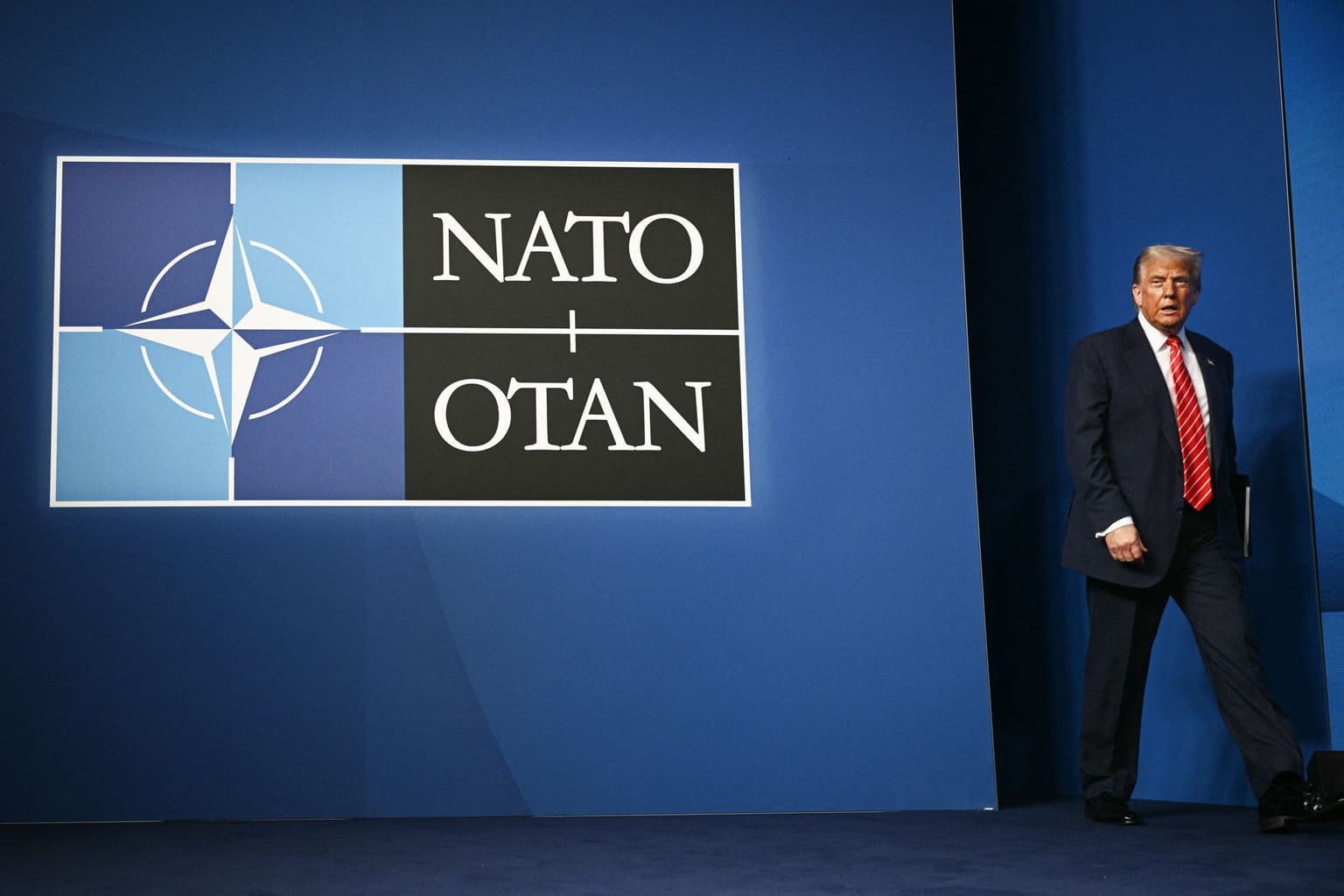
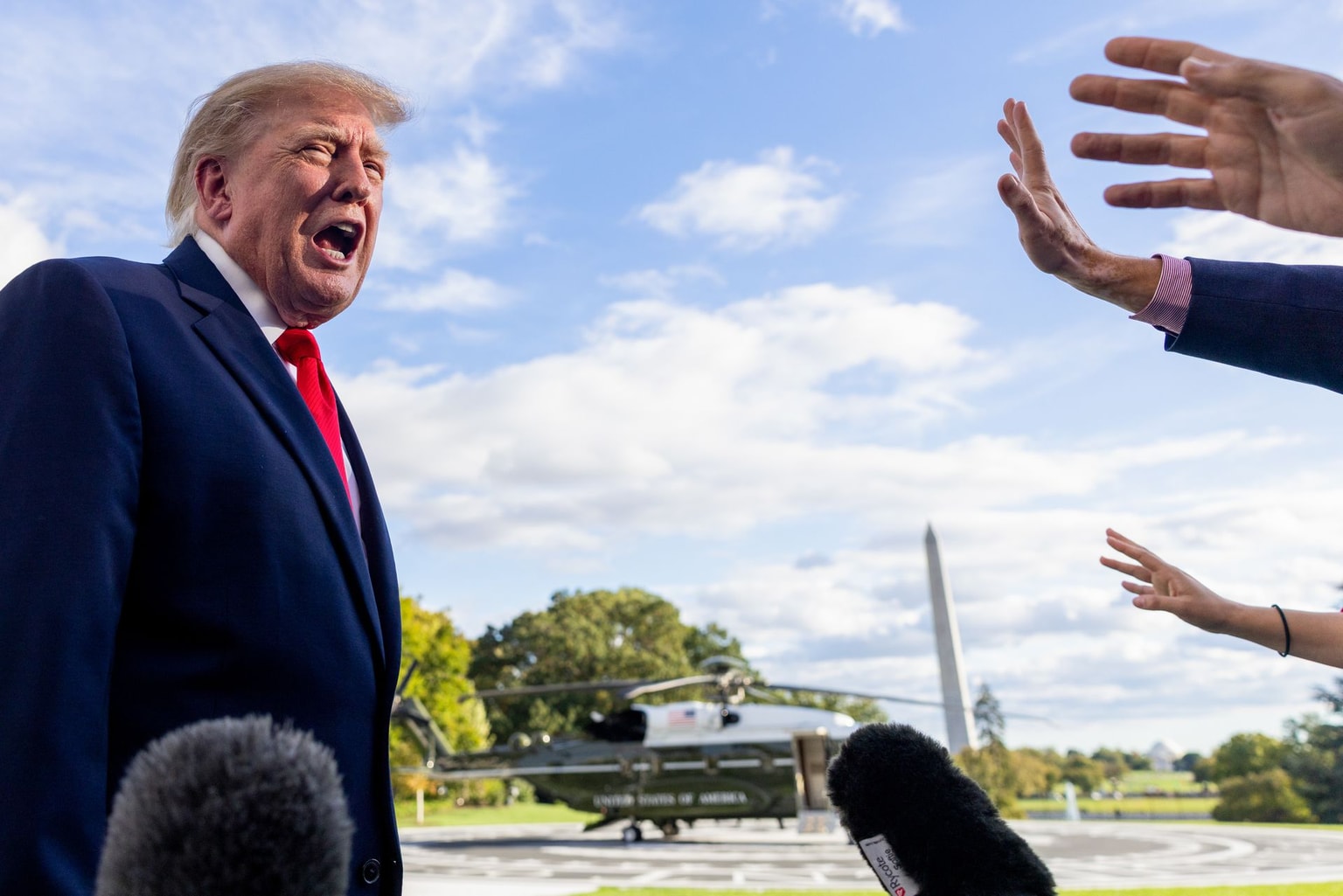
U.S. President Donald Trump arrives for a press conference during a North Atlantic Treaty Organization (NATO) Heads of State and Government summit in The Hague on June 25, 2025. (Brendan Smialowski /AFP via Getty Images)
 on Google
Erik Jones
Director of the Robert Schuman Center for Advanced Studies at the European University Institute
The question of NATO's future arises again and again whenever Donald Trump makes a statement about his European allies. Can NATO survive the disillusionment of the Trump administration or the progressive withdrawal of American military support for European security?
And yet each time that question pops up, America's European allies insist that NATO will endure.
They highlight the continuous close cooperation between military leadership across the Atlantic, pointing to the obvious reality that European security is clearly in the United States' national interest.
These things are all, of course, true. The question, however, is whether they are relevant.
The NATO we have now is already different from anything we have seen since the alliance began. The North Atlantic Treaty is the same, but its meaning has shifted fundamentally.
The old interpretation rested on America's steadfast political commitment to underwrite European defense, both conventionally and – more importantly – through strategic deterrence. The text of Article V gives American leadership a choice over what kind of response is "necessary" to a given threat, but the presumption has always been that any U.S. administration would regard a Europe whole and free as necessary for American security.
What Donald Trump has underscored is that the word "necessary" no longer means the same thing. In his understanding, the new version of necessity depends on the willingness of European countries to support U.S. military campaigns in third countries.
If Europeans want the United States to respond to Russian provocations in one of the Baltic States, they should help establish control over the Strait of Hormuz, for example. Indeed, they probably should have done that already.
Alternatively, Trump's version of "necessity" may take precedence over what it means to be "European". If European allies cannot secure Greenland in a way Trump views as adequate, the Trump administration might just take that responsibility away from Europe.
This change in the meaning of "necessary" has important strategic implications.
If Europeans must constantly earn U.S. support, then Europe's adversaries can exploit any divisions across the Atlantic to test the boundaries of alliance solidarity. This is already happening. The list of provocations runs from conducting illegal overflights to damaging undersea cables, from Estonia to Ireland, and from Svalbard to Cyprus.
The fact that neither Ireland nor Cyprus is formally part of NATO only makes them easier targets for Russia to use in threatening European security. A stronger, more obvious U.S. commitment to NATO created a strategic umbrella that extended beyond the political boundaries of the alliance.
The change in "necessary" also undermines coordination. When it was safe to assume that the United States would do whatever it takes to ensure European security, it was easier to imagine a division of labor across the Atlantic.

The United States could provide key assets for strategic mobility, nuclear deterrence, and command, control, communications, and intelligence, while European partners invested in the other aspects of conventional defense. This was the refrain in the 1990s and early 2000s.
Whenever Europeans talked about strengthening their security and defense identity, Americans responded that they should not duplicate the assets the United States already provided for the NATO alliance. "Unnecessary" redundancy only creates inefficiency and potential for conflict across the Atlantic.
Now it is harder to suggest that such redundancy is unnecessary. Whether European investments in those strategic assets are inefficient or create tension across the Atlantic is less important than what they contribute to Europe's ability to provide for its own security.
Indeed, the need to establish Europe's capacity to defend itself becomes all the more imperative each time the Trump Administration suggests it will take on responsibilities from Europe (as in Greenland) or threatens to withhold its strategic assets from key European allies (like Ukraine).
Europe must be able to replace any support that the United States might offer if Europeans cannot count on U.S. support as part of its basic commitment to the North Atlantic Alliance.
NATO will continue to exist as an arena for close military cooperation across the Atlantic and as a forum for discussion of common security interests, but NATO has already changed fundamentally as the cornerstone for an Atlantic security community.
Europeans now have no choice but to imagine how they can provide for their own security in a post-Atlantic context, where they will eventually duplicate and replace the assets currently provided by the United States.
More importantly, they need to make a public commitment to do so that is credible both for Europeans and in the eyes of Europe's adversaries.
To achieve that goal, Europeans will have to abandon any pretense that Article V of the North Atlantic Treaty defines European security. Instead, they will need to enlist support from key allies, both inside and outside the NATO alliance, to build something different yet comparable.
Whether Ukraine or Moldova is ever admitted to NATO will be less important than how tightly and effectively they can be integrated into that post-Atlantic security community.
Editor's note: The opinions expressed in the op-ed section are those of the authors and do not purport to reflect the views of the Kyiv Independent.