Russia’s offensive tactics on full display in fight for Sloviansk
With all attempts to win Donbas at the negotiating table failed, Moscow is preparing for an all-out summer campaign to take it by force.
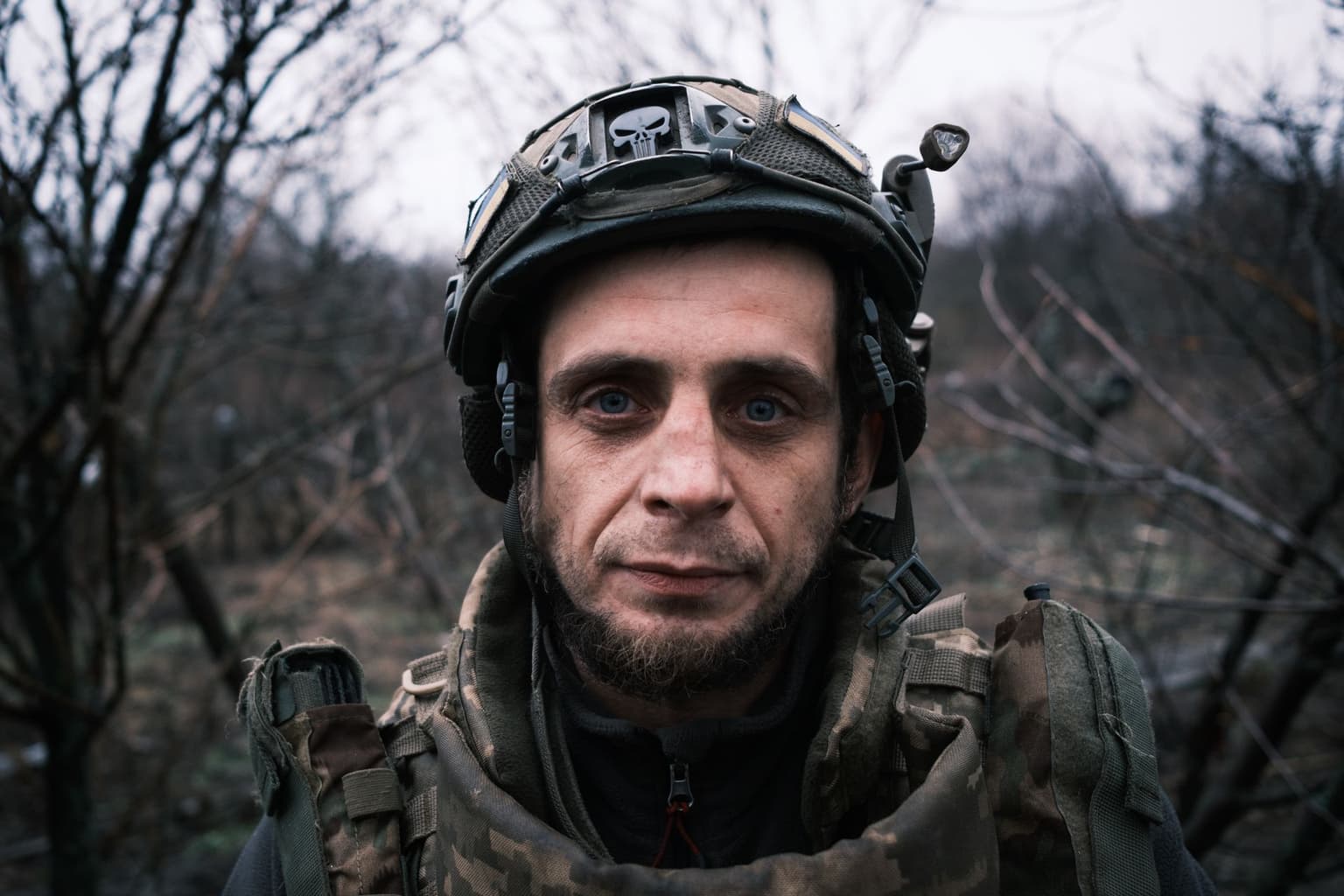
Artilleryman Semen "Sega" at positions east of Sloviansk, Donetsk Oblast, on March 18, 2026. (Francis Farrell / The Kyiv Independent)
 on Google
Editor’s Note: In accordance with the security protocols of the Ukrainian military, soldiers featured in this story are identified by first name and call sign only.
DONETSK OBLAST - "The Russians have the task of starting the occupation of Sloviansk in the summer."
The words of Dmytro "Lifecell" come without drama, panic, or mockery.
But on the cusp of what could be one of the most decisive summer campaigns in one of the most important sectors of the front line in Ukraine's far eastern Donbas region, the tone struck was always going to be foreboding.
Traipsing through the grey, foggy landscape of a spring morning in the hills east of Sloviansk, the 44-year-old head of artillery reconnaissance of Ukraine's 10th Mountain Assault Brigade does the rounds of his unit's newly relocated artillery positions.
Over the past two nights, the huge metal beasts of war, some over half a century old, had moved into these hills, hunkering down in the black earth, and camouflaged with nets and branches.
In the basements and dugouts dotted around the area, Ukrainian soldiers from his unit drink coffee and rest after sleepless nights changing position under fire.
"You always feel like something could happen here," said artilleryman Semen Sega, resting after a tense overnight relocation of their howitzer.
"When we first got here, it was still okay. But where we were before, where we left last night, it was really bad. We couldn’t even go to the bathroom for an hour, because a drone was just hanging there."
Ever since the culmination of the bloody battle of Bakhmut over three years ago, the 10th Brigade has held the line here, guarding the approach to the northernmost of Ukraine's now famous "fortress belt" of Donbas cities, Sloviansk.

For a long time, despite Russia's best efforts to break through, the defense of this sector was one of the most stable in Donetsk Oblast.
But over winter, with a renewed Russian push, quickly overrunning the city of Siversk, Ukrainian brigades in the area have been forced to pull back.
Now, with Russian first-person view (FPV) drones reaching Sloviansk for the first time, an intense summer campaign ahead, the brigade's soldiers are bracing themselves for what could be one of their toughest fights so far.
"Russia's objective here is like their aim to take Kyiv in three days (in 2022)," said Dmytro.
"They set these kinds of goals for themselves, and our job is to stop them from carrying it out. We’re doing that job."
Push and penetrate
In over three years of brutal attritional warfare that has often seen the Ukrainian command chop and change brigades to plug holes on the front line, the 10th Brigade, better known as Edelweiss for its roots in the Carpathian Mountains, is one of the few combat units which has stayed in one place the entire time.
Fighting, firing, driving, and moving through these lands for years, the brigade knows this hilly terrain between Sloviansk and the destroyed, occupied city of Bakhmut. Its soldiers now feel more at home here than in the Carpathians, where most of them come from.
For Dmytro, the passing of this time has also given him a clear view on how Russian tactics have changed since the days of the relentless assaults of Russia's notorious Wagner mercenary group.

Leading the fight for Bakhmut with tens of thousands of motivated prisoner soldiers at its disposal, Wagner pioneered the small group infantry assault tactics that have come to define Russian offensives across the front line since.
Nevertheless, Dmytro says the increasing density and saturation of Ukrainian drones in the sky has forced Russia to gradually scale down the size of their one-way assault teams.
"Russian soldiers are moving forward one or two at a time;" said Dmytro, "there’s no longer that mass scale like in Bakhmut, when it felt like a thousand of them would attack at once.
"Now it’s ten people a day going on the assault. The number of personnel has decreased."
Russia's focus, the commander says, is now on infiltration, bypassing Ukraine's increasingly scarce frontline infantry positions to push deeper into the rear, sometimes, he said, as far as four kilometers.


Although Ukraine's own drone component, both in the brigade and from Unmanned Systems Forces units supporting the fight, is strong, the strike teams are often too busy snuffing out every infiltration to properly stretch their own kill zone deep into the Russian rear.
"These people die, but a lot of reconnaissance attention is focused on them," he said. "They move in these small groups, essentially suicide units; they always end up killed in action."
"But the problem is that our reconnaissance ends up focusing on these infiltrating groups, and there’s less capacity left to conduct long-range reconnaissance."
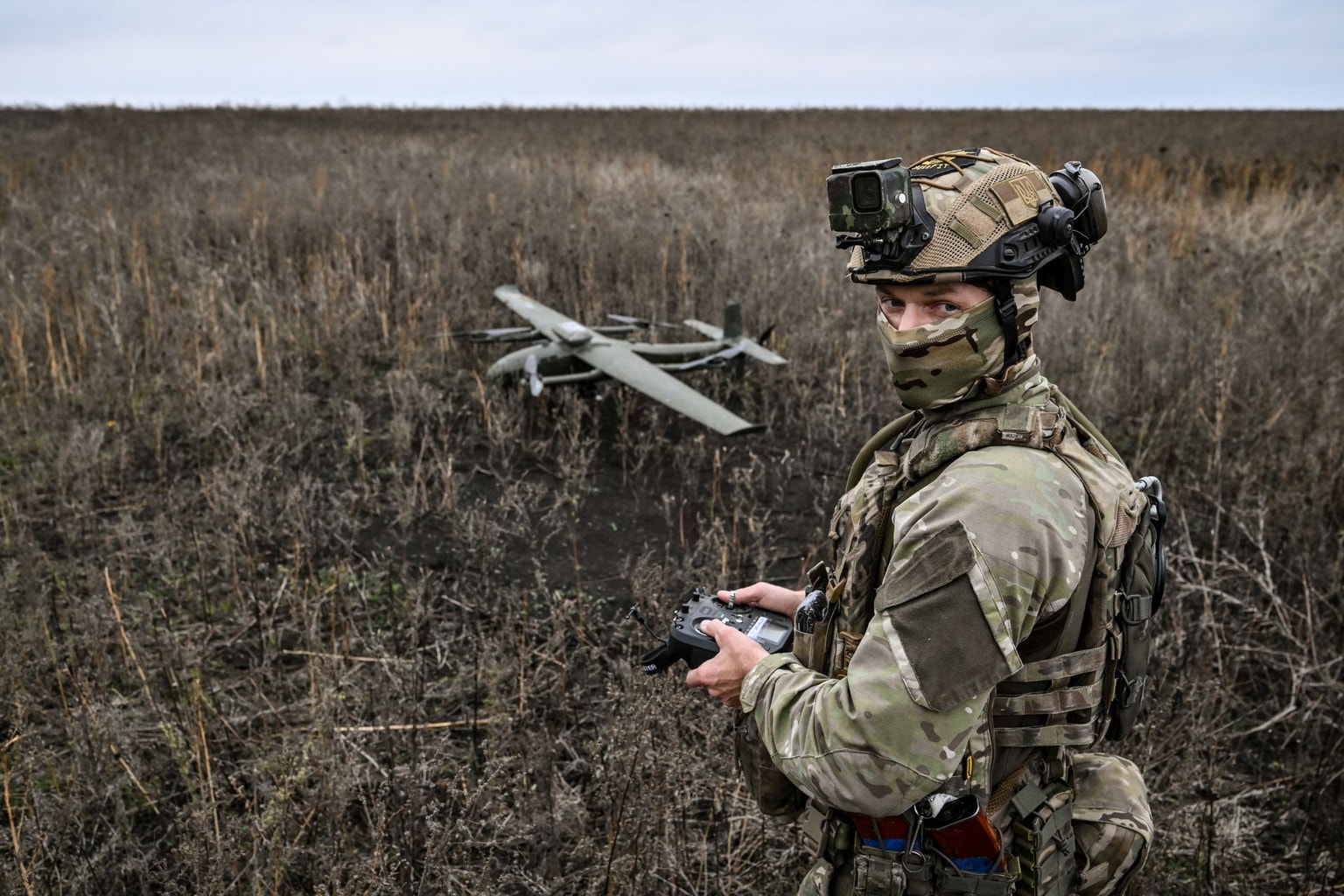
For 33-year-old Andrii "Zhuk," who just came off 21 days on positions in a Mavic reconnaissance drone team, the direct danger posed by Russian infiltrations is an inevitable new reality of his work.
On several occasions, he recalled, Russian soldiers pushing past the infantry have come within just a few hundred meters of his location before being killed.
"Their motivation is just to stay alive a few more hours, that’s it" said Andrii, "if they don’t come out to us, they’ll get shot by their own."
"That’s what most of the prisoners we take say, that’s the whole motivation. Who in their right mind, no matter how high or drugged up, would do this?"
New-age air raid
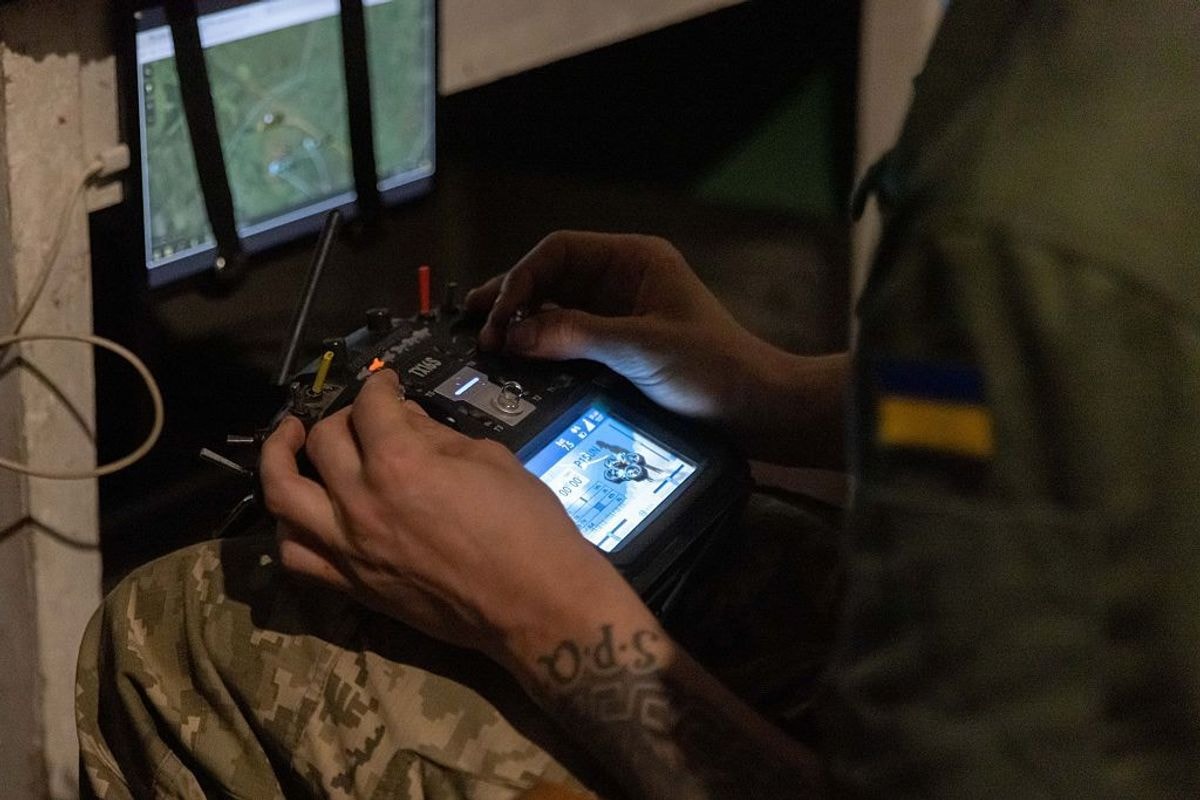
Not too far away, in the early hours of the morning, another crew from the 10th Brigade awaits a break in the light spring rain to begin their own work. A far cry from the metal monsters of the artillery division, the weapon this team will deploy tonight is a new innovation in a class of its own.
Wings, tail, fuselage, and bomb bay are clasped together by the red light of the soldiers' head torches as the aircraft takes shape, looking like an oversized, futuristic model plane, but with a very real mission.
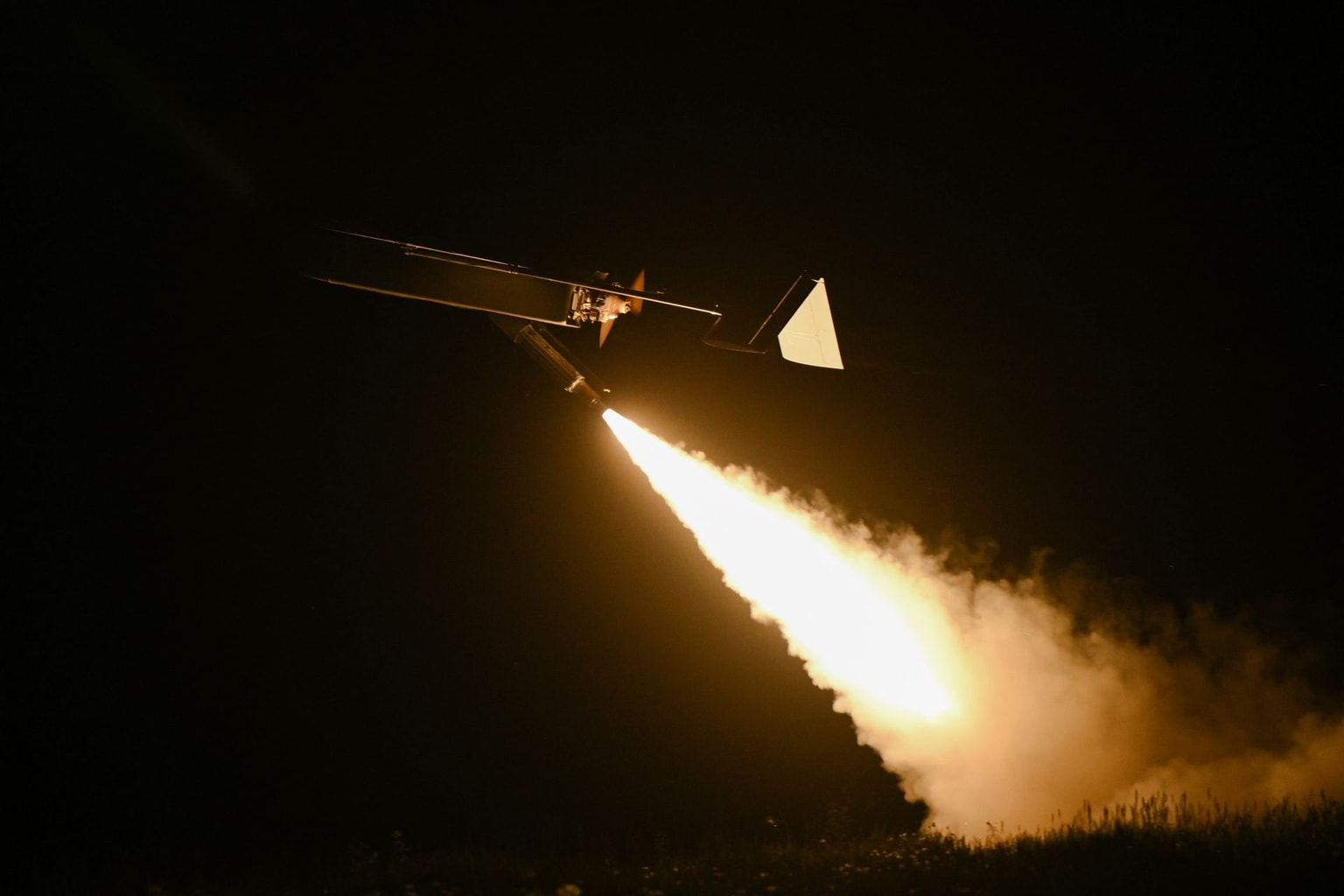
This is a long-ranged fixed-wing bomber drone known as the Backfire, designed and built by a Mykolaiv-based company to strike targets deep in the enemy rear, even under conditions of radio frequency jamming and satellite navigation suppression.

Unlike most strike drones that work at this range, the Backfire drops its payload much like on a World War II bombing raid, then returns to be once again loaded and sent on its way.
As the rain stops and the all-clear is given, the bomb is armed and loaded into the drone, which itself is placed on a short but powerful catapult, allowing take-off from almost anywhere.
Within seconds, it's in the air, on the way to its target, the location of a Russian drone position east of Siversk.
For the crew, most of whom served in the infantry, then fought in FPV drone teams, switching to the Backfire is a welcome way to keep working at a safer distance.
"We hit anything we spot, anything we can reach;" said 39-year-old pilot Oles "Simon" while the drone approached its target, "bridges, gun positions, pilot positions."
"Maybe we won't destroy them completely, but we’ll knock out an antenna, or something else. There are a lot of different targets — some shelter, some buildings, and other camouflaged equipment."

After about half an hour in the air, the Backfire is ready to drop its payload.
The moment cannot be watched in real time, as the plane flies along a pre-programmed route without direct control from the pilot.
The drop itself is a masterpiece of technology, of engineering: the drone's onboard ballistic calculator factors everything from airspeed, wind, terrain, and payload to automatically release the bomb at just the right time to hit the target.
Once the Backfire returns, a parachute is deployed, kicking off a rather comical retrieval mission on the part of the crew. Only later can they check the video, which in these dark, foggy conditions is inconclusive.
As the war enters its fifth year and Ukraine fights on in conditions of chronic manpower shortage, the need to be able to stop Russian assaults at maximum distance with minimum risk to the lives of personnel only becomes more acute with time.
Drone-based solutions, while not always perfect, are for now the clear way forward.
Having retrieved the drone, the Backfire crew waits for its next mission. But for now, the rain has returned, and flying will have to wait.

No time to waver
As the morning fog slowly begins to clear at the artillery positions, the order is given to fire.
These are test shots, an essential part of an artillery crew's work after switching positions, but the target is real: a treeline where Russian movement has been spotted.
Within minutes of the order, the bushes are cleared, and the great green barrel of the 152mm Akatsiya self-propelled howitzer rises into the air.

Upon the word "Fire!" a ball of flame engulfs the position for a split second.
While the massive shell sizzles across Donbas on the way to its enemy, leaves and dirt from the explosion float through the air.
Without unnecessary ceremony, the crew readies the next shell, in a routine repeated hundreds if not thousands of times
This weapon cares little about the weather, and on the receiving end, can lay down the kind of firepower at range that any drone would struggle to match.


As enduring as the old Soviet howitzers are, Ukraine's ability to stay in the fight remains a product of the country's human resource: both in terms of overall combat manpower and the individual endurance of each soldier.
While most of the 10th Brigade's men are fighting on the other side of Ukraine from where they were born, some are much closer to home.
Thirty-six-year-old artilleryman Pavlo, callsign "Bakhmut," hails from the very city that the brigade once defended, and the abandoned ruins of which are still just a short drone flight away.

As fatigued as he is, and despite his city being razed to the ground by Russia, the question of handing over territory in exchange for a quick peace is absurd for Pavlo.
"I’m here fighting because I don’t want to give it (Donbas) up," he said
"That’s why I’m not running away, that’s why I stay with my guys, because just giving up isn’t an option. If we do, they’ll just take more and more."
Note from the author:
Hi, this is Francis Farrell, cheers for reading this article. It was great to get back to the front lines with my colleague Nick Allard to bring you this report. With the world distracted by new wars and Russian drones making visiting front line areas more and more dangerous, less and less reporting can be found coming straight from the battlefield in Western media. We here at the Kyiv Independent understand that the front line remains the most important factor in any end of war scenario, and that is why we commit to continuing to report from there. Please consider supporting our reporting.