Where drone developers see the EU getting it right, and wrong, on defense
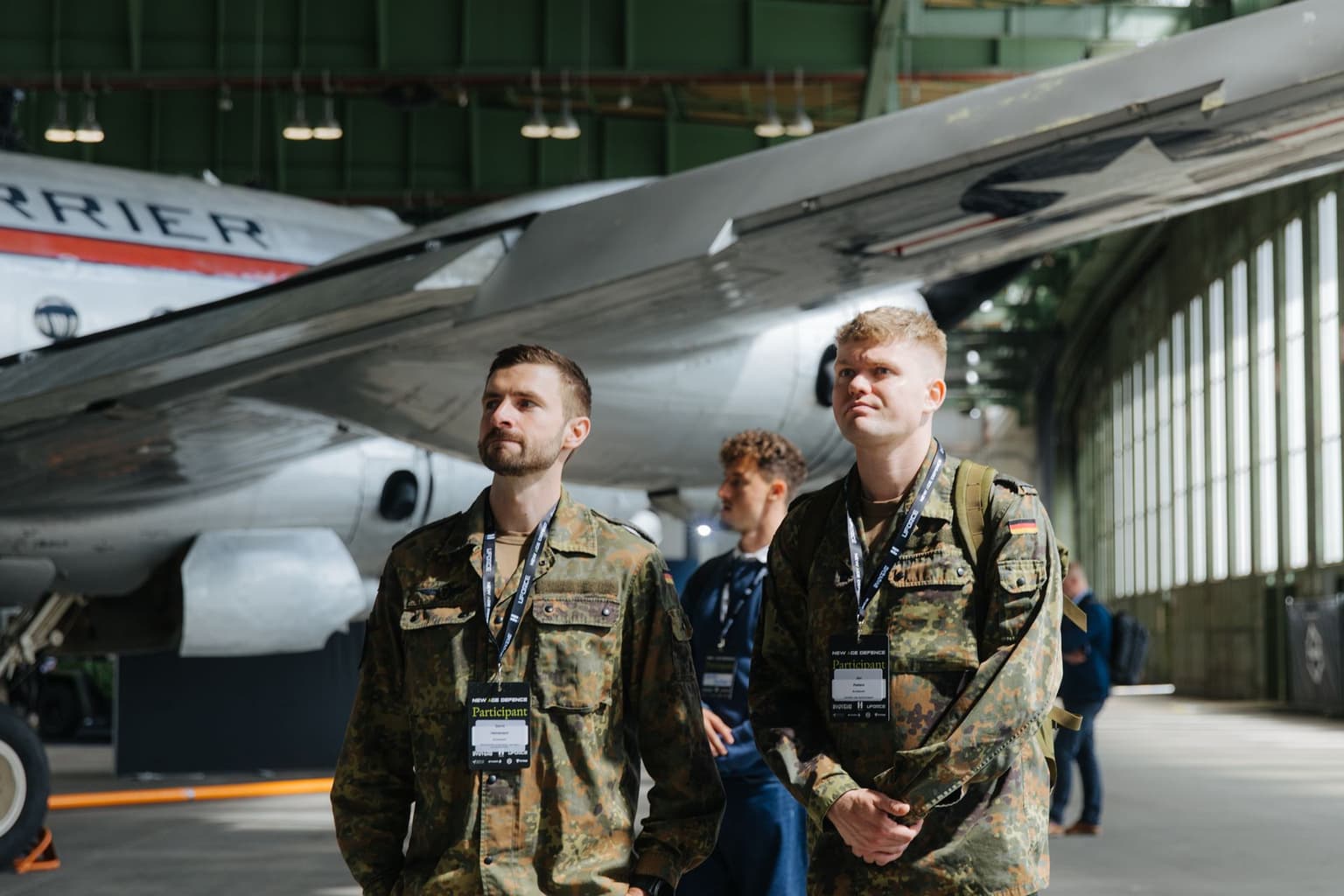
German servicemen attend the New Age Defense conference at Berlin's Tempelhof Airport on June 8, 2026. (Antonina Polukhina / New Age Defense)
 on Google
BERLIN, Germany — In a former hangar at Berlin's Tempelhof Airport, German and Ukrainian drone companies turned out in force at a new defense conference to cut deals, discuss their role in shaping the future of warfare, and make clear their needs from the EU and national governments.
"It's a really positive shift that Europe is investing more effort, specifically upping financial resources," Maximilian Enders of Tytan Technologies told the Kyiv Independent in an interview at the New Age Defense conference in Berlin.
Broadly, "EU initiatives can be helpful in getting people to interact in a more structured way, which makes it more transparent for companies to see where there is potential business to be done," he said.
And the EU has many initiatives. In 2025, the EU passed 150 billion euros ($173 billion) in SAFE defense loans, its 1.5 billion euro ($1.73 billion) European Defense Industry Program (EDIP), and European Commission President Ursula von der Leyen announced a new "drone wall" to protect the EU's eastern flank from drones in September 2025.
Since then, the EU has passed a 90 billion ($105 billion) loan for Ukraine; two-thirds of which is to be spent on Kyiv's defense needs, and the bloc is considering a range of EU-wide common projects to shore up the eastern flank and improve defenses in air and space.
A space for action is there at the EU level as the continent is besieged by drone incursions, whether in Latvia, Lithuania, or Romania.


Those continued breaches of airspace in the Baltic states show how "no country is well-equipped enough to handle these geopolitical challenges by themselves, we need a united European approach," Enders told the Kyiv Independent.
Nine months on from von der Leyen's drone wall announcement, it "remains fragmented, but the obstacles are legal, not technical," Paul Strobel at drone company Quantum Industries told the Kyiv Independent.
One obstacle remains to make countries aware that affordable drone defense technologies exist in the first place — part of the reason the New Age Defense conference has been established.
"Our founding mission was to change this paradigm of shooting down inexpensive threats with massively expensive defense systems," Enders said.
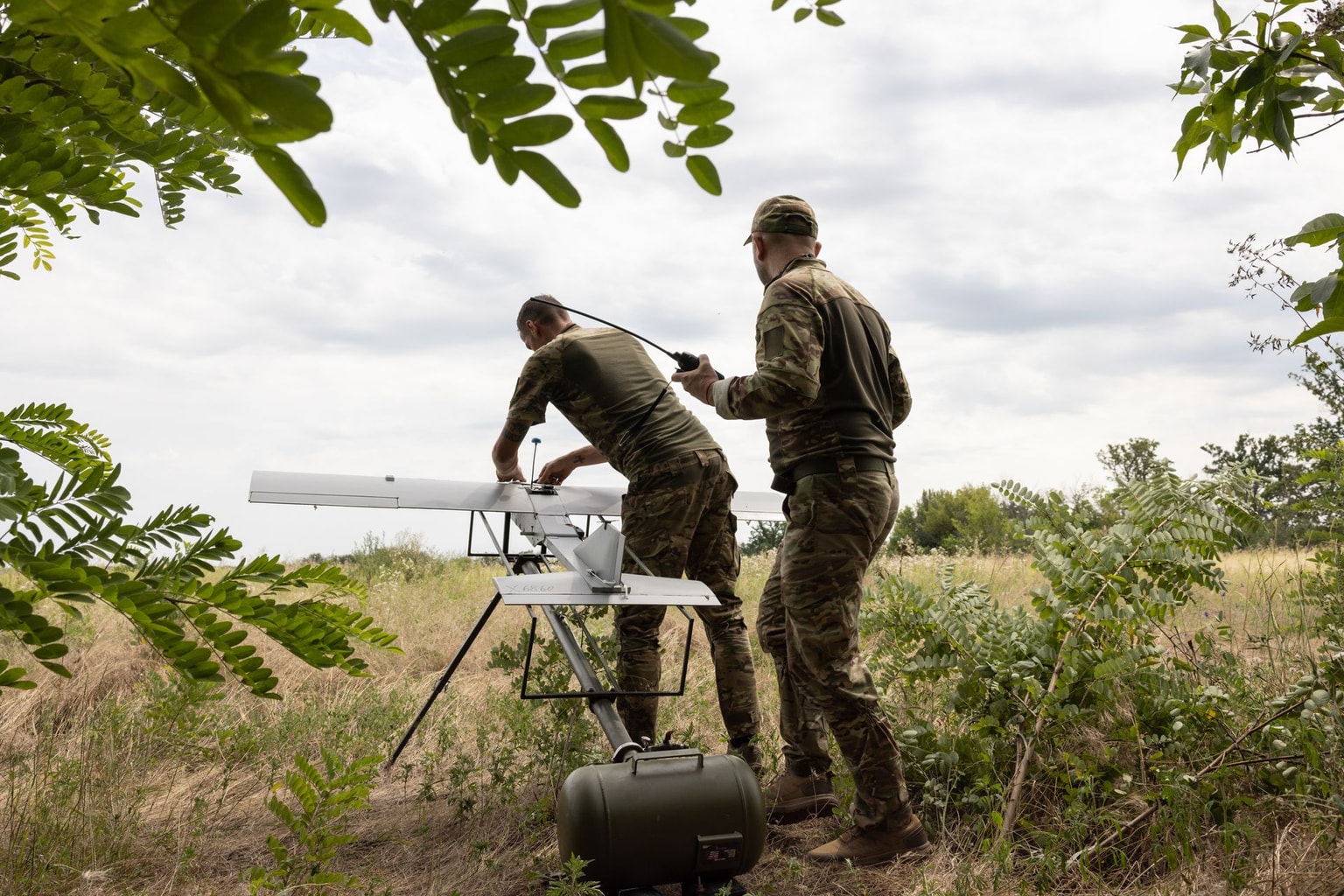
Tytan Technologies has two types of interceptor drones, which are being used by the Ukrainian and German armies.
But even so, countries are having to use fighter jets and expensive missiles to take down drones that cost orders of magnitude less to produce.
Enders suggested the EU could fund some experimental procurement to make member states aware of the latest innovations, so they "can decide whether to procure it or not."
Strobel at Quantum Industries thinks companies should not wait idly by for orders to come to them.
"In the meantime, companies should just reach out to individual customers, for example, make a deal to protect Lithuania's airport in Vilnius first, rather than the whole country. Prove the product works, and scale up from there," he said.
However, Enders noted a "big challenge for European air defense is the need for open source architecture to facilitate the integration of different systems. Building this kind of architecture takes time, as you have to find common ground in terms of standards on the one hand, and on the other hand, companies have to agree to open up part of their intellectual property.
That could lead to some countries taking a wait-and-see approach to identify which companies will stick around for the long term.

Enders thinks the EU could play a role in helping member states to focus their resources.
"Europe's role should lie in steering national procurement efforts in the right direction, not necessarily going into direct procurement itself," he said.
The European Commission has tried to foster such an approach first by having countries prioritize joint procurement in their plans for spending the 150 billion euros of SAFE loans, and second by proposing several "capability coalitions," whereby groups of willing EU countries team up to tackle specific gaps in Europe's defenses, including drones and air defense.
But "it needs fine-tuning to make sure that money goes exactly where it needs to go to close the EU's capability gaps," Enders said.
Another major aspect of EU policymaking that has been met with defense industry approval has been the EU's new conditions that favor European defense companies over third countries.
In SAFE, EDIP, and the loans to Ukraine, the EU has added a condition that at least 65% of the components within any defense product purchased should come from the EU, Norway, or Ukraine.
"The EU's procurement rule changes to create a European preference are exactly the change that needed to happen," Strobel told the Kyiv Independent.
He mentioned that his company has worked hard to create a China-free supply chain.
Vasyl Arbuzov of the Defense Robotics UA foundation told participants at the New Age Defense conference, "With China, everyone understands the problem, but not much is being done about it."
"If China halts exports to Ukraine, we would not exist for long," he added.
Beijing has been increasingly flexing its control over rare-earth metals and other strategically important resources against Europe, which led the EU to announce a Resource EU action plan to break free of these strategic dependencies in December 2025.
China also looms large on the agendas of G7 leaders as they meet in France June 15-17, and again for EU leaders at their June 18-19 summit.