US imposes 25% tariffs on countries that do business with Iran as anti-government protests continue
 on Google
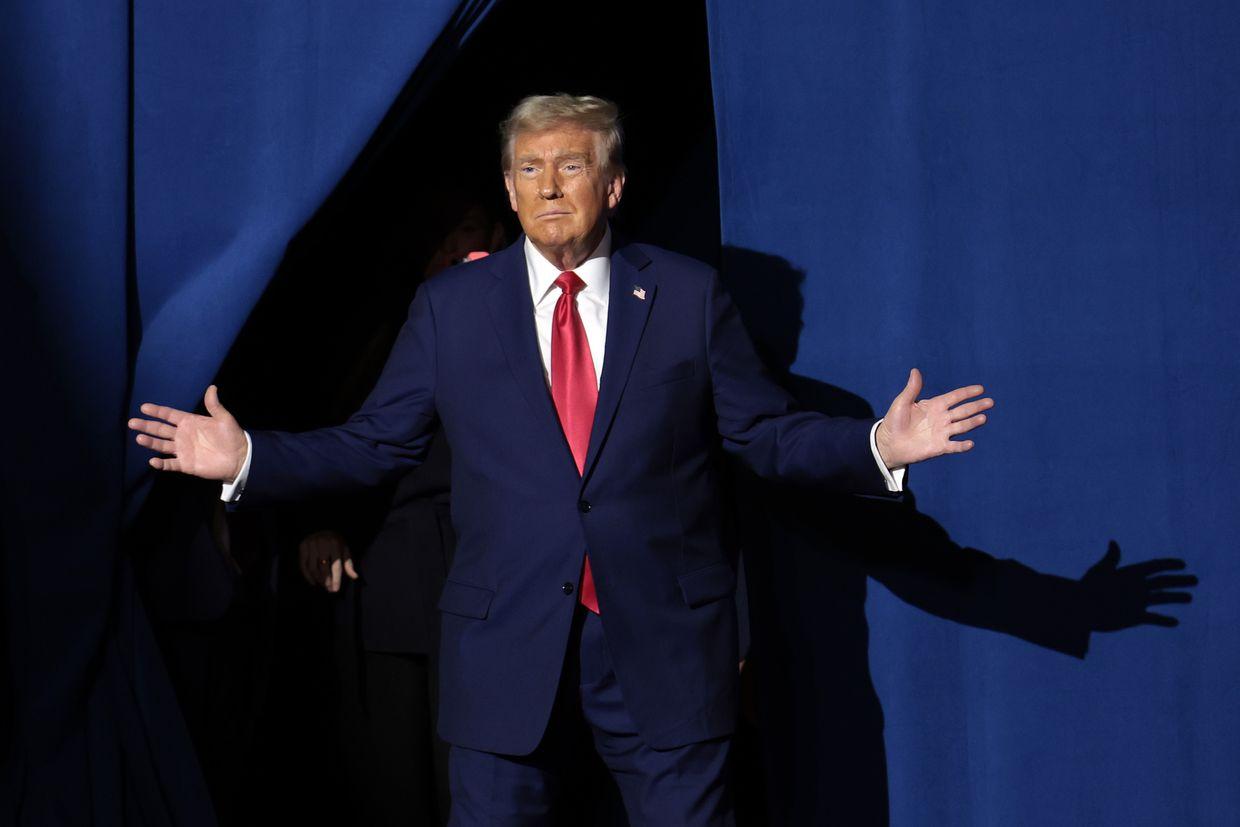
The U.S. has imposed 25% tariffs on countries that continue to do business with Iran as anti-government protests continue, U.S. President Donald Trump announced on Jan. 12.
"Effective immediately, any country doing business with the Islamic Republic of Iran will pay a Tariff of 25% on any and all business being done with the United States of America. This Order is final and conclusive," he said in a post to his Truth Social platform.
Trump has voiced support for demonstrators in Iran and threatened to take military action against the Iranian regime for cracking down on protesters.
"Iran is looking at freedom, perhaps like never before. The U.S.A. stands ready to help," he said on Jan. 10.
The U.S. Embassy on Jan. 12 also urged American citizens to leave Iran immediately, and to have an independent exit plan not relying on assistance from the U.S. government.
"Leave Iran now. Have a plan to leave Iran that does not rely on assistance from the US government. If you cannot leave, find a safe place in your home or another secure building. Have a supply of food, water, medicine, and other essential items," the embassy advised on their website.
Protests began on Dec. 28, with market vendors and shops closing their doors in response to high inflation and the sharp depreciation of the Iranian rial.
Demonstrations quickly surged into anti-government mass protests, with protesters calling for the removal of Supreme Leader Ayatollah Ali Khamenei.
Authorities have led a violent crackdown on demonstrators, with at least 544 confirmed killed as of Jan. 11, according to the U.S.-based Iranian rights group, Human Rights Activists News Agency (HRANA). Meanwhile, independent outlet Iran International on Jan. 10 reported that at least 2,000 protesters were killed over a span of 48 hours.
Analysts caution that despite the scale of the protests and crackdown, it is too early to assume the Iranian regime is on the brink of collapse.
Julian G. Waller, political science professor at George Washington University, said the limited information available suggests the Iranian authorities are relying on “strong, violent, and coercive measures” to suppress unrest. He noted that the regime’s survival will largely depend on elite defections, loyalty within the security services, and whether protests can be sustained over time.
Waller added that Russia and China are likely to support Tehran’s crackdown through surveillance technology, internet shutdown capabilities, and financial assistance to keep security forces loyal.
Any potential upheaval in Iran would also carry implications for Russia’s war against Ukraine, though experts say the effects would not be immediate.
Elena Davlikanova, a senior fellow at the Center for European Policy Analysis, said that even a sudden collapse in Tehran would not quickly undermine Russia’s ability to wage war, as Moscow has already internalized much of its drone production. “The decisive variable for Russia’s war effort is not Iranian drones but oil revenue,” she said.
President Volodymyr Zelensky backed Iran's protesters, calling for international support, and warned Russia that it would not get easier for the Kremlin either.
"It is crucial that the world does not miss this moment when changes are possible. Every leader, every country, and international organizations must step in now and help the people remove those guilty of what Iran has sadly become," Zelensky said in Persian and English in two posts to X.