Russian oil rig in Caspian Sea halts production after Ukrainian drone strike, SBU source says
 on Google
Editor's note: A previous version of this article stated Sea Baby naval drones were used in the strike. They were in fact long-range strike drones.
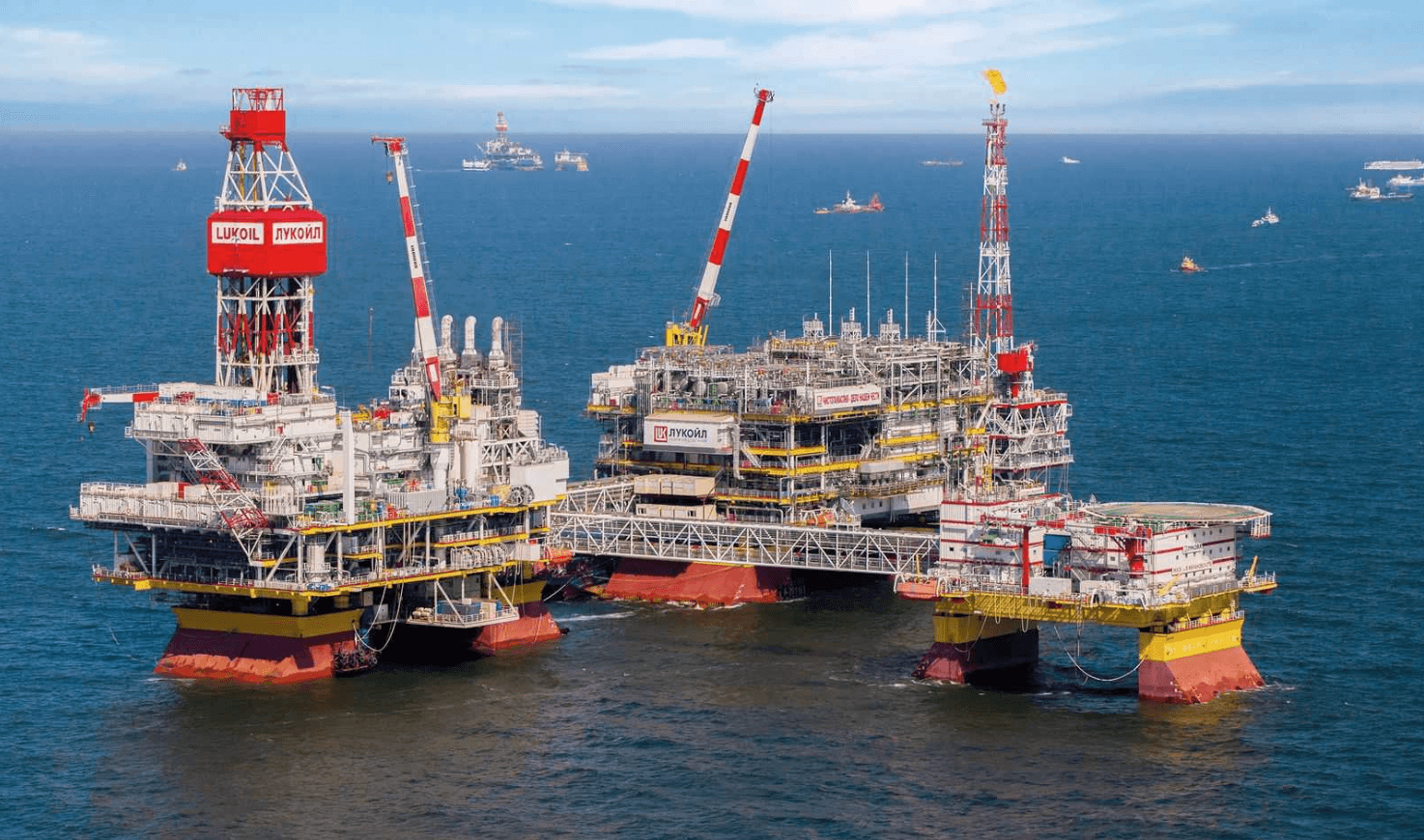
Ukraine's Security Service (SBU) struck Russia's Vladimir Filanovsky field in the Caspian Sea for the first time with long-range drones, halting oil and gas production from more than 20 wells, a source in the SBU said on Dec. 11.
Four drones struck Moscow's largest offshore oil field in the Caspian Sea, and one of the largest exploration sites in Russia, owned by a subsidiary of Russian oil giant Lukoil, according to the SBU source, who shared the details with the Kyiv Independent on the condition of anonymity.
"At least four hits were recorded on the offshore platform. As a result of the attack, oil and gas production from more than 20 wells it serves stopped," the SBU source said.
"(Explosions) in the Caspian Sea is another reminder to the Russian Federation that all its enterprises working for the war are legitimate targets."
The Russian Defense Ministry has not commented on Ukraine's claimed attack on the oil facility in the Caspian Sea. It claimed on Dec. 11 that it downed 287 Ukrainian drones overnight, many headed to Moscow.
Ukraine's continued strikes deep inside Russia with its domestically produced drones are an attempt to slowly grind down Russia's war machine despite the manpower and resource disadvantage. The extent to which these attacks affect the Russian army, which is currently intensifying offensives on multiple sectors of the front, is unclear.
The Vladimir Filanovsky field, located in the northern part of the Caspian Sea, is "considered the largest post-Soviet discovery in Russia. Commercial operation of the field," according to the Dutch Offshore Energy platform.
Lukoil discovered the field in 2005, and production began in 2016.
The SBU source said that the field's reserves amount to 129 million tons of oil and 30 billion cubic meters of gas, which are exported via the Caspian Pipeline Consortium, a key oil export route from Kazakhstan.