Ukraine war latest: Russia attacks passenger bus in Kherson Oblast, killing 1, injuring 5
 on Google

This is Chris York and Yuliia Taradiuk reporting from Kyiv on day 1,437 of Russia's full-scale invasion of Ukraine.
Today's top story:
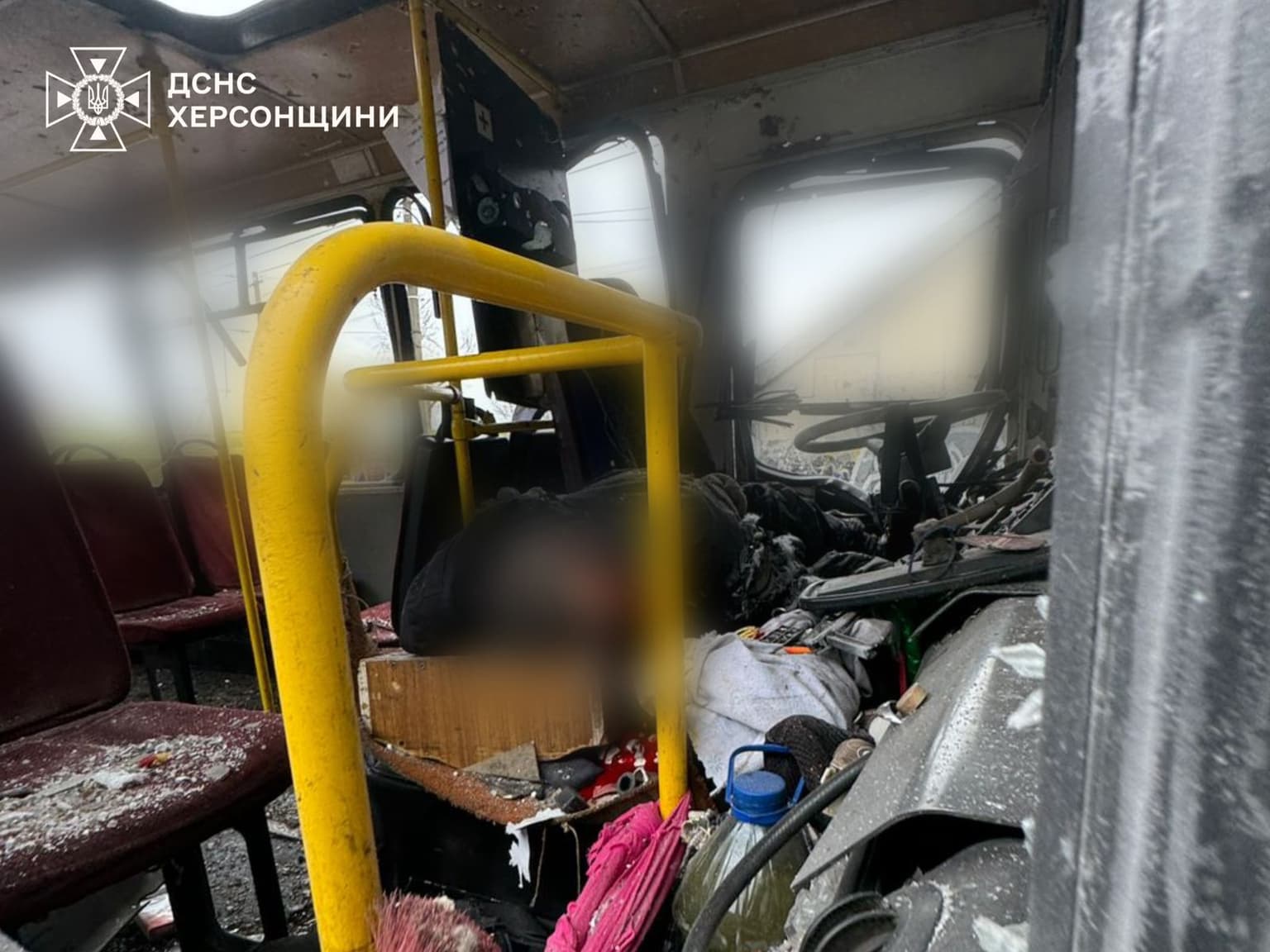
Russian shelling hit central Kherson around midday on Jan. 30, killing the driver of a city bus and wounding five other civilians, according to the Kherson Oblast Prosecutor's Office.
According to the office, at around 12 p.m. Kyiv time, Russian troops fired artillery at the city of Kherson, striking a bus. The State Emergence Services said one of the shells hit the roadway and shrapnel damaged the bus.
Governor Oleksandr Prokudin added two of the injured are in critical condition, and three others are in moderate condition.
"In the middle of the day, Russians deliberately attacked a bus carrying people in Kherson," Prokudin said.
Following the attack, a pre-trial investigation has been launched into the commission of a war crime that resulted in the death of a person (Part 2 of Article 438 of Ukraine's Criminal Code).
"Prosecutors, together with police investigators, are taking all necessary measures to record and document war crimes committed by Russian Federation military personnel," the statement by Kherson Oblast Prosecutor's Office reads.
Russian forces have increasingly used drones to target civilians in front-line areas, particularly in Kherson, where local officials have reported near-daily FPV drone strikes on vehicles and pedestrians. Artillery strikes are rarer but can be more devastating.
In August 2025, a Russian drone strike on a bus in the Kherson area killed two and injured nine.
Almost 60 generators from Warsaw arrived in Kyiv, Klitschko says
Last updated 5:50 p.m. Kyiv time.
A first batch of generators donated by Warsaw's City Hall has arrived in Kyiv, Mayor Vitali Klitschko reported on Jan. 30.
Klitschko said the Polish capital sent 90 generators of various capacities, ranging from 10 to 64 kilowatts (kW). Almost 60 of them arrived on Jan. 30, while others are expected to be delivered in the coming days.
"These backup power sources will allow the city to strengthen the resilience of critical facilities, social institutions, and residential buildings. The generators have already begun to be distributed to some areas of Kyiv, in particular to power equipment in buildings where there are problems with restoring heat supply," Klitschko said.
Amid subzero temperatures and the coldest winter since the beginning of the full-scale war, Ukrainian cities, including Kyiv, were struggling to restore power, heating, and water after Russian attacks on Ukraine's critical infrastructure on Jan. 9, Jan. 20, and Jan. 24.
Since the first Jan. 9 attack, more than 6,000 residential buildings remained without heating. On Jan. 30 Klitschko reported that energy and repair workers had managed to get that number below 400.


Ukrainian forces hit Russian Osa air defense system, logistics sites in occupied Zaporizhzhia Oblast
Last updated 2:25 p.m. Kyiv time.
Ukrainian forces struck a Russian Osa surface-to-air missile system and a series of logistics sites in the Russian-occupied part of Zaporizhzhia Oblast over the past day, according to Ukraine’s General Staff.
The Osa system was struck near the settlement of Semenivka in occupied Zaporizhzhia Oblast, with a direct hit recorded, according to the General Staff's statement. Open-source estimates put an Osa system’s value at as much as $10 million, depending on the variant.
Ukrainian troops also targeted Russian "logistics facilities" in occupied Zaporizhzhia Oblast, including a repair facility from a Russian separate special purpose brigade near Tokmak, the warehouses of an artillery regiment near Okhrymivka, and facilities linked to Russia’s 76th Air Assault Division near Kyrylivka, the statement said.
Confusion reigns as Russia says it was only asked to stop attacking Kyiv until Sunday
Last updated 12:41 p.m. Kyiv time.
Russia on Jan. 30 said it was asked by U.S. President Donald Trump to refrain from attacking Kyiv until Feb. 1.
The comment from Kremlin spokesperson Dmitri Peskov came a day after Trump said Russian President Vladimir Putin had agreed to his request not to strike Kyiv as well as other Ukrainian cities and towns for a week.
But there was confusion over both the timing and the scope of the supposed proposal.
Trump asked Putin to refrain from striking only Kyiv until Feb. 1 "in order to create favorable conditions for negotiations," Peskov said, appearing to contradict the scope of the agreement referenced by Trump.
"I personally asked President Putin not to fire on Kyiv and the cities and towns for a week," Trump said during a cabinet meeting, stressing that Ukraine is currently facing extremely cold temperatures. "And he agreed to do that. And I have to tell you, it was very nice."
'We are all used to this' — Inside one of Kyiv’s hardest-hit buildings this winter
Last updated at 12:11 p.m.
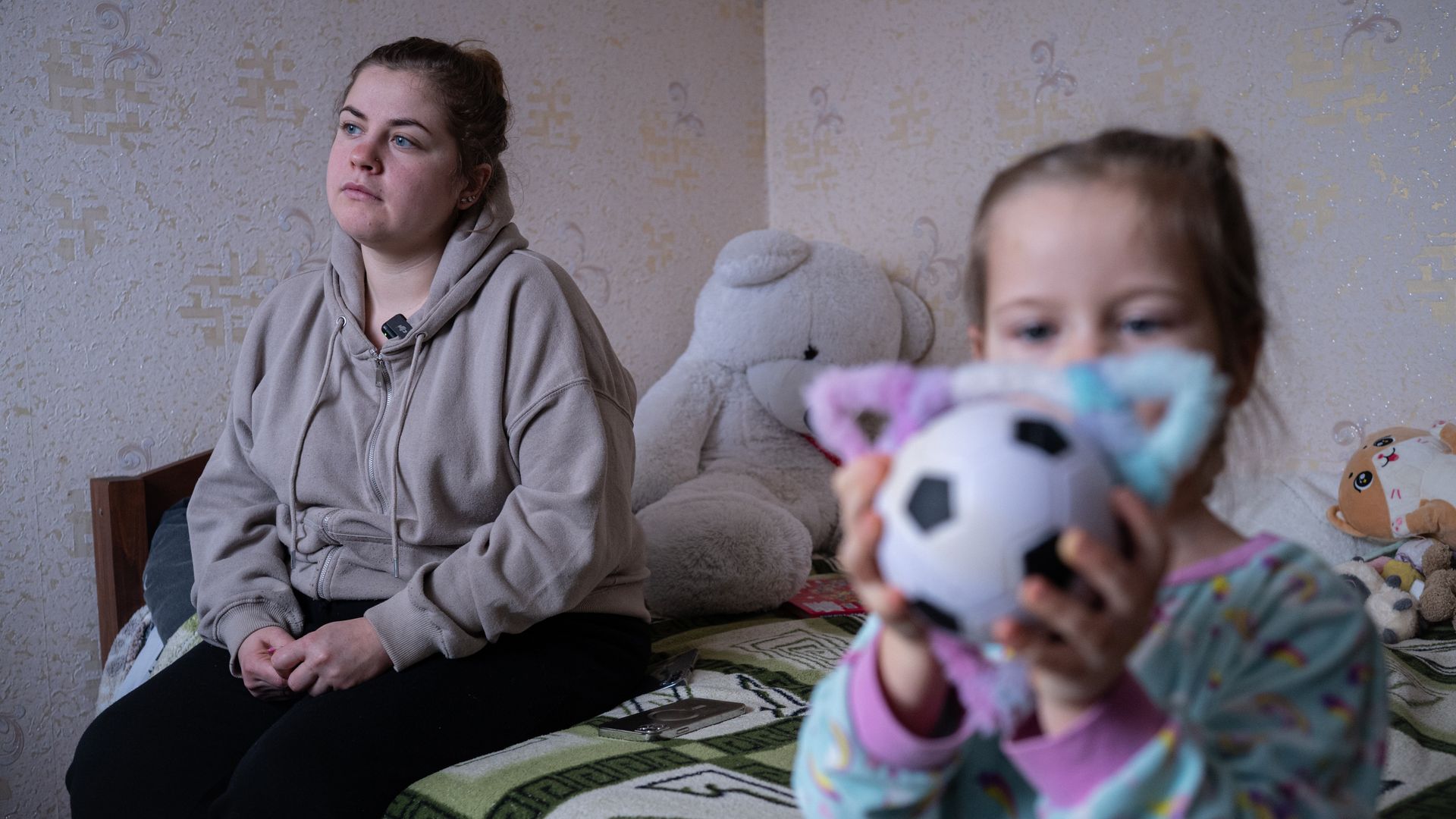
Upon entering Daria’s apartment in a large complex in Rusanivka on Kyiv’s left bank, a faint smell of gas lingers in the cold, dim rooms. After Russia’s attacks on Ukraine’s energy infrastructure cut heat and power across parts of the city, she uses the stove daily to raise the indoor temperature by a couple of degrees, but even then it barely reaches 13 degrees Celsius (55 degrees Fahrenheit).
The warmth comes with consequences.
"We don't want to live in mold. You come in from the street and just smell dampness," says Daria, a young mother, as her toddler, Taia, plays with toys on wet towels covering the windowsill.
Beads of water drip from the ceiling and trickle down nearly every wall. Severe condensation from constant gas use has created ideal conditions for mold to grow and spread. The wallpaper has started peeling, and Daria runs her hand down the wall, and then shows her wet palm.
The conditions inside Daria’s apartment reflect the deteriorating living conditions in her building. The 17-story block, home to hundreds of families, has been without central heating for weeks and fully disconnected from the city’s power grid, relying on a generator that provides only a few hours of electricity each day.
Russia halts POW exchanges, Zelensky says
Last updated 12:01 p.m. Kyiv time.
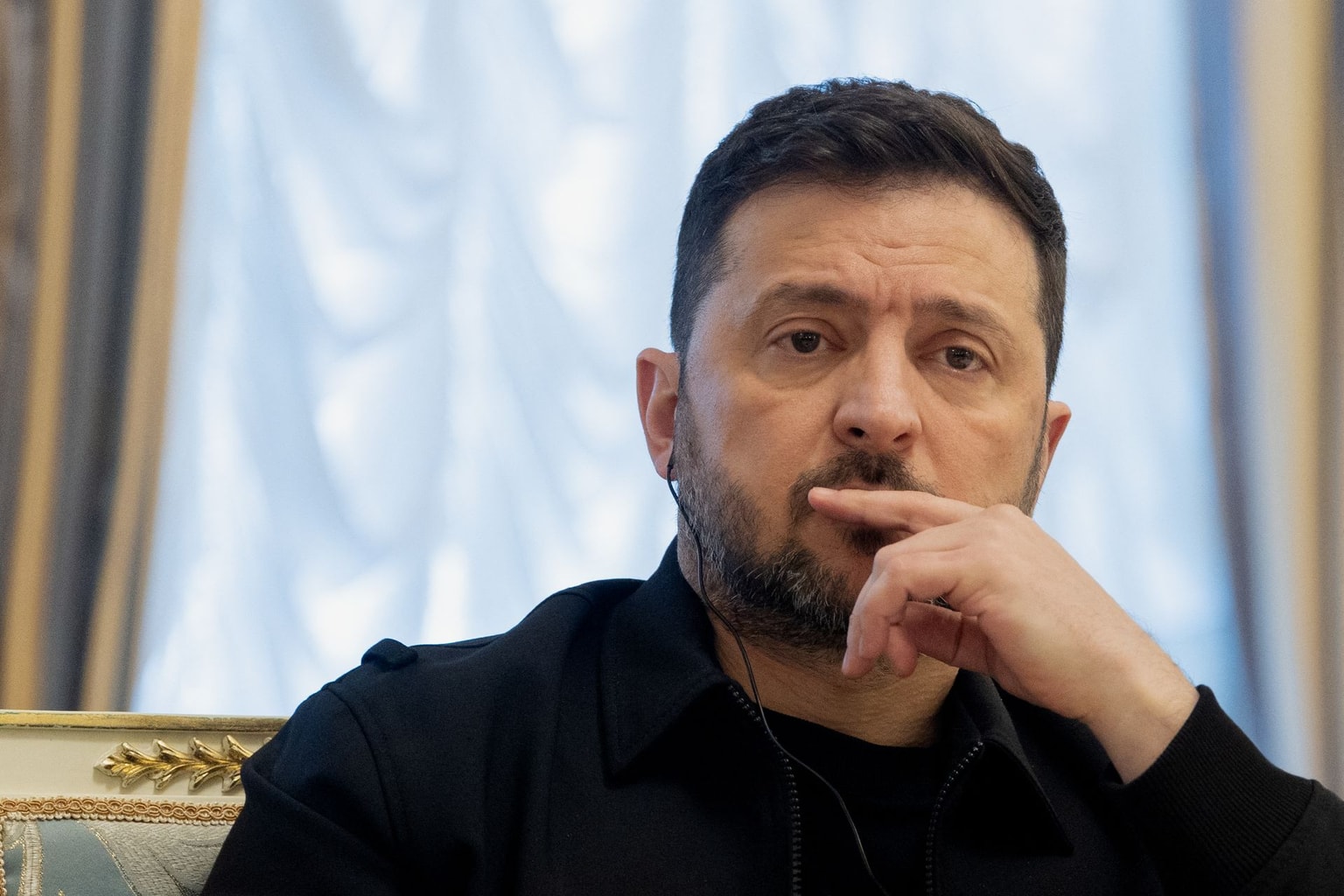
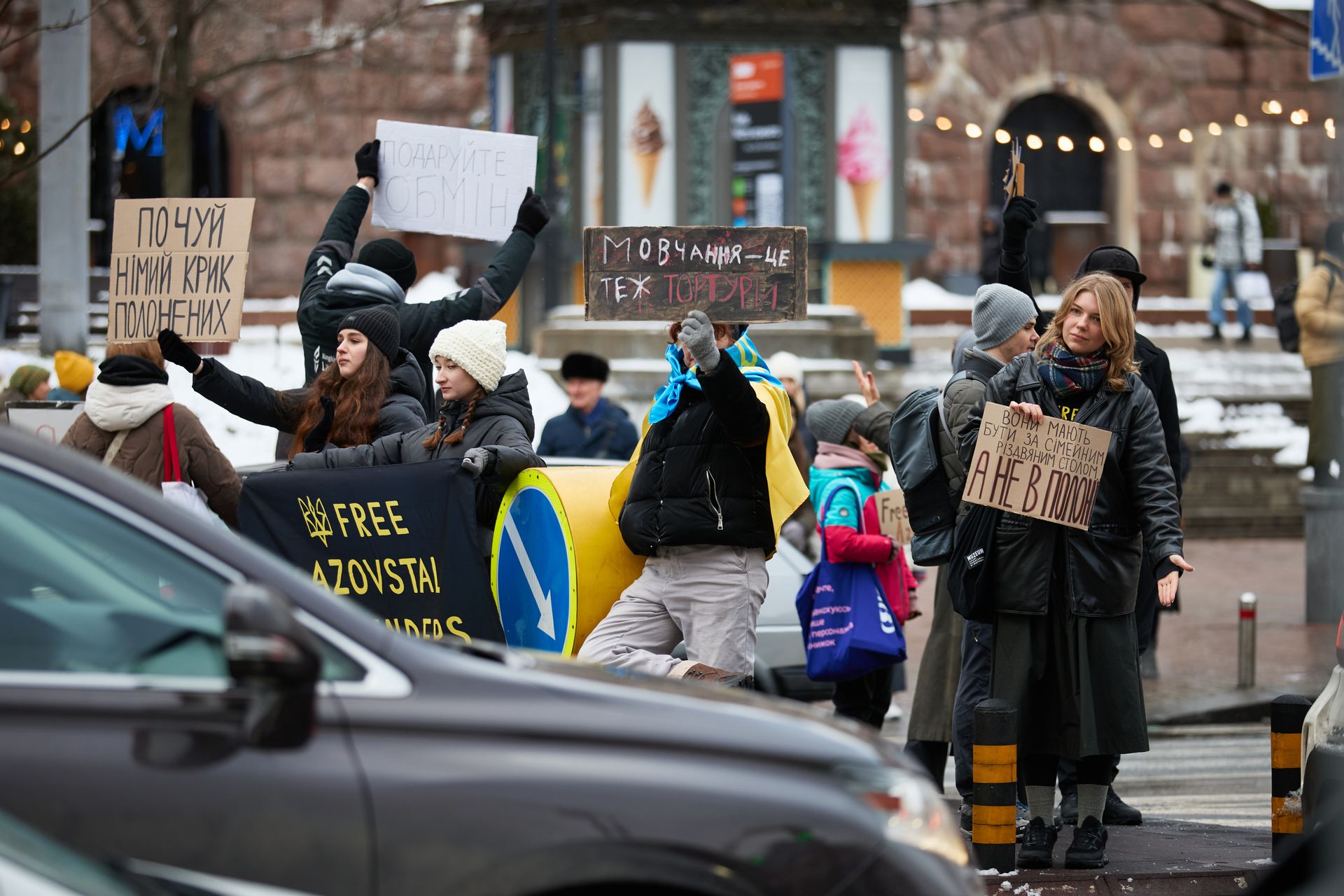
Russia has halted the process of prisoners of war (POW) exchanges, President Volodymyr Zelensky said on Jan. 30, in comments reported by Ukrinform.
Zelensky told reporters that Russia stopped the exchanges because "they are not very interested," and do not see any benefit in the process.
"They do not feel that it gives them anything. They believe that it gives us something. But I think they should also think about their people, their military," Zelensky said.
The last POW exchange with Moscow was held on Oct. 2, 2025, according to Zelensky. Ukraine then brought home 185 soldiers and 20 civilians held in Russian captivity.
At least 6 killed, 20 injured in Russian attacks on Ukraine over past day
At least six people have been killed and 20 others injured in Russian attacks against Ukraine over the past day, local authorities said on Jan. 30.
Ukraine's Air Force reported on Jan. 30 that overnight Russia launched 111 drones of different types and one ballistic missile.
Ukrainian air defenses intercepted 80 drones. The missile and 25 drones made it through, striking 15 locations. Debris from intercepted drones damaged two locations.
In Kherson Oblast, Russian forces targeted 36 settlements, killing three civilians, and injuring 10 others over the past day, Governor Oleksandr Prokudin said.
In Dnipropetrovsk Oblast, one person was killed, three were injured in Russian attack on the city of Kryvyi Rih, the State Emergency Service said. Elsewhere in the oblast Russian drones injured one person, Governor Oleksandr Hanzha said.
In Kharkiv Oblast, a 47-year-old woman was killed in the village of Novoosynove, two civilians were injured elsewhere in the Oblast, Governor Oleh Syniehubov said.
In Donetsk Oblast, Russian strike killed a person in the city of Druzkivka, while a separate attack injured a civilian in the city of Oleksiievo-Druzhkivka, according to Governor Vadym Filashkin.
In Zaporizhzhia Oblast, Russian attacks injured at least three civilians over the past day, according to Governor Ivan Fedorov. Russian forces carried out 799 strikes on 33 settlements in the Oblast, including the city of Zaporizhzhia.
General Staff: Russia has lost 1,238,710 troops in Ukraine since Feb. 24, 2022
Russia has lost around 1,238,710 troops in Ukraine since the beginning of its full-scale invasion on Feb. 24, 2022, the General Staff of Ukraine's Armed Forces reported on Jan. 30.
The number includes 1,310 casualties that Russian forces suffered over the past day.
According to the report, Russia has also lost 11,614 tanks, 23,969 armored fighting vehicles, 76,319 vehicles and fuel tanks, 36,748 artillery systems, 1,631 multiple launch rocket systems, 1,289 air defense systems, 435 airplanes, 347 helicopters, 119,234 drones, 28 ships and boats, and two submarines.