Ukraine war latest: Ukraine strikes Russian drone plant in Taganrog, military confirms
 on Google
Key developments on April 18-19:
- Ukraine strikes Russian drone plant in Taganrog, military confirms
- Ukraine carries out first-ever interception of Shahed using naval drone platform, military says
- Ukraine hits 4 'important' Russian oil sites in overnight strikes, military says
- Russia in no rush to resume Ukraine peace talks, Lavrov says
- Ukraine builds AI-driven defense ecosystem as over 200 companies develop drone technologies
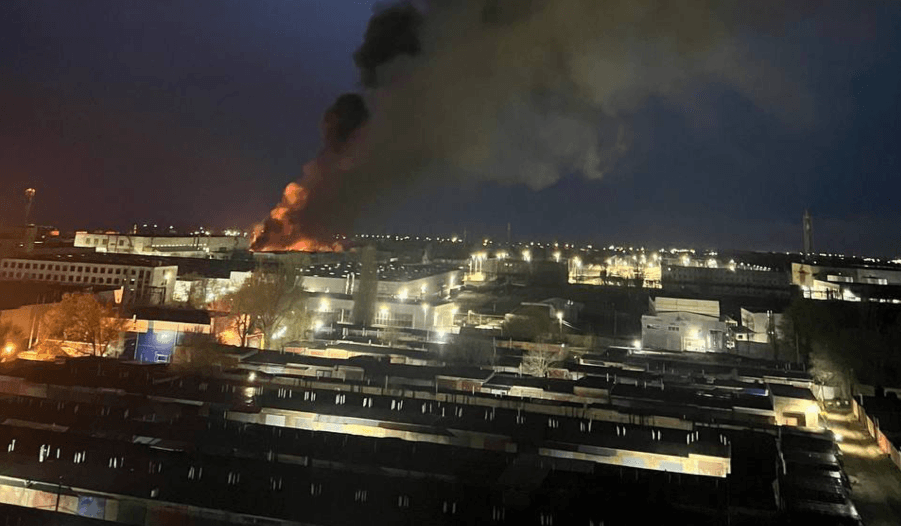
Ukrainian forces struck a Russian defense industry facility in the southern Russian city of Taganrog overnight on April 19, the General Staff confirmed.
The targeted site was the Atlant-Aero plant, which develops and manufactures strike and reconnaissance drones for the Russian military. A fire broke out at the facility following the strike.
According to the General Staff, the company produces Molniya-type drones and components for the Orion UAV, which can carry up to 250 kilograms of payload, including guided aerial bombs and missile systems.
The strike is expected to reduce Russia's capacity to produce drones and weaken its ability to carry out attacks on Ukrainian civilian infrastructure.
In addition, Ukrainian forces hit an ammunition depot near the village of Trudove in occupied Zaporizhzhia Oblast, as well as logistics warehouses in the areas of Mangush, Topolyne, and Mariupol in Donetsk Oblast.
Fuel storage tanks were also struck near Novopoltavka in Zaporizhzhia Oblast.
The full extent of the damage is still being assessed.
Earlier on April 19, Russian authorities claimed three people were injured in the strikes on Taganrog, but only reported that a commercial site in the city was struck, not specifying if the drone plant was targeted.
"During the missile strike on Taganrog, commercial infrastructure was damaged. A fire broke out in a warehouse area," Rostov Oblast Governor Yuri Slyusar said.
The details could not be immediately verified by the Kyiv Independent.
Ukraine regularly strikes military infrastructure deep inside Russia and the occupied territories in an effort to diminish Moscow's capacity to continue waging war on Ukraine.
read also
Ukraine carries out first-ever interception of Shahed using naval drone platform, military says
Ukraine's Unmanned Systems Forces have for the first time intercepted a Russian Shahed-type drone using an interceptor drone launched from an unmanned surface vessel, the military said on April 19.
The interception was carried out by a naval drone unit of the 412th Nemesis Brigade operating in the maritime zone. The unit successfully destroyed the aerial target using a drone launched from a sea-based unmanned platform.
The development marks a new level of integration between Ukraine's naval and aerial drone capabilities, expanding the country's ability to counter Russia's air threats and adding another layer of defense for Ukrainian cities, according to Nemesis.
Ukraine's top drone warfare commander, Robert "Madyar" Brovdi, said on April 19 that Ukraine's unmanned systems grouping has begun deploying such naval platforms more broadly.
Between April 1 and April 19, Ukrainian drone units destroyed 4,465 aerial targets, including 671 Shahed-type drones and similar loitering munitions, according to Brovdi.
Moscow has widely deployed Shahed-type drones in mass attacks on Ukrainian cities since the beginning of the full-scale invasion, causing widespread damage and civilian casualties and prompting Kyiv to develop new countermeasures, including interceptor drones and integrated air defense solutions.
Ukraine hits 4 'important' Russian oil sites in overnight strikes, military says
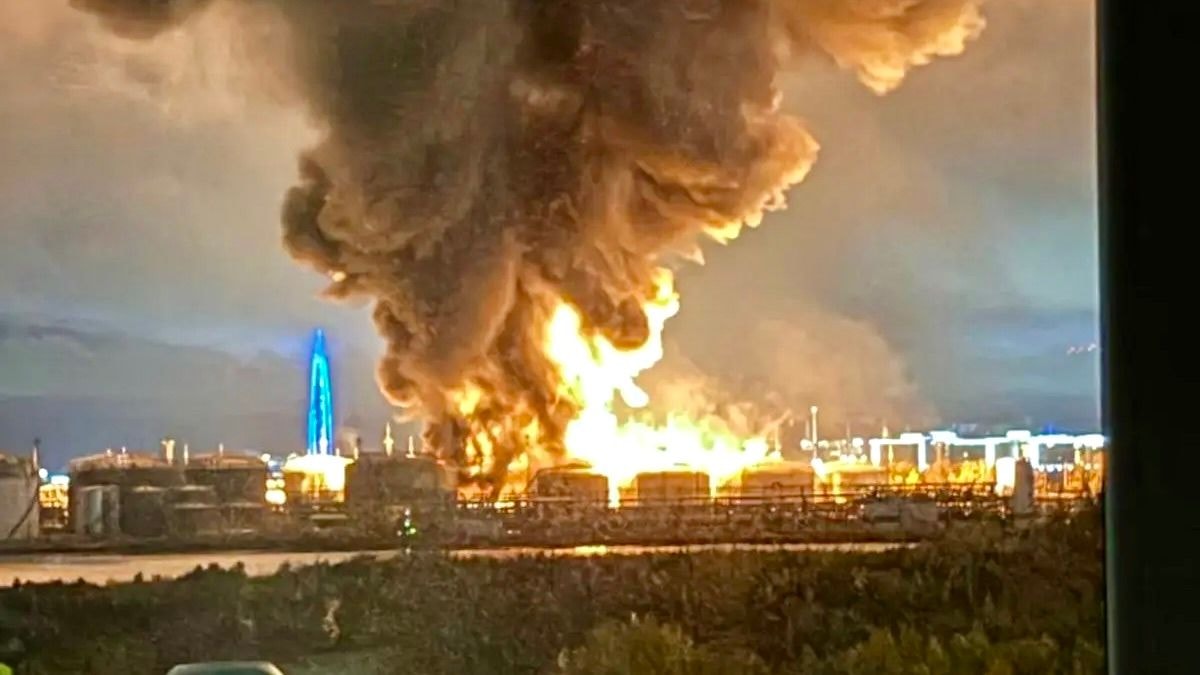
Ukraine struck four "important" Russian oil industry facilities overnight on April 18, the General Staff reported, as Kyiv continues efforts to disrupt Moscow's war funding.
The military said the targeted sites support Russia's Armed Forces and that the attacks were part of a broader campaign to "undermine (Russia's) military and economic capabilities."
According to the statement, the targets included the Novokuybyshevsk and Syzran oil refineries in Samara Oblast, an oil terminal in Leningrad Oblast, and the Tikhoretsk oil pumping station in Krasnodar Krai.
The extent of the damage is still being assessed, the military said.
Russian Telegram channels also reported a large fire at the Novokuybyshevsk refinery in Samara Oblast early on April 18 following an apparent drone strike.
Russia's Defense Ministry said it intercepted 258 Ukrainian drones overnight, including over Leningrad, Samara, and Krasnodar oblasts.
The Kyiv Independent could not verify these claims.
Ukraine has increased strikes on Russian oil infrastructure in recent months, as it aims to reduce the Kremlin's most important revenue source — given a boost by the skyrocketing oil prices that have followed the war in Iran.
In March, long-range Ukrainian drone attacks and shadow fleet tanker seizures reportedly disabled about 40% of Russia's oil export capacity.
Russia in no rush to resume Ukraine peace talks, Lavrov says
Peace talks with Ukraine are not Russia's top priority, Foreign Minister Sergey Lavrov said on April 18 at the Antalya Diplomacy Forum in Turkey, as U.S.-mediated negotiations remain stalled.
The latest trilateral talks involving Ukraine, Russia, and the United States took place on Feb. 16, while a follow-up meeting planned for late February and later moved to early March was postponed shortly before U.S.-Israeli strikes on Iran.
"At this point, the issue of resuming negotiations is not our top priority. We haven't forced negotiations on anyone," he said. "We have always operated on the principle that if our partner is ready, we're ready."
President Volodymyr Zelensky has urged both Washington and Moscow to resume the process, saying he does not believe negotiations have reached a dead end.
Despite the pause, Kyiv has sought to maintain momentum, even as key disagreements persist, particularly over Russia's territorial demands.
Ukraine argues that freezing the current front line is the most realistic basis for a ceasefire, while Russia insists Ukrainian forces withdraw from parts of Donbas as a precondition for any agreement — a demand Kyiv rejects.
The diplomatic slowdown has also been affected by the limited availability of U.S. envoys Steve Witkoff and Jared Kushner, who are involved in negotiations related to Iran.
The envoys proposed holding talks in the United States, but Zelensky said Russia indicated it preferred alternative venues such as Turkey or Switzerland.
Kyiv hopes a potential visit by Witkoff and Kushner could help revive negotiations, though their schedules remain uncertain. A U.S. official familiar with the matter told the Kyiv Independent on April 15 that Washington is discussing a possible trip by the envoys to Ukraine.
Ukraine builds AI-driven defense ecosystem as over 200 companies develop drone technologies
Ukraine is rapidly developing a defense technology market centered on artificial intelligence, with more than 200 companies involved in producing AI-powered drones, the Defense Ministry said on April 18.
Over 300 AI-related developments are registered on the Brave1 platform, while more than 70 systems based on artificial intelligence and computer vision are already in active use on the battlefield, according to the ministry.
As part of its strategy, Ukraine is building a network of military technology centers focused on key areas of modern warfare, including mid-range and deep strikes, ground robotic systems, and artillery.
The first such hub, the Defense AI Center "A1," is expected to develop solutions for battlefield operations and to optimize internal military and defense-industry processes.
"Technological advantage is critical in modern warfare. We must be faster than the enemy at every stage," Defense Minister Mykhailo Fedorov said.
AI systems are already being used on the front line for autonomous drone targeting, detecting camouflaged enemy equipment and personnel, operating automated firing positions, and analyzing battlefield data through systems such as Delta.
The Defense Ministry said it aims to equip all drones deployed at the front with machine vision and AI capabilities.
Ukraine is also training AI models on combat data through the Brave1 Dataroom platform, which provides developers with datasets collected under various real-world conditions, including different weather, times of day, and sensor types.
International cooperation between Ukrainian and foreign companies is also expanding. Through platforms such as Avengers Labs and Test in Ukraine, foreign companies can train AI models on battlefield data and test technologies in real combat conditions.
The Defense Ministry reported on April 14 that Ukraine signed its first agreement with Germany on defense data exchange and joint projects in military technology development.
Note from the author:
Ukraine War Latest is put together by the Kyiv Independent news desk team, who keep you informed 24 hours a day, seven days a week. If you value our work and want to ensure we have the resources to continue, join the Kyiv Independent community.