Shells, stalled contracts, and no armor for wounded — Ukraine's new defense minister's problem list

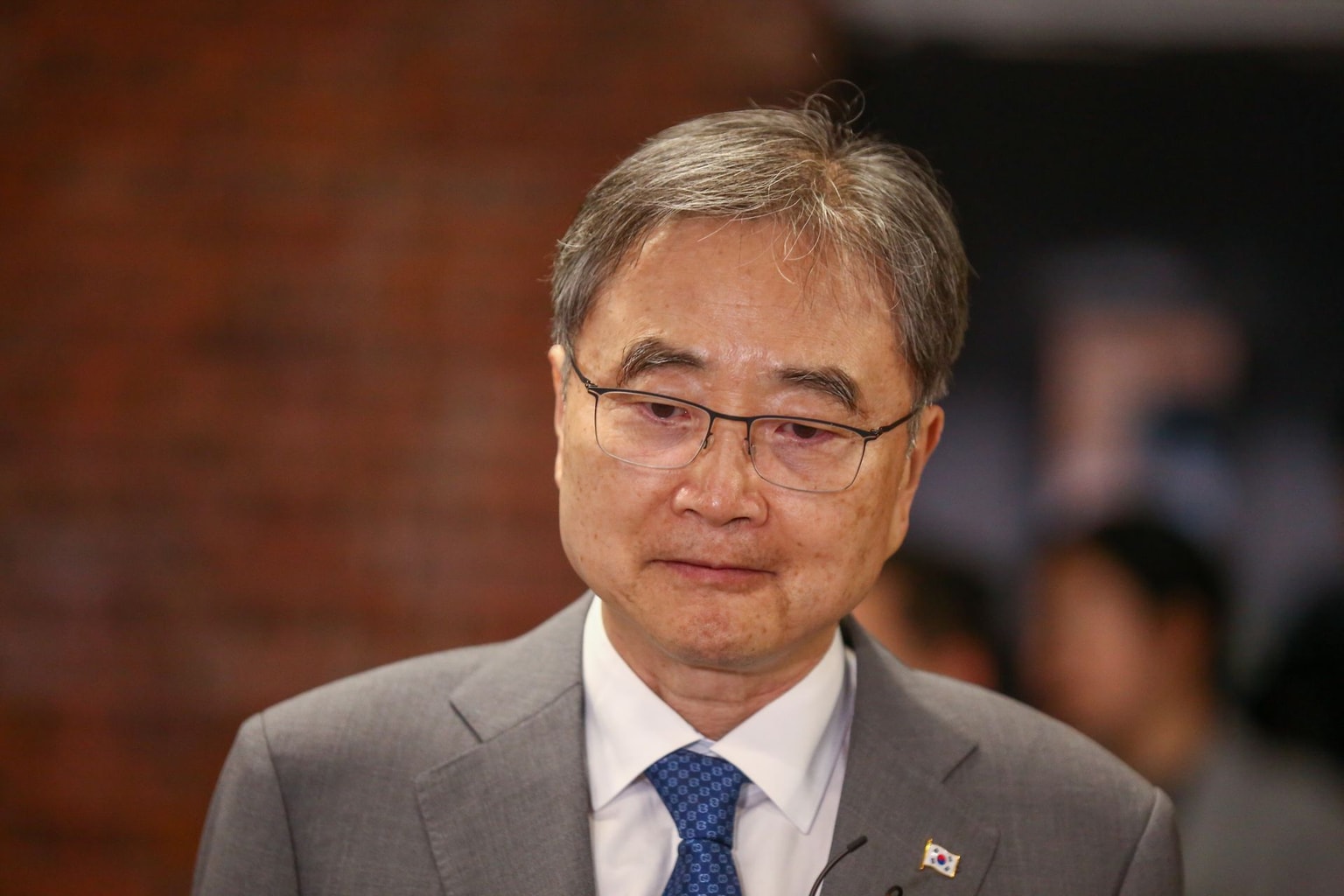
Yevhen Khmara in Kyiv Oblast, Ukraine, on Aug. 18, 2026. (Roman Pilipey / AFP / Getty Images)
 on Google
Bohdan Miroshnychenko
Editor-in-chief of Oboronka
Weapons production in Ukraine has a mountain of problems: short contracts, scandals over ammunition and other complex equipment procurement, inefficient drone purchasing, leaky quality control and oversight of manufacturers' capabilities, export rules that don't work, funding shortages, and more.
All of this ultimately adds up to poor supply for troops at the front.
Neither the dismissed minister Mykhailo Fedorov nor any other "six-month defense minister" has come even close to solving these problems.
To be fair, the task is extraordinarily difficult.
To carry out deep reforms, the head of the Defense Ministry needs not just good ideas and a mandate from President Volodymyr Zelensky, but also the ability to strike a delicate balance among military command, the Presidential Office, members of parliament, the National Security and Defense Council, arms associations, international partners — and to fight off certain corrupt groups with powerful media and political lobbying behind them.
Partly through his own mistakes, partly through resistance from the system, and partly simply for lack of time in office, Fedorov failed to resolve all the industry's long-standing problems — so that burden now passes to his successor, Yevhen Khmara.

Khmara is taking over the Defense Ministry at an extremely tense moment.
Arms companies are anxious over delayed contracting, troops are waiting for clarity on shell, drone, and vehicle deliveries for the second half of the year, and international transfers of weapons and technology for export have been blocked by a poorly written regulation.
Ahead lies the possibility of a new wave of mobilization in Russia — meaning the system needs to run smoothly, with or without Fedorov.
A few chronic problems are particularly prominent. Firstly, public tenders are nearly derailed.
Shifting weapons procurement onto a tender-based system was arguably the previous Defense Ministry's signature reform in the arms sector, since Fedorov's team decided to roll it out much more broadly than it had ever been before. How does it work?
Right now, procurement most often happens "by name" — meaning the General Staff names a specific drone from a specific manufacturer that needs to be bought, and the Defense Procurement Agency (DPA) contracts for it. This approach is efficient in terms of speed, but it creates corruption risks and kills competition.
Under the tender system, military command would provide only technical specifications, while the Defense Ministry would independently seek contractors. This was meant to drive down prices and improve transparency for international partners, who are pouring billions of dollars into Ukrainian weapons production.
It was expected that the Defense Ministry would start large-scale contracting under the tender system as early as summer, but the technical specifications for these purchases were delayed.
By mid-August, only a very small share of the specs had actually been delivered to the Agency. That's what pushed the associations to go public with a warning about a possible breakdown in weapons supply by the end of 2026.
It turned out to be less dramatic than the associations feared. In reality, arms contracting never stopped — not even for a week — and continues to this day. The Ministry kept signing contracts under the old procedure while the new one wasn't yet up and running.
At the same time, part of the funding is left hanging. Babel reports that the Defense Ministry is currently operating with funds from a European loan, which means partners have certain transparency requirements regarding how the funds are allocated. So the tenders still need to get up and running as quickly as possible, regardless.
Secondly, even though drones undeniably dominate the battlefield and have largely replaced artillery in many respects, heavy howitzers still remain irreplaceable in plenty of combat situations: bad flying weather, strikes on massed troops or fortified positions, breaking up assaults or infiltration through tree lines, the need to hit a target quickly, suppressive fire, and so on.
Meanwhile, enemy drones are reaching further and further. In some areas, the kill zone already extends to 20 km (about 12,4 miles), while a standard 155mm shell only reaches 14 km (8,7 miles).

It's become clear that artillery needs to shift to longer-range shells.
In 2026, Fedorov gave total priority to 30+ km (18,6+ miles) long-range shells, as he repeatedly stated publicly. What's the risk here? There are dozens of different 155mm shell types, ranging from the "short" M107 (14-18 km) to extended-range rounds like the HE ER-BT (35 km) — and the longer a shell's range, the scarcer it is on the global market, since propellant charges worldwide are contracted years in advance.
The problem of short contracts isn't new, and no defense minister has managed to solve it.
This hurts not only shell manufacturers but producers of any complex weapon with a long production cycle, since efficient production now requires contracts of at least 12-18 months. The Ministry previously reported introducing long-term contracting, but in practice, it doesn't work — manufacturers still end up investing their own profits into ordering components in advance, with no certainty anyone will buy the finished product.
A similar gap exists in medical evacuation.
The state has contracted tens of thousands of ground robotic systems (GRS) but has barely signed any new contracts for armored vehicles — even though evacuating the wounded requires both working in tandem: the robot crosses the most dangerous stretch, then an armored vehicle quickly picks the soldier up.
Finally, there's the failed export push. Ukrainian arms manufacturers' capacity is running barely half-loaded, so defense companies are asking for weapons exports to be opened up, so they can earn money on the global market and reinvest it into product and production development, along with technology transfer, so they can set up companies abroad, secure new partnerships, and attract more Western funding.
This is especially pressing given the shortage of state orders and the need to develop technology faster than the Russians.
Politically, the question has already been settled — the president made clear a year ago that exports need to be opened up.
But various centers of power still haven't agreed on a concrete mechanism, and who's actually responsible is unclear: the Defense Ministry, the Economy Ministry, the National Security and Defense Council, or individual strategic advisers in the Presidential Office with murky authority.
The rules have changed at least twice since then, and neither version has worked properly, while Ukraine's niche on the global market is gradually being taken over by Western companies.
A vivid example is the "Ukrspecsystems" plant in Britain, whose opening was announced at the level of an international delegation and the ambassador — everyone assumes it's operating — but it still can't start work because it hasn't obtained permission for technology transfer.
All the problems mentioned above can be summed up in a single sentence: the absence of a state strategy for the defense-industrial complex.
As things stand, there's no institutional clarity in Ukraine over who exactly should be thinking about the chronic problems in weapons production and pushing for their resolution at every level of government.
Editor's note: Copyright, Ukrainska Pravda, Oboronka. This article is an adapted English translation of a piece originally published in Ukrainian by Oboronka. The opinions expressed in the op-ed section are those of the authors and do not purport to reflect the views of the Kyiv Independent.