Russia's largest oil company's net income drops by 73% in 2025
 on Google
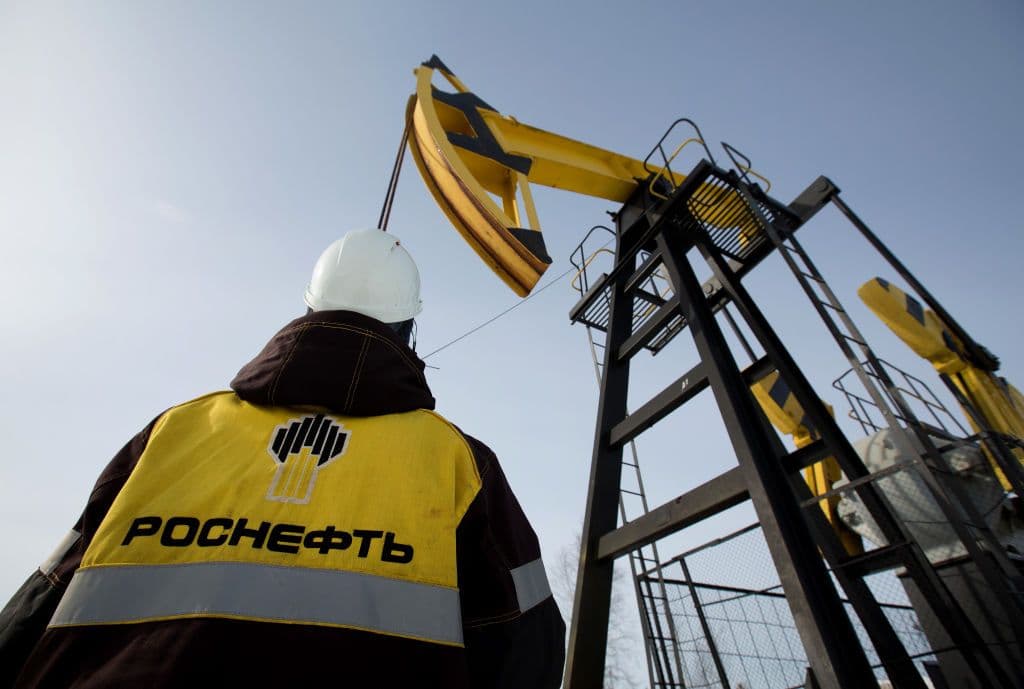
Rosneft's net income fell by 73% to 293 billion rubles ($3.6 billion) last year due to high taxes and interest rates, among other factors, the company said on March 31.
"In 2025, the Russian oil industry found itself at the epicenter of a 'perfect storm'," facing unfavorable market and macroeconomic conditions and a volatile geopolitical environment, CEO Igor Sechin said in a company press release.
Rosneft and Lukoil, Russia's first- and second-largest oil companies, respectively, were sanctioned by the U.S. in October 2025 as part of U.S. President Donald Trump's pressure on Moscow to end the war in Ukraine.
Oil exports are a key source of funds for Russia's federal budget, helping to sustain the country's war effort. Rosneft accounts for roughly one-third of Russia's crude production.
Rosneft's 2025 revenue dropped by 18.8% from 2024 to 8.236 trillion rubles ($102 billion). EBITDA, a metric that shows the company's core operating profit excluding financing, accounting, and tax effects, declined by 28.3% to 2.173 trillion rubles ($27 billion).
The company has faced "systemic pressures" via Western sanctions, including price caps, embargoes, and insurance denial, Sechin said.
Logistics costs also increased, with freight rates for transporting Russian oil from the Baltic Sea to India exceeding $20 per barrel — a tenfold hike since 2022, the executive noted.
Low oil prices in 2025 and a strong ruble contributed to a decline in sales revenues, and Ukrainian strikes against Russian energy infrastructure further destabilized the industry, according to Sechin.
While the drop in oil revenues contributed to the economic strains Russia faced last year, experts believe Moscow is bound to get a reprieve after the U.S.-Iran war and the closure of the Strait of Hormuz, which drove a worldwide energy price spike.
The market instability also led the U.S. to ease some sanctions on the Russian oil sector.
However, Sechin said that the impact of the current price spike should not be overestimated, as it is "largely offset by rising freight, insurance, and currency conversion costs."
read also
 Tanya Kozyreva
 Bohdan Krotevych