'No intimidation or threat will influence us' — Europe hits back at Trump tariff warning
 on Google
Editor's Note: This is a developing story.
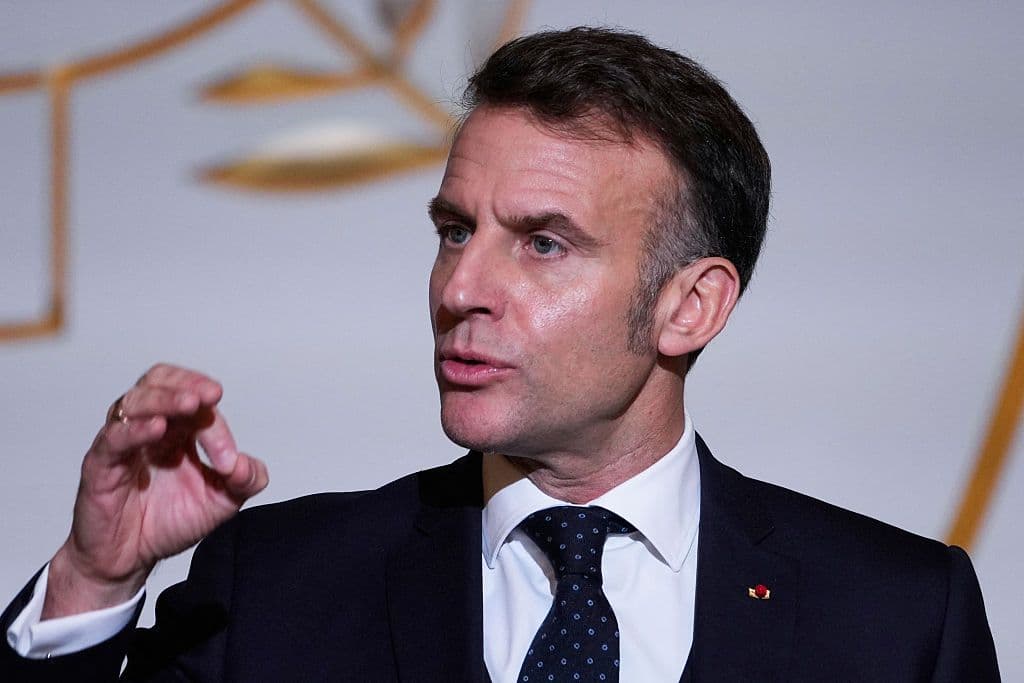
French President Emmanuel Macron, U.K. Prime Minister Keir Starmer, and other officials voiced support for Denmark, Greenland, and principles of international law in statements denouncing tariff threats on Jan. 17.
Their remarks came shortly after U.S. President Donald Trump announced that Washington would impose 10% tariffs on NATO allies — France, Sweden, Denmark, Norway, Germany, the U.K., the Netherlands, and Finland — until the U.S. reaches a deal to buy Greenland.
Macron called the tariff threats "unacceptable" in a post on X, saying France's commitment to sovereignty and the United Nations Charter is the foundation of its ongoing support for Ukraine.
"France is committed to the sovereignty and independence of nations, in Europe and elsewhere. ... No intimidation or threat will influence us — neither in Ukraine, nor in Greenland, nor anywhere else in the world when we are confronted with such situations," he wrote.
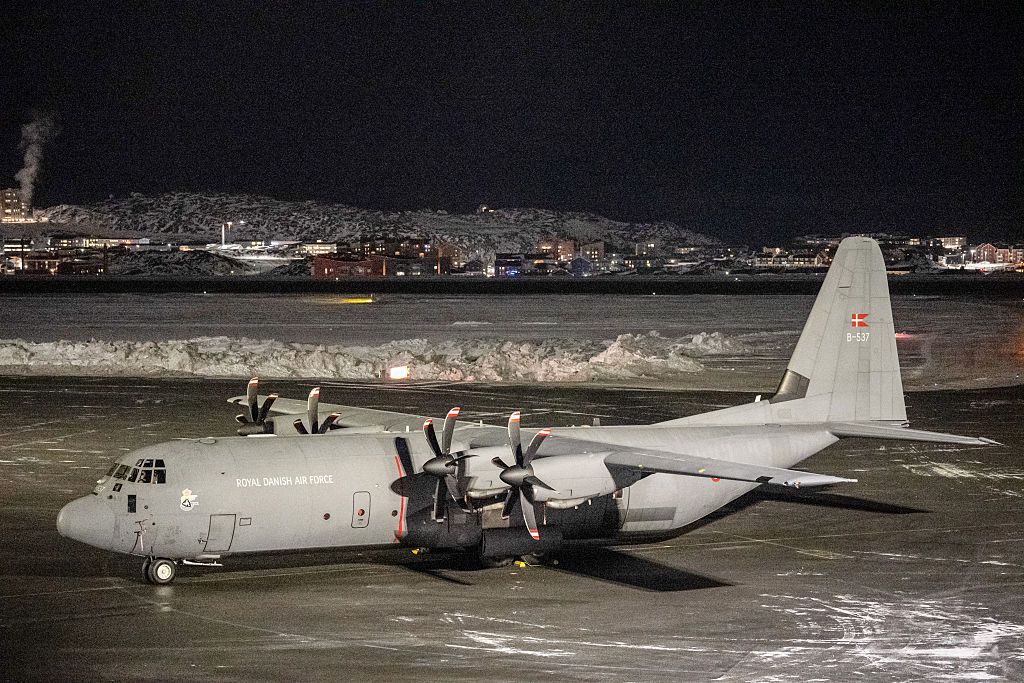
France was among a group of nations that recently deployed troops to Greenland to conduct joint exercises as part of a security assessment. Trump lambasted the joint exercises, calling them a "very dangerous game" and targeting the participating nations with tariffs.
The eight nations will face "a 10% tariff on any and all goods" sent to the U.S. beginning Feb. 1, Trump said. Tariffs will increase to 25% on June 1 and remain in effect until "a deal is reached for the complete and total purchase of Greenland."
Europe stands up to Trump
In light of Trump's statement, Cyprus, which currently holds the EU's rotating presidency, announced late on Jan. 17 that EU ambassadors will hold an emergency meeting on Jan. 18 to assess the situation and discuss a response.
European Commission President Ursula von der Leyen and European Council President Antonio Costa defended the joint mission in Greenland and reaffirmed the EU's solidarity with Denmark in a joint letter following Trump's announcement.
"The pre-coordinated Danish exercise, conducted with allies, responds to the need to strengthen Arctic security and poses no threat to anyone," they wrote.
"The EU stands in full solidarity with Denmark and the people of Greenland. ... Tariffs would undermine transatlantic relations and risk a dangerous downward spiral. Europe will remain united, coordinated, and committed to upholding its sovereignty."
In an even blunter statement, U.K. Prime Minister Keir Starmer called Trump's tariff threats "completely wrong" and said London would address the issue with the White House directly.
"Applying tariffs on allies for pursuing the collective security of NATO allies is completely wrong. We will of course be pursuing this directly with the U.S. administration," he said.
Starmer's comment represents a rare public criticism of Trump, and Europe's collective response points to strong pushback against Washington's unilateral ambitions in Greenland and punitive economic policies.
"We will not let ourselves be blackmailed," Swedish Prime Minister Ulf Kristersson said on Jan. 17, joining the chorus of rebukes to Trump. "Only Denmark and Greenland decide on issues concerning Denmark and Greenland. I will always stand up for my country, and for our allied neighbors."
Kristersson said he was engaged in "intensive" talks with the U.K., Norway, and other EU states on a coordinated response.
Rifts in the transatlantic alliance
Experts said Trump's aggressive policy threatens Europe's carefully managed approach to transatlantic relations.
"Many leaders in Europe would still prefer to avoid open confrontation or a rupture with the Trump administration," Jörn Fleck, senior director with the Europe Center at the Atlantic Council, told the Kyiv Independent.
"But the U.S. president's ever-bolder, some would say more brazen, approach after Venezuela and on Greenland is testing the limits on what Europe’s hugging-the-bear strategy can deliver. His aggressive push risks robbing European leaders of what political space is left at home and in Trump's new global power politics to maintain their careful balancing act vis-à-vis the United States."
One immediate consequence of Trump's threats may be a delay in the pending trade deal between the U.S. and EU — an agreement that Europeans believed successfully smoothed over economic tensions between Brussels and Washington, according to Fleck.
Manfred Weber, president of the European People's Party — the largest political faction in the European Parliament — said shortly after Trump's Greenland ultimatum that the deal could not be approved.
"The EPP is in favor of the EU–U.S. trade deal, but given Donald Trump's threats regarding Greenland, approval is not possible at this stage. The 0% tariffs on U.S. products must be put on hold," he said.
While also criticizing the tariffs, Kaja Kallas, the EU's top diplomat, pointed out that fractures in the transatlantic alliance only benefit Russia and China — and may undermine support for Ukraine.
"China and Russia must be having a field day," she said in response to the U.S. tariff threat. "They are the ones who benefit from divisions among Allies. ... We also cannot let our dispute distract us from the our core task of helping to end Russia's war against Ukraine."
Fleck agreed that friction among Ukraine's allies may pose problems for Kyiv, saying that Europe had recently regained a stronger position in support of Ukraine amid Trump's efforts to negotiate a peace deal.
"That stabilizing role seems at risk should the fractures deepen in the alliance," he said.

James Goldgeier, professor of foreign policy and global security at American University in Washington, D.C., said Trump's stance on Greenland threatens longstanding alliances while doing little to advance U.S. interests.
"The alliance is in deep trouble for no good reason," Goldgeier told the Kyiv Independent.
"Trump's obsession with Greenland has become a real liability for U.S. interests. He's leaving the Europeans with no choice but to oppose this imperialist foreign policy."
Trump's tariff announcement came as thousands of demonstrators gathered in both Denmark and Greenland to protest a possible U.S. takeover. Participants held up signs reading "Hands of Greenland" and ""Make America Go Away."
"(N)o one in the administration has explained what they would do with the people who live in Greenland and who have said over and over they don't want to be part of the U.S.," Goldgeier said.
Since returning to office in January, Trump has repeatedly laid claim to Greenland, Denmark's semiautonomous island with strategic significance in access to the Arctic region. Trump has claimed that the U.S. must seize the territory in order to prevent Russia or China from doing so first, echoing similar remarks made to justify the recent U.S. attack on Venezuela.
Trump has also frequently used tariffs — or the threat of tariffs — pursue his foreign policy agenda.
Danish lawmaker Pelle Dragsted called for "European solidarity and resistance" in response to Trump's latest threats.
"Trump must not be allowed to divide us," he wrote.
"The EU must respond united and hit back hard. ... Enough is enough!"