NATO may get 'more aggressive' in countering Russia’s hybrid attacks, top military official says
 on Google
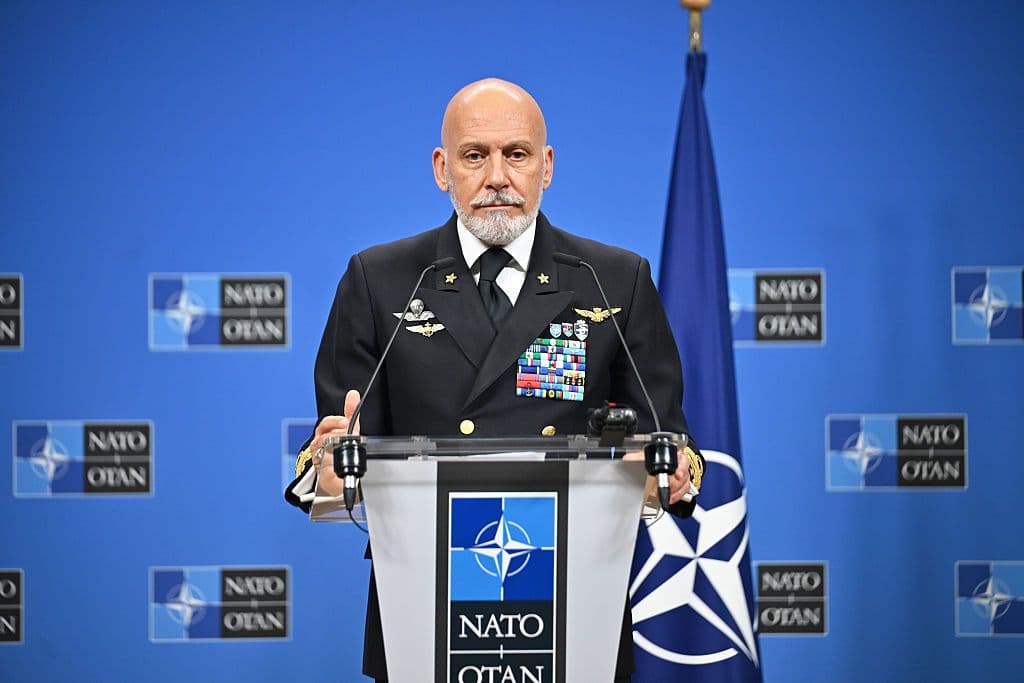
NATO is weighing a shift toward a more assertive response to Russia’s cyber operations, sabotage, and airspace violations, the alliance’s top military official told the Financial Times (FT). Admiral Giuseppe Cavo Dragone, who chairs NATO’s Military Committee, said the alliance is reassessing how it confronts hybrid threats that have intensified across Europe.
"We are studying everything … On cyber, we are kind of reactive. Being more aggressive or being proactive instead of reactive is something that we are thinking about," Dragone told the FT. He also suggested that a "pre-emptive strike" could, in some circumstances, be viewed as "defensive action," while noting that such an approach is "further away from our normal way of thinking and behavior."
European countries have faced a string of hybrid incidents in recent years — including cyberattacks, suspected Russian-linked sabotage, and repeated cases of underwater infrastructure being damaged in the Baltic Sea.
While some NATO members, particularly in Eastern Europe, have pressed for a tougher posture, Dragone said any change requires careful consideration of legal and jurisdictional limits. "Being more aggressive compared with the aggressivity of our counterpart could be an option. [The issues are] legal framework, jurisdictional framework, who is going to do this?" he said.
Dragone highlighted NATO’s Baltic Sentry mission as an example of successful deterrence.
The operation deploys allied ships, aircraft, and naval drones to monitor critical infrastructure in the Baltic Sea following multiple cable-cutting incidents in 2023 and 2024. "From the beginning of Baltic Sentry, nothing has happened. So this means that this deterrence is working," he told the FT.
Concerns remain, however, after a Finnish court dismissed a case involving the Eagle S — a Russian-linked vessel suspected of damaging several underwater electricity and data cables — because the incident occurred in international waters.
Finland’s Foreign Minister Elina Valtonen acknowledged to the FT that this effectively gives Russian vessels carte blanche in such waters. She added that becoming more assertive is under review but cautioned that allies "shouldn’t be hysterical" and should "trust" existing response frameworks.
Dragone said the central challenge for NATO is determining how to prevent future hybrid attacks. "How deterrence is achieved — through retaliation, through pre-emptive strike — this is something we have to analyse deeply because there could be in the future even more pressure on this," he said.