Military: Ukrainian strike in occupied Kherson Oblast kills around 60 Russian soldiers
 on Google


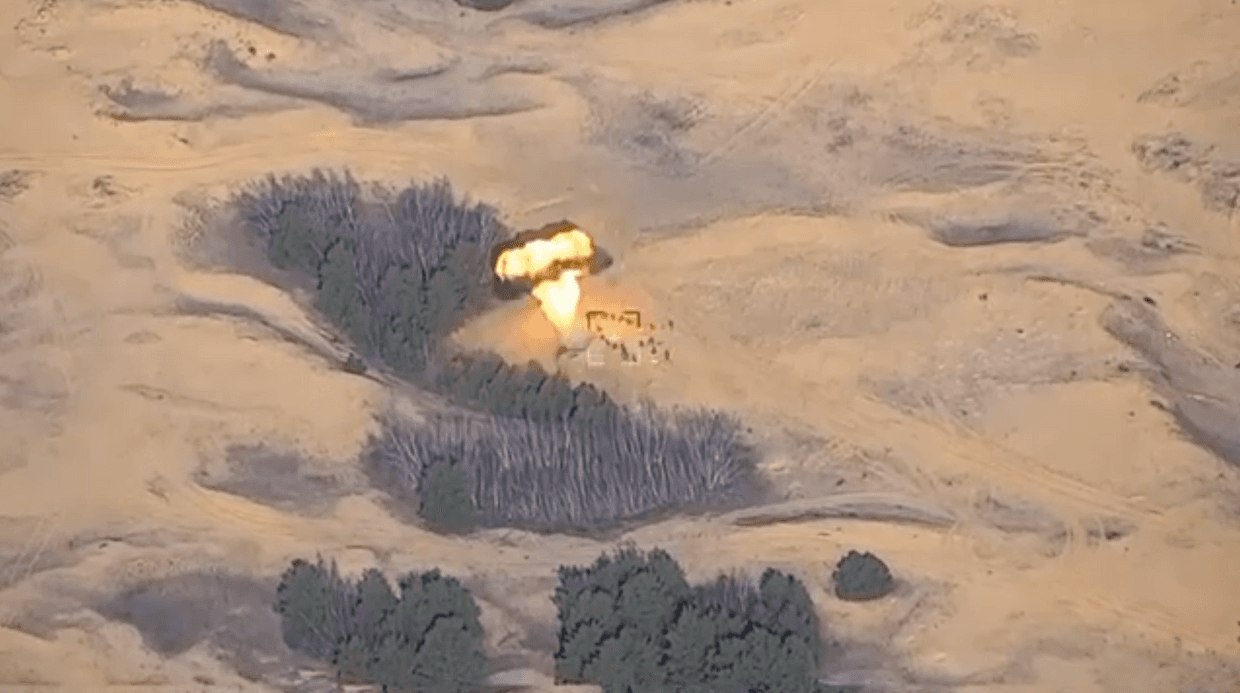
Ukrainian forces struck a Russian military training ground in the occupied part of Kherson Oblast, killing around 60 Russian soldiers, Nataliia Humeniuk, a spokesperson of Ukraine's Southern Operational Command, said on Feb. 22.
Fighting continues on the Russian-held east bank of the Dnipro River in Kherson Oblast, where Ukrainian forces have established limited footholds.
Russia recently claimed it had seized the Ukrainian bridgehead in the village of Krynky, one of the main flashpoints in this sector, which was later refuted by Ukraine.
According to Humeniuk, at the targeted training ground, Russian assault groups were possibly undergoing training for combat in the Krynky area, “but they met with our counter-battery fire.”
“They could not withstand this onslaught,” she added.
Humeniuk didn’t specify where exactly the training ground was located and which weaponry the Ukrainian military used for the strike.
The Deep State outlet first reported on the attack overnight on Feb. 22, saying that it had happened near the village of Podo-Kalynivka, around 30 kilometers south of Krynky.
As of early February, over 70,000 Russian personnel were stationed on the east bank of the Dnipro River in Kherson and Zaporizhzhia oblasts, Humeniuk said on national television.
The Institute for the Study of War (ISW) recently reported that if the West continued to delay aid, Russia could repeat the tactics it used to capture Donetsk Oblast’s Avdiivka in other areas.