Macron unveils expansion of France’s nuclear arsenal, opens door to European deterrence cooperation
 on Google
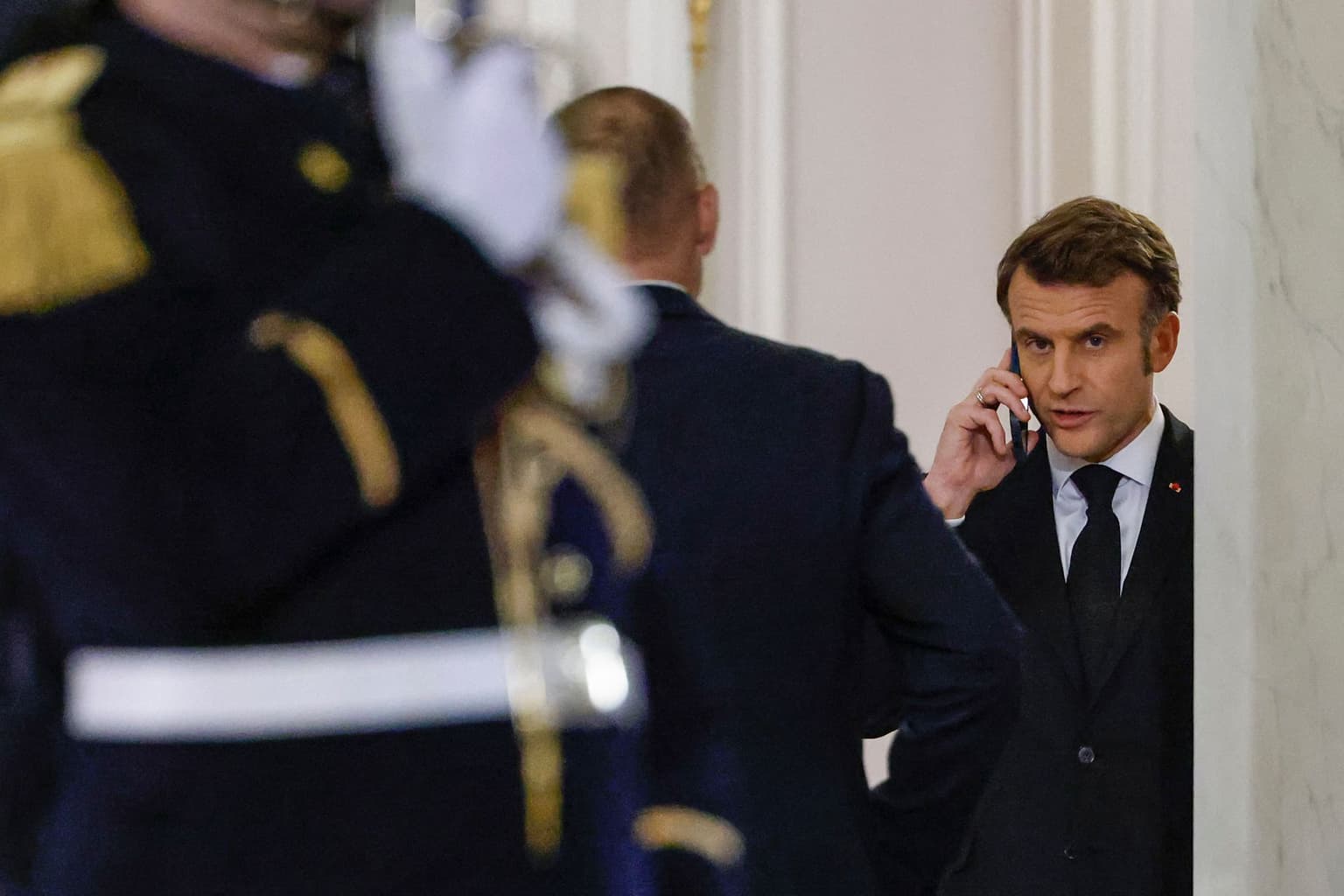
France will increase its nuclear warhead stockpile for the first time in decades and may temporarily deploy nuclear-capable aircraft to partner nations, President Emmanuel Macron announced on March 2, outlining what he called a necessary adaptation to a more dangerous security environment.
Speaking at the L’Ile Longue military base in northwestern France, home to the country’s ballistic missile submarines, Macron argued that Europe must take greater responsibility for its own defense as Russia continues its full-scale war against Ukraine and uncertainty grows around future U.S. security commitments.
"To be free, one needs to be feared," Macron said. "To be strong in our nuclear deterrence, we must be strong in our conventional capabilities in all their dimensions. It is on these two pillars that our defense is based, and I emphasized their importance as early as 2020. But recent years have clearly shown the glaring lack of support capabilities in Europe. And this situation is untenable. "
France remains the European Union’s only nuclear power since the United Kingdom left the bloc in 2020. Under France’s constitution, the president retains sole authority over the use of nuclear weapons. Macron made clear that while France would deepen cooperation with European partners, no other country would share decision-making power over its nuclear arsenal.
Macron said France could temporarily deploy elements of its strategic air forces to allied states and invite partners to participate in nuclear deterrence exercises. He added that discussions on closer coordination have already begun with the U.K., Germany, Poland, the Netherlands, Belgium, Greece, Sweden, and Denmark.
The announcement marks the first time since at least 1992 that France will expand its number of nuclear warheads. Macron did not specify how many additional warheads France plans to add, but said the country must maintain what he described as "assured destructive power."
"If we had to use our arsenal, no state, however powerful, could shield itself from it," Macron said.
European leaders welcomed the initiative, which many view as a supplement to NATO’s nuclear umbrella rather than a replacement for it.
Polish Prime Minister Donald Tusk confirmed that Warsaw has entered discussions with Paris and other European partners. "Poland is in talks with France and a group of closest European allies on the programme of advanced nuclear deterrence. We are arming up together with our friends so that our enemies will never dare to attack us," Tusk wrote on X.
German Chancellor Friedrich Merz also signaled deeper coordination between Berlin and Paris.
.@EmmanuelMacron and I have established a nuclear steering group in which we coordinate on deterrence issues. We intend to take concrete steps before the end of this year, including conventional German participation in French nuclear exercises.
— Bundeskanzler Friedrich Merz (@bundeskanzler) March 2, 2026
Macron ruled out allowing German aircraft to carry French nuclear weapons, despite previous public speculation in Berlin. Instead, France and its partners will focus on coordinated exercises and strategic consultations.
The move comes as several European governments question the long-term reliability of U.S. nuclear guarantees, especially amid shifting American defense priorities and political tensions with Washington.
Macron argued that evolving threats — including the strengthening of adversaries' missile defenses, the emergence of new regional powers, and the risk of coordination among hostile states — require France to reinforce its deterrent capacity.
The International Campaign to Abolish Nuclear Weapons (ICAN) criticized the plan. The group also warned that expanding France’s arsenal could cost billions of euros.
"Every additional nuclear weapon in the world and every additional country where they are deployed increases the risk that they will be used," ICAN’s Executive Director, Melissa Parke, said in a statement published on March 2.
"These are indiscriminate weapons that are banned under the Treaty on the Prohibition of Nuclear Weapons. This announcement from French President Macron is a direct threat to the peace and security of the region, and the world. This is not progress, it’s a nuclear arms race that no one can afford."