'We've been naive and lazy for way too long' — Dutch PM calls out Europe in exclusive interview
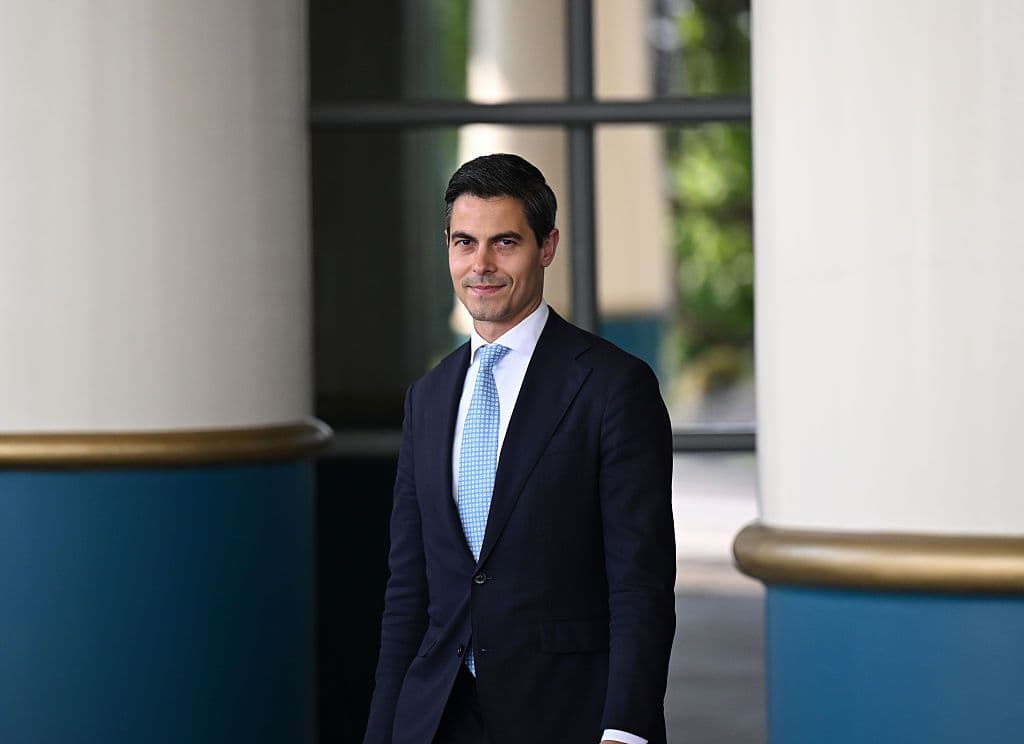
Dutch Prime Minister Rob Jetten leaves the venue after holding a press conference during the NATO Ankara Summit in Ankara, Turkey, on July 8, 2026. (Mehmet Ali Ozcan/Anadolu via Getty Images)
 on Google
The Netherlands has spearheaded Western support for Ukraine.
The 18-million-strong NATO country was among the first to provide Ukraine with F-16 fighter jets — the country's first Western warplanes — alongside Patriot launchers, artillery, and more.
Now, the new Dutch government led by Rob Jetten signals that its military stocks have reached their limits.
But, as the prime minister explains, this only means that the focus must shift — toward non-military support, joint defense production, and a renewed push for other allies to match the Netherlands' pace.
After leading his liberal D66 party to victory in the October 2025 snap elections — triggered when the far-right PVV quit the government — Jetten became the youngest prime minister in Dutch history, tasked with navigating the country's famously unstable politics as Europe faces its biggest cascade of challenges in decades.
The Kyiv Independent spoke with the prime minister on the sidelines of the NATO summit in Ankara on July 8 — the first one he attended in his new role — about Ukraine's future in the alliance, Europe's changing relationship with Washington, and a path toward ending the war.
Editor's note: The interview has been edited for brevity and clarity.
The Kyiv Independent: Your Defense Minister (Dilan Yesilgoz-Zegerius) recently said that the Netherlands has reached its limit when it comes to direct military support for Ukraine. Should we see it as a signal, 'we've done as much as we could, it's now time for other partners to pick up the slack?'
Dutch Prime Minister Rob Jetten: We will do whatever we need to do to support Ukraine, both on the military front and also on the non-military front. For example, we're now looking into additional support for Ukraine's electricity and energy system, and we're boosting military cooperation in areas such as drone and rocket production.
But it was a call-out from my minister of defense to other countries, saying we need them to do more. The Netherlands is among the five countries that are now the top donors to Ukraine, and if more countries support Ukraine, financially as well, we can maintain the momentum and ensure that Ukraine wins this war against Russia.
The Kyiv Independent: You just signed a defense cooperation deal with Ukraine. How important, in your opinion, is Ukraine becoming for European security?
Jetten: When the Russian aggression war started, everyone was wondering what Europe or NATO could do for Ukraine. Now after so many years in this terrible war, we should actually ask ourselves what can we learn from Ukraine and how is Ukraine making Europe stronger with all the experience on the battlefield, with huge innovation on the ground and a lot of Ukrainian companies that are showing us what modern warfare means and how to scale up production in a way that we can actually catch up with the Russians and counter the threat that's coming from (Russian President Vladimir) Putin.
The Kyiv Independent: Yesterday, President Volodymyr Zelensky renewed the push for Ukraine's NATO bid, arguing that, as you say, those increased capabilities can strengthen European security. What's your opinion about this argument? Do you think that this indeed strengthens the Ukrainian NATO bid?
Jetten: I've been very clear about this also today during the NATO meeting. The future of Ukraine is in this family. We support Ukraine's ambition to become a member of the EU as soon as possible, and I also underlined that in Washington, we've all promised, as NATO countries, that Ukraine's future is as a NATO member. So, as soon as this war is over, we should make it very clear to Moscow that Ukraine is part of this alliance.
The Kyiv Independent: There were hopes that this summit could bring the revival of U.S.-led peace talks, but hasn't the past year shown us that this is a failed strategy? In your opinion, shouldn't Europe try to chart a new path instead?
Jetten: It's very important that we support Ukraine so the country can keep the momentum now with deeper strikes into Russia, putting more pressure on the Russian economy and on Putin, who has definitely been losing this war over the past few months.
We have to make sure that Ukraine gets more support in air defense to protect Ukrainian civilians against the terrible strikes that have been going on from the Russian side. But we also have to think about how to find a way to end this war through diplomacy.

It is important that the Americans are engaged in this, also to put more pressure on Moscow, but in the end, it is Ukraine and Ukraine only to decide when they are ready for a serious negotiation for a just and lasting peace, and the European partners will support Ukraine in that process. We want to be part of those negotiations, but it's only one country that can decide when the war is over — and that is Ukraine.
The Kyiv Independent: U.S. President Donald Trump, however, recently said that he believes that Russian President Vladimir Putin wants to end the war. What's your opinion on this, especially after the recent strikes on Kyiv?
Jetten: Over the past weeks, months, and years, we've never seen a clear signal that Putin is definitely ready and willing to have serious negotiations.
As long as he continues this illegal war and as long as he continues to walk away from any opportunity to have serious negotiations with Ukraine, I don't agree with this statement. So let's make sure we keep up the pressure on Putin so that, at some point, he has no other option but to come to the negotiating table.
The Kyiv Independent: Last year, the allies agreed to increase defense spending to 5% of GDP, partially because of Trump. What followed, however, was a series of tensions over Greenland and the war in Iran. What lessons should, in your opinion, Europe draw about its relationship with the Trump administration?
Jetten: First of all, let's not be distracted by every new message or tweet that comes out of the U.S. We have to look at the long-term relationship. We're still very important allies, both militarily and economically, and we're working very closely with the Americans — but in a modern and more mature relationship where European countries are also responsible for their own security and future.
And this Ankara summit has shown that we are delivering on the commitments from The Hague by boosting defense spending, but also by boosting the quality of our defense industry, which is, in the end, also in the interest of the U.S., because it also supports their economy and security.
The Kyiv Independent: But, in your opinion, was there a significant change in the relationship with the U.S. administration, let's say, compared to 2024?
Jetten: Of course, there is a new president and a new administration with a new course for the U.S. and the U.S.-European relationship. But it's not the first time that we have had a very clear message coming from D.C.
Predecessors of President Trump have already told us that we have to do more for our own security and that we have to build a stronger Europe within a strong NATO. And now we're finally delivering. We've been way too naive and way too lazy for way too long.
The Kyiv Independent: Do you think there is a chance that European nations will actually fall back into complacency, stop investing in defense and support for Ukraine, and hope that, again, the U.S. will take care of everything?
Jetten: I'm quite confident that we can now build on the strong experience that we already have, that we will show some concrete projects and companies delivering on a lot of technology that we need for Ukraine to win this war, but from there on also to build a stronger defense industry in Europe, together with the Americans, building a stronger NATO and hopefully a free Ukraine as soon as possible.