NATO summit — Trump rages at allies but hands Ukraine a win
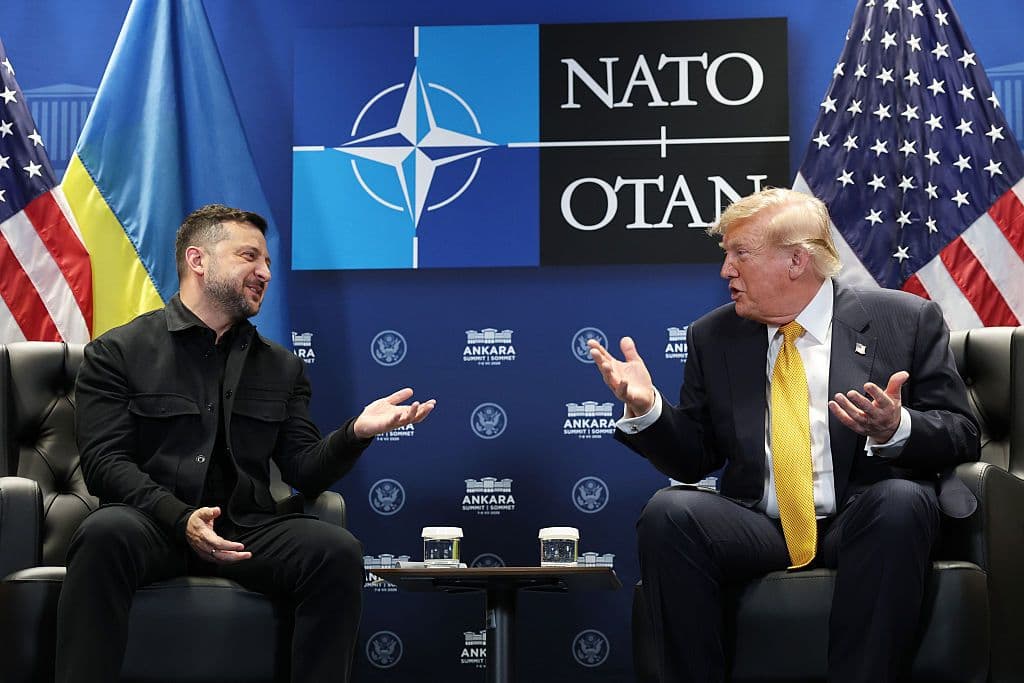
U.S. President Donald Trump (R) meets with President Volodymyr Zelensky for bilateral talks at Beştepe Presidential Compound during the NATO Summit on July 8, 2026 in Ankara, Turkey. (Win McNamee/Getty Images)
 on Google
ANKARA, Turkey — Despite all expectations, Ukraine seems to be leaving the NATO summit in Ankara with a major win.
The alliance itself, less so.
Alongside an allied pledge of $80 billion in defense aid for 2026, President Volodymyr Zelensky has also secured an apparent green light from U.S. President Donald Trump to produce Patriot missiles, sorely needed amid increasingly deadly Russian attacks.
As the two leaders met in the Turkish capital on July 8, Trump nonchalantly added several more comments that would once be bombshell news.
For example, he did not rule out visiting Ukraine or closing the country's skies as part of post-war security guarantees.
But if the past year and a half has taught Ukraine anything, it's that Trump is nothing if not fickle, and he quickly walks back his promises.
And this year's summit has indeed shown that Trump remains the same old, familiar Trump.
NATO's Groundhog Day
As he landed in Turkey, the U.S. president again raged at allies for refusing to back his war against Iran, restated his claim on Greenland, and even floated withdrawing all U.S. forces from NATO.
And this was despite NATO Secretary General Mark Rutte pushing his usual flattery to new extremes, even endorsing the latest U.S. strikes on Iran.
All this seems to follow the familiar pattern.

At The Hague summit in 2025, the allies agreed to Trump's request to raise defense spending to 5% of GDP — only to face further demands and threats over the coming months.
Few deny that the U.S.-European relationship has irreversibly changed.
But officials who spoke to the Kyiv Independent do not give up on hopes that they may yet keep the U.S. on board by simply sticking to the new spending goal and arming up.
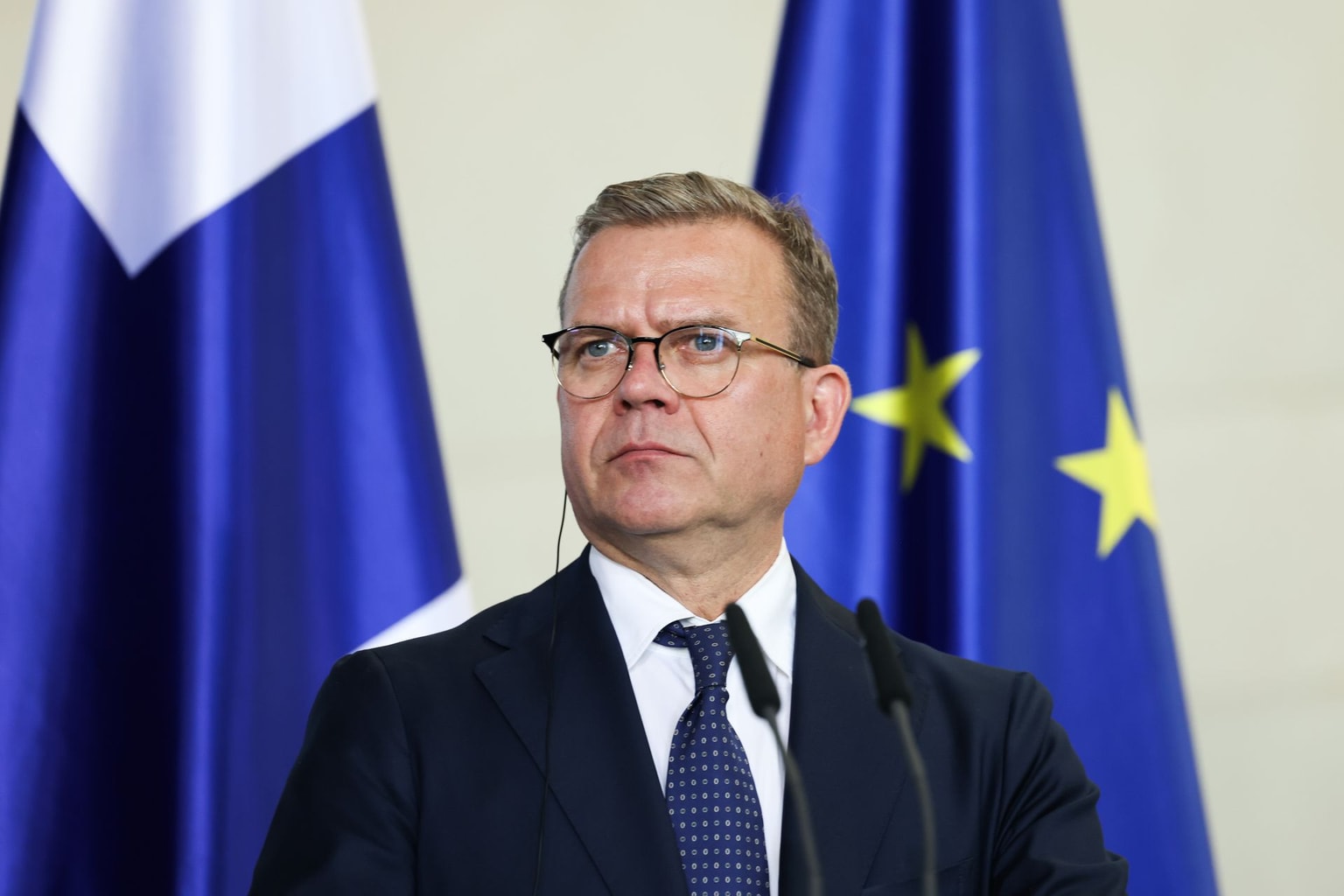
"Let's not be distracted by every new message or tweet that comes out of the U.S.," Dutch Prime Minister Rob Jetten told the Kyiv Independent on the sidelines of the summit.
"We're still very important allies… but in a modern and more mature relationship where European countries are also responsible for their own security and future."
Martin Sklenar, a former Slovak defense minister, expressed the same view, framing Trump's rhetoric as a negotiating tactic that has simply become the "new norm."
"In the past, we used to try to persuade the U.S. to keep being engaged by doing the minimum necessary," the ex-minister, now a researcher at the Globsec think tank, said.
"So now Europe has to actually turn it around and try to make sure that the U.S. understands that we are able to do everything ourselves… which would be a strong argument for the U.S. to be engaged."
But as the Pentagon announced a review of its military presence on the continent, Europe braces for at least a partial U.S. disengagement.
"We recognize… that the United States needs to divert some attention, some power and energy, somewhere else," Admiral Giuseppe Cavo Dragone, the chair of the NATO Military Committee, told the Kyiv Independent.
"So we are doing that the way in which allies can fill the gap that the United States could leave."
Perhaps, Ukraine could help.
Ukraine's new role
This year's summit saw Zelensky conclude new Drone Deals with three NATO members — Denmark, Estonia, and the Netherlands.
Even Trump, who once scoffed at Kyiv's offers of unmanned technology, turned around and said Washington would also purchase Ukrainian drones.
Ukrainian drone capabilities, tested against Russia, have increasingly turned the country from a security recipient to a provider — and Zelensky used this topic to revive talks about the country's NATO bid.
"Do you really believe it would be right to leave outside NATO a country and a people with this level of defensive capability?" the Ukrainian leader said during his address on July 7.
While talks of NATO membership for Ukraine have effectively stalled since Trump returned to office, European officials increasingly recognize the country's growing importance to the continent's security.

"When the Russian aggression war started, everyone was wondering what can Europe or NATO do for Ukraine," Jetten said.
"Now… we should actually ask ourselves what can we learn from Ukraine and how is Ukraine making Europe stronger… in a way that we can actually catch up with the Russians and counter the threat that's coming from Putin."
Yet, despite the obvious lessons that Europe and the U.S. could now potentially learn from Ukraine's drone industry, Kyiv came to the summit primarily with a plea for more arms, specifically air defense missiles.
The plea was apparently heard.
Trump said he will grant Ukraine its longstanding request to produce Patriot missiles, the West's only tool capable of stopping Russian ballistic missile attacks.
"We are gonna give a license to you to make Patriots... This way you can't complain that we are not giving you enough," Trump said during a joint press conference with Zelensky on July 8.
"Make them yourself," he added.
While Trump later expressed confidence that Ukraine could produce the missiles quickly, he also said he had not coordinated with the manufacturer, Lockheed Martin, ahead of the announcement.
In his remarks after the meeting, Zelensky was more reserved, writing that they "spoke about some ideas that could strengthen our positions and bring peace closer."
"I count on our teams to follow up promptly on everything discussed today," he added.