EU considering ending Georgia's visa-free access over ruling party's democratic backsliding
 on Google

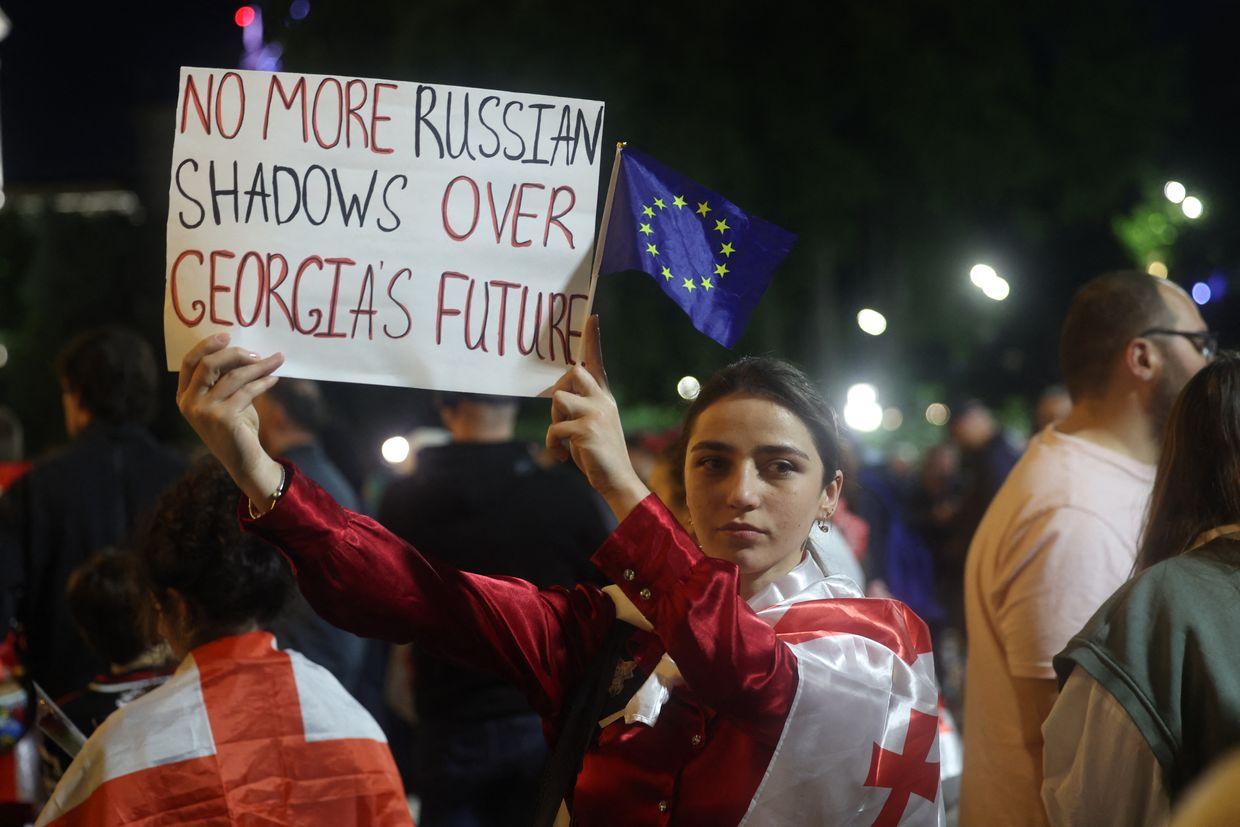
The EU is weighing the potential end to Georgia's visa-free access to the bloc as a result of democratic backsliding under the ruling Georgian Dream party, Politico reported on Sept. 19, citing an unnamed spokesperson for the European Commission.
"All options are on the table" if Georgia does not reverse its trend toward authoritarianism, "including the potential temporary suspension of the visa liberalization scheme," the spokesperson told Politico.
Concerns about Georgia's democracy have reached a fever pitch after the ruling Georgian Dream party passed the foreign agents law, which requires organizations that receive foreign funding to be labeled as "foreign agents" and mirrors repressive Russian legislation used to crack down on Kremlin regime critics.
Georgia's traditional Western partners — the EU and the U.S., have responded to the law's passage and related crackdown on protesters by halting aid, effectively freezing the country's EU bid, and sanctioning government officials.
The proposed plan to end Georgia's visa-free access to the EU, first granted in 2017, was the latest step in the deteriorating relations between Georgia and the West.
"As part of the EU-Georgia visa liberalization dialogue and the corresponding Action Plan, Georgia was required to meet specific benchmarks, including ensuring the protection of fundamental rights and preventing discrimination," the European Commission spokesperson said.
"An assessment would of course take place in case of developments posing a risk to the internal security of the Schengen area, as well as in case of a further democratic decline in Georgia."
Following rumors in recent days that the visa-free regime might be ended, Prime Minister Irakli Kobakhidze characterized the proposal as a "cheap blackmail attempt."
Kobakhidze further claimed that "it will not have an impact on the election," referring to the upcoming parliamentary elections scheduled for October. Georgian Dream, in power since 2012, is seeking a fourth term.
The previous day, Georgia's parliament passed a package of anti-LGBTQ legislation that would ban gender transition, adoption by same-sex couples, and forbid gatherings or the distribution of information "aimed at promoting" LGBTQ relationships.
The legislation was widely condemned by Georgia's Western allies, who reiterated concerns that the government's trajectory is hurting the country's Euro-Atlantic goals.
A day after the parliament passed the set of bills, Kesaria Abramidze, one of Georgia's most prominent transgender public figures, was murdered. Police have arrested her boyfriend, who is suspected in Abramidze's killing.
In response to the murder, the human rights NGO Social Justice Center said, "There is a direct correlation between the use of hate speech in politics and hate crimes."