Putin shouldn't decide when Ukraine votes — but political ambition shouldn't either
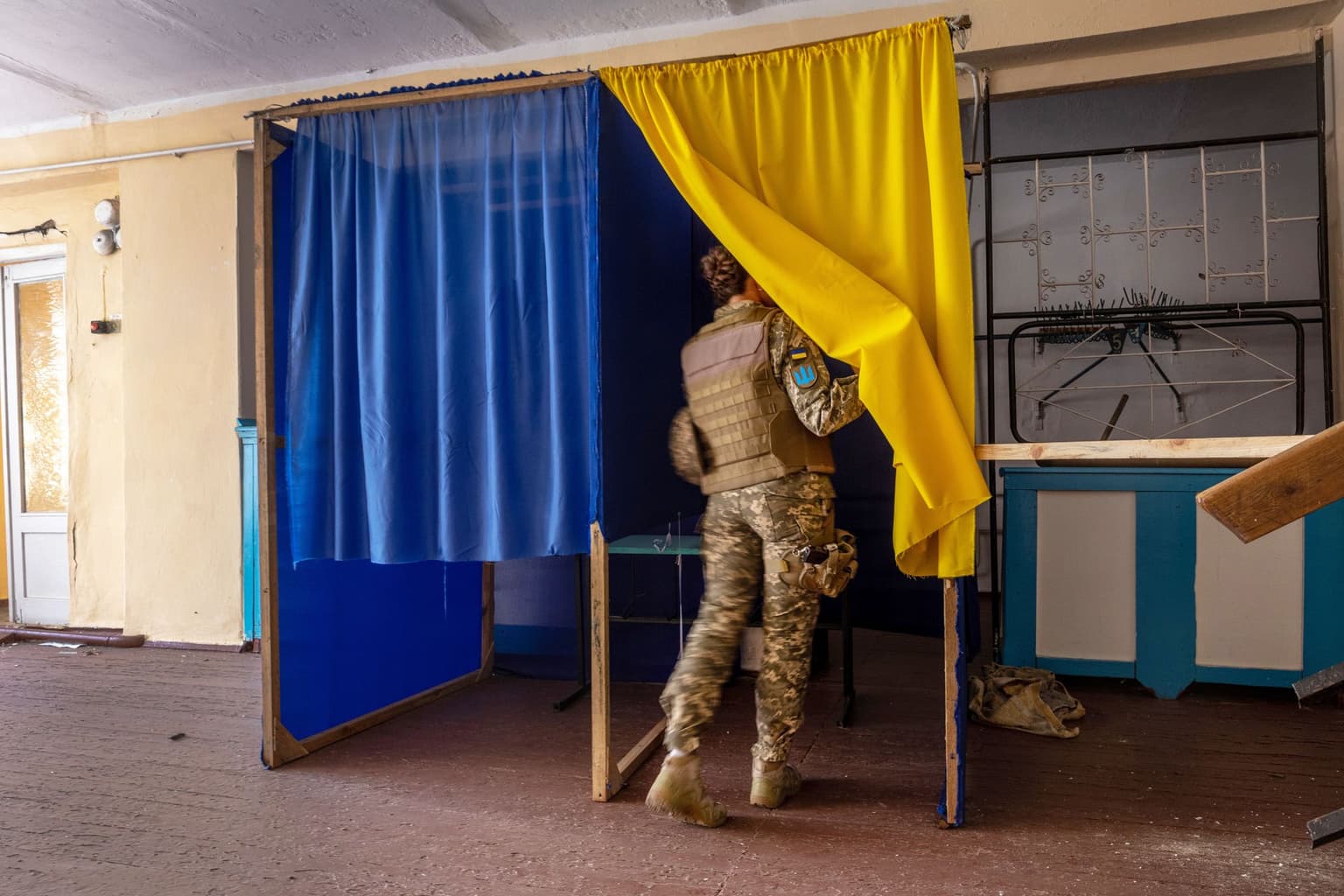
A Ukrainian soldier checks a voting booth at a bomb-damaged school in Zagradivka, Ukraine, on May 8, 2022. (John Moore/Getty Images)
 on Google
Olga Aivazovska
Head of the Board of the Civil Network OPORA
With his latest statement, former Defense Minister Mykhailo Fedorov appears to have reinvigorated a dangerous debate about elections in wartime Ukraine.
"We must not let Putin decide when Ukrainians can choose their government," Fedorov said, adding that democracy is "part of what we are fighting for today."
The principle is difficult to dispute. Yet a prolonged war of attrition places extraordinary strain on both the state and society, demanding that Ukraine's political leadership exercise the utmost caution when contemplating the prospect of elections under wartime conditions.
Instead, some of the country's most prominent leaders, including President Volodymyr Zelensky and Fedorov himself, continue to operate in what appears to be a peacetime political mode, without fully reckoning with the potentially devastating consequences of their mistakes.
Fedorov frequently describes himself as a visionary and speaks at length about strategies, missions, and visions for the future, but without concrete action, these words neither heal nor create added value.
Neither Zelensky nor Fedorov has done enough to prepare Ukraine's security system for what could become the most difficult and consequential elections in the country's history. At the same time, when it comes to societal expectations, elections remain a deeply sensitive and controversial issue.
Got an opinion on anything you've read in the Kyiv Independent so far?
and it may appear in our Letters section.

As years of polling have consistently demonstrated, a clear majority of Ukrainians believe the question should be postponed until martial law is lifted.
There is a broad public consensus among political elites and experts that Ukraine will need at least six months to prepare for elections after a sustained ceasefire is established.
The legitimacy of the authorities and politicians is not being called into question, but a war of attrition could become "eternal," while the authorities could lose both their full functionality and their "desire to perform accountable, good-faith work."
The postponement of elections should therefore be justified and predictable, tied to changing conditions, and end once the security situation changes.
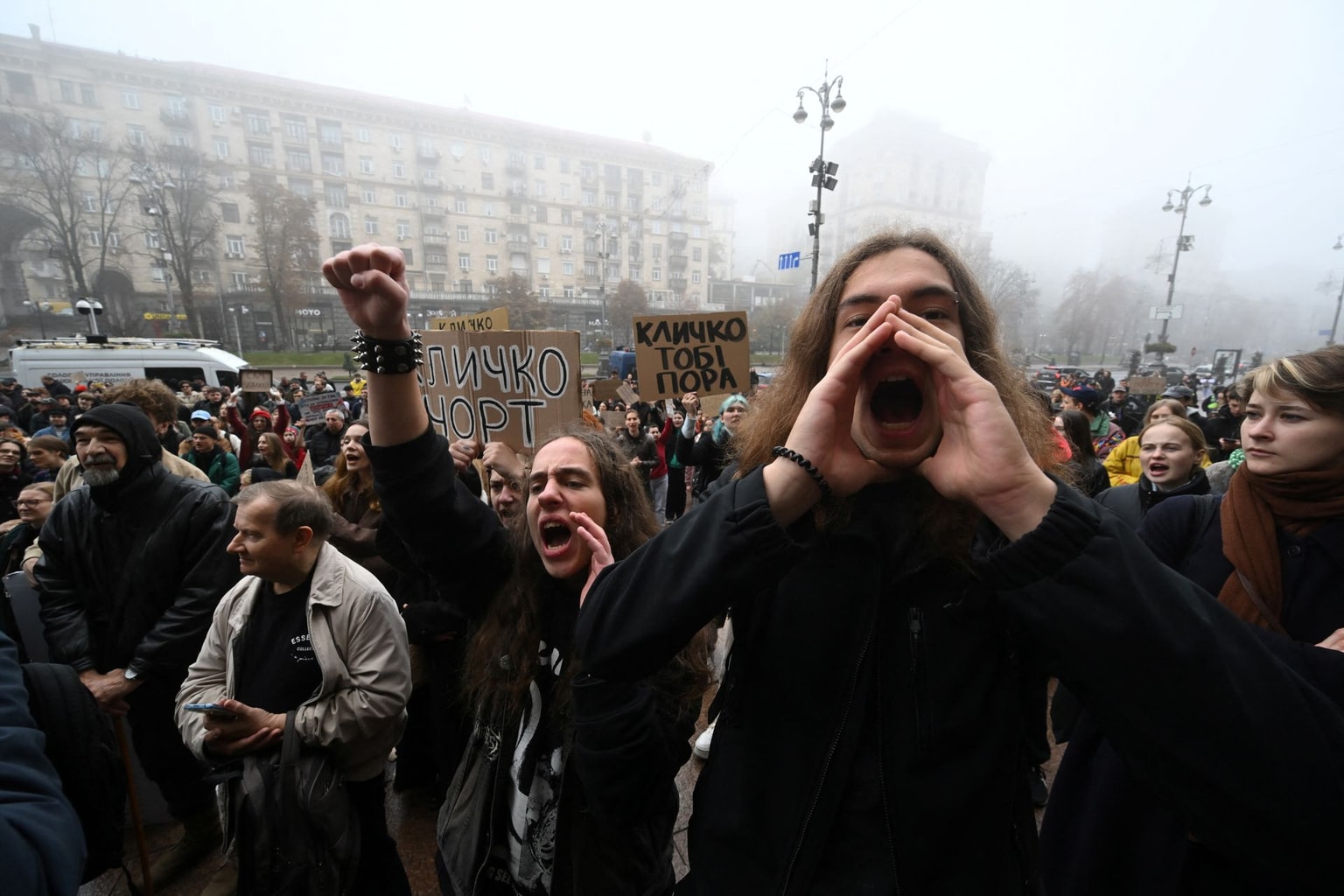
In the first years after 2022, society did not question the president's personnel decisions. But this July, people took to the streets in peaceful protest over the decision to dismiss the now-former Defense Minister Fedorov. This points to a growing demand for greater transparency in the president's personnel policy, even in the absence of elections.
After all, the essence of an electoral cycle lies in society delegating a mandate to representatives and parties capable of pursuing specific political objectives. Without elections, Ukrainians still want a meaningful voice in personnel policy, and formal government reshuffles, with ministers simply moved from one position to another, do not satisfy this demand for political change.

While elections, as a process, remain a toxic topic, personnel changes at the political level, including public involvement, would be entirely welcome by society.
A prolonged period without democratic electoral procedures does not relieve the state of its obligation to create the conditions for a peaceful transfer of power, both from the standpoint of security and in terms of Ukraine's commitments on its path toward European integration.
Elections as a process during wartime could lead to a loss of social resilience, undermine the legitimacy of state institutions, weaken defense capabilities, and violate the Constitution due to the inability of a critical number of voters — military personnel, internally displaced people, and voters abroad — to exercise their right to vote.
Any election campaign must have security guarantees to ensure the completion of all stages and procedures, because the price of a mistake or disruption in the process would be the legitimacy of the authorities themselves and, as a result, a failed state.
"Elections that are neither free nor fair will undermine legitimacy. And elections without adequate protection will be a gift to the Russians."
Russia has 101 plans for undermining trust in the process, because it has deliberately and demonstrably used elections in Ukraine as a tool of influence.
It is no coincidence that elections were part of both Minsk protocols and of the 28- and 20-point "peace plans" proposed by the Kremlin. Including elections as a provision in any agreement shifts the war into the format of an internal armed conflict, which is also unacceptable for the state's future resilience.
This is not so obvious to those who do not live through the terrifying nights in Kyiv, Zaporizhzhia, Sumy, Kharkiv, or Odesa during massive "ballistic shootings" of cities. It also means little to those who perceive elections solely as casting a ballot, rather than as a full-fledged competitive contest governed by certain rules and standards.
Already today, Ukraine needs to pool resources, both financial and intellectual, for extraordinary security measures and ensure basic infrastructure, both inside the country and abroad; a legislative framework that would regulate the unique challenges of the postwar period; and a productive system of cooperation among all the co-organizers of the process, from the Central Election Commission and the State Voter Register to political parties, which have not only rights but also public responsibilities.
Elections that are neither free nor fair will undermine legitimacy. And elections without adequate protection will be a gift to the Russians.
Anyone who hopes for victory over the aggressor but has neither an army nor weapons is either a dreamer or a fool.
The process can be protected through critical, long-term investments in communications, cybersecurity, infrastructure, countering potential terrorism and incitement to political violence, and preventing social divisions amplified by social media and algorithms. Any infantile approach is self-destructive.
Therefore, all efforts now should be directed toward building the capacity of both the state and society to ensure a peaceful transfer of power in the future.

Ukrainian society certainly does not agree to unchallenged rule by one person or a group of people, but it also has a fairly rational instinct for self-preservation.
This has happened partly because of attempts by external actors to revive the issue of elections without taking the Ukrainian people's position into account, and partly because of the Kremlin chief's desire to secure a Ukrainian president willing to sign any capitulation agreement.
But since the beginning of the full-scale war, citizens have drawn a clear dividing line in their minds.
On one side are those politicians who, during a war for the survival of the Ukrainian state, think about their own political interests and gains. They are ready to exploit murderous populism and sell empty promises, but the toxicity of the election issue among citizens is what prevents them from openly raising it.
Others are responsible leaders with high levels of trust who, in time, may become entirely promising candidates for president or go on to lead political parties. But not now, when their key task, in their professional or personal roles, is to win the war.
"The best option for Ukraine today is to establish the rules and infrastructure for the first postwar elections, but not to torpedo the process."
Any free and fair elections must guarantee equal conditions for all in political competition and, above all, give voters a voice, however difficult it may be to exercise it. Postwar elections will be a global phenomenon, since more than 20% of voters have ended up abroad.
Any attempt to deprive any group of citizens of the opportunity to participate in the first postwar elections would be a sign of a deliberate policy of discrimination by the state, from voters abroad to military personnel.
In a reality where 50% of Ukrainian citizens do not live at their registered addresses, according to OPORA, this factor alone, without any changes, will have a dramatic impact on turnout.
Imagine a situation in which election turnout is calculated based on those included in the voter rolls, but half of them are hundreds or thousands of kilometers away from their official registered addresses.
To this factor, we can add attempts by the Russians to disrupt election day through shelling and terrorist attacks near polling stations. A massive morning attack on election day could simply bring the movement of citizens to a halt, and could be accompanied by an information and psychological operation concerning the presence of military recruitment centers near polling stations.
A turnout of 10-15% could become a telling indicator.
The best option for Ukraine today is to establish the rules and infrastructure for the first postwar elections, but not to torpedo the process, or further fuel political posturing designed to present oneself as a potential candidate.
Editor's note: The opinions expressed in the op-ed section are those of the authors and do not purport to reflect the views of the Kyiv Independent.